A sad old Urdu song :-/

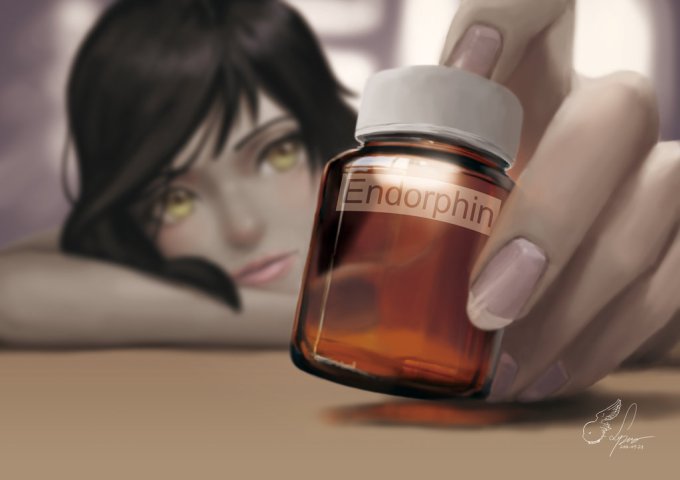
Jaane Woh Kaise Log Lyrics and Translation

Jaane woh kaise log the jinke pyaar ko pyaar mila
I wonder what kind of people find their love reciprocated
Humne to jab kaliyaa.N maangii kaa.NTo.N kaa haar milaa
Whenever I asked for flowers, I received a garland of thorns

Bichharh gayaa har saathii dekar pal do pal kaa saath
Every companion gave me a few moments of company, and left
Kisko fursat hai jo thaame diiwaano.N kaa haath
After all, who has the time to hold a crazy person’s hand?
Humko apnaa saayaa tak aksar bezaar milaa
Even my own shadow is often weary of me

Isko hii jiina kehte hai.N to yuu.N hii jii le.Nge
If this is what they called life, then I will live like this
Uff na kare.Nge, lab sii lenge, aa.Nsuu pii lenge
I will not sigh, I will seal my lips, and swallow my tears
Gham se ab ghabraana kaisaa, gham sau baar milaa
After all, how can I be concerned by sadness? I have met sadness a hundred times

Humne to jab kaliyaa.N maangii.N kaaTo.N kaa haar milaa
When I asked for flowers, I found a garland of thorns
Jaane woh kaise log the jinke pyaar ko pyaar mila
I wonder what kind of people find their love reciprocated

Osteoporosis meds, terrible!

Medication for osteoporosis, such as Fosamax, Prolia, and Boniva actually make your bones weaker and more brittle, and women who are on them experience breaks in bones such as the femur, the thigh bone, one of the strongest, thickest bone in the human body.

Why do they do that? Well these medications inhibit a class of cells called “Osteoclasts.” Osteoclasts are the cells in our bodies that eat away old brittle bones and they are needed to do that before “Osteoblasts” can put down new, fresh bone. So when osteoclasts are inhibited, old, brittle bones are not eaten away, and fresh new bone cells cannot be put down. So taking these “medications” effectively makes your bones old and brittle while the turnover to fresh, new bone is inhibited. So people get very old brittle bones and things like breakage of femurs (previously unheard of) and osteonecrosis of the jaw (https://www.drugwatch.com/fosamax/side-effects/) this is bone death of the jaw and can lead to horrible disfigurement, can occur.

These are horrible side effects and are exactly the opposite of what a medication for osteoporosis should do! I am totally beside myself that knowing these things can happen, people are still being told to take these awful “meds!” It’s like handing someone a hammer and telling them to hit themselves till their femur breaks as a treatment for osteoporosis!

I grant that the idea to suppress osteoclasts (cells that eat bone) may have originally been a good one. No osteoclasts, no bone thinning, that may well have been the logic. But when it was seen what was actually happening, they should have stopped prescribing these awful “meds” but they haven’t. They continue to prescribe them.

I was given a prescription for Fosamax and Prolia. Prolia was going to cost me $400 for one 6 mont shot. Prolia (Amgen) was willing to cover my copay, all except $25. But I refused to take them after I read what I have just told you.

Still can’t believe they are still prescribing these awful compounds.


Why Acting Strong Is Really Weak

A troubling theme that I come across in my work as a therapist—and in observation of people in general—is the belief that we should always act strongand hide our insecurities and fears. The damage that this “common wisdom” perpetrates is incalculable. It decimates true self-esteem and damages our relationships.

Acting strong is still acting. When we act or pretend to be different than who we truly are, we abandon our real self by putting on a mask. We do this in an attempt to control what we hope others will think of us. So we manipulate and camouflage our self as we seek the approval of others, or at the least try to avoid their disapproval. This sets up our primary betrayal of our genuine self.

We derive authentic self-esteem from our relationship with our own self. If we contort our personality to seek recognition or approval from others, we’re pursuing what I call other-esteem, because it doesn’t come from within, but is sought from outside of us. We’re trying to feel better about ourselves by being disingenuous. How do you think that’s going to work out? The more we do this, the further we move from genuine self-esteem. This is the opposite of what we should be doing. We should be embracing our vulnerability.

What do I mean by vulnerable? For me the word vulnerable doesn’t elicit weakness, butopenness. Don’t construe it to mean fragile. As humans we all experience vulnerable feelings, like insecurity, doubt and fear. In moderation these are common emotions. But due to our misinformed cultural meta-narrative that demands the appearance of strength, we decide to hide these feelings from one another. So we live out our lives falsely thinking that our shortcomings or self-doubts are unique to us. The sad irony is that those same individuals whose opinions we are so worried about are very likely doing the same thing. So the vast majority of people are disempowering themselves, thinking that others are more confident and secure. This tragic myth terribly limits our lives.

Hiding our true self from others is what makes us fragile. Being yourself makes you strong. When I encourage this transition people may ask, “but what will they think of me?” How will they see me? This is a common concern for people who grapple with revealing their genuine self. I’d offer that I want to be seen—as I truly am—as my authentic self.This is the path to a powerful self-esteem.

When we accept our vulnerability, we have nothing to hide from others and this in turn makes us genuinely powerful. You can find the key to a resilient self-esteem by embracing your vulnerability; your fears and insecurities. In doing so, you liberate yourself from setting up others as your judge, as you have nothing to hide. You must embrace your vulnerability to attain inner strength. Releasing your concerns by bringing them into the light allows them to dissipate, masking them cements them into your being.

Who is my judge? Why is it more important to us what someone else thinks of us than what we think of ourselves? When we subordinate our self-worth by setting up another person as our judge, we perpetuate emotional abuse on ourselves. Other people aren’t your judge; why appoint them that power? Everyone has opinions for sure, but to elevate someone’s opinions to the power of a judgment is irrational and without merit. What you’re doing is judging yourself and then projecting that power of judgment onto someone else. I’m fond of saying that the only person who has the right to literally judge me wears a long black robe and presides in a courthouse.

For relationships to thrive we must experience emotional intimacy(link is external). What I mean by this is a transparent and safe sharing of our feelings. When we obscure feelings that we think others will criticize or scrutinize, we block emotional intimacy.

We all just want to be loved, but to be loved you need to be lovable. Most of us struggle in actually being lovable. When you need to act strong, you erect a defensive wall that doesn’t allow others in. You become impenetrable and therefore, unlovable. Others most often see vulnerability—openness—as lovable. In my work with couples and families, when someone expresses their softer vulnerable feelings, others not only listen—they care.

Isn’t it insane that we hide the very qualities that could make us feel validated, affirmed, and loved? Embracing rather than hiding from our vulnerability makes us authentic and powerful. It suggests that we accept and value ourselves as we are, without fear of what we think others may think of us.

We’ve clearly been playing from the wrong game plan.
My forthcoming book, The Possibility Principle: How Quantum Physics Can Improve the Way You Think, Live and Love (Fall 2017, Sounds True) will provide more detail on this subject. In the interim please enjoy related articles atMelschwartz.com(link is external).

Mel Schwartz is a psychotherapist and couples counselor based in Westport, CT. He is the author of The Art of Intimacy, The Pleasure of Passion and his more than 100 articles have been read by over 1 million readers. You can reach him at Mel @melschwartz.com (link is external)He also works globally with people via Skype or telephone.

What are we leaving our children?

What are we leaving our children? In light of the terror attacks, I ask this. We are leaving them isis, a sickening, violent, almost non human group. We are leaving them a horribly unequal world, as far as wealth, as far as education, as far as the comforts of living a long and productive life, and it is this inequality that spawns terror. 

As far as climate, the health of this planet, our home, what are we leaving them? We are leaving them a catastrophe. The 10-20 inch rise in sea levels that was to have taken many decades in which to occur, now climatologists think will happen within a decade. And it will have real and dire consequences. This is what we are leaving for our children to deal with and it is not something that can easily be handled, or perhaps handled at all. 

Terror and climate catastrophe. This is what we are leaving for our children. Sad, incredibly sad. 

How, with the way things are and the way people behave, how can we make things any better? 

Cruz is calling for monitoring of Muslim neighborhoods to make sure that Muslims don’t get radicalized! Trump wants to register Muslims so he can keep tabs on them! Does this not remind you of another awful period in history, targeting and marking a whole group of people. Remember, it did not end well. 

As my brother, who is an Art director of an Institute in Brussels said “Scary times!” Scary because of so many things. 

Unfortunately, fear seems to be winning. 

I ❤️ Ankara. I ❤️ Istanbul. I ❤️ Brussels. 

All three cities have been the target of isis attacks.  I send them all my love.

I hope this abomination known as isis is destroyed with as much alacrity as we can muster!

If Trump could guarantee the annihilation of these monsters, I would vote for him, that is how much I want them gone.

These monstrous inhumans pull out the anger and hate in us, they infect us with their own fear, hatred and violence. We must not give in to them. We must still act with love not fear.

You see, the struggle between love and fear is not some abstract thing, it is played out in the human arena countless times, every day. What we have to do is make sure we act with love and love wins over fear. We can even show our love to our own fear, that is truly grace! If each and every human on this earth does this, then there can be no isis.

With much love from me to all of you.

Piece by Piece

Wow, now I understand why Kelly Clarkson is always emotional and always singing about men leaving her. I had no idea she’d been abandoned by her father. These emotions cut close to my heart as well. Does it ever end? You can read a ton of books on how to heal your inner child, on how to tame your outer child, on how to become a Buddist nun (haha not really) on how to do EMDR, on how to get over PTSD, and on and on and on. You can be in counseling, exercise, take your meds, but then you hear something like this and the hole in your heart (the figurative one not the real one lol) gets bigger. Are you forever destined to be in pain, broken, irreparable? If once you’ve been broken, can you never glue yourself together again? Like the proverbial Humpty Dumpty? Very powerful song and very powerful emotions,  just finished exercising, going to take a shower and be calm and ok.

Fear is everywhere, it is anger, it is anxiety, it is hopelessness and so much more. How do we help ourselves overcome it?

Fear is everywhere, it is anger, anxiety, hopelessness. It is a primal emotion which has helped us survive, evolutionarily. But now our fear response can be triggered because of non urgent events. And we can react by getting angry, getting anxious, having all the negative emotions. It activates our fight or flight or freeze response. We can become habituated to feel fear, anger, anxious, hopeless, etc, etc. And we try to get away from these emotions, we run away from them.But that doesn’t work. What do we do about it? We accept it, we sit with it in meditation. Every time we feel fear and anger means we have hit a boundary in our life. Meaning fear is at the outer limit of what is acceptable to us. We have reached our limits. And we experience fear. We can sit with it, we can push against it and this is growth. When we reach out outer edges, we can either be fearful, or we can accept the fear and push back, and that is where growth happens for us. So as frightening as fear, anger, anxiety are, they are the catalysts for our own growth!

Keep listening, she’s really good!

Is Good Really Stronger Than Evil?

DSCN4887

Hmmm, according to this article, after doing a good deed, your strength increases! But your strength increases after you do a bad deed as well. So it’s up to us to choose wisely.

https://www.psychologytoday.com/blog/positive-prescription/201602/is-good-really-stronger-evil?utm_source=FacebookPost&utm_medium=FBPost&utm_campaign=FBPost

Fiction abounds with incredible feats of strength. In the real world, too, strangers and neighbors perform incredibly physical acts—lifting cars off babies, raising fallen trees off trapped victims. Is it all adrenaline rush or is something else going on?

Harvard psychologist Kurt Gray thinks he’s figured out a key ingredient to feats of extraordinary strength in the real world. After a few simple experiments, (link is external)Gray concluded that moral activity has a distinct, measurable effect on people’s capacity for physical endurance and strength—he calls it “moral transformation.”

To put it to the test, Gray measured the physical strength and endurance of test subjects before and after they contributed to charity. After their charitable act, the test subjects were stronger and their physical endurance greater: Each was able to hold weights and hand grips longer than before their philanthropic contribution.

Not all tales are clear-cut good vs. evil. In fiction, as in real life, villains have power, too. And Gray’s theory of moral transformation most certainly has a dark side. In addition to testing the morally transformative power of “good” or charitable acts, Gray had test subjects scribble tales of doing harm to another human being. These “wicked” test subjects exhibited just as much higher strength and physical endurance as the “kind” group, leading Gray to conclude:

People perceive those who do good and evil to have more efficacy, morewillpower, and less sensitivity to discomfort. By perceiving themselves as good or evil, people embody these perceptions, actually becoming more capable of physical endurance.

The lesson for all of us is to use our power wisely. Being kind and being cruel empower us, and it’s up to us to make the right choice. At the very least, help out a stranger or give a dollar to someone in need on the way to the gym—not only will the world be a better place, but you’ll have a better workout.

Hugh’s Weekly Photo Challange: Week 17 – Calm

DSCN6572

A lake in Brandenburg KY. A beautiful calm day with a canoe.


IMG_1432

A filly in the Churchill Downs stable. She was so sweet and let me get so close to her, a lovely horse!