
When I Went To France Without A Visa!

sam 17 samina 16

I was 17 years old, I had worked at a Deli in a grocery store (against the strong objections of my mother who said I didn’t need to work) for a few months and had saved all my money. My step father’s younger brother (my uncle) and his family were in Bordeaux, France. He was an officer in the Pakistani Air Force, and was sent to Bordeaux to learn everything about Mirage jet fighter planes. So, since he was there, I decided I would go to France with my money. We went to see a travel agent, she booked my flight from Buffalo to NYC to Paris to Bordeaux. I packed my suitcase. Told everyone at school I was going to France. And excitedly waited for the day. On the day, got on the plane and finally arrived in Paris. There I waited in line to get to the immigration official. She looked at my Pakistani passport (I wasn’t an American citizen in 1977) and looked at me and went to the back to talk to someone. I was quite fluent in French then and thought I could explain whatever was the problem to them in French. She came out, looked at me and said “Visa?” All my French went out the window, heck all my English went out the window. Apparently Pakistani nationals, even if they had Green Cards (as I did) needed visas to enter France. The travel agent in Buffalo had failed to mention that to us and we had, erroneously. assumed that since I had a Green Card, I didn’t need a visa to go to France. So now I’m sobbing, tears are spilling out of my eyes copiously. I am sure she is going to send me back. And the only thought I have is how will I ever show my face in school again. Oh my god, my life will be absolutely ruined. This woman is just shaking her head. Then finally she asks where I am going and to whom. I tell her my uncle’s name and his address in Bordeaux. She and some other officials discuss this, she says my uncle and my last names are the same, I am visiting him in Bordeaux and then miraculously she stamps a visa in my passport, hands it to me and says ” Prochaine en ligne”!! Oh and my heart is singing, I literally want to grab this lady and give her a hug! But I don’t, I just say “Merci, merci, merci beaucoup!” and leave before they change their mind! I find the gate for the plane going to Bordeaux. I barely make it, but I do! My uncle meets me at the airport and I tell him and his wife about my misadventures, which luckily turned into good adventures.

Then we go to San Sebastien in Spain and again I have no visa, they give me one with a smile. We get caught in the Basque independence rebellion, amidst huge crowds chanting slogans and turning over cars and jeeps and setting them on fire. We are separated from each other only for a few minutes which feel like hours. In the end, we find each other, we have dinner, we go to bed and just stay a day and head back to Bordeaux.

Then we go to Paris. Le Tour Eiffel, Le Louvre, Avenue des Champs Elysées, La Place de la Concorde, Rive Gauche, oooh la la! I had such a wonderful time in Paris. Street vendors gave me gifts, everyone gave me smiles, I was walking on air, but then I was 17 and charmed and happy.

Then we went back to Bordeaux. There we decided to send my passport to the Embassy in Paris to have my visa renewed so I could stay a bit longer. My passport never reached the Embassy. It got lost in the mail. So then I had to have another passport issued from the  Pakistani Embassy in Paris and this took quite a while. I still have my old passport issued in Paris! I went to school about 10 days after Christmas vacation was over. And everyone thought I was a rock star, having gone to France and stayed for so long. I had bought some clothes and high heeled boots and people in school would always ask  me if I was a model! It was such a fun time and doubly fun because I was 17.
When I met President Clinton!

44_Bill_Clinton_3x4

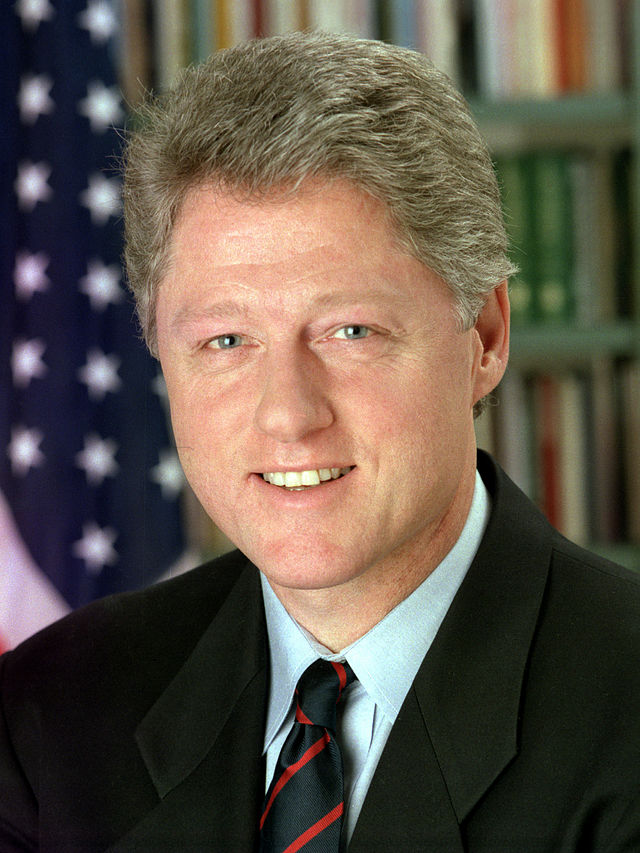
We were living in Little Rock AR. My son was born there in 1990. On November 3rd, 1992, Bill Clinton was elected president. In December, I was at the mall, shopping for Christmas presents. I was holding my son in my right arm and bags of presents in my left arm. I saw a throng of people standing outside of a store in the mall. I asked one of them what was going on. They answered that President (Elect) Clinton was inside. I asked if the store was closed to everyone, and the person said “No, it’s a public place, they can’t close it to the rest of us.” I decided right then and there I was going to congratulate him and wish him luck! So I marched into the store, making a beeline for President Clinton. I saw the secret service men rustle, but no one stopped me. I walked up to him, my son in one arm and shopping bags in the other, he gave me a dazzling smile, ready to pour on the charm, but at the last instant he remembered he had just been elected president and toned it down. I shook his hand, congratulated him, and told him how happy we were that he was the president and I wished him the best of luck at the White House. He beamed at me again, and even pinched my son’s cheek. And then I turned around and walked out and went home and told my husband very excitedly about the whole encounter. Oh if only they had as ubiquitous cell phones as they do today, back then, I might have gotten a picture of that fun little moment in my life.

Some Very Good News! “What Does Mindfulness Meditation Do to Your Brain?”

http://blogs.scientificamerican.com/guest-blog/2014/06/12/what-does-mindfulness-meditation-do-to-your-brain/?WT.mc_id=SA_Facebook

As you read this, wiggle your toes. Feel the way they push against your shoes, and the weight of your feet on the floor. Really think about what your feet feel like right now – their heaviness.

If you’ve never heard of mindfulness meditation, congratulations, you’ve just done a few moments of it. More people than ever are doing some form of this stress-busting meditation, and researchers are discovering it has some quite extraordinary effects on the brains of those who do it regularly.

Originally an ancient Buddhist meditation technique, in recent years mindfulness has evolved into a range of secular therapies and courses, most of them focused on being aware of the present moment and simply noticing feelings and thoughts as they come and go.

It’s been accepted as a useful therapy for anxiety and depression for around a decade, and mindfulness websites like GetSomeHeadSpace.com are attracting millions of subscribers. It’s being explored by schools, pro sports teams and military units to enhance performance, and is showing promise as a way of helping sufferers of chronic pain, addiction and tinnitus, too. There is even some evidence that mindfulness can help with the symptoms of certain physical conditions, such as irritable bowel syndrome, cancer, and HIV.

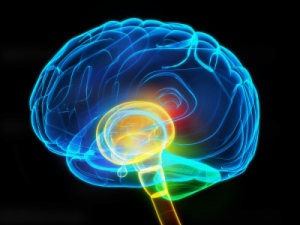
Yet until recently little was known about how a few hours of quiet reflection each week could lead to such an intriguing range of mental and physical effects. Now, as the popularity of mindfulness grows, brain imaging techniques are revealing that this ancient practice can profoundly change the way different regions of the brain communicate with each other – and therefore how we think – permanently.

No fear
MRI scans show that after an eight-week course of mindfulness practice, the brain’s “fight or flight” center, the amygdala, appears to shrink. This primal region of the brain, associated with fear and emotion, is involved in the initiation of the body’s response to stress.

As the amygdala shrinks, the pre-frontal cortex – associated with higher order brain functions such as awareness, concentration and decision-making – becomes thicker.

The “functional connectivity” between these regions – i.e. how often they are activated together – also changes. The connection between the amygdala and the rest of the brain gets weaker, while the connections between areas associated with attention and concentration get stronger.

The scale of these changes correlate with the number of hours of meditation practice a person has done, says Adrienne Taren, a researcher studying mindfulness at the University of Pittsburgh.

“The picture we have is that mindfulness practice increases one’s ability to recruit higher order, pre-frontal cortex regions in order to down-regulate lower-order brain activity,” she says.

In other words, our more primal responses to stress seem to be superseded by more thoughtful ones.

Lots of activities can boost the size of various parts of the pre-frontal cortex – video games, for example – but it’s the disconnection of our mind from its “stress center” that seems to give rise to a range of physical as well as mental health benefits, says Taren.

“I’m definitely not saying mindfulness can cure HIV or prevent heart disease. But we do see a reduction in biomarkers of stress and inflammation. Markers like C-reactive proteins, interleukin 6 and cortisol – all of which are associated with disease.”

Feel the pain
Things get even more interesting when researchers study mindfulness experts experiencing pain. Advanced meditators report feeling significantly less pain than non-meditators. Yet scans of their brains show slightly more activity in areas associated with pain than the non-meditators.

“It doesn’t fit any of the classic models of pain relief, including drugs, where we see less activity in these areas,” says Joshua Grant, a postdoc at the Max Plank Institute for Human Cognitive and Brain Sciences in Leipzig, Germany. The expert mindfulness meditators also showed “massive” reductions in activity in regions involved in appraising stimuli, emotion and memory, says Grant.

Again, two regions that are normally functionally connected, the anterior cingulate cortex (associated with the unpleasantness of pain) and parts of the prefrontal cortex, appear to become “uncoupled” in meditators.

“It seems Zen practitioners were able to remove or lessen the aversiveness of the stimulation – and thus the stressing nature of it – by altering the connectivity between two brain regions which are normally communicating with one another,” says Grant. “They certainly don’t seem to have blocked the experience. Rather, it seems they refrained from engaging in thought processes that make it painful.”

Feeling Zen
It’s worth noting that although this study tested expert meditators, they were not in a meditative state – the pain-lessening effect is not something you have to work yourself up into a trance to achieve; instead, it seems to be a permanent change in their perception.

“We asked them specifically not to meditate,” says Grant. “There is just a huge difference in their brains. There is no question expert meditators’ baseline states are different.”

Other studies on expert meditators – that is, subjects with at least 40,000 hours of mindfulness practice under their belt – discovered that their resting brain looks similar, when scanned, to the way a normal person’s does when he or she is meditating.

At this level of expertise, the pre-frontal cortex is no longer bigger than expected. In fact, its size and activity start to decrease again, says Taren. “It’s as if that way of thinking has becomes the default, it is automatic – it doesn’t require any concentration.”

There’s still much to discover, especially in terms of what is happening when the brain comprehends the present moment, and what other effects mindfulness might have on people. Research on the technique is still in its infancy, and the imprecision of brain imaging means researchers have to make assumptions about what different regions of the brain are doing.

Both Grant and Taren, and others, are in the middle of large, unprecedented studies that aim to isolate the effects of mindfulness from other methods of stress-relief, and track exactly how the brain changes over a long period of meditation practice.

“I’m really excited about the effects of mindfulness,” says Taren. “It’s been great to see it move away from being a spiritual thing towards proper science and clinical evidence, as stress is a huge problem and has a huge impact on many people’s health. Being able to take time out and focus our mind is increasingly important.”

Perhaps it is the new age, quasi-spiritual connotations of meditation that have so far prevented mindfulness from being hailed as an antidote to our increasingly frantic world. Research is helping overcome this perception, and ten minutes of mindfulness could soon become an accepted, stress-busting part of our daily health regimen, just like going to the gym or brushing our teeth.

The Shocking Truth: Severe Mental Illness & Life Expectancy

Quite shocking!! That’s us… “People diagnosed with serious mental illness — schizophrenia, bipolar disorder, or severe depression — die 20 years early, on average, because of a combination of lousy medical care, smoking, lack of exercise, complications of medication, suicide, and accidents.”

christianconjectures's avatarAn Uneasy Awakening: Bipolar Musings

Image courtesy of dream designs at FreeDigitalPhotos.net Image courtesy of dream designs at FreeDigitalPhotos.net

Allen Francis, Emeritus Professor at Duke University has just published an excellent blog entitled ‘Having a Severe Mental Illness Means Dying Young’ in the Huffington Post.

Prof. Francis, who rather refreshingly pulls no punches throughout his article, writes this as his opening paragraph:

People diagnosed with serious mental illness — schizophrenia, bipolar disorder, or severe depression — die 20 years early, on average, because of a combination of lousy medical care, smoking, lack of exercise, complications of medication, suicide, and accidents.

He goes on to say:

They (people diagnosed with a serious mental illness) are the most discriminated-against and neglected group in the U.S., which has become probably the worst place in the developed world to be mentally ill.

Prof. Francis includes an insightful piece in his blog by  Dr. Peter Weiden, Professor of Psychiatry at the University of Illinois College of Medicine…

View original post 263 more words

Extended release vs. Immediate release

DSCN0373

Many of the medications we take for our disorders come in immediate release or extended release forms.

Immediate release, as the name implies, dissolves immediately within our stomachs and is taken up into the bloodstream. This can cause side effects, it is also taken up quickly and then degraded quickly. So the concentration of the medicine does not stay constant in our bodies, we get a quick spike and the drug is quickly degraded. It is actually better to have a constant concentration as opposed to this increase and decrease. Lithium is one drug that is known to cause major gastrointestinal side effects if taken in large doses in an immediate release form and can be quite corrosive to the stomach.

Extended release, also known as Controlled release, has a coating that allows it to dissolve slowly either in the stomach or small intestine (enteric coated). These medicines are then slowly dissolved, therefore slowly absorbed into the bloodstream. This not only cuts down on local side effects such as upset stomach, but general side effects are also reduced. The dose of the medicine stays more constant over a 12 hour period. This is much more desirable.

My preference is always for the extended release meds. Lithium comes in an extended release form and I always ask for it from my doctor. Seroquel comes in an extended release from as well, but apparently my insurance company doesn’t want to cover that as it is more costly. I am going to try my best to get the extended release Seroquel so the side effects I have been experiencing will go away. I have been having anxiety attacks which may well be the result of too much norepinephrine due to the large absorption of Seroquel into my bloodstream initially, right after I take it. My stiff muscles are probably also due to a decrease in dopamine. And both of these things can be the result of having been taken off the Zoloft. But this is all temporary.

It’s always a guessing game for me, are my symptoms because I’m on too much of the med or too little of it. Are the symptoms due to side effects of the meds, and if so which med? Are the symptoms because my mood disorder is exacerbated, so then increase the meds, which ones? Of course my doctor is helpful, but sometimes I have to tell him what’s going on and he listens. This one listens! Rare, and lucky if you find one who does. So we take two steps forward and one step back, so we are actually advancing! My doctor, my husband and even I, we have all noticed that since getting off the Zoloft, my mood swings are less severe. So instead of having huge spikes, I have sort of a little rolling hills thing going. I will be very happy when the terrain is flat. Oh no, will I be boring then? Hmmm, maybe boring is nice 🙂

My doctor and I are working together and figuring out the best doses of these two medicines that I can tolerate, so that my mood will be in the stellarly normal range!

One more thing, I had genetic testing done to see which forms (long or short) of neurotransmitter receptors I have. This will allow us to predict which class of meds will be useful for me and at what dosages. More on that later.

2014 in review for Bipolar1Blog

The WordPress.com stats helper monkeys prepared a 2014 annual report for Bipolar1Blog.

Here’s an excerpt:

A San Francisco cable car holds 60 people. This blog was viewed about 2,300 times in 2014. If it were a cable car, it would take about 38 trips to carry that many people.

Click here to see the complete report.

Aha! Very possibly.

Dec312013Dec312013

Aha, well this may explain the enormous (and when I say enormous, I really mean it) amounts of anxiety I’ve been feeling lately. The increase in Seroquel may well be the culprit! I’ve been thrashing around in my sleep even, as my friend “Blahpolar” amazingly surmised. Seroquel increases epinephrine (adrenalin) and norepinephrine (noradrenaline.) Which are involved in the fight or flight response, also in alleviating depression, as well as in causing anxiety, aha!

I have been having awful anxiety and now my muscles are starting to get very stiff, another adverse effect of Seroquel.

Ah yes, as it saves you, it also kills you. Have to be vigilant about the beginning of these adverse effects and cut them off at the pass, Kimosabe.

Well at least it’s good to know what is likely happening with me. Thank you Blahpolar for your ingenious understanding of my symptoms.

Below information about Seroquel side effects and adverse effects from : https://www.google.com/webhp?sourceid=chrome-instant&ion=1&espv=2&ie=UTF-8#q=does%20seroquel%20increase%20adrenalin

Seroquel Side Effects: Get emergency medical help if you have any of these signs of an allergic reaction to Seroquel: hives; difficulty breathing; swelling of your face, lips, tongue, or throat.

Report any new or worsening symptoms to your doctor, such as: mood or behavior changes, anxiety, panic attacks, trouble sleeping, or if you feel impulsive, irritable, agitated, hostile, aggressive, restless, hyperactive (mentally or physically), more depressed, or have thoughts about suicide or hurting yourself.

Call your doctor at once if you have:

  • a light-headed feeling, like you might pass out;
  • very stiff (rigid) muscles, high fever, sweating, confusion, fast or uneven heartbeats, tremors;
  • twitching or uncontrollable movements of your eyes, lips, tongue, face, arms, or legs;
  • mask-like appearance of the face, trouble swallowing, problems with speech;
  • breast swelling or discharge (in men or women), missed menstrual periods, impotence, loss of libido;
  • blurred vision, tunnel vision, eye pain, or seeing halos around lights; or
  • sudden weakness or ill feeling, fever, chills, cold or flu symptoms, cough, sore throat, red or swollen gums, painful mouth sores, skin sores, trouble breathing.

Common Seroquel side effects may include:

  • dizziness, drowsiness, loss of energy, tired feeling;
  • increased appetite, weight gain;
  • dry mouth; or
  • nausea, vomiting, stomach pain or discomfort, constipation.

This is not a complete list of side effects and others may occur. Call your doctor for medical advice about side effects. You may report side effects to FDA at 1-800-FDA-1088.

CLINT MALARCHUK Interview by Samina Raza. :-)

An amazing interview with Clint Malarchuk. Please read!

PalestineWILLbefree's avatarPalestine WILL Be Free

CMCMCM

I had the great pleasure of interviewing Clint Malarchuk, NHL goalie, NHL coach, cowboy, horse dentist and now author of his first book “A Matter of Inches”, the title refers to the bullet in his head, as well as the skate that was actually a few millimeters from his carotid artery! This man is indestructible, thank goodness, knock on wood!

He suffered from OCD, horrible anxiety, depression, alcohol abuse, and finally PTSD because of a horrific hockey injury to his neck. Even dealing with all those mental illnesses, he became a great goalie, playing for, among others, the Buffalo Sabres. And then an NHL coach. While battling his demons and alcohol addiction, he put a bullet in his head and survived with no side effects! His book is a tour de force of honesty, truth and a no holds barred description of his life, good or bad, he…

View original post 4,926 more words

Strength.

/home/wpcom/public_html/wp-content/blogs.dir/381/72261148/files/2014/12/img_4885.jpg

Remember we had no choice as to whether we have this illness or not. However, we do have a choice as to how we react to it. So the illness does not define us. Our strength and fortitude in living with this illness and fighting this illness is what defines us. Never forget this, never. Strength! Courage!

WHAT IS EQUINE THERAPY?

CD 3CD 3

https://www.google.com/webhp?sourceid=chrome-instant&ion=1&espv=2&ie=UTF-8#q=equine%20therapy

http://www.crchealth.com/types-of-therapy/what-is-equine-therapy/

Equine Therapy also know as Equine Assisted Therapy (also referred to as Horse Therapy, Equine-Assisted Therapy, and Equine-Assisted Psychotherapy) is a form of experiential therapy that involves interactions between patients and horses.

Equine Therapy involves activities (such as grooming, feeding, haltering and leading a horse) that are supervised by a mental health professional, often with the support of a horse professional.

Both during the activity and after the patient has finished working with the horse, the equine therapist can observe and interact with the patient in order to identify behavior patterns and process thoughts and emotions.

The goal of equine therapy is to help the patient develop needed skills and attributes, such as accountability, responsibility, self-confidence, problem-solving skills, and self-control. Equine therapy also provides an innovative milieu in which the therapist and the patient can identify and address a range of emotional and behavioral challenges.

What are the Benefits of Equine Therapy?

Studies have indicated that equine therapy has been successful in helping patients show marked improvements in the following areas:

  • Assertiveness
  • Emotional awareness
  • Empathy
  • Stress tolerance
  • Flexibility
  • Impulse control
  • Problem-solving skills
  • Self-actualization
  • Independence
  • Self-regard
  • Social responsibility
  • Interpersonal relationships

Many of the benefits of equine therapy are likely due to the nature of the animals with which the patient and equine therapist are interacting. Horses are typically non-judgmental, have no preconceived expectations or motives, and are highly effective at mirroring attitudes and behaviors of the humans with whom they are working.

While working with horses under the guidance and supervision of an equine therapist, equine therapy patients have a unique and effective opportunity to note their tendency to engage in self-defeating and otherwise negative thoughts and actions. These realizations provide excellent bases for discussion and processing both during and after the equine therapy experience.

What Conditions/Disorders Does Equine Therapy Treat?

Equine therapy has been successfully integrated into treatment programs for adults and teens who are being treated for substance abuse, addiction, behavior disorders, mood disorders, eating disorders, learning differences, ADD/ADHD, autism, Asperger’s, grief/loss, trauma, sex addiction, compulsive gambling, bipolar, depression and related conditions.