
A few days ago, I had started feeling bad! Depression? Mania? Mixed? Who knows! Just extremely bad… And I was off the Zoloft, have been for about a month to stop “mini” cycles. So now what do I do? Can’t take Zoloft if it is a depression. I was still on 900 mg of Lithium and 50 mg of Seroquel, which is another mood stabilizer.
I started taking 100 mg of Seroquel and in TWO days, I feel almost normal. My normal singing, talking, thinking, SMILING, interested in things me!!! Do you have any idea how big this is! In two days!
I absolutely worship my doctor, he was right. Let’s see if I continue to stay on 900 mg Lithium and 100 mg of Seroquel, will my mood continue to be controlled? Oh my goodness, I hope so. This is amazing. I am so thankful for this that I could jump up and down with joy. Just thought I’d share the good news. :))
My story, as I know it, 3rd installment
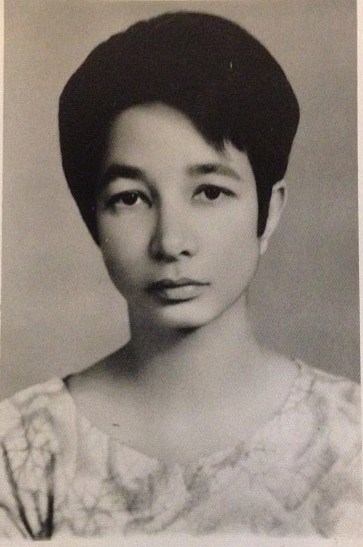
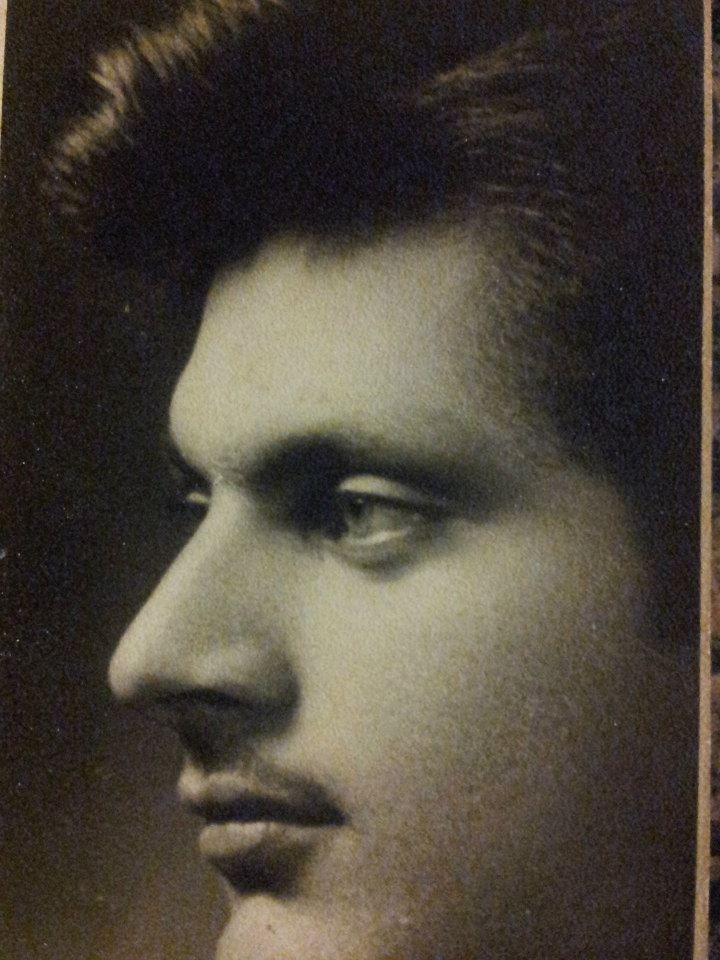
My mother. My father.
It wasn’t that my grandmother didn’t love her children. She did, most certainly and fiercely. It was that she became a mother at the age of 13/14, she had no mother as hers had passed away when she was a very small girl, and I am sure she suffered from intermittent explosive disorder. This is when a person becomes so angry that they black out and without even realizing it, they do violence to other people. Unfortunately and really heartbreakingly, my grandmother’s victims were her own children. By the time I came along, she was mild and loved me more than life itself. It is her love and my Ammi Khala’s, Fatto Khala’s, and my Ahmed Mamoon’s love and care that has made me as strong and as normal as I am. Truly it is. Without their love and care and adoration, I think I would have been a total basket case. Why you ask? Because even though my mother was never beaten, she must have internalized all the violence. She was not allowed to be beaten because my grandfather forbade it, because she was beautiful, intelligent and my grandfather’s favorite. So, she was never beaten. My mother was in Medical school in Bhopal, India, where my father, Shahid Kamal Pasha, (his real last name was Khan, but because his oldest sister loved Mustafa Kemal Pasha, she named him that) saw her. He was also from a princely family, the youngest of his siblings. They were from the family of the Nawab of Bhopal. He fell madly in love with my mother, and being the handsome, spoilt, young, entitled man that he was, he pursued my mother. In those days, as even now, there was no dating allowed, but my mother was far away from UP (United Provinces), where her home was, and they did sort of date. And against my mother’s family’s strong wishes, my mother and my father got married. Then I came along. I was born in Bhopal on June 30th, 1960. Apparently one of my lungs collapsed when I was just a few days old and I had to be hospitalized in those days’ version of the NICU. My mother’s Pediatric professor was my doctor and told her best friend, Saroj, that he didn’t think I was going to pull through. But pull through I did. I have had an enormous amount of strength since the day I was born! My mother had not graduated from Medical school yet, she was in 2nd year. So my grandmother took me to Karachi, Pakistan, where my whole family was moving. I lived with my grandmother, My aunt Liaquat, whom I called Ammi Khala, my Farhat Khala (khala means maternal aunt) and Ahmed Mamoon (mamoon means maternal uncle) for two blissful years. I was perfectly taken care of, I was adored, every need of mine was met. I don’t think they ever let me cry. Ammi Khala cared for me and loved me like I was her own daughter and I loved her as if she was my mother. They took pictures of me and sent them to my mother. In the meantime, my mother’s young marriage was not doing too well, and she and my father moved to Karachi after she graduated from Medical school. Of course she reclaimed me and life in paradise was over. My parents’ marriage deteriorated steadily. And by the time I was four years old, my mother started beating me mercilessly. She finally stopped when I was fourteen years old, when I lifted my hand as if to strike her, to protect myself. Finally, it took me TEN years to say “Enough, you can’t hit me anymore!” Oh I had black eyes, bloody lips, a bloody nose, black and blue marks all over from being hit with anything that came into her hands. Yes I did. And I know why she was doing it. She was spoilt, her husband was probably cheating on her, he didn’t have a job, she was angry that she had to work all the time to support us. She probably suffered from the aforementioned disorder (IED) and she had no one to take it out on except a defenseless young child. I hated her for a long time, I was extremely angry for a long time, but around the time I was in my early thirties, I forgave her. I decided to let it all go. With the help of one of my best friends, Deb, I truly forgave my mother and started loving her as a daughter should. I forgave my father as well. He had never stayed in touch with us since their divorce in 1965, I looked him up in 1999, and stayed in touch with him until he passed away a few years ago. They were people and people make mistakes. And anyway, they were not the same people in the 1980’s or 1990’s or the 2000’s as they were when I was a child, so how could I keep holding grudges against them? I couldn’t. After forgiveness comes love. Comes lightness, airiness, comes Grace. And all the mistakes I’ve made involving anyone, my beloved son and husband, my beloved friends, my beloved family members, I hope they will forgive me too, not only for my sake, but for their own sake as well.
Should I feel guilty about writing this down? I do. Even though it is my story, I feel like I am blackening my mother’s name and I really did love her very much. She was an extraordinary woman, an MD in India, when girls weren’t allowed to have any education, she sang well, she was a self taught gourmet cook. She loved Art, Music, Fashion, Architecture, Urdu Poetry, she was a remarkable woman and I did and do love her immensely. My story is my story and I think it needs to be told. Maybe the truth shall set you free…
Rest of the story, soon.
My story, as I know it, 2nd installment.

My grandfather’s card.
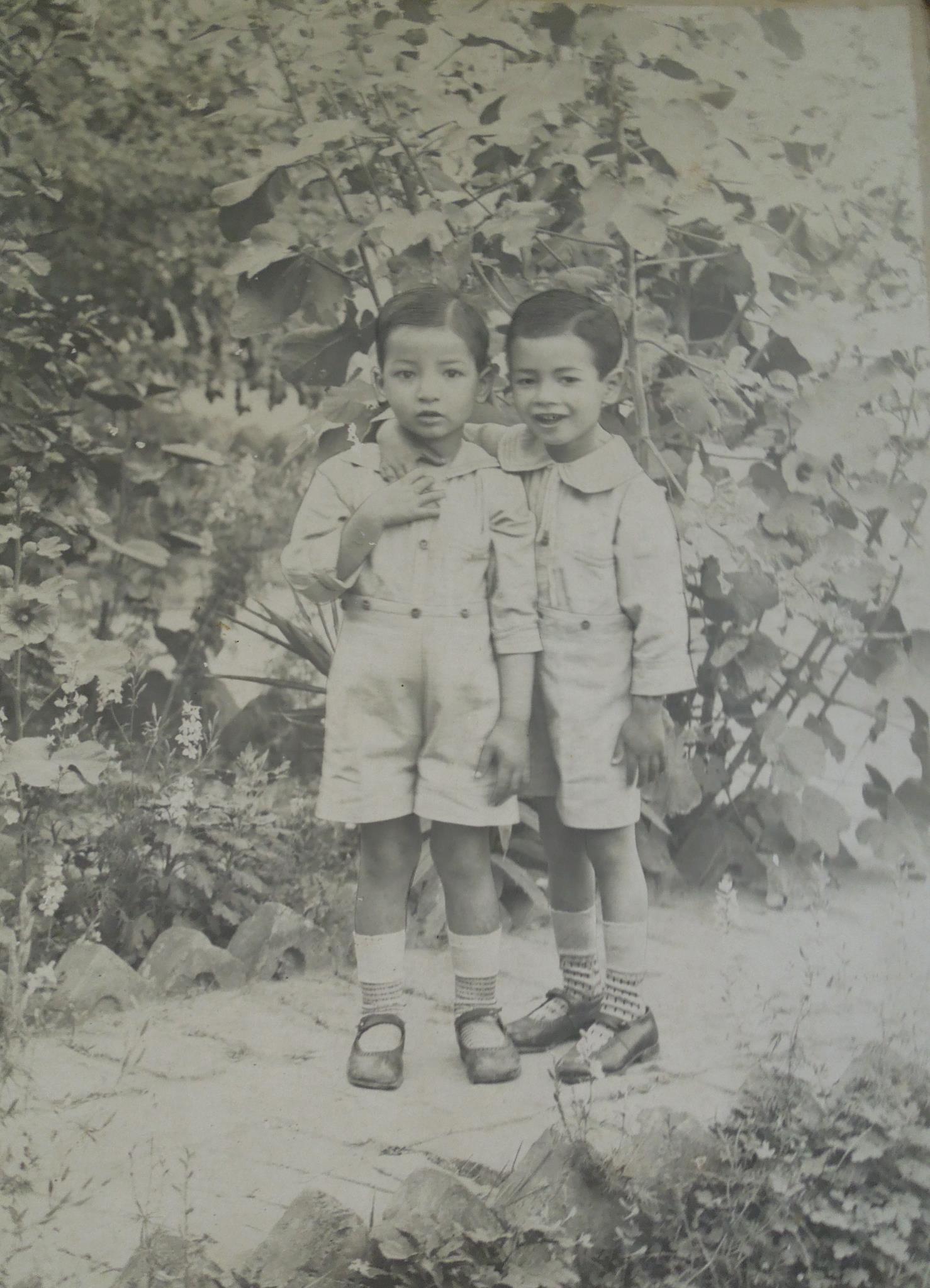
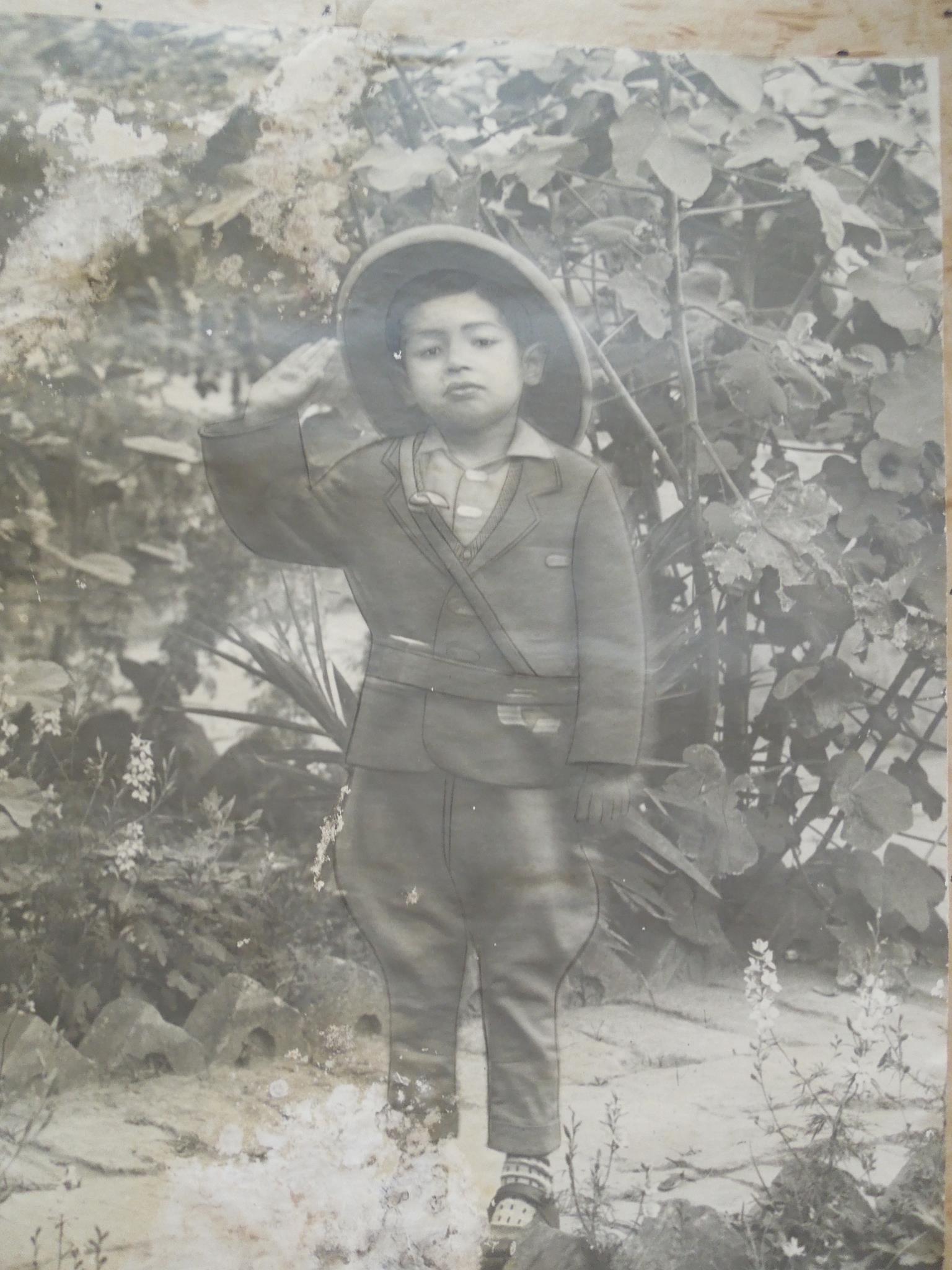
My Uncles, Wahid and Waris. Uncle Waris
So my grandmother, Begum Mushtaq Fatima, was married to my grandfather, Ahsan Mohammad, when she was 13 and he was 20. He was handsome, 6 ft tall, and educated in the Western style. She was diminutive, not even 5 ft. tall, but she had a formidable personality, was a crack shot with a rifle, and if you knew what was good for you, you did not cross her! They started having children immediately of course, as no birth control was available at the time (India 1920’s.) They had two strapping baby boys, Waris, which means the inheritor or successor, and Wahid, which means singular or unequalled. My paternal great grandfather said they shouldn’t have named the second child Wahid, that was the bad luck that caused it. Their first child, Waris, being a rambunctious, spirited boy, ran out into the street when he was five years old and was hit by a car. He didn’t survive. That was the bad luck. A few years after that my great grandfather decided to ship my uncle Wahid off to boarding school, in order to save him from a similar fate. More about that later. In the meantime, my grandmother had my aunt Wajahat, my aunt Liaquat, my uncle Ahmed, My mother Sabahat, my aunt Farhat, and finally my uncle Khalid.
From the stories I have heard, I am convinced my grandmother suffered from Intermittent Explosive Disorder. She apparently got so enraged and angry at her little children, and about minor things, that she lost total control of her self and beat them mercilessly. When my uncle Waris was four years old and my uncle Wahid was three, they decided to rum away from home because of these heartless beatings. They walked to the train station and boarded a train to leave! However my grandparents were well known in the area (they owned most of it, and because of our central asiatic roots, we are all recognizable) the little children were recognized and taken back home. I don’t know what happened to them when they got home, whether they were embraced with loving tears, or beaten, I don’t know…
We people with bipolar d/o are storytellers. The beginning of my story.

Here’s a story I was writing last year, and quite accidentally came upon again. I will finish it in the near future.
A long time ago, and very far away… isn’t that how stories start out? My nanny, in the hot afternoons in Lahore, used to start her stories like that. She would tell us stories about adventures, about boys who put salt in the cuts on their fingers so they wouldn’t fall asleep and miss the ship that was taking them to their fabulous adventures Then she would forbid us to ever do what these boys had done, no salt in our cuts, she warned, because it stings and hurts.
She didn’t know the sting and the hurt that had already been in my life and none of us knew what stings and hurts and tragedies life held in store for us.
I start and then I don’t want to go on. I don’t want to write about the sad things and relive the devastating emotions. So I start and start and leave it unfinished. Anxiety makes me stop. But I will conquer this anxiety and go on.
She was my grandmother. She was only 13 when she got married. She was raised like a princess, the only daughter of a very wealthy adoring land owner father, who owned 1000’s of acres of land, in fact whole villages and was a Nawab, the Indian equivalent of a Duke. Her mother had died when she was a baby so she was brought up by her wet nurse, who adored her and was adored in return. However, the wet nurse really still being a servant, had no authority over my grandmother and so my grandmother grew up imperious, spoilt and used to getting her way. When she inevitably started having children soon after she was married, she did not know how to be a mother. She was 14 at the most when she had her first son. A child herself and spoilt and imperious and impatient and used to being waited upon, not waiting on a new born.
More to come, soon.
Intelligence is not affected by bipolar d/o.
There are mental illnesses, such as schizophrenia, that affect a person’s intelligence (decrease it.) Bipolar d/o is definitely not one of them. Bipolar d/o is strictly a mood disorder, meaning that one’s mood is affected. You can be severely depressed or severely manic, or a mixture of the two. Your IQ does not decrease, now or in time as a result of having bipolar d/o.
For example, even when I am very sick, I can still have an intelligent conversation and cite references as to the evidence of what I am saying. My mood might be awful, I may be weepy, hopeless, bone weary and irritable or I might be talking a mile a minute and very energetic, but through it all, I can carry on an intelligent conversation.
One caveat to this is when someone is out of touch with reality, or psychotic, which is the medical term, then you are not going to have a very intelligent conversation with them. They might tell you about a witch who is trying to damage their heart and how they have to burn basil to get her and her negative energy out of their house. That really happened to me, I truly thought there was a witch practicing black arts, who was after me and my heart. I literally felt chest pain and doubled over in pain, because I believed the witch had hurled damaging energy at me from somewhere in Europe. Pretty amazing what the mind can do. I would believe all that and then I would come out of it and be amazed at what I had been thinking. Anyway, if someone is in a psychotic phase, you can’t have an intelligent conversation with them unless you want to talk about witches who practice the black arts! However their intelligence is not affected by this and when they come out of this phase, they are normal again and you can converse with them normally.
Why do you make my life hell, bipolar disorder?

Why don’t you leave me be? What wrong did I ever do you? Why do you pierce my heart? Why do you make it hurt? Why do you take away my peace of mind? My smile? My laughing eyes? Why do you fill my eyes with tears? Why do you make me feel helpless instead of fierce? Where has the “me” gone again, dissolved in a puddle on the floor. It hurts, it hurts, it really hurts. I know why people become addicts, anything to make this go away. Even if it’ll blow up your heart and fry your mind and kill you. Anything, yes anything, to make this pain go away.
I am forbidden by my doctor to take Zoloft because of blah blah blah, however, even if the blah blah blah is true, it won’t matter if I don’t exist, because my mood got so low that I couldn’t take it anymore. Never fear, it never will get that low. There’s always the hospital. Oh joy! Not.
I know it’s only an illness, there is NO reason why I should feel like this except the chemical imbalance in my brain. There is no event/situation in my life that is making me feel like this. I know this very well, I know it logically. But the FEELINGS nonetheless feel awful and painful. I feel desperately sad, sort of hopeless, and very small. Usually I feel big and in control and capable. But this illness takes all that away from me, temporarily. A temporary tempest. Oh too many emotions, too many feelings, too much pain. Where is the lobotomist when you need one?
Go away. Let me be. I’m happy and peaceful and fine when you’re not around. Please bipolar disorder, let me be in peace. Let me live my life, I don’t bother you, please let me go. Go back to the dark forest of gnarled trees and ugly witches and ogres where you normally dwell. I did not summon you, go away. Leave me in my sunny, bright, verdant, flower filled bower where I live. You have no place here. You have no right to pollute my little home that I’ve made for myself. Go back to the hell where you belong and never haunt me anymore.
As the days get shorter… :((.

As the days get shorter, unfortunately, my face gets longer. My mood gets choppy…
(A note: Please don’t think I am whining, I am not. At times it feels like the rug being pulled out from under my life, at times, and this is the worst, it feels like my heart is breaking into a million, jagged pieces, and at times it feels like I am living in pitch darkness. None of it is good, and I have lived with this, on and off, for twenty eight years. So please believe me when I tell you, I am not whining or needlessly caterwauling. I am not.)
Getting hard again. Sadness creeping in. Emotions too close to the surface. Crying a lot again. Missing my friends. Missing my precious son. Memories creeping in. Ammi, Farooq, Mamoon, Ammi Khala, Khalid Mamoon, all gone, lost to me. Tears on the brink of falling, hurriedly wiped away. Life is never easy, but it gets much more difficult when bipolar strikes. God, I thought I might escape it this year, with the increased dose of medication. Haha, no such luck. But I go on. I cook, I bake, I even model (!!), I read, I go see plays, I talk to and even laugh with my friends and family. But the heaviness in my heart remains. No one knows. I don’t think anyone suspects. I put on a good show :)). Of course I do. There is nothing else I can do. Uneasy feelings or not, life must go on. I must go on, although thoughts of not going on cross my mind. But I shoo them away, I have a son and nephews and nieces for god’s sake. I would never do anything that would even hurt one little hair on their precious heads. Of course I go on. I summon the strength with which I was lucky enough to have been born. I remember the love my grandmother, and my mother and my aunts and uncles gave me from the day I was born. That is the love that sees me through. I have their faces and their hearts imprinted on my heart. My Amma, my Ammi, my Farooq, my Mamoon, my Ammi Khala, my Khalid Mamoon. All full of love and caring and such steely strength. We are descended from a great Sufi saint named Baba Farid! He preached love, nonviolence, meditation, and living simply, and he practiced it. I am his great, great, great, … grand daughter. I have read his poetry and it’s very sweet and sounds a lot like Buddhism. One of his poems says that he thought he was the only one in pain, but when he climbed on the roof of his house, he saw every house was on fire! Another poem says not to strike someone who hits you, but kiss his feet and go home! Even one step beyond ” turn the other cheek”… He is still worshipped in Pakistan and India, by Moslems, Hindus and Sikhs! What does this have to do with bipolar disorder? Well, in times when I feel weak, I draw my strength from the love my family gave me and the teachings of my ancestors. It’s about having the strength to hang on with the tips of your fingers when the mountain you’ve been scaling, starts to crumble in a landslide. Of course I am going to call my doctor and increase the Seroquel dose or the lithium dose, and then I will be as right as rain again. These medications are a godsend and a blessing for me. Without these, I would be nowhere, so I am very fortunate that we have them and that they work for me. So, as usual, when the days get shorter, my mood goes awry. Seems that I can’t avoid it. But, and this is a big but, I can control the severity of the swing and quickly squash the phase by staying on higher doses of medication all year, and then increasing one or both as soon as I feel bad. That is indeed a great blessing and something for which to be very thankful!
Today is National Bipolar Awareness Day in the USA.
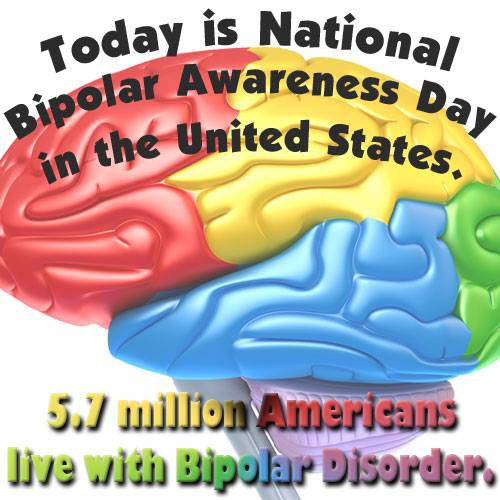
Hope Xchange. For Bipolars by Bipolars.
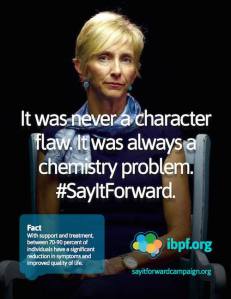
I love this, “It was never a character flaw, it was always a chemistry problem.”
Found a new blog about breaking down the stigma. This post is called: “Breaking Down the Wall of Mental Illness Shame, Silence & Stigma with an Innovative Community-Based, Mental Wellness Initiative, the Hope Xchange Uptown TimeBank.”
How Exercise May Protect Against Depression

(Original article in Cell: Skeletal Muscle PGC-1α1 Modulates Kynurenine Metabolism and Mediates Resilience to Stress-Induced Depression.
Cell. 2014 Sep 25;159(1):33-45. doi: 10.1016/j.cell.2014.07.051.)
The New York Times
By GRETCHEN REYNOLDS
OCTOBER 1, 2014
Exercise may help to safeguard the mind against depression through previously unknown effects on working muscles, according to a new study involving mice. The findings may have broad implications for anyone whose stress levels threaten to become emotionally overwhelming.
Mental health experts have long been aware that even mild, repeated stress can contribute to the development of depression and other mood disorders in animals and people.
Scientists have also known that exercise seems to cushion against depression. Working out somehow makes people and animals emotionally resilient, studies have shown.
But precisely how exercise, a physical activity, can lessen someone’s risk for depression, a mood state, has been mysterious.
So for the new study, which was published last week in Cell, researchers at the Karolinska Institute in Stockholm delved into the brains and behavior of mice in an intricate and novel fashion.
Mouse emotions are, of course, opaque to us. We can’t ask mice if they are feeling cheerful or full of woe. Instead, researchers have delineated certain behaviors that indicate depression in mice. If animals lose weight, stop seeking out a sugar solution when it’s available — because, presumably, they no longer experience normal pleasures — or give up trying to escape from a cold-water maze and just freeze in place, they are categorized as depressed.
And in the new experiment, after five weeks of frequent but intermittent, low-level stress, such as being restrained or lightly shocked, mice displayed exactly those behaviors. They became depressed.
The scientists could then have tested whether exercise blunts the risk of developing depression after stress by having mice run first. But, frankly, from earlier research, they knew it would. They wanted to parse how.
So they bred pre-exercised mice.
A wealth of earlier research by these scientists and others had shown that aerobic exercise, in both mice and people, increases the production within muscles of an enzyme called PGC-1alpha. In particular, exercise raises levels of a specific subtype of the enzyme known unimaginatively as PGC-1alpha1. The Karolinska scientists suspected that this enzyme somehow creates conditions within the body that protect the brain against depression.
But to determine if that theory was true, they had to isolate the PGC-1alpha1 from all the other substances pumped out by the muscles during and after exercise. So they created mice that, even without exercising, were awash in high levels of PGC-1alpha1. Their muscles produced lots of it, even when they were lazing around.
The scientists then exposed these animals to five weeks of mild stress. The mice responded with slight symptoms of worry. They lost weight. But they did not develop full-blown rodent depression. They continued to seek out sugar and fought to get out of the cold-water maze. Their high levels of PGC-1alpha1 appeared to render them depression-resistant.
But the scientists knew that the PGC-1alpha1 was almost certainly not directly protecting the animals’ brains. It doesn’t work that way, acting directly on cells. Rather it is what’s known as a promoter, sparking activity in genes, which in turn express proteins that then affect various physiological processes throughout the body.
So the scientists looked for which processes were being most notably intensified in their PGC-1alpha1-rich mice. They found one in particular, involving a substance called kynurenine that accumulates in human and animal bloodstreams after stress. Kynurenine can pass the blood-brain barrier and, in animal studies, has been shown to cause damaging inflammation in the brain, leading, it is thought, to depression.
But in the mice with high levels of PGC-1alpha1, the kynurenine produced by stress was set upon almost immediately by another protein expressed in response to signals from the PGC-1alpha1. This protein changed the kynurenine, breaking it into its component parts, which, interestingly, could not pass the blood-brain barrier. In effect, the extra PGC-1alpha1 had called up guards that defused the threat to the animals’ brains and mood from frequent stress.
Finally, to ensure that these findings are relevant to people, the researchers had a group of adult volunteers complete three weeks of frequent endurance training, consisting of 40 to 50 minutes of moderate cycling or jogging. The scientists conducted muscle biopsies before and after the program and found that by the end of the three weeks, the volunteers’ muscle cells contained substantially more PGC-1alpha1 and the substance that breaks down kynurenine than at the study’s start.
The upshot of these results, in the simplest terms, is that “you reduce the risk of getting depression when you exercise,” said Maria Lindskog, a researcher in the department of neuroscience at the Karolinska Institute and a study co-author.
Whether the same biochemical processes likewise combat depression that already exists is less certain, said Jorge Ruas, a principal investigator at the Karolinska Institute and the study’s senior author. But he is hopeful. “We think that this mechanism would be efficient if activated after depression has begun,” he said. He and his colleagues hoped to test that possibility in mice soon.
In the meantime, if work and other pressures mount, it may be a good idea to go for a jog. It may just keep your kynurenine in check.
 Palestine WILL Be Free