
Feel Too Much

Sometimes I just want to break down and cry

At the exquisite beauty of life

At the hideousness of it

At the warmth and tenderness

At the frigid, iciness

At the loving arms enveloping me

At the cruel feet kicking the life out of me

At my terrifying, heartbreaking love for my precious child

At the fear and terror that everything will go wrong

At the family gatherings with love, care, and compassion. Loving togetherness

And the aching goodbyes, the pangs of missing each other, “Oh we were all together just yesterday!”

Feel and feel and feel too much

My heart cries out at your tender touch

Time to up the Lithium? Yes, if it gets any deeper than this.

Beauty and feelings mean nothing to me if I’m in the hospital in a freaking manic phase.

Helping myselfย 

Wow! Sometimes you do something only in the spirit of helping someone, and it totally comes back to bite you in your derriรจre. You don’t have to do this thing, you are under no obligation to do it. But for some reason you feel someone is asking for your help without using the exact words, so you actually try to help. My advice was actually to read “The Power of Now” by Eckhart Tolle. Also it was about the effects of L-Dopa when people first start taking it for early onset Parkinson’s disease. How that advice could be taken wrongly and twisted to make me feel like I’d done something wrong is quite puzzling and quite beyond me. 

Do I stop helping people? If someone reaches out to me either in words or actions, do I just ignore them to avoid the backlash? Yes. For a bit. Until I understand how trying to help someone is wrong. I’m going to stop. For self preservation. For my own peace of mind and for the peace in my life. I’m going to put myself first. And not go out on a limb to help anyone else. 

I have always been helpful and selfless. But this incident is teaching me how to be more selfish and less selfless, so that I cannot be turned into the scapegoat into which I have frequently been turned. My entire life. I think I needed that lesson. 

Overcoming the โ€œ8 Reasons Why People Donโ€™t Get Treatment for Mental Illnessโ€ by Dr. David Susman.ย 

Pretty great article for anyone struggling to accept they have a mental illness. So many reasons not to accept that we have these wretched illnesses. Dr. Susman offers alternative ways of looking at things, more helpful and constructive ways. Would be a great read for relatives of those struggling with mental illness as well.

Me, after my first depression, at which point I had no idea what the hell happened to me, but after that, I realized and accepted that I suffered from a mental illness. My first manic phase when I was Alice in Wonderland, and what a wonderland it was, well it was quite difficult to disavow my illness. After that first manic phase, I of course had to accept that I had bipolar 1. And though I’ve lost my baby brother to this illness, 31 years after my diagnosis, I’m still here.

As per the author’s request, I am removing the text of the article here, please just click on the link to read it ๐Ÿ™‚

http://davidsusman.com/2017/06/01/overcoming-the-8-reasons-why-people-dont-get-treatment-for-mental-illness/?utm_content=buffer575a8&utm_medium=social&utm_source=twitter.com&utm_campaign=buffer


Farooq Ahsan Raza Oct. 3rd, 1964 – June 21st, 1991

My baby brother, the most loving, the sweetest, most caring, most handsome, most missed, most beloved. Bipolar disorder took him from our lives but never, never from our hearts. I love you Farooq, I always have and I always will. 

The Links Between Allergies and Anxiety

The reason I did a search on allergies and anxiety is that recently I went on a family vacation to Lake George NY.  While I was there, my Ohio river valley allergies absolutely vanished! And lo and behold so did the massive amounts of anxiety I had been experiencing! Now I admit, my son was with us on this vacation, so part of the reason my anxiety disappeared was that I knew he was with me and safe and sound. But I feel it was more than that, I thought perhaps my allergies were making me anxious. Allergies happen because our immune system reacts against something otherwise benign like pollen. If our immune system didn’t think pollen or mold or other environmental substances  were pathogens and if our immune system didn’t mount a full on attack against these things, we would not have allergies! Simple. 

Since I also knew the immune system is implicated in the development and perpetuation of mental illness, well it only made sense that allergies and anxiety may well be related! 

After I came back home to Louisville, my allergies returned with a vengeance and so did my anxiety! 

So I did a search about it and found many publications relating the two. One such article is below. I’ve bolded what was most important to me. 

I have also made an appointment with my allergist, I intend to get injections of my allergens in minute doses in an attempt to rid my self of these annoying and perhaps anxiety producing allergies. 

I will report back on my anxiety levels when I have completed the injections. 

http://www.ei-resource.org/articles/mental-and-emotional-problem-articles/the-links-between-allergies-and-anxiety/
The Links Between Allergies and Anxiety
Last Updated on Monday, 09 May 2016 02:04

by Ryan Rivera

October 2011
Beyond starting with the letter โ€œA,โ€ most people do not equate allergies with anxiety when looking at the causes of both disorders. Allergies are an environmental health problem, caused by an immune system that reacts poorly to the environment. Anxiety is a mental health problem, caused by inadequate coping strategies, stress, and genetics. But these two disorders have a fairly strong link, both directly and indirectly, and those that suffer from both may need to address each of those issues if they hope to successfully treat it.
Indirect Ways That Allergies Contribute to Anxiety
Many of the ways that allergies affect anxiety are indirect โ€“ meaning that the allergies are not physically causing the anxiety, but are contributing to it considerably. These include:
Fear of Allergic Reaction โ€“ Those that experience severe allergic reactions to things like peanut butter or bee stings may experience stress and anxiety every day, concerned over whether or not theyโ€™ll be able to stay safe in the environment. Life threatening allergies can be a frightening thing, and if you are already suffering from any mild anxiety, that fear can easily make your anxiety much worse.
Sleep Problems โ€“ When your allergies keep you awake at night, getting a full nightโ€™s sleep can be difficult. Unfortunately, experiencing the symptoms of anxiety is very common when you are struggling to get a full nightโ€™s rest. Over time this can become a vicious cycle, since anxiety can then cause sleep issues, and sleep issues can cause your allergies to worsen.

Oversensitivity to Body Changes โ€“ While panic attacks are a mental health problem, they are often triggered by concerns over physical health. Those that suffer from panic attacks become oversensitive to their own bodyโ€™s physical reactions, causing them to experience panic. When you have allergies, you experience physical symptoms often, and those that are prone to panic attacks may easily respond negatively to those changes.

Even indirectly, itโ€™s clear that allergies and anxiety are linked. Research has also found that anxiety itself can have a direct effect on allergies.

How Anxiety May Affect Allergies
Research at Ohio State University has shown that anxiety is also a factor in experiencing allergy symptoms. Several studies have shown that even a small amount of stress can not only increase the intensity of an allergy attack, but also cause the allergy attack itself to last longer and fade less quickly.
The reason for this is that stress and anxiety can affect the status of your immune system. Since allergies themselves are already caused by an inadequate immune system response, the additional stress on your immune system only makes it work less efficiently, resulting in more serious allergy symptoms than if you did not have stress.
How Allergies May Affect Anxiety
The physical effects are not necessarily one sided either. While you already read the ways that allergies can indirectly affect anxiety symptoms, early research is showing that allergies themselves may actually trigger an increase in anxiety.
Research in the British Journal of Dermatology found that patients that suffered from skin allergies experienced greater levels of anxiety. Studies have also shown that a compromised immune system can cause physical stress, and research has indicated in the past that experiencing physical anxiety symptoms may increase the likelihood of experiencing stress and worry โ€“ both of which are mental health symptoms, rather than physical symptoms.
While research in both of these areas is fairly new and still subjected to intense medical scrutiny, there is early evidence that anxiety can cause allergies to worsen, and vice versa.
What Does This Mean For Future Research and Treatment?
The next steps in research are going to need to focus on direct causes โ€“ looking at how the immune system interacts with anxiety and vice versa in order to discover where or what the direct link is that causes the two diseases to essentially feed off each other, assuming such a link exists.
Nevertheless, the early evidence does indicate that there is a medical link between both disorders, and beyond that there are several indirect links that cause anxiety to fuel allergies and vice versa, so that in the event that research finds them to be independent, each can still exacerbate the symptoms of the other, causing those that experience both to live with the vicious cycle.

One thing is clear, however. For those that experience both anxiety and allergies, treating only one may not be adequate enough to reduce the symptoms. Allergy treatments are going to be less effective for those whose symptoms are exacerbated by anxiety, and anxiety treatments are going to struggle to work if the individual is simultaneously dealing with the physical and mental effects of allergies. Both need to be addressed if one is to be free of either, which means that research needs to continue to discover the links so that each can be treated successfully.

Mindfulness and meditation dampen down inflammation genes

Wow! Inflammation is reduced, as seen by a reduction in NFKB levels. NFKB is a transcription factor that is involved in the production of pro inflammatory cytokines. This then drives inflammation. While inflammation is good to fight off infection or repair injuries, it is horrible when it becomes chronic, in which case it can cause autoimmune diseases such as rheumatoid arthritis and lupus, etc. Inflammation is also involved in psychiatric illnesses. 

So if mindfulness and meditation decrease inflammation, they will obviously have a healing effect on the body and mind. 

Wow! Decreasing inflammation is why mindfulness and meditation are so helpful! Of course more studies are needed and will be done to make this official. 

Yoga anyone? 

https://www.newscientist.com/article/2137595-mindfulness-and-meditation-dampen-down-inflammation-genes/
Hush those genes
By Jo Marchant
Meditation and tai chi donโ€™t just calm the mind โ€“ they seem to affect our DNA too. Thereโ€™s evidence that such โ€œmind-body practicesโ€ dampen the activity of genes associated with inflammation โ€“ essentially reversing molecular damage caused by stress.
Mind-body practices such as mindfulness meditation are widely claimed to protect against stress-related diseases from arthritis to dementia. But although thereโ€™s plenty of evidence that they can relieve stress, the scientific case for physical health benefits has not yet been proven.
Recent advances mean itโ€™s now easier to study patterns of gene activity inside cells, and there has been growing interest in using this approach to investigate how nurturing inner peace might influence the immune system and disease risk.

Ivana Buric, a psychologist at the Coventry Universityโ€™s Brain, Belief and Behaviour lab, and her colleagues have now conducted the first systematic review of such studies. The team analysed 18 trials including 846 participants, ranging from a 2005 study of Qigong to a 2014 trial that tested whether tai chi influenced gene activity in people with insomnia.

Although the quality of studies was mixed and the results were complex, Buric says an overall pattern emerged. Genes related to inflammation became less active in people practicing mind-body interventions. Genes controlled by a key protein that acts as an inflammation โ€œon-switchโ€ โ€“ called NF-ฤธB โ€“ seem to be particularly affected.
Stress busting
Inflammation is the bodyโ€™s first line of defence against infection and injury, but it can damage the body if switched on long term. It is thought to be an important way in which psychological stress can increase a personโ€™s risk of developing disease. Chronic inflammation is associated with increased risk for psychiatric disorders, autoimmune conditions such as asthma and arthritis, cardiovascular disease, neurodegenerative disease and some types of cancer.

But the results of the analysis suggest mind-body interventions might help reduce the risk for inflammation-related disorders, says Buric. โ€œAnd not just psychological ones, but even the physical ones like asthma or arthritis.โ€
Steve Cole, a genomics researcher at the University of California, Los Angeles, who worked on several of the studies included in the analysis, describes Buricโ€™s conclusions as โ€œspot onโ€. But he says rigorous clinical trials are still needed to show whether the changes in gene expression really do result in improved physical health.
Thereโ€™s also a need for more studies comparing the effects of mind-body therapies with other lifestyle interventions, such as diet or exercise.
So far, the results suggest that different mind-body interventions may well all be working in a similar way. If your main purpose is to reduce inflammation to improve health, says Buric, โ€œit seems it really doesnโ€™t matter which one you chooseโ€.

Not Just a State of Mind: Scientists Locate the Physical Source of Depression in the Brain

So the area of the brain involved in reward is under active, and the area that of the brain that is involved in non reward and punishment is overactive. Therefore the symptoms is depression ๐Ÿ˜ช Didn’t all of us people with mood disorders already know this? That depression is a real disease with real physical reasons! Well here’s the proof!

https://futurism.com/not-just-a-state-of-mind-scientists-locate-the-physical-source-of-depression-in-the-brain/IN BRIEF

Major depressive disorder affects approximately 14.8 million American adults, or about 6.7 percent of the U.S. population age 18 and older, in a given year.
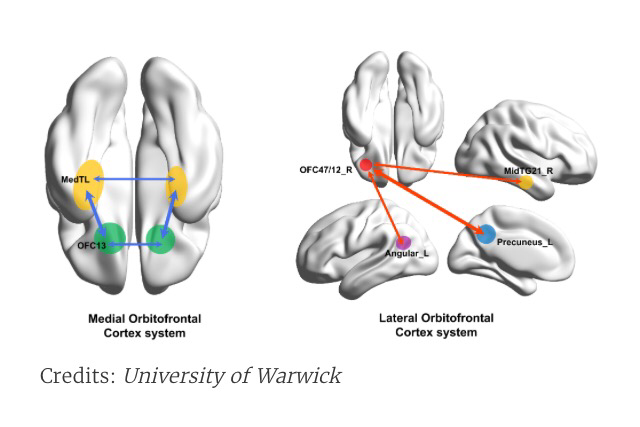
Researchers have found that feelings of loss and low self-esteem are directly linked to two sides the OFC โ€” the medial OFC and the lateral OFC.

ONE IN TEN

Depression is a mental illness many people still dismiss as a matter of mindset. An international team of researchers from UKโ€™s University of Warwick and Fudan University in China may just have proven that depression is more than just that โ€“ and pinned down where it originates in the brain.
โ€œMore than one in ten people in their life time suffer from depression, a disease which is so common in modern society and we can even find the remains of Prozac (a common drug used to treat depression) in the tap water in London,โ€ explains Jianfeng Feng, a member of the research team and professor at both Warwick and Fudan.
According to their research published in the neurology journal Brain, depression results from connection pattern changes in a key area of the brain called the orbifrontal cortex (OFC). The researchers used a high-precision MRI to scan the brains of more than 900 people, of which 421 were patients with major depressive disorder. They found that feelings of loss and low self-esteem are directly linked to two sides the OFC โ€” the medial OFC and the lateral OFC.

UNDERSTANDING DEPRESSION

The medial OFC, which fires up when we receive rewards, showed reduced functional connectivity in depression. This explains why people with depression feel a sense of loss, disappointment, and low self-esteem. Furthermore, this also leads to weaker memory system functional connectivity in the hippocampus (the brainโ€™s memory center).
The lateral OFC, on the other hand, exhibited stronger functional connectivity in persons with depression. This sector of the OFC is involved in non-reward and punishing events. The lateral OFC displayed strong connections with the precuneus (related with the sense of self) and the angular gyrus (responsible for memory retrieval and attention), making it difficult for depressed persons to feel good about themselves due to easy recall of negative experiences.
This study could allow us to dramatically improve the lives of millions around the world, and could lead to treatment better than the current hit-and-miss approach.
This is a fascinating reminder to us. As we develop better artificial intelligence (AI) technology, itโ€™s worth remembering that we have yet to fully understand how our own brains work.
References: ScienceAlert – Latest, Brain, Warwick University

AUTHOR
Dom Galeon October 20, 2016

EDITOR

Sarah Marquart

@sagaofsarah

Get futuristic videos and news delivered straight to your inbox

6 Ways to Break the Cycle of Bipolarโ€™s Negative Thinking

Bipolar disorder, it’s a lot of work! But if we don’t do it, our lives can. Wet wuickly become hell. Below are some steps we can take to stop negative thinking, or at least curb it. We need reminding sometimes that these infernal places that our brains take us are not, in fact, the realist reality that exists! Best luck, bloggers!

http://www.bphope.com/bipolar-buzz/6-ways-to-break-the-cycle-of-bipolars-negative-thinking/


Since those living with bipolar spend more time depressed than elated, having the skills to manage the negative thought pattern is essential. Psychologist Elizabeth Saenger, PhD, offers these six helpful techniques:
#1 Distinguish between what you feel and what is real
Your mood can easily blur your vision. Feeling depressed often means feeling life is hopeless, but itโ€™s important to realize these views are symptoms of bipolar and do not reflect reality. โ€œIn other words, itโ€™s the depression talking, not an objective picture of your situation,โ€ Saenger explains. She suggests thinking back to a time when you were optimistic about the future, and tell yourself that what you thought then about your life was more accurate.
#2 Avoid focusing on the negative
When we disregard the positive and instead concentrate on the unfortunate aspects of a situationโ€”dwelling on soccer games lost, and forgetting our victoriesโ€”we do ourselves a tremendous disservice, asserts Saenger. Instead of focusing on your limitations, think about what a friend would say to you to contradict this negative line of thinking.
#3 Ban over-generalizations
How many times have you concluded, on the basis of a single failure, that you will always fail? Donโ€™t fall prey to overgeneralized thoughts such as โ€œNo one cares about meโ€ and โ€œIโ€™m never going to be able to get a job.โ€ Instead, let the words โ€˜always,โ€™ โ€˜everybodyโ€™, โ€˜never,โ€™ and โ€˜nobodyโ€™ serve as red flags that youโ€™re probably overgeneralizing.
#4 Create alternatives to mind reading
When weโ€™re depressed, we may be apt to misread or mind read how people feel about us. If we automatically conclude someone does not like us because he didnโ€™t say โ€œhelloโ€ rather than considering it was because he didnโ€™t see us, this is mind reading. Saenger says it can help to write down the behavior which discouraged you in one column, your automatic interpretation of it in a second column, and multiple alternative explanations in a third column.
#5 Create a gray continuum when you have black-or-white thinking
Black-or-white, or all-or-nothing, thinking involves inappropriately categorizing objects, situations, or people into one extreme or another. When you are depressed, it is easy to think of yourself as a total failure, or as completely worthless. Remind yourself that the world is made of shades of gray, and people who are all good or all bad are rare.
#6 Break up catastrophizing
Catastrophizing involves noticing one unfavorable fact or unfortunate situation, and making it mushroom in your mind into a chain of hypothetical circumstances ending in disaster. Observed symptoms of a cold lead to an imagined death from pneumonia, or a minor mistake at work results in the nightmare of getting fired. When you predict calamities, ask how probable each event is, and how likely it is they could occur together.

Bipolar Brain Biology a Bit Different

Yeah, a bit different ๐Ÿ˜‰ ! Read on bloggers, it’s not all bad.

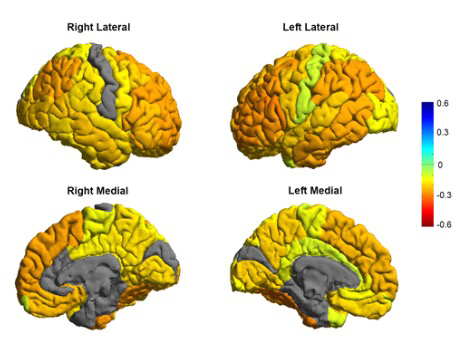
Here are some of the difference: “The study showed thinning of gray matter in the brains of patients with bipolar disorder when compared with healthy controls. The greatest deficits were found in parts of the brain that control inhibition and motivation – the frontal and temporal regions.”

But even though these changes exist, Lithium offers a protective role! “Some of the bipolar disorder patients with a history of psychosis showed greater deficits in the brain’s gray matter. The findings also showed different brain signatures in patients who took lithium, anti-psychotics and anti-epileptic treatments. Lithium treatment was associated with less thinning of gray matter, which suggests a protective effect of this medication on the brain.”
https://www.technologynetworks.com/neuroscience/news/mri-study-of-bipolar-sufferers-reveals-structural-differences-288248
Bipolar patients tend to have gray matter reductions in frontal brain regions involved in self-control (orange colors), while sensory and visual regions are normal (gray colors). Image courtesy of the ENIGMA Bipolar Consortium/Derrek Hibar et al.

A new study has found brain abnormalities in people with bipolar disorder.

In the largest MRI study to date on patients with bipolar disorder, a global consortium published new research showing that people with the condition have differences in the brain regions that control inhibition and emotion.
By revealing clear and consistent alterations in key brain regions, the findings published in Molecular Psychiatry on May 2 offer insight to the underlying mechanisms of bipolar disorder.
“We created the first global map of bipolar disorder and how it affects the brain, resolving years of uncertainty on how people’s brains differ when they have this severe illness,” said Ole A. Andreassen, senior author of the study and a professor at the Norwegian Centre for Mental Disorders Research at the University of Oslo.
Bipolar disorder affects about 60 million people worldwide, according to the World Health Organization. It is a debilitating psychiatric disorder with serious implications for those affected and their families. However, scientists have struggled to pinpoint neurobiological mechanisms of the disorder, partly due to the lack of sufficient brain scans.
The study was part of an international consortium led by the USC Stevens Neuroimaging and Informatics Institute at the Keck School of Medicine of USC: ENIGMA (Enhancing Neuro Imaging Genetics Through Meta Analysis) spans 76 centers and includes 26 different research groups around the world.
Thousands of MRI scans
The researchers measured the MRI scans of 6,503 individuals, including 2,447 adults with bipolar disorder and 4,056 healthy controls. They also examined the effects of commonly used prescription medications, age of illness onset, history of psychosis, mood state, age and sex differences on cortical regions.
The study showed thinning of gray matter in the brains of patients with bipolar disorder when compared with healthy controls. The greatest deficits were found in parts of the brain that control inhibition and motivation – the frontal and temporal regions.
Some of the bipolar disorder patients with a history of psychosis showed greater deficits in the brain’s gray matter. The findings also showed different brain signatures in patients who took lithium, anti-psychotics and anti-epileptic treatments. Lithium treatment was associated with less thinning of gray matter, which suggests a protective effect of this medication on the brain.
“These are important clues as to where to look in the brain for therapeutic effects of these drugs,” said Derrek Hibar, first author of the paper and a professor at the USC Stevens Neuroimaging and Informatics Institute when the study was conducted. He was a former visiting researcher at the University of Oslo and is now a senior scientist at Janssen Research and Development, LLC.
Early detection
Future research will test how well different medications and treatments can shift or modify these brain measures as well as improve symptoms and clinical outcomes for patients.
Mapping the affected brain regions is also important for early detection and prevention, said Paul Thompson, director of the ENIGMA consortium and co-author of the study.
“This new map of the bipolar brain gives us a roadmap of where to look for treatment effects,” said Thompson, an associate director of the USC Stevens Neuroimaging and Informatics Institute at the Keck School of Medicine. “By bringing together psychiatrists worldwide, we now have a new source of power to discover treatments that improve patients’ lives.”
This article has been republished from materials provided by University of Southern California. Note: material may have been edited for length and content. For further information, please contact the cited source.

Interesting that Scrabble helps with anxiety!

So when I am feeling very anxious, I go to my Scrabble app and start playing. It’s amazing but the anxiety disappears! Really just vanishes into thin air! Of course the reason for ur is that when I’m anxious I’m in my amygdala, that is the amygdala is the region of the brain in which fear and anxiety reside. When I start playing Scrabble, I start using the prefrontal cortex or the logical part if my brain. So the amygdala is shut down and the frontal live is activated. No more anxiety.

That’s great! But lately I have noticed that my ranking in Scrabble had gone down from around 3 to 6 or 7. This is a bit disconcerting! Is the anxiety stealing my IQ points? Or is it the Lithium? Recently I had to decrease my dose of Lithium from 1200 mg to 900 mg because my hair started falling out in bunches, I became extremely clumsy, even started breaking out in my face, I also actually felt worse, mood and anxiety wise and my memory became so bad that I couldn’t remember what I had say a few minutes ago and repeated it to the annoyance of my friends and my hand tremor became so pronounced that I almost could not write legibly. ย All signs of too much Lithium in my system. So I cut the dose by 25%. I feel a lot better. All the above symptoms have improved. Now I’m just wondering if Lithium may be the cause of my slipping Scrabble ratings. Does too much Lithium make you stupid? Don’t know. Will ask my psychiatrist and report back.

PS

I made GRATINEE for 131 points! ๐Ÿ˜ƒ