With my baby Leo :-)
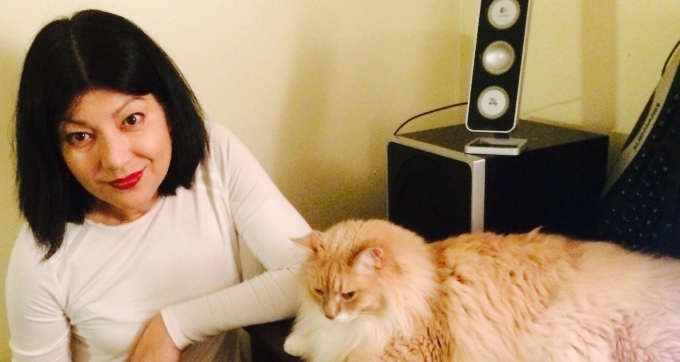
Well I’m back in Buffalo, visiting my son and my baby Leo. At the sight of my son, my heart expands and I feel such love and pride and happiness! He’s been lifting weights in between going to his 3L law classes, and he is quite the little body builder.
I have to say that whatever hard work, sleepless nights, and sometimes extreme worry that went into raising a son, it was worth it, all worth it. I love him quite madly, and I would highly recommend motherhood to anyone who is considering it.
And speaking of motherhood, there was a young mother to be sitting next to me in the plane when I was flying here last night, poor things was not doing well with the turbulence. I remember my pregnancy, 25 years ago! Quite unbelievable. I felt the healthiest, bounciest, most energetic I’ve ever felt in my life! Should have had 5 more, hahaha.
What Mentally Strong People Don’t Do. 9 Ways to Keep Your Personal Power
Another very valuable and salient article I found reading online. It’s helping me heal scars and I hope it is helpful to my readers as well. My good Facebook friend Sal has asked me to write an article about acceptance, patience, understanding, love and friendship in relation to helping a friend with mental illness. Something that should be right up my alley and I will do it soon. 💞😄
https://www.psychologytoday.com/blog/what-mentally-strong-people-dont-do/201601/9-ways-keep-your-personal-power?utm_source=FacebookPost&utm_medium=FBPost&utm_campaign=FBPost
As the author of 13 Things Mentally Strong People Don’t Do, I often hear from people about which of the 13 things they struggle with the most. The second thing on my list—mentally strong people don’t give away their power—is one of the hardest.
For example, a business executive confided that an associate always brings out the worst in him. A stay-at-home parent said her day hinges almost entirely on what type of mood her spouse is in. At some point, almost everyone has given someone else power over the way they think, feel, or behave.
Giving away your personal power robs you of mental strength. But maintaining control in your life requires that you make a conscious choice to take back your power. Before you can create positive change, you need to recognize the ways in which you give your power away.
Here are 9 ways to keep your personal power:
1. Don’t waste energy complaining.
There’s a big difference between complaining and problem-solving. Venting to your friends, family, and co-workers keeps you focused on the problem and prevents you from creating a solution. Grumbling implies that you have no power over your situation, and also shows that you lack power over your attitude.
2. Accept responsibility for how you feel.
Don’t let other people’s behavior dictate your emotions. Saying your mother-in-law makes you feel bad about yourself, or claiming that your boss makes you mad, suggests that they have power over how you feel. Instead, accept that it is up to you to manage your emotions, regardless of how others behave.
3. Establish healthy boundaries.
Giving in to guilt trips, or refusing to speak up for yourself, gives power to other people. Rather than blame them for wasting your time or “forcing” you to do something, recognize that you’re in charge of yourself. Establish healthy physical and emotional boundaries that give you control over how you spend your time and with whom you spend it.
4. Practice forgiveness.
Holding a grudge against someone who has hurt you doesn’t punish the other person—it only punishes you. When you waste valuable time thinking about a person you feel wronged you, it takes away your ability to enjoy the moment.
Forgiving someone is the best way to take back your power. But to be clear, forgiveness isn’t about saying what the person did was OK. It’s about choosing to let go of the hurt and anger that interferes with your ability to enjoy life.
5. Know your values.
When you’re not clear what your values are, you’re at risk of becoming a helpless passenger rather than a confident driver of own life. You’ll be at risk of jumping on board with other people’s ideas and may be easily led astray. Take back your power by acknowledging your values and living true to what’s important to you.
6. Don’t waste time on unproductive thoughts.
Have you ever come home from work and spent the entire evening wishing you didn’t have to go back again tomorrow? Suddenly, you’re giving your eight-hour workday 12 hours of your time. Take control over the thoughts that occupy your mind so you don’t give more brainpower to areas of your life that don’t deserve it.
7. Avoid language that implies you’re a victim.
Saying things like, “I have to work 60 hours a week,” or, “I had no choice but to say yes,” infers that you’re a victim of unfortunate circumstances. While there will certainly be consequences for the decisions you make, acknowledge that you always have choices.
8. Make your self-worth independent of other people’s opinions.
If your self-worth depends on others holding you in high regard, you’ll likely become a people-pleaser. Not everyone needs to like you, nor do they have to agree with your lifestyle. Evaluate the merit of criticism you receive, but never allow any one person’s opinion determine your self-worth.
9. Be willing to stand out from the crowd.
Self-doubt and fear can lead you to want to blend in with those around you. But trying to fit in with the crowd will cause you to disguise who you really are. Trust that you’re mentally strong enough to stand out and dare to be different.
For World Bipolar Day
My video for the International Bipolar Foundation’s “I am more than Bipolar Disorder” campaign.

Justin Trudeau’s impressive core strength will make you say ‘namaste’ (and Dreamboat 😄)
 Sigh, what a dreamboat!!! Gosh, can we import him and export that &@$$ Drumpf? Please!
http://mashable.com/2016/03/29/justin-trudeau-yoga-namaste/#ch8K0DDqs5qoBY HEIDI MOORE
We know many things about Canadian prime minister Justin Trudeau: his inclusiveness on gender and race, his strong faith in the American people, his warmth toward refugees, his ability to ignite the world’s best bromance with President Obama.
Less well-known about Trudeau is his impressive upper-body strength.
The slim Trudeau, who is 6’2″, balanced only on his wrists on a table, achieving a yogi-approved “peacock pose,” or mayurasana.
The pose is a powerful one — even besides the biceps required — because the peacock represents “big things, like immortality and love,” in Hindu lore, according to Yoga Journal.
The pose has a rich mythology based on the theme of peacocks destroying snakes that represent human flaws and attachments. It also has an extensive range of detoxifying physical benefits, according to athletic wear brand Athleta, which says “this pose strengthens the digestive system, stimulates metabolism, and purges your body of toxins by massaging the digestive organs, increasing the blood circulation, and strengthening the core.”
While it’s not clear when or where the picture of Trudeau was taken — the blurriness suggests it’s a bit old — it was given viral new life by a Facebook post by Canadian yoga teacher David Gellineau.
Trudeau tweeted it himself in 2013.
Naturally, it also shows off the polymath abilities of Trudeau, a Renaissance man whose personal traits seem all the more appealing to many Americans given the dire state of the 2016 election.
There are other examples of Trudeau’s aptitude for Eastern movements.
In 2015, he and his wife Sophie did tree pose — with Trudeau in a full suit — impressing Canadians and yogis alike by maintaining excellent form, keeping their feet away from their knees.
Trudeau has also showed off his physical abilities by dancing to bhangra, or Indian music, credibly enough to impress some Canadians of Indian descent and become a sensation in India. (The full video is at this link, with Trudeau entering at around 9:25 minutes in).
Trudeau’s abilities run in the family, it seems. There is a popular, widely circulated picture of his late father, former Canadian Prime Minister Pierre Trudeau, doing the same peacock pose.
There’s a long history of world leaders showing off their physical prowess, from Vladimir Putin’s shirtless hunting and workouts to Barack Obama’s jogging video with vice president Joe Biden, not to mention his beachgoing pictures.
The strongman displays tend to be a bit retro, however — weights, shirtlessness — and Putin seems to avoid yoga, losing out on an opportunity to get a little more zen.
Once again, Trudeau shows himself to be on the right side of history. We say namaste.
BONUS: How to move to Canada
Fearlessly
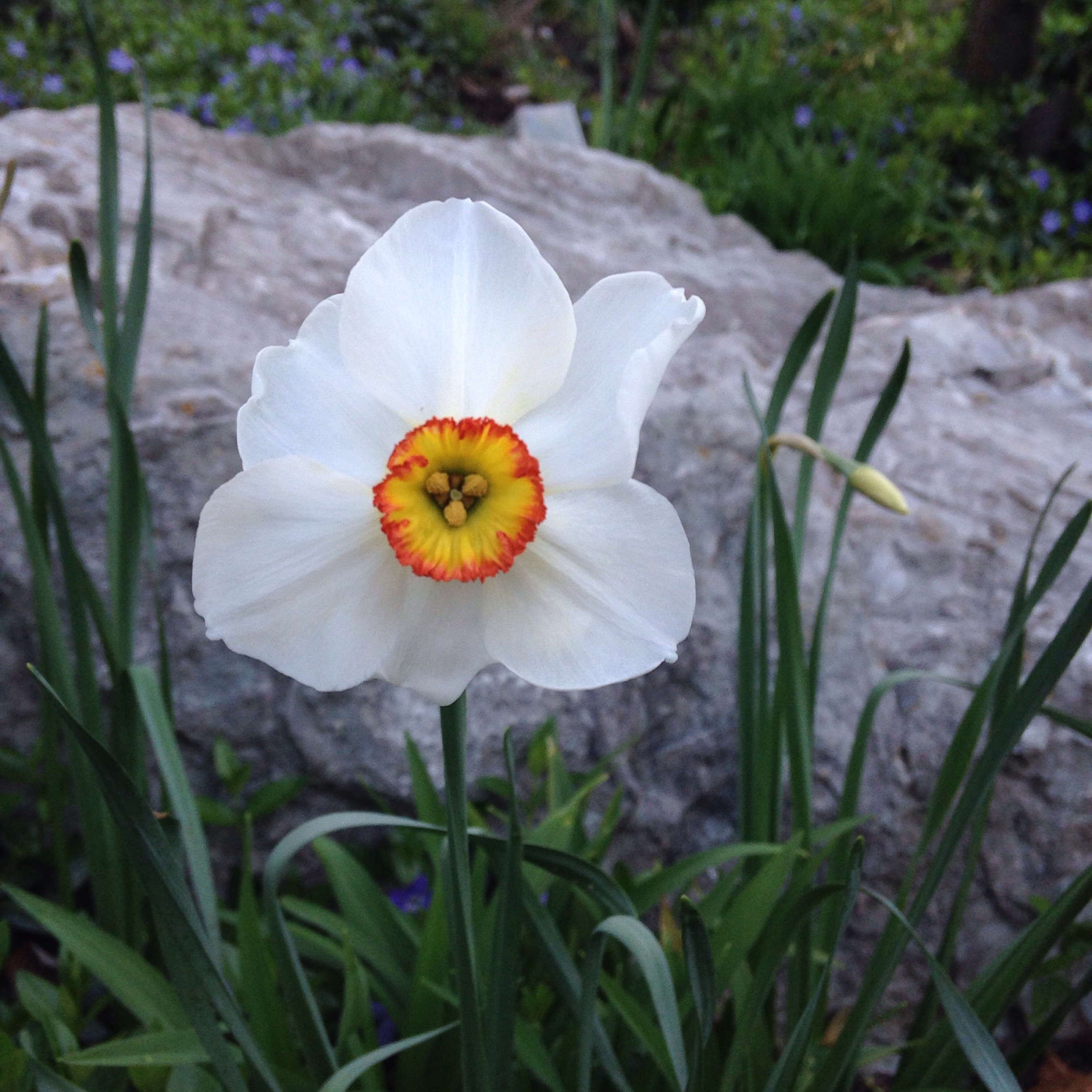 I have decided to stop being afraid. Afraid of what, you ask? Well, afraid of everything! I may not act afraid, but inside I have mostly always been afraid. Also many of my actions have been fueled by fear. The fear of loss. The fear of abandonment. And really, that is no way to act or live.
Does my decision mean I am healing from the past? Yes. It does. I am healing from all that happened in the past. The surest sign is that I can say I will not live in fear anymore! Fear of people leaving me, because that fear causes me to hang on too tightly and ironically causes people to really leave me. Yes, ironic and a little sad that friends who I want to stay in my life get annoyed and leave. So if I’m not afraid, I don’t hang on too tightly, no one feels constricted and leaves.
I will not live in fear of bad things happening. Also known as anxiety, your brain, my brain, when I wake up in the morning, hits me with a jolt of horrible anxiety. I have been meditating every day and hopefully, and by all accounts, it will help me with my anxiety.
I am afraid of learning my lines for my play, actually of not learning my lines. But I’m putting this phone down and starting to learn them in the next few minutes. I am the female lead in this play so I have quite a few lines. But I’ve easily learnt 10 times as many lines. So no fear, just get er done.
I will not be afraid of examining where I’m going with my life. I have many options, a PhD in the molecular biology of bipolar disorder. How amazing is it that I have the opportunity to do this! Other options are perhaps getting a real estate license, I love houses and I think I would be good at selling them. Since very fortunately, we are fine financially, I could even get a job at Macy’s and just work there. I’d done that once in Buffalo and had so much fun working there, helping little old ladies find anything they were looking for. Yet another option I have is writing my book. I really do have a book inside me just waiting to make a grand entrance into the world.
So no fear. Not even about my soon to be 21 year old baby Fluffin cat. She’s lived a long and happy life, and I love her to pieces, but… you know at her age there’s a but, I will be sad. Ok let’s not talk about this anymore.
No fear. Only possibilities, making some of them into reality, living fearlessly and positively. Amen.
Oscar-Winning Actress Patty Duke Dies At 69

Actress Patty Duke in 2014 in Los Angeles.
Ryan Miller/Invision/AP
Actress Patty Duke, who shot to fame as a teenager in the film The Miracle Worker,died Tuesday morning of sepsis from a ruptured intestine at age 69, her agent said.
“She was a wife, a mother, a grandmother, a friend, a mental health advocate and a cultural icon,” the agent’s statement said. “She will be greatly missed.”
When Duke was 12, she starred as Helen Keller in the Broadway play The Miracle Worker, NPR’s Mandalit del Barco reports.
She reprised her role in the 1962 film version, winning an Academy Award for best supporting actress when she was 16 — then the youngest person to have won an Oscar.

Anne Bancroft holds Patty Duke’s hand to teach her a new word in a scene from the 1962 film The Miracle Worker.
United Artists/Getty Images
In 1963, Duke took the starring roles in a popular sitcom called The Patty Duke Show,in which she played identical cousins. NPR reported that she was the youngest actress in television to have a prime-time series built around her.
The Los Angeles Times notes that “after her successful stint as Patty and Cathy Lane on television, Duke tried to transition back to film with a controversial performance as Neely O’Hara in ‘Valley of the Dolls,’ in which the actress portrayed an alcoholic, drug-addled star.”
But Duke’s outward success belied her private struggles.
“The success … masked personal misery which included depressions that led to suicide attempts and a string of failed marriages,” NPR reported in 2000.
Duke, whose real name was Anna Pearce, wrote an autobiography in 1987 titled Call Me Anna that addressed some of these struggles.
Mandalit says Duke served as president of the Screen Actors Guild in the 1980s and adds: “After she was diagnosed with bipolar disorder, she became an advocate for mental health issues.”
In 2011, Duke made news by applying for Social Security benefits online and encouraging other seniors to do the same. She talked to NPR’s Renee Montagne about it at the time.
The Devastation of Inner Emptiness (Brilliant article!)
One of the sad truths in our society is how empty many people feel, and the devastation their emptiness causes others through their resulting addictive behavior.We have all heard about the sexual acting-out of Anthony Weiner, Arnold Schwarzenegger, Tiger Woods, Bill Clinton and John Edwards. We all know about the many famous people who end up in treatment centers for alcohol and drug addiction.
The question is: why? Why would someone who seemingly has everything destroy their own life, and the lives of those they are close to, with their addictions to sex, alcohol or drugs?
It’s true that these high-profile people seem to have everything that our society deems important for happiness and self-esteem – money and all that money can buy, relationships and fame. What is it that creates the desperate need to act out addictively when they have so much?
While they have much externally, internally they are bereft – empty. And the cause of this inner emptiness is one thing only – a lack of love. But it is not a lack of love from others. These people often have the love of many people, such as spouse, children and friends.
Inner emptiness is caused by the lack of love that comes from a narcissistic, entitled mindset. The lack of love that results from trying to get love, rather than be loving to oneself and with others. When a person’s intention is to get love, attention, and approval externally, they create their own inner emptiness. While the sex or the alcohol or the drugs might fill them temporarily, or give them a feeling of aliveness and wellbeing temporarily, it can never truly fill them in any deep and consistent way.
The thing that all of these people lack is an intent to take responsibility for loving themselves – for filling themselves with love so they have love to share with others. They have learned to substitute their various addictions – sex and other processes, alcohol and other substances – in place of genuine love. But because sex and alcohol, drugs, food, and other addictions are not love, the person never feels full inside. And because they are not loving themselves, their hearts are closed to others’ love.
When our intent is to take responsibility for our own feelings and learn to be loving to ourselves, our heart opens. When our heart is open, we can genuinely experience love from others, and, more importantly, from our Source.
Our Source IS love. Love is what we live in. Love is the intelligence of the universe, and is available to all of us when we open to it. But love from your Source cannot fill you when your heart is closed.
What Opens the Heart to Love and Fills the Emptiness?
Whether your heart is open or closed to love depends on your intent. At any given moment you are either intent on:
Protecting against your painful feelings with some form of addictive, controlling behavior, or
Learning about what is loving to yourself and others – about what is in your own highest good, and the highest good of others.
The intent to protect against painful feelings closes the heart, leaving you feeling empty and alone inside. It takes courage to be willing to compassionately feel your painful feelings of life – your loneliness and heartbreak – but unless you have the courage to learn to feel and lovingly manage these painful feelings, you will turn to addictions as a way of avoiding them.
The intent to learn about what is loving opens your heart to love. The intent to learn and love leads to taking loving action in your own behalf and in behalf of others, such as being kind and compassionate toward yourself and others.
When your intent is to get something from others – sex, approval, caring or compassion – you will feel empty.
When your intent is to give love, caring and compassion to yourself and others, you will feel full. This is what heals addictions and fills the emptiness.
Margaret Paul, Ph.D.
Fact or Fiction?: People Swallow 8 Spiders a Year While They Sleep. (Hint: Phew, thank goodness!)
Rod Crawford has heard plenty of firsthand accounts of spider-swilling slumberers. “Once or twice a year, someone tells me they once recovered a spider leg in their mouth,” says Crawford, the arachnid curator at the Burke Museum of Natural History and Culture in Seattle.Luckily for all of us, the “fact” that people swallow eight spiders in their sleep yearly isn’t true. Not even close. The myth flies in the face of both spider and human biology, which makes it highly unlikely that a spider would ever end up in your mouth.
Three or four spider species live in most North American homes, and they all tend to be found either tending their webs or hunting in nonhuman-infested areas. During their forays, they usually don’t intentionally crawl into a bed because it offers no prey (unless it has bed bugs, in which case that person has bigger problems). Spiders also have no interest in humans. “Spiders regard us much like they’d regard a big rock,” says Bill Shear, a biology professor at Hampden–Sydney College in Virginia and former president of the American Arachnological Society. “We’re so large that we’re really just part of the landscape,”
More than anything, spiders probably find sleeping humans terrifying. A slumbering person breathes, has a beating heart and perhaps snores—all of which create vibrations that warn spiders of danger. “Vibrations are a big slice of spiders’ sensory universe,” Crawford explains, “A sleeping person is not something a spider would willingly approach.”
From the standpoint of human biology, the oral spider myth also seems ridiculous. If someone is sleeping with her mouth open, she’s probably snoring—and thus scaring off any eight-legged transgressors. Plus, many people would likely be awakened by the sensation of a spider crawling over their faces and into their mouths. Shear can attest: once, while camping, he awoke to find a daddy longlegs crawling on his face.
Spider experts concede that a sleeping person could plausibly swallow a spider, but “it would be a strictly random event.” People who claim they’ve swallowed spiders never seem to have any concrete evidence. “People tell me this happened to them, but they threw it (the evidence) away—flushed it down the toilet, usually,” Crawford says. There’s also a sore lack of eyewitnesses for such a frequent event as eight spiders a year. So even if you heard or read this spider statistic from a trustworthy source (such as a Snapple cap), you can rest assured that it doesn’t have a leg, or eight legs, to stand on.
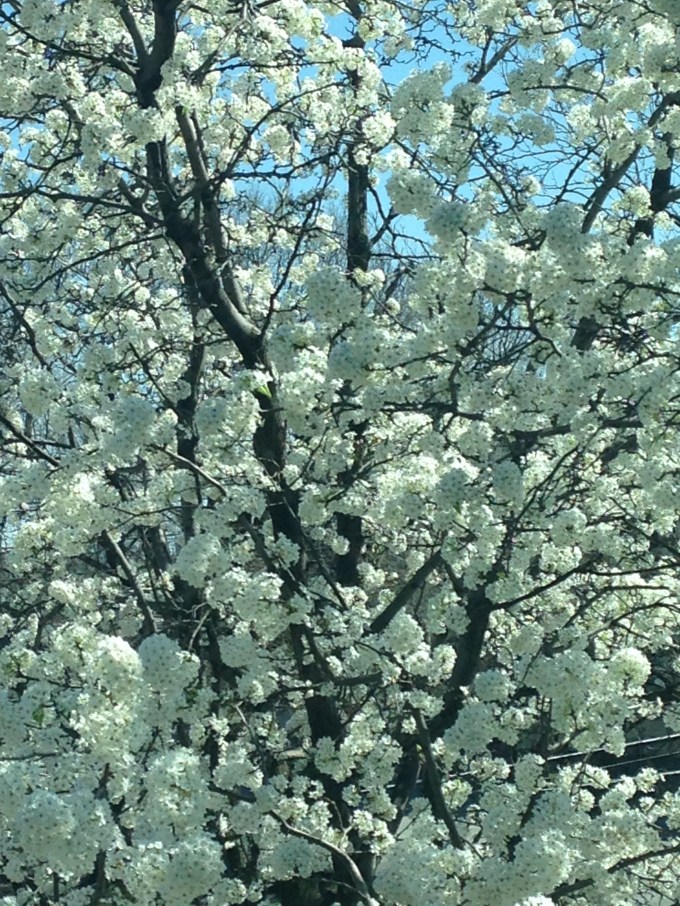
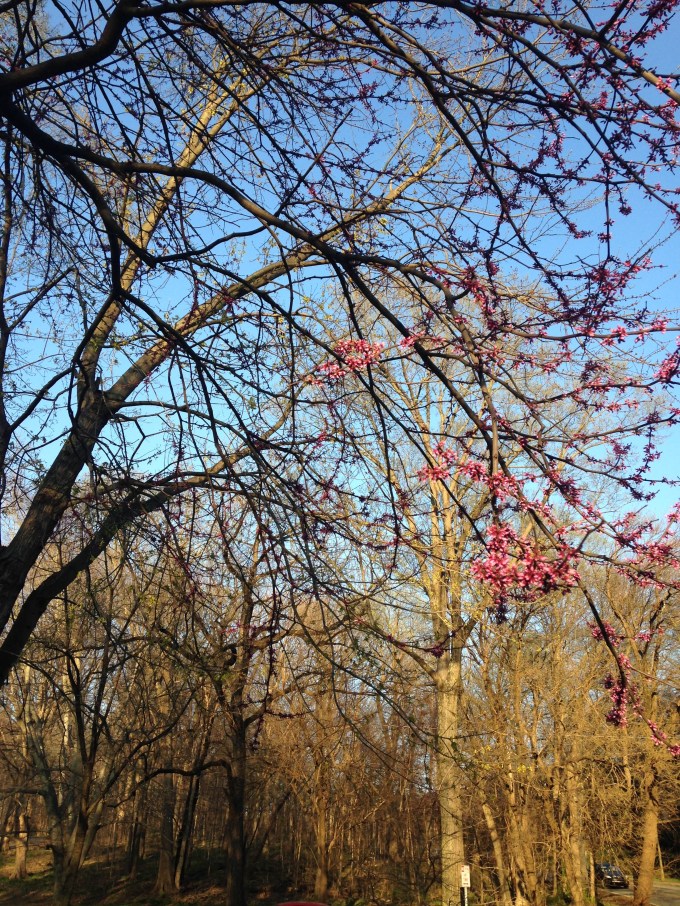
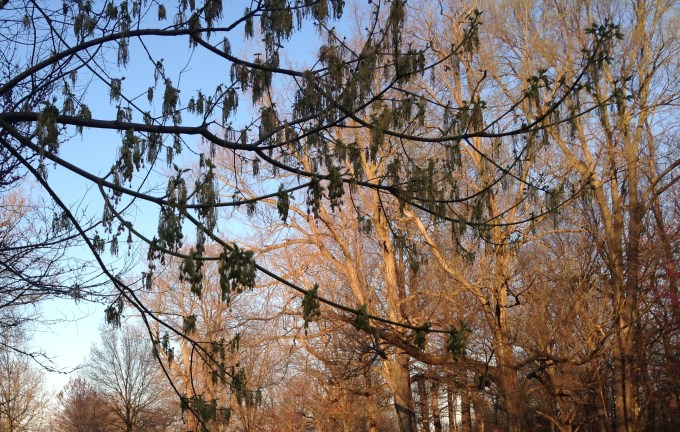
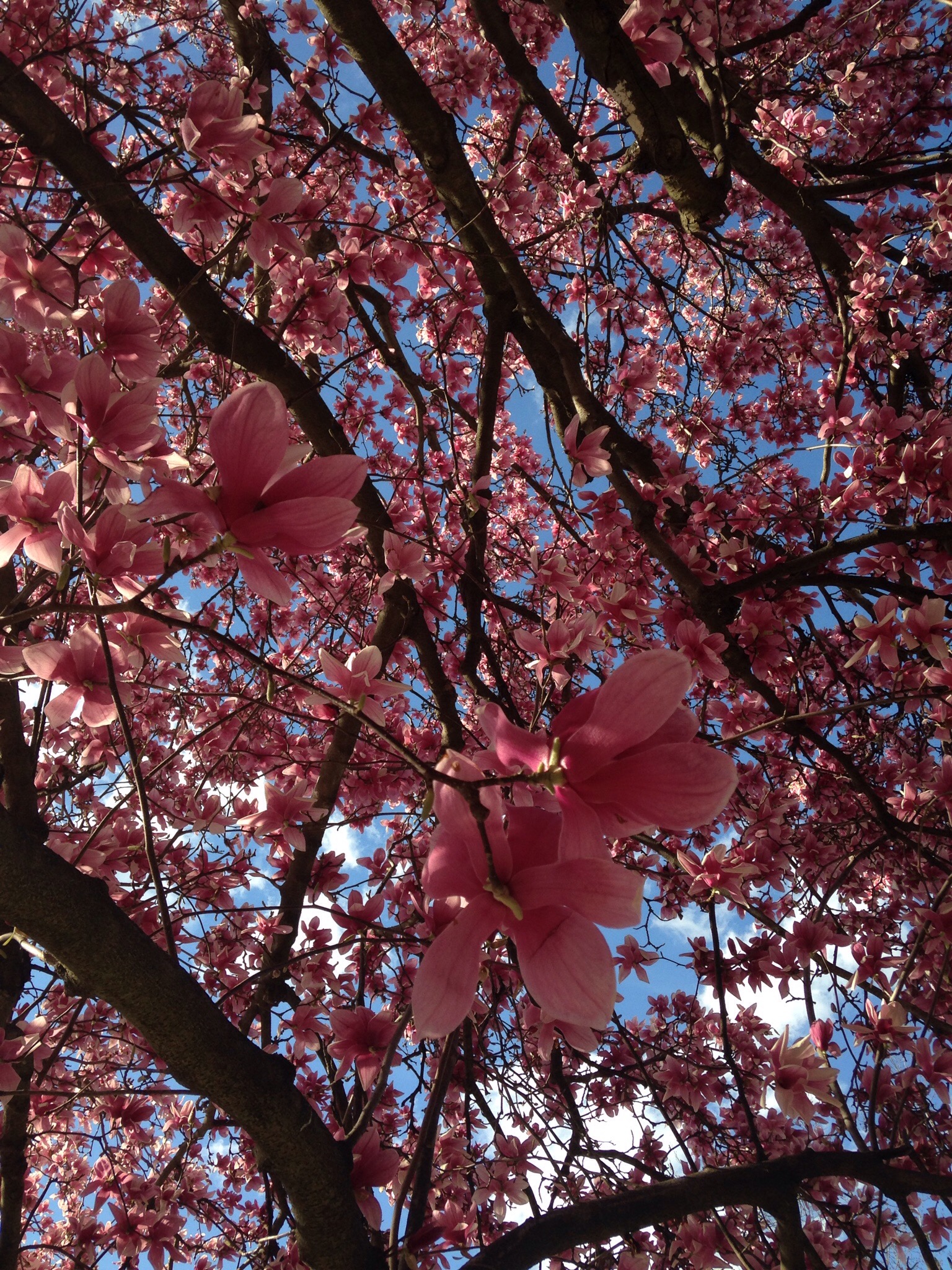
Oooh gorgeous flowering spring trees!
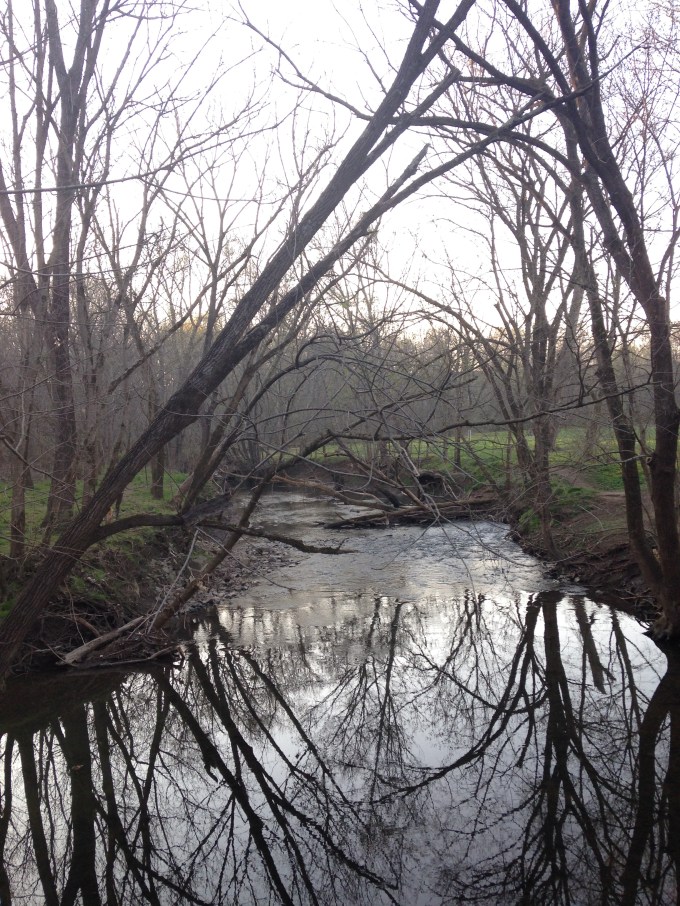
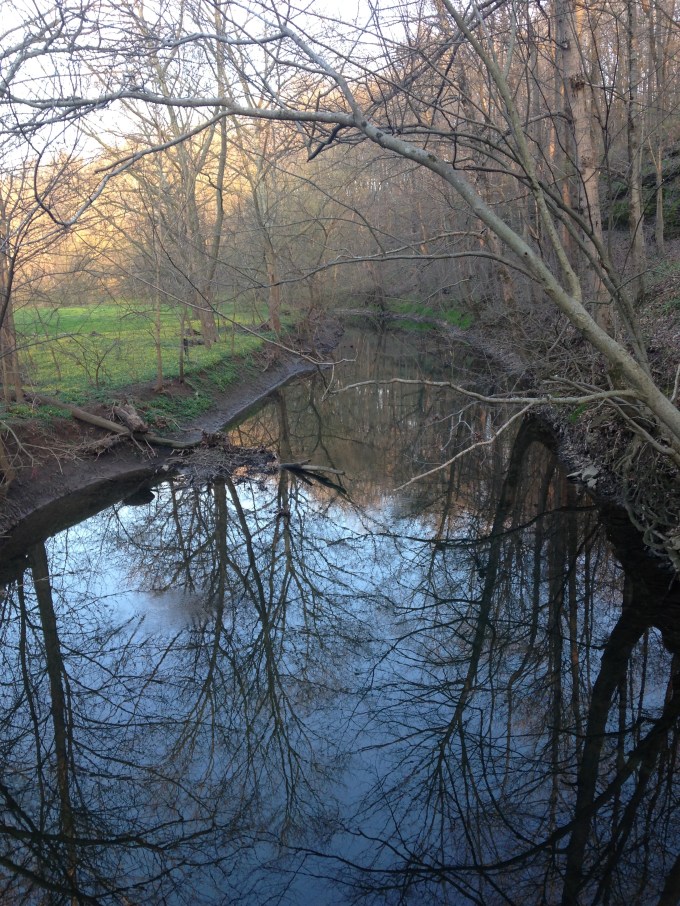
And my favorite creek, Bear Grass Creek!