Another tragedy! UNTREATED mental illness, violent tendencies, easy gun availability.
So what are we calling this? Homeland terrorism or insanity?
Treatment is the key for us, people with mental illness. If our brains and minds are not working properly due to a mental illness, we are not in control of our actions. Treatment is the key, to our living healthy productive lives. Treatment is the key to not allowing tragedies like this, and about scores of other tragedies like this, and all recently, not allowing them to happen. The family of this man tried to get help for him, but the police will not help in prevention, unless a crime has been committed, there is nothing they can do… the doctors won’t help, it is too difficult to help someone who is non compliant. The sick person themselves cannot help because their mind is not working. So what is the answer? The answer is still TREATMENT, medication, and therapy! The Aurora shooter, with his wild eyes, Schizophrenic, the Sandy Hook shooter, with his wild eyes, Schizophrenic and violent, and this man, mentally ill and violent…
Yes, the stigma is there for a reason, people are afraid of mentally ill people for a reason, because they act without reason. The only good thing about mental illness is TREATMENT of it. When a mentally ill person is on medication, in a normal state of mind, then there is no stigma, no possibility of this kind of thing happening.
I thank goodness for Lithium and Seroquel everyday, even if the side effects cause me some discomfort, it is these miraculous compounds that allow me to be normal and functioning. Thank goodness!
Chicago, Illinois – A nano-sized discovery by Northwestern Medicine® scientists helps explain how bipolar disorder affects the brain and could one day lead to new drug therapies to treat the mental illness.
Scientists used a new super-resolution imaging method – the same method recognized with the 2014 Nobel Prize in chemistry – to peer deep into brain tissue from mice with bipolar-like behaviors. In the synapses (where communication between brain cells occurs), they discovered tiny “nanodomain” structures with concentrated levels of ANK3 – the gene most strongly associated with bipolar disorder risk. ANK3 is coding for the protein ankyrin-G.
“We knew that ankyrin-G played an important role in bipolar disease, but we didn’t know how,” said Northwestern Medicine scientist Peter Penzes, corresponding author of the paper. “Through this imaging method we found the gene formed in nanodomain structures in the synapses, and we determined that these structures control or regulate the behavior of synapses.”
Penzes is a professor in physiology and psychiatry and behavioral sciences at Northwestern University Feinberg School of Medicine. The results were published October 22 in the journal Neuron.
High-profile cases, including actress Catherine Zeta-Jones and politician Jesse Jackson, Jr., have brought attention to bipolar disorder. The illness causes unusual shifts in mood, energy, activity levels and the ability to carry out day-to-day tasks. About 3 percent of Americans experience bipolar disorder symptoms, and there is no cure.
Recent large-scale human genetic studies have shown that genes can contribute to disease risk along with stress and other environmental factors. However, how these risk genes affect the brain is not known.
This is the first time any psychiatric risk gene has been analyzed at such a detailed level of resolution. As explained in the paper, Penzes used the Nikon Structured Illumination Super-resolution Microscope to study a mouse model of bipolar disorder. The microscope realizes resolution of up to 115 nanometers. To put that size in perspective, there are 1,000 nanometers in a micron, and there are 25,400 microns in one inch. Very few of these microscopes exist worldwide.
“There is important information about genes and diseases that can only been seen at this level of resolution,” Penzes said. “We provide a neurobiological explanation of the function of the leading risk gene, and this might provide insight into the abnormalities in bipolar disorder.”
The biological framework presented in this paper could be used in human studies of bipolar disorder in the future, with the goal of developing therapeutic approaches to target these genes.
Other authors include Katharine R. Smith, Katherine J. Kopeikina, Jessica M. Fawcett-Patel, Katherine Leaderbrand, Ruoqi Gao, Britta Schurmann, Kristoffer Myczek, Jelena Radulovic and Geoffrey T. Swanson, all of Northwestern University Feinberg School of Medicine.
This is quite amazing. The brain has a heretofore undiscovered lymphatic system. That means that the immune cells and the brain are in much closer contact than was ever before imagined. That opens up many more possibilities of brain immune system interaction. Many more possibilities for immune cells to affect the development of psychiatric illnesses. Who knows, lol as I hypothesized in one of my manic phases, mental illness could be an autoimmune disease. Well we’ll just have to wait and see exactly what the implications of this discovery are. At the moment, it just shows us that the brain and the immune system are much more intimately associated than was previously known.
Elle is a mess. She’s actually talented, attractive and good at her job, but she feels like a fraud — convinced that today’s the day she’ll flunk a test, lose a job, mess up a relationship. Her colleague Moody also sabotages himself. He’s a hardworking, nice person, but loses friends because he’s grumpy, oversensitive and gets angry for no reason.
If you suffer from depression or anxiety as Elle and Moody do, spending time with them could help. They are characters in a free online program of cognitive behavioral therapy called MoodGYM, which leads users through quizzes and exercises — therapy without the therapist.
Cognitive behavioral therapy is a commonly used treatment for depression, anxiety and other conditions. With it, the therapist doesn’t ask you about your mother — or look at the past at all.
Instead, a cognitive behavioral therapist aims to give patients the skills to manage their moods by helping them identify unhelpful thoughts like “I’m worthless,” “I’ll always fail” or “people will always let me down.” Patients learn to analyze them and replace them with constructive thoughts that are more accurate or precise. For example, a patient could replace “I fail at everything” with “I succeed at things when I’m motivated and I try hard.” That new thought in turn changes feelings and behaviors.
The success of cognitive behavioral therapy is well known; many people consider it the most effective therapy for depression. What is not widely known, at least in the United States, is that you don’t need a therapist to do it. Scores of studies have found that online C.B.T. works as well as conventional face-to-face cognitive behavioral therapy – as long a there is occasional human support or coaching. “For common mental disorders like anxiety and depression, there is no evidence Internet-based treatment is less effective than face-to-face therapy,” said Pim Cuijpers, professor of clinical psychology at the Vrije Universiteit Amsterdam and a leading researcher on computer C.B.T.
CreditTodd Heisler/The New York Times
MoodGYM, the pioneer, was developed by Australian psychologists in 2001. Now there are several similar programs in wide use and with good evidence behind them (and lots of junk programs that are completely ineffective).
MoodGYM and its kin are important because untreated mental illness is a huge global problem. Depression is the leading cause of disability for women worldwide, and the second-leading cause for men. If medical care is hard to come by in much of the world — in rural Indiana as well as rural India — mental health care is often impossible to get. In the United States, at least half of major depression goes untreated, and in very poor countries the figure is close to 100 percent.
Why don’t people get treated? Many don’t know they have a treatable disease, or don’t believe that treatment will help them. Some know they have a problem, but the stigma of mental illness keeps them from facing it and seeking help.
Online therapy can’t do much about those barriers. But it can help people who stay sick because there are no therapists nearby, who fear being judged or embarrassed in therapy, who can’t take time off from work, or for whom the cost of treatment is too high. It allows people to carry therapy around in their pockets, use it at 2 a.m., and pay nothing or nearly nothing.
In the late 1990s, Helen Christensen, a mental health researcher at the Australian National University in Canberra, and her colleague Kathleen Griffiths worked with local designers to create MoodGYM, which was adopted by Australia’s national health system six years ago. Christensen is now the chief scientist at the mood-disorder research Black Dog Institute (named after Winston Churchill’s famous term for his own depression), where she researches and designs more online programs. Among these are BiteBack for teenagers and MyCompass, which aims to treat anxiety, stress and depression in mature adults (MoodGYM is pitched younger, although older people use it, too). MyCompass is designed in small chunks, “something you can do at the bus stop on your mobile phone,” said Christensen. Both are available to anyone with a computer worldwide.
MoodGYM was controversial when it first came out. “People did feel threatened,” said Christensen. “They said it’s unethical, harmful – you’re doing damage and you don’t know it. Or you’re stopping people from getting the real help they need.”
But MoodGYM has been widely successful, without the predicted consequences. About 100,000 Australians use it each year, as do people in 200 countries.
Australia is ground zero, but other online cognitive behavioral therapy programs are also widely used in the Netherlands, Sweden and Britain. In 2007, the British National Health Service begancovering a program called FearFighter for phobias and anxiety, and another program, Beating the Blues, for depression. Both can be used for no cost through participating National Health Service doctors, or bought to use alone. Beating the Blues costs the equivalent of $237. FearFighter is $154, or $313 if you want telephone support from clinicians.
In a medical setting, most doctors use online therapy in what’s called a stepped model. Patients with mild to moderate problems start with the computer program, checking in every so often with a therapist or case manager. Those who don’t get better are then treated face to face by a therapist and, if that doesn’t work, by a specialist. (Patients with very serious issues start with in-person therapy.)
Online therapy is effective against an astonishing variety of disorders. A Swedish survey of studies found that online C.B.T. has been tested for 25 different ones. It was most effective for depression, anxiety disorders, severe health anxiety, irritable bowel syndrome, female sexual dysfunction, eating disorders, cannabis use and pathological gambling. “Comparison to conventional C.B.T. showed that [online] C.B.T. produces equivalent effects,” the researchers concluded.
Cuijpers said there were fewer studies of online therapy to treat insomnia, pain and alcohol abuse, but what’s been done has shown good effects. (Last week the Upshot published one contributor’s story of his success using online C.B.T. for insomnia.)
MoodGYM, like some other programs, can be completely self-guided. People who use these programs alone tend to see a small but significant effect — the program helps, but not as much as the same program with occasional human contact. That could be check-ins with a therapist, but it doesn’t have to be. The human could be a case manager or possibly a peer. Encouragement and support are what count, not expertise.
The main reason self-guided C.B.T. doesn’t work as well is that people tend to stop using it. The human touch encourages people to stick with it. One study of adolescents found that almost 60 percent of users stopped MoodGYM after the first module when they were working unsupported on their own. When the same program was used with monitoring and support, only 10 percent stopped.
“Well, it’s called Mood Gym,” said Marcia Valenstein, a psychiatrist at the University of Michigan Medical School who is researching online C.B.T. with peer support among veterans at the Veterans Affairs Ann Arbor Healthcare System. “Even the gym gym people are enthusiastic and go for a day or so — and then they stop.”
Michigan is one of the few places in America working with cognitive behavioral therapy online. Others are Kaiser Permanente in Oakland and the University of Pittsburgh. (The University of Pittsburgh Medical Center is a co-owner of theAmerican version of Beating the Blues.)
Why so few? One possible reason for America’s resistance is that doctors fear lawsuits; what if a patient whom a doctor starts with an online program commits a mass murder? (Perhaps wide access to online therapy plus gun control would be a good plan.)
Also, the American medical system likes to have testing done in the United States before it takes something seriously. The extensive research with Australian, British, Swedish and Dutch patients might not be persuasive here.
Perhaps most important is the lack of an influential champion. Ideas don’t spread by themselves. And just as important would be bringing online C.B.T. to the attention of the World Health Organization. Poor countries are where it’s needed most.
The reception for online cognitive behavioral therapy isn’t uniformly warm — and the dissenters are not just therapists worried about being put out of business (if only untreated depression were that scarce a commodity). One big issue is that someone seriously ill might waste time tootling around with an online program, not realizing he needs more help. Or he might use a program that isn’t right for him. It’s safer, of course, if a therapist sees the patient and then prescribes online therapy. That’s an efficient use of therapists — but it still requires a therapist, and that negates some of online C.B.T.’s advantages.
Over all, the benefits of online cognitive behavioral therapy are persuasive. It allows people who could not otherwise get therapy to get it — and can help psychotherapists and specialists focus on more complex cases. It saves money for patients and health systems. And the online clinic never closes. When you can’t sleep for worry and it’s 3 a.m., your therapist is there for you
Customization is another benefit. Bruce L. Rollman, an internist who is a professor of psychiatry at the University of Pittsburgh School of Medicine, is studying an online program tailored for patients with heart failure — a group in which depression is common. Depression can kill in many ways. One is by keeping you from dealing with other illnesses; people who are depressed are less likely to take their meds and do their exercises. So one way to treat heart disease is to treat any accompanying depression. “And if you apply depression treatment to high-cost patients, you are much more likely to save money,” said Rollman.
Ricardo Muñoz, a professor of clinical psychology at Palo Alto University, sees online C.B.T. as a tool for preventing depression. “We know that if a person develops a major depressive episode, the likelihood of another one goes to 50 percent, up from 17 percent,” he said. “After that, the likelihood of another goes to 70 and then 90 percent. Obviously, we need to be preventing the first one.”
Face-to-face cognitive behavioral therapy, which teaches people skills they can use to improve their mood, is well-suited for prevention of depression. But the health insurance system is not. No one will pay for face-to-face therapy for someone who doesn’t yet have a disorder. There is a clear need here for the online version.
Why stop there? Muñoz envisions translating and adapting the basic therapy to tailor it to different syndromes, co-illnesses and languages: a Swahili-speaking kidney dialysis patient with depression could get exactly the right program. “I dream of systematically filling in a grid in which columns are health issues (smoking, depression, anxiety, obesity, pain, alcohol and other substance abuse and so on) and the rows are languages (English, Spanish, Chinese, etc.),” he wrote in an email. “This is totally within our ability to do right now. We have the knowledge and the digital tools.”
Just in case I may not have explained myself well enough as to what I meant, I meant to compare the culture of love so prevalent in African American communities to the culture of hate that has developed in middle eastern fringe groups, both due to religion. Also, I firmly believe that just because of the way they act, terrorists are insane people allowed access to guns or ammunition of some kind. Isis are, to me a group of whacked, insane people, with access to a large number of guns and ammo, who have grouped together to give them selves some sort of insane legitimacy. Crazy people from all over the world, including the West are flocking to them. This is not a religious philosophy, this is madness.
My mind is reeling as I read this article: “Family Describes Chattanooga Shooter as Being on a Downward Spiral” links below . The combination of mental illness, inadequate medical treatment, recreational drugs, and in this case the philosophy of the “Hashisheen”, let me not call it philosophy, it is not the love of knowledge, let me call it “philonecry” or the love of death, all these put together, to again be the cause of horrendous actions and results!
First of all, let me explain who the Hashisheen were (http://disinfo.com/2012/07/hasan-bin-sabbah-and-the-secret-order-of-hashishins/). The word Assassin comes from them. And yes, it is hashish they are talking about, which was used to drug the recruits to have them perform their murderous tasks. They were a Persian sect headed by Hasan bin Sabah, born in 1034. The students in this sect were taught to question everything, including Islamic dogma. They were intellectuals. Ultimately they were turned into the Hashisheen, or assassins through the use of drugs, a paradisal garden (Hasan’s palace) and promises, no, not just promises, but the absolute surety of going to heaven by committing murder and sacrificing themselves. So here’s what they did, they recruited young men, gave them hashish, took them to Hasan bin Sabah’s paradisal garden, while they were in their hashish high state, they were told that this garden is paradise, and this is where they will go when they murder others and kill themselves in the process. I’m sure 40 virgins were also in the garden to spur the new recruits on to do their murderous/suicidal duty!
These are the predecessors of the modern day terrorists. If Mohammod Youssuf Abdulazeez had been a young recruit of the Hashisheen, his actions could not have been more in accord with their tenets. As I live and breathe, I believe that mental illness was and is involved in terrorist activities. Who in their right mind would set another human being on fire while they are still alive, I ask you? Well the terrorists do it, but so did the Spanish inquisition, the English inquisition, the Nazis, so much murder, torture, and mayhem caused by religion or crazy philosophies and people. By humans. The latest of which is this news story of a mentally ill young man, who didn’t get treated adequately, using recreational drugs, to self medicate, no doubt, in combination with an insane “philosophy” of the Hashisheen as carried out by present day terrorists, all this, a powder keg of death and delusions, leading to the death of innocent people.
Is it insanity that is to blame? Is it the inadequate treatment? Is it the hashisheen/terrorists crap to blame? As I write this, as I try to make sense of of all of this, my head is swimming, I ask myself: Why? Why the death? Why the murders? Why the insanity?
In direct contrast to this hashisheen/terrorist bs is the way African Americans live life. They have been though unspeakable atrocities, and they too look for a better life, if not here, then after death. But their way is love, not hate. They forgive those who transgress against them. They truly do behave according to the philosophy of Jesus. I am in awe of these people. If someone killed my relative, I would not be able to go on TV the same day and say “I forgive you”!
The Play/musical called BUSTER! that I am in is about the same principles of love and forgiveness and “We shall overcome!” And even “We shall not, we shall not be moved! Just like a tree that’s planted by the water, we shall not be moved!” But never is it about we will blow up people and die in the process so we can go to heaven!
As a very good friend of mine pointed some of these things out to me when there was violence at cartoon drawing competitions of Mohammed in Texas, these are two extremes. Both are looking for something better, both saying if life is hard on this earth, things will get better in the next world, that alone is a very dangerous and destructive idea. But African Americans choose love and non violence, while some Middle Eastern people choose murder and suicide. Why?
Martin Luther King left his legacy of love and a dream, of Christian values. One man! How?
Hasan bin Sabah created a sect which is violent and murderous, and is still having an affect today. Why?
Just one more thing, Arabs and Middle Easterners and Pakistanis, in general, are the most hospitable people in the world. I go to Pakistan and I am amazed at their hospitality and innocence. These are not bad, murderous people! They are being used to further an evil, murderous, violent agenda. But who benefits from this? Why is it happening? I don’t know and I am tired of it all.
Also, present day terrorism, as far as I can see, is in response to the occupation of Palestine, the land where the Arab’s were made homeless so that the dispossessed Jews could have a home. I am not excusing it, not saying terrorism is the answer, but what do you do when your home has been taken away from you, all your possessions, your country, your nationality has been taken away from you, and you have absolutely nothing but yourself. Do you go quietly and live as a homeless, nationless, nobody or nothing, or maybe do you think I will use what I have and use it for protest, my body… yes, huge issues, political, religious, moral issues and questions. Do I have the answers, no. But I am asking the questions.
I try to end on a positive note in my blog posts. For this one, I have nothing. Or maybe I do… one person can make a world of difference… we should make sure we are having the “right” affect, leaving the world a better place because of our existence.
If theatre teaches you one thing, it is to stay in the moment, to stay in the now. You drop a line? Let it go. Go on to the next line. If you think about your dropped line, you will miss the next line as well. Let it go, stay in the moment. You dropped your cue? Let it go, move on to the next cue. No time for thinking. If you think about the dropped cue, you will drop the next one too. This is perfect practice for life, yes theatre as practice for life. In your life, you drop a line, it’s done, it’s in the past. Move on, leave the past behind, stay in the moment.
I will NOT drop any lines in the performance tonight! But if I do, I will leave them behind, in the land of abandoned, silent, unfulfilled lines, and I will go on, on stage to give my next lines, the lines that are fortunate and heard, bounced off of the audiences’ eardrums and appreciated by the theatre goers. These lines live in the land of NOW. And it is constantly now and we must stay here and deliver and never worry about what’s past.
The Power of Now, The Power of Theatre!
PS
It was amazing that the audience members who knew Anne Braden, appreciated my performance so well. This is the first time I’ve actually played a historical figure and to get that kind of feedback is priceless!
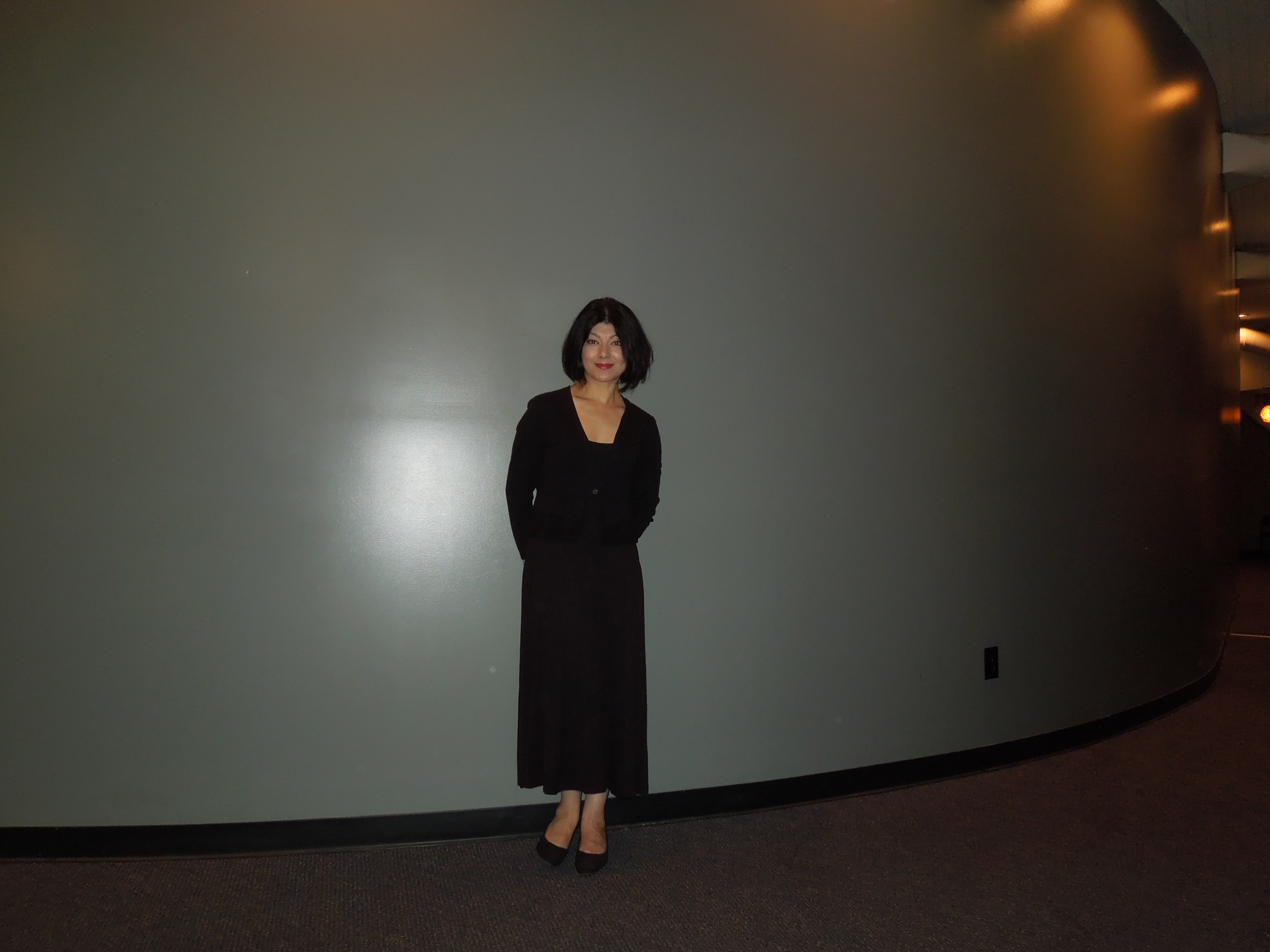
Pics after tonight’s performance. Wish me “Break a leg!” gentle readers!
Picture a sheepish face… me… for complaining about the play. I went on stage with the flu, and did it! We all did it! We got a standing ovation! People who knew Anne Braden (my character) said I “WAS” Anne Braden! Quite a compliment! It was an outstanding effort by everyone! And I feel bad about whining and going on. But that is in the past. This is a new moment, and today I promise myself never to whine again and I mean it very sincerely until I forget and whine again… but I am only human… and there is no better medium to showcase the human condition than theatre. And today, we proved that good theatre can move people, even when you’re playing characters who the audience knows well.
I am proud of myself for not giving in to my own or anyone else’s negativity. And I go forth into tomorrow and tomorrow’s performance with a happy and light heart and more confidence than ever.
Forgive me gentle readers, for whining. And congratulate me on my victory, against the flu and against any negative notions!
Positive, positive, positive, from now on!
Pictures next time! Oh and yes, I killed my monologue!
This is my 3rd day taking Tamiflu, my flu symptoms have gotten better, but now is something else happening? Something of the neuropsychiatric variety? Feeling depressed and weepy…wow can I not get a break, please? Does everything have to always be this difficult? Sisyphus ain’t got nothin’ on me!
Ok, so I have been in this play, which has not been a very pleasant experience to begin with, at all… then I got the flu, becoming less pleasant by the second… so I took Tamiflu and now I feel very depressed… least pleasant of all… What am I supposed to do? Does it always have to be such an uphill climb? God, does it never get any easier? Is it just my filter from when I was a child experiencing negative events, or are these events really so bad that they deserve this magnitude of a negative response from me, or is it depression caused by Tamiflu? How the hell am I supposed to know! All I know is whether because of the flu, the antiviral, or my mood disorder, my past, or present events, hell lets say all of the above, add to that the disrespect and negativity that I have encountered with this particular play, I totally feel like shit… and yet I am going to perform tonight for opening night, and then for the rest of the six performances, because that is what you do when you take on a play, you do it till the end.
Of course, I could walk out and tell them to eff off, but I won’t, I’m too responsible and too much of a miss goodie two shoes to do that. However, I am NEVER doing any more plays, ever again. I don’t trust the process, I will never put myself at the mercy of someone, who has power over me. Not after this god awful experience. Not ever again.
Sorry for the rant, dear readers. I am just very distressed and quite puzzled and… oh whatever… I’m going to take a hot shower, get my hair done and walk into the theater with my head held high and perform for the audience, perform the story that is being told. That is the important thing! Not my ego, or slights to it!
Oh and below is a link of an article of a young Korean girl who became suicidally depressed and then developed bipolar disorder (BPD) after taking Tamiflu. Coincidence? Tamiflu brought out the BPD? Can’t say.
















 Palestine WILL Be Free