Posts
Why Inflammation is good and bad…
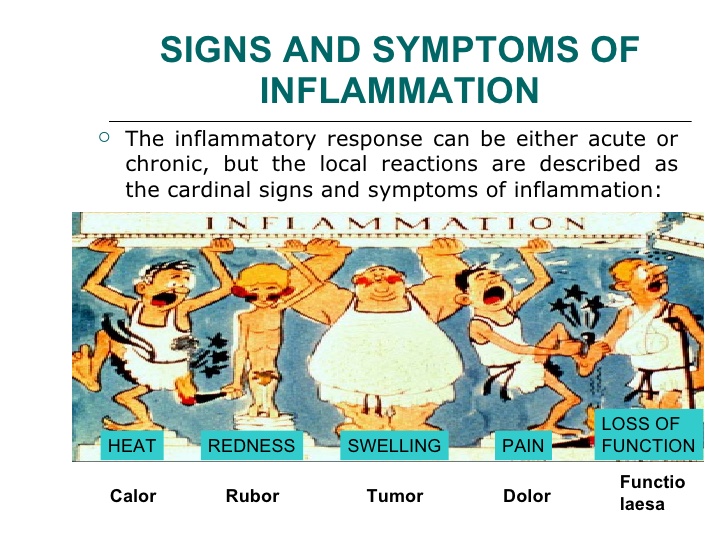
We read about it all the time, diseases caused by inflammation, auto immune diseases, allergies, ulcers, and a host of other diseases (including mental illnesses) are thought to have the involvement of inflammation in their development!
Well, if inflammation is so bad, if it is involved in the causation of so many illnesses, then why does it exist?
Inflammation in and of it self is not bad. It is a process that our white blood cells carry out to protect our bodies from foreign invaders and repair our bodies after injury. If our immune system didn’t function, we would all have to live in a bubble like the “bubble boy” who had no immune system and therefore could not fight off any infections or repair the smallest of injuries.
When we cut our finger, our white blood cells rush there, an enzyme called Bradykinin actually opens up holes in the blood vessels in the cut’s vicinity so that immune cells can get to the site of the cut!!! Bradykinin binds to mast cells (another of our immune cells) that have just come to the site of infection from the opened blood vessel. It is these mast cells that release the mediators of inflammation such as histamine, heparin, prostaglandins, leukotriene and other compounds. All these molecules are needed in the process of repairing the cut finger. If this process wasn’t functioning well or at all, we would not be able to repair damage to out own bodies.
Also when we have a viral or bacterial infection, our immune system again fights off the virus or bacteria. We have macrophages in our immune cells that will phagocytize (ingest) the bacteria or the cells that have been infected by viruses. Neutrophils and leukocytes are also involved here.
Also the immune system can recognize cancer cells that arise in your body. Yes, the immune system recognizes and destroys cancer cells. But cancer cells are wily, they use cloaking devices to hide from our immune system, so they can establish themselves and grow. But our immune system kills many, many cancer cells before one cell escapes it and becomes a tumor.
So the above is an extremely abbreviated description of what inflammation is and what it does. Inflammation is carried out by our immune cells, which are the armed forces of our body.
It is when these armed forces turn the ammunition against us, rather then against invading bacteria and marauding viruses, that the trouble with inflammation starts.
Take allergies, they happen when your immune system erroneously thinks that, for example, tree pollen is a dangerous invader and reacts against it like it would against Yersinia pestis, the bacteria that causes plague. The tree pollen in and of itself is not a problem, what is a problem is your immune system reacting against it as if it is something dangerous. The runny nose, sneezing, fatigue, sinus headaches/infections are the direct result of your immune system’s mistaken and hypervigilance.
Even more dangerous are the deadly nut allergies so frequently seen these days. For example, peanut allergies. In this, our immune system sees peanuts and thinks danger! All systems go, the production of histamine happens at such a high level that it closes up out breathing passages and throat. This is anaphylaxis. You can’t breathe, and unless you get an epinephrine shot, which will cause vasoconstriction, an elevated heart rate and bring you out of anaphylaxis, you will die! Steroids will also help, but they have to be administered before the anaphylaxis reaction starts.
Now to autoimmune illnesses, here the immune system finds something in your body, such as in your joints in rheumatoid arthritis, that it thinks is foreign. So perhaps a protein in your joints looks like an invader to your immune system, so it unleashes its full deadly response against this protein. The trouble is that it is not an invader, it is a protein in your joint, and your own immune system is destroying your own body! In rheumatoid arthritis it is joints and connective tissue. In Hashimoto’s thyroiditis, your immune system is attacking your thyroid. In autoimmune diabetes, the immune system destroys the beta cells of the pancreas. And there are many, many more autoimmune diseases, where your own body is erroneously attacked by your own immune system.
All the reports I see and post about steroids being able to stop the development of mental illnesses, of the immune system’s involvement in mental illness… who knows, we may ultimately find the immune system is intimately involved in the manifestation, and the development of mental illness.
In summary, inflammation is a critical process that is needed to protect and rebuild from pathological invasion and injury. When this inflammatory response us turned against ourselves, autoimmunity, that is when the trouble starts.
What we have to do is somehow stop our immune system from turning upon our own bodies. Why is it happening more and more these days? Peanut allergies were unheard of not so many years ago! Is it the chemicals with which we douse our food? Chemicals in the air, in our water? If our immune system sees a poison sprayed on an apple as we are eating this apple, and it reacts against the poison in conjunction with the apple, then when we eat only an apple (no poison spray), will our immune system then react to the apple as well? Is that perhaps how all these food allergies started? Possibly. More ideas, more thinking and more research is needed.
Steroid Eye Drops Reverse Cataracts in Mice (Wow!!!)b
http://news.sciencemag.org/health/2015/11/steroid-eye-drops-reverse-cataracts-mice
I know this is not about mental health, but this is very big! Cataracts, a condition for which one has to have eye surgery, can be treated by steroid drops, at least in mice! Cataracts, if left untreated, can cause blindness! Also eye surgery is not a minor thing, so if it can be avoided, well that would be wonderful! Really, this is huge. Read the article below.
“More than half of Americans over the age of 70 have cataracts, caused by clumps of proteins collecting in the eye lens. The only way to remove them is surgery, an unavailable or unaffordable option for many of the 20 million people worldwide who are blinded by the condition. Now, a new study in mice suggests eye drops made with a naturally occurring steroid could reverse cataracts by teasing apart the protein clumps.
“This is a game changer in the treatment of cataracts,” says Roy Quinlan, a molecular biologist at Durham University in the United Kingdom who was not part of the study. “It takes decades for the cataracts to get to that point, so if you can reverse that by a few drops in the eye over a couple of weeks, that’s amazing.”
The proteins that make up the human lens are among the oldest in the body, forming at about 4 weeks after fertilization. The majority are crystallins, a family of proteins that allow the eye to focus and keep the lens clear. Two of the most abundant crystallins, CRYAA and CRYAB, are produced in response to stress or injury. They act as chaperones, identifying and binding to damaged and misfolded proteins in the lens, preventing them from aggregating. But over the years, as damaged proteins accumulate in the lens, these chaperones become overwhelmed. The mutated proteins then clump together, blocking light and producing the tell-tale cloudiness of cataracts.
To treat the condition without surgery—which is out of reach for many patients in developing nations—researchers have looked to drug treatments. Although boosting the function of CRYAA and CRYAB seems to be a good target, developing a therapeutic has been challenging. Most drugs that act on disease-related proteins work by changing how the protein functions, something scientists can measure by monitoring the protein’s enzymatic activity. CRYAA, CRYAB, and similar proteins are known as “undruggable” because their activity can’t be measured, says Jason Gestwicki, a biochemist at the University of California (UC), San Francisco, and a senior author of the new study, published online today in Science.
Gestwicki’s team decided to use a technology called differential scanning fluorimetry, which allows scientists to measure the temperature at which a target protein begins to melt. They analyzed CRYAA and CRYAB and discovered that in one type of hereditary cataract, CRYAB takes on a mutant form with a much higher melting temperature than its normal version. If they could find a molecule that would bind to the mutant CRYAB protein and lower its melting temperature back to that of a healthy CRYAB, they speculated, CRYAB should function normally and prevent damaged proteins from clumping in the lens. The researchers turned to a bank of 2450 molecules that exhibited similar properties to CRYAA and CRYAB. They added molecules to the mutant CRYAB, looking for one that would stabilize their target. They settled on compound 29, a steroid found naturally in the bloodstream but not in the lens, which has no blood supply. Mice with age-related and hereditary cataracts received drops in the right eye, whereas the left eye went untreated. After just a few weeks, the treated eye was visibly clearer, says Gestwicki, who conducted the work while at the University of Michigan. Cataract severity is measured on a scale of zero to four, with four being the worst case. On average, mice in the study had about a one-grade improvement in cataract severity after 4 weeks of treatment.
This is the second study this year to find that eye drops made from a class of steroids called sterols can successfully reverse cataracts. In July, researchers from UC San Diego reported that lanosterol, a steroid found in the human eye, reversed cataracts in dogs.
“It’s a me-too paper in the sense that this new study also treated cataracts with a sterol,” Quinlan says. “But they arrived at the same conclusion by completely different routes. That’s the way excellent science is done, and [it’s] something that should get philanthropists and pharma excited.”
One key difference between the two studies is the way the different steroids were administered. The dog study administered the drug both by injection into the eye and eye drops. The new study used only eye drops.
There’s still a lot to uncover before either study can move into clinical trials, Quinlan notes. The lens in the human eye is very different from those in mice or dogs, and neither study explains how the steroids work on cataracts. “Mechanistically, we really don’t know what’s going on here. It’s a black box.”
Figuring out how the treatment reverses cataracts is the team’s next task, a key step toward clinical trials, which Gestwicki hopes to launch in the next year. ViewPoint Therapeutics, a biotech company he co-founded in San Francisco, California, holds the license to the technology and will launch more animal studies soon.”
And this! “Early treatment for brain inflammation could prevent schizophrenia, study finds. “
http://www.sciencealert.com/early-treatment-for-brain-inflammation-could-prevent-schizophrenia-study-finds
The disorder may be a side effect of our immune response.
PETER DOCKRILL 20 OCT 2015
Facebook Icon6.9k Twitter Icon 43
There’s no shortage of research identifying the possible root causes of schizophrenia, but a new study published this week is the first to demonstrate that the brains of people with schizophrenia – or at risk of developing it – have significantly higher levels of immune cell activity than those with no sign of the disorder.
Not only does the finding point to new avenues of research so we can better understand how immune cells contribute to schizophrenia, it might one day lead to treatments that could prevent the progression of the disease altogether, based on early warning signs related to inflammation in the brain.
“Schizophrenia is a potentially devastating disorder and we desperately need new treatments to help sufferers, and ultimately to prevent it,” said Oliver Howes, head of the psychiatric imaging group at the Medical Research Council (MRC) Clinical Sciences Centre in the UK. “This is a promising study as it suggests that inflammation may lead to schizophrenia and other psychotic disorders. We now aim to test whether anti-inflammatory treatments can target these. This could lead to new treatments or even prevention of the disorders altogether.”
Immune cells in the brain, called microglia, serve to repair damage to the brain and defend against infections, but the researchers hypothesised that one consequence of their activity could be triggering the progression of schizophrenia. To test this idea, they used positron emission tomography (PET) scans to compare the levels of microglial activity in a group of participants.
Among those tested, some were patients already diagnosed with schizophrenia, some were at risk of developing the disease, and others showed no symptoms. The researchers found that the activity levels of microglia in the brain corresponded to the severity of schizophrenia symptoms in those diagnosed with the disorder.
“Our findings are particularly exciting because it was previously unknown whether these cells become active before or after onset of the disease,” said one of the team, Peter Bloomfield. “Now we have shown this early involvement, mechanisms of the disease and new medications can hopefully be uncovered.”
It’s early days yet. While the results are definitely promising, the sample size used in this particular study (just 56 participants) is small. But the findings also amount to the latest evidence that inflammation – in the form of potential over-activity of our immune response system – lies at the heart of a host of modern medical problems.
“This study adds to a growing body of research that inflammation in the brain could be one of the factors contributing to a range of disorders – including Alzheimer’s, schizophrenia and depression,“ said Hugh Perry, chair of the Neuroscience and Mental Health Board at the MRC, ”and with this new knowledge comes the hope of life-changing treatments.”
The findings are published in The American Journal of Psychiatry.
Can Prenatal Choline Cut Schizophrenia Risk in Kids? (Wow! Pretty big news!)
http://m.livescience.com/52674-prenatal-choline-schizophrenia-risk.html
Can Prenatal Choline Cut Schizophrenia Risk in Kids?by Sara G. Miller
In an update to a recent study, researchers say they are continuing to find evidence that women who take supplements containing choline when they’re pregnant may lower the risk of schizophrenia in their children.
The children in the study are now 4 years old, and are already showing fewer early signs of schizophrenia — such as certain attention and social problems — than expected, said Dr. Robert Freedman at a talk in New York City on Oct. 23. Half of the children in the study had an increased risk for schizophrenia because their mothers had depression, anxiety or psychosis.
Freedman, the chairman of the department of psychiatry at the University of Colorado School of Medicine and editor in chief of The American Journal of Psychiatry, gave attendees at the Brain and Behavior Research Foundation symposium an update on the participants in his study, which was originally published in 2013 in The American Journal of Psychiatry.
In the 2013 study, Freedman and his team looked at the brains of the babies when they were newborns. They found that those whose mothers took a supplement containing phosphatidylcholine (a version of the nutrient choline) during the second or third trimester of pregnancy showed improvements in how well nerve cells could block certain signals, compared to a group whose moms were given a placebo. In people with schizophrenia, this ability to block these signals does not fully develop.
This means that people with schizophrenia are unable to block out certain sensory signals, making it difficult to focus their attention, Freedman said at the research meeting last month.
Schizophrenia — which affects about 1 percent of American adults — is characterized by an inability to distinguish some aspects of reality from the imagination, Freedman told Live Science. People with the condition may hear voices that aren’t there, hallucinate and have delusions, he said. And they are less able to function in their daily lives, he said. [Schizophrenia: Symptoms and Treatments]
However, because the symptoms of schizophrenia usually don’t become apparent until late adolescence or early adulthood, studying the disease in infants and children is challenging, he said.
To do so, Freedman and his team turned their attention to neurons in infants’ brains. In the study, the researchers played clicking sounds for the babies, and measured how well the infants’ brain inhibited certain signals.
In infants whose mothers had taken the choline supplement, the researchers observed more signal inhibition than those whose mothers had taken a placebo, Freedman said at the meeting.
Choline’s potential
It isn’t clear whether choline may actually lower children’s risk of developing schizophrenia later in life; much more research is needed to look at the question. But research has shown that choline turns on receptors in the brain that help promote the development of inhibitory nerve cells.
Many people with schizophrenia — and other mental illnesses as well — have fewer of these receptors to begin with, due to genetics, Freedman said. That means these people could benefit from making sure all of the receptors that are present are turned on, Freedman said.
Choline is necessary for other reasons too, during the development of a fetus, because it is used to make cell membranes, the researchers wrote in their study. However, higher levels than those that are usually recommended are needed to turn on the receptors, they wrote. The current recommended dosage for pregnant women is 450 milligrams of choline daily, according to the National Institutes of Health; foods that are rich in choline include egg yolks, meat and soybeans.
Four years later, the newborns whose moms took choline in the study are already doing better, Freedman said. Those whose moms took choline are less likely to have problems with attention and social interactions, he said. People with schizophrenia often have problems in these two areas as children.
Still, because the typical age at which schizophrenia begins is still many years off — and because the number of children in the study is low — researchers won’t have a definitive answer for some time.
Even without final results, Freedman said he believes that all women (and by implication, their children) could benefit from taking choline during pregnancy.
There are no risks to women at the doses we’re recommending, Freedman told Live Science. In the study, the women took the equivalent of 900 milligrams of choline daily. He did note, however, that if women take much more of the nutrient, they could have some problems digesting it.
Still, Freedman stressed that women should always check with their obstetrician before taking any nutritional supplement.
Breakthrough eye test to diagnose mental disorders
http://m.scotsman.com/news/scotland/top-stories/breakthrough-eye-test-to-diagnose-mental-health-disorders-1-3932670#axzz3qQwFwCrR
A SIMPLE eye test which could help diagnose mental health disorders or spot them before they arise is a step closer to being available on the NHS.
The award-winning test developed by Aberdeen University scientists uses a specialised, ultrafast camera to track patterns in eye movement and early results suggest that it is nearly 100 per cent effective in detecting mental health disorders such as schizophrenia, bipolar disorder and depression.
“We hope that as many people as possible come along to the open meeting to hear about what were are doing and what they can do to help in our research.” Professor David St Clair.
People with conditions such as schizophrenia did not explore images as fully as those without as they would rest their gaze on certain points for longer, according to the original research published in 2012 in the scientific journal Biological Psychiatry
Follow us: @TheScotsman on Twitter | TheScotsmanNewspaper on Facebook
Ah yes, another doctor’s appointment, another fiasco!

Here we go again! I had an appointment with a new endocrinologist, Dr P, my first appointment. I got there on time, signed in. I was called in to the examining room by a young woman with bright red braids. She signed in to the computer, looked at me and said “How do I know you have thyroid problems?” I said I have Hashimoto’s thyroiditis, I’ve been treated for it for the last three years. She said: How can you prove you have this? I told her my TSH was 102 (the normal is 0.2 – 5) when I was diagnosed, I am on 125 micrograms of Synthroid. She said: Do you have any paper work, any ultrasounds, any scans? I said no, I wasn’t told to bring any, if I had been told to bring those, I would have. But I do have a thyroid condition. She said this doctor will not see me unless I give her the number of a doctor who can provide substantiation. So I gave her the name of my psychiatrist, Dr. E and his phone number, because he recommended this doctor to me. She sent me back to the waiting room. A few minutes later, she came out in the middle of the full waiting room and announced “That is the number of a psychiatrist, we need the number of a real doctor.” What?! A psychiatrist IS a real doctor, I exclaimed! She said no, a real physical doctor. I again reiterated that a psychiatrist is a real doctor who treats real illnesses. I told her I do not want to speak with you anymore, I want to see the doctor I came to see. She said he will not see me unless I give her the name of a real doctor. So I gave her the number of my old endocrinologist and she left. I just sat there, fuming by now, what the hell is this, intimidation and blackmail central? I considered just walking out, but I stayed to see what this new doctor would be like. Then I saw this new doctor, I explained to him how I’d been treated and he simply laughed me off.
Wow! Here is me, an unsuspecting person, coming to see this doctor for the first time and this is how I get treated! There are so many things wrong here that I don’t know where to begin!
Ok, first off, you do not challenge a patient to prove that they have an illness! Why the hell would I be wasting my time in crummy, crowded waiting rooms talking to idiotic women whose iQ is probably borderline moron, if I didn’t absolutely have to.
Secondly, you do not come into a waiting room full of strangers and announce that I have given you the number of a psychiatrist! I mean yes, I blog about my illness, and if I choose to tell the whole waiting room that I see a psychiatrist, that is my business. But, and this a big but (haha) you with your idiotic red braids and rude manner do not have the right to announce it on my behalf. Ever heard of HIPA? And anyway, no doctor is going to give you my information over the phone unless I have signed a release, which I had not.
Three, so a psychiatrist is not a real doctor! Then, by extension, the illnesses he treats are not real illnesses. WTF are you saying here and what century are you living in, the 6th century?
Four, the doctor laughing me off! Really? Your staff is obnoxious, rude, confrontational, doesn’t respect my privacy, and you are going to laugh me off?
Just writing all this down is upsetting the hell out of me again. Damn! I mean really?
So here’s what I’m going to do about it, I am going to write to this doctor about the unprofessional, disgusting, rude way I was treated. He works at Norton hospital. I am also going to cc this letter to the CEO of said hospital. That is all I can do. If they have any professionalism and ethics at all, I should receive an apology. I am not a vindictive or even a negative person, but something like this can not be simply forgotten. Something has to be done about it.
And obviously, I am not going to see him again. Aaaaaarrrrggghhhh! Can I not get a break with all these morons with MD and DDS degrees and their inept, moronic employees?
Ok, I’m done. I’m going to do some deep breathing now, maybe watch some Golden Girls and get over this nasty episode, yet another nasty episode. Geeez! I’m seriously leery of going to see anymore doctors.
Oh and I am going to enlighten my psychiatrist about the fact that he is not a real doctor, poor guy was operating under the misconception that he was a real doctor! Hahaha!
Bipolar Disorder Treatment: Brain Cells May Reveal Why Lithium Doesn’t Work For Everyone
There it is in a nutshell, folks: “Neurons are normally activated by a stimuli and respond. The cells we have from all six (bipolar) patients are much more sensitive in that you don’t need to activate them very strongly to see a response.”
Researchers took skin cells from 6 people with bipolar d/o. They made them turn into stem cells, which then differentiated into neurons. When they activated these neurons, they saw that neurons from people with bipolar d/o didn’t need a very strong stimulus to become activated. So our neurons can be activated by very weak stimuli. In other words we react much more strongly to things than people who don’t have bipolar d/o! Hunh! I think I already knew that! I do it all the time. I have extreme reactions to small stimuli! And now here is the reason, in black and white, our neurons fire at stimuli that wouldn’t make the neurons of people without bipolar d/o.
“Mitochondria — the energy producing powerhouse of the cell — were more active in the bipolar neurons.” This means that bipolar neurons also produce more, therefore have more energy.
“Cells from the patients who responded to lithium showed weakened excitability after growing in the lithium bath, while cells from patients who hadn’t been helped by the drug remained hyperexcitable. The findings didn’t explain why exactly lithium works in certain patients but not others, but it provided a great starting point for probing at what those differences are.”
So cells from people who respond to lithium show weakened excitability in response to lithium, whereas cells of people who don’t respond to lithium keep being hyperexcitable. Again a difference at the cellular level.
This is so amazing, because now for lithium resistant patients, they can test other medications to see which will decrease the hyperexcitability.
In one of the first studies to show how bipolar disorder affects the brain at a cellular level, researchers have discovered that the brains of people with the disorder are more sensitive to stimuli than those in people without it.
The findings, published in the journal Nature, also suggested the reason why some bipolar patients respond to treatment with lithium while others do not. “Researchers hadn’t all agreed that there was a cellular cause to bipolar disorder,” said Rusty Gage, a professor in Salk’s Laboratory of Genetics and senior author of the study, in a press release. “So our study is important validation that the cells of these patients really are different.”
Bipolar disorder, which affects over five million Americans, is characterized by severe mood swings between depression and elation. The disorder can be challenging to treat because when lithium doesn’t improve the mood swings, mental health professionals must piece together a unique treatment plan with antipsychotic drugs, antidepressants, and mood stabilizers. Oftentimes, though, these treatments only affect one of the mood extremes, not both.
For the study, Gage and his team recruited six bipolar patients and collected skin cell samples. They reprogrammed the cell samples into stem cells, then coaxed the stem cells into becoming neurons. These induced bipolar neurons were then compared to the normal neurons of healthy people.
“Neurons are normally activated by a stimuli and respond,” said Jerome Mertens, a postdoctoral research fellow and first author of the new paper. “The cells we have from all six patients are much more sensitive in that you don’t need to activate them very strongly to see a response.”
Mertens also noted that the mitochondria — the energy producing powerhouse of the cell — were more active in the bipolar neurons.
Three of the bipolar patients’ cells responded to lithium treatment, while the three others’ did not. The scientists tested how the cells reacted to growing in a liquid with lithium, and then remeasured how sensitive they were. Though all of the bipolar patients’ neurons had been more sensitive than healthy ones in the first test, this test showed they behaved differently after lithium exposure.
Cells from the patients who responded to lithium showed weakened excitability after growing in the lithium bath, while cells from patients who hadn’t been helped by the drug remained hyperexcitable. The findings didn’t explain why exactly lithium works in certain patients but not others, but it provided a great starting point for probing at what those differences are.
“Now that we have neurons that show differences in excitability, we can use them to screen for better drugs,” Mertens said.
For example, a new drug that reverses the hyperexcitability at a cellular level would likely be able to treat bipolar disorder in patients. The team plans to study the affected cells for longer periods to determine whether the hyperexcitability it measured is simply an initial manic phase or more long-lasting.
“After a few months, it’s possible that this hyperexcitability becomes too much for the cell to handle and it crashes into a less excitable state,” Gage said. “That could signal the shift between the depression and mania that patients experience.”
Source: Gage R, Mertens J, Yongsung K, Yu D, Pham S, Diffenderfer K, et al. Bipolar patients’ brain cells predict response to lithium. Nature. 2015.
Happy Halloween form Jasmine and Jafar!









Halloween is probably my favorite holiday. I love, love, love to dress up, and cook, and dance, all of which happen at a Halloween party. Already thinking about my costume for next year. Hahaha.
I have been nominated for the “REALLY NEAT BLOG AWARD”! :-)

Thank you to Gentle Kindness at http://gentlementalannie.com/ for nominating Bipolar1Blog for the Real Neat Blog Award.
The Rules Are
1. Put the award logo on your blog.
2. Answer 7 questions asked by the person who nominated you.
3. Thank the people who nominated you, linking to their blogs.
4. Nominate any number of bloggers you like, linking to their blogs.
5. Let them know you nominated them (by commenting on their blog etc.)
My answers to Gentle Kindness’s questions:
1)Do you see yourself as introverted or extroverted?
Extroverted, usually, I am very outgoing. I can walk up to complete strangers and talk to them with ease. There is one caveat, when I have bad anxiety, then I turn into an introvert, all my sparkly friendliness disappears and I just want to hide in bed under a blanket. Thankfully, that doesn’t happen too often, although it happens more than I’d ever want it to.
2. What do you do for relaxation?
I exercise, as in lifting weights and Zumba. And I love to read and sometimes veg out in front of the TV, although my favorite shows are Masterpiece theatre and Masterpiece mystery, not vegging out kind of shows.
3. Do you have a favorite movie (or movies)?
One of my favorite movies is “Gone With the Wind”, another is “Pride and Prejudice”, and “Sense and Sensibility.” I loved Jurrasic World, especially the end! I know there are other movies I love, but I can’t think of them right now… Oh wait, “The Pink Panther” is hilarious, I know I know, I’m old….
4. Do you have any pets?
Yes, I have a gorgeous, beautiful, very beloved cat. She is 20 and a half years old, which translates to about a 95 tear old human! Pretty spectacular! She has grass green eyes and is very loving and gentle, although in her younger days she used to be a fierce warrior, bringing us moles, mice, and even rabbits as presents!


5. How long have you been blogging?
Since August of 2014, a little over a year.
6. How often do you read other blogs?
Every day!
7. Tell us something you want to share about yourself.
I act in plays 🙂 and I speak 4 languages, and I love to sing, and I love and adore my son 🙂
If I have to do this, so do you! My nominees:
- http://proudlybipolar.wordpress.com
- http://bipolarhappens.wordpress.com
- http://kittomalley.com/
- https://deanneworld.wordpress.com/
- http://theblahpolar.wordpress.com/
My Questions for you:
1. How long have you been blogging?
2. What made you start your blog?
3. Which post of yours has the most views?
4. Do you like cats or dogs?
5. Summer or winter?
6. If there is one thing, what would you like to change about your self?
7. How much time do you spend on your blog daily?
 Palestine WILL Be Free