My last post, definitely PTSD

IMG_2951

Ok, my last post, definitely PTSD. I react just as wildly as my son does to his problems. I react with the unbridled fear of losing him. There I said it, that is truly what I am terrified of, losing my beautiful, super intelligent, loving, compassionate son. I am terrified of the unknown. And the PTSD comes from the past, from the known, from losing my brother to bipolar 1. From the biggest tragedy in mine and my family’s life. Is it going to happen again? Unknown. And the unknown, mixed with a terrible, fearsome known, the past, is not easy to live with.

But although my son has an initially extreme reaction, he calms down and takes care of the troubling issue perfectly. And he has NOT been diagnosed with any illness 🙂 But that’s the thing with PTSD, it is not based on the present, it is based on the past and the fearful phantoms that memories and past thoughts conjure up. How do you get over this? Talking to my ecounselor about this pronto, no prontissimo! Life is really short, half or more of mine is over. I want to live it in peace and enjoying all the positive, fun things it has to offer, not in the black dungeon of fear.

PS

My mood may also be kicking up. From the season, the increase in Synthroid, not enough Lithium, don’t know, but knowing that my mood IS getting too elevated is half the battle already won and I’ll take care of it. Do i have this? Yes, I think I really do. Breathe…

Upheaval. Strength. Calm.

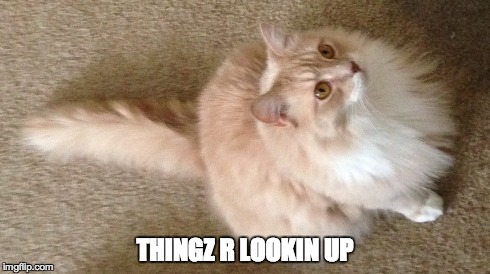
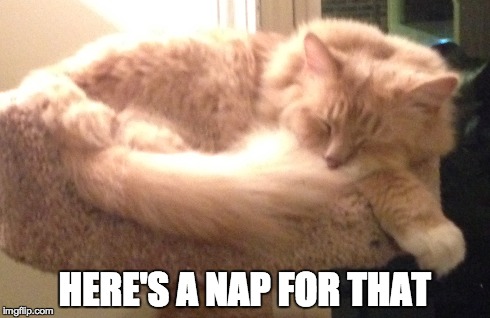
end of scrabble lookin up meme nap meme

Pictures of Leonidas and two memes I made with his pictures. Isn’t he adorable!

I was beside myself! This child of mine, the one who feels too much, the one whose reactions are extreme called me today. He called and said his beloved pet cat had eaten lilies and he had done a search on the internet and had found out that lilies are horribly poisonous for cats. Once a cat ingests them, kidney failure and death follow within 36 hours. My son said he could not take this, he would go into a depression (oh no, oh no, no, no), he would not be able to finish his semester in Law school. He would not be able to stand it. He was blaming himself for buying the flowers for his girlfriend, saying it was all his fault. He was on his way to the veterinary clinic with his little cat. I tried to calm him down, while massive amounts of anxiety suddenly swirled in my chest, so much so that breathing was difficult for me. Oh god, what should I do? How should I get there fast enough to be at my son’s side, to be with him should the unthinkable happen? I immediately booked a flight for tomorrow, getting in at noon. He got to the clinic, the cat was rushed to the back. I called my son and told him our Puffin had had feline infectious peritonitis (a deadly disease which kills the majority of infected cats) there is no cure, but our Puffin survived and lived to be 18.5 years old. I told him cats have nine lives, and his baby boy Leo was young and strong, he would make it through this! I told him to have hope and wait and see what the doctor says. I told him he did not cause the accident, but he may well have saved his Leo’s life by acting so quickly! The vet gave his adored baby Leo some emetics to make him vomit up the lily flowers. That was done. Then they did a blood test to determine the levels of kidney enzymes. If the kidney enzyme levels are elevated, it means that kidney damage has occurred. Thankfully, the levels were normal. So the little kitty was made to vomit up the offending flowers and his kidney enzyme levels were normal! I breathed a sigh of relief. I changed my flight to a later date. I talked to my son again. He was taking the kitty home, he was recovering, as was the cat. The vet actually told him that he saved the cat’s life by bringing him so quickly to the clinic!!! Leo is to go back to get his kidney enzyme levels done again on Monday. That will give him an absolutely clean bill of health. Fingers crossed!

I was at the mall, buying my Derby dress and hat and having a fun time… And all of a sudden… Oh my god, such upheaval. Of course these accidents can happen, but what floors me is his reaction, his saying to me that he wouldn’t survive if something happened to his most beloved Leonidas. I told him that he has to be stronger, things can happen, something may happen to me, to him, we all have to be strong and go on. At this point, he listened to me and said “Yes, you’re right.”

But his emotions, his feelings, his reactions, so extreme.

Are they so extreme, though? If something similar had happened to me at his age, I may well have reacted the same way, felt the same way. My side of the family, all of us are very intense, feel very intensely and our cats, our pets are very dear to us. And it is times like this when we realize exactly how dear and valuable they are.

Our sweet Puffin, at 18.5 years of age had to be put to sleep because she developed lymphoma. And this time, there was no miracle recovery. I held her as she took her last breath, I sang Mozart arias to her because she liked them. I was strong for he. Even my husband couldn’t stay. But I stayed with her. I was strong for her.

It seems I am strong and my strength is there for my son, my husband, my sister, my brother, my niece, my nephew, my aunts, uncle, my cousins, my friends. All the people I love beyond measure. And I will always be there for each and every one of them. No matter what happens. I don’t mean to be maudlin, not at all. I suppose this is just a way for me to reassure myself, that I am strong and I am strong for all my loved ones. Even though, sometimes having bipolar d/o makes me feel weak. I am not weak.

My Dearest Son, I offer you all the strength I have, I promise you I will always be there for you no matter what life brings our way.

Please be calm, be peaceful, be at ease. You too have my strength and you will handle all that life brings your way as well. Remember once you were very young and you were singing and I said “Oh Aral, you got my voice!” And you said “But mom, how will you talk then?” And I told you that even though you got my voice, I still have enough to speak. Just like that, you have my strength and I still have enough to be strong for you and with you. With all my love for you my Aral.

My Son

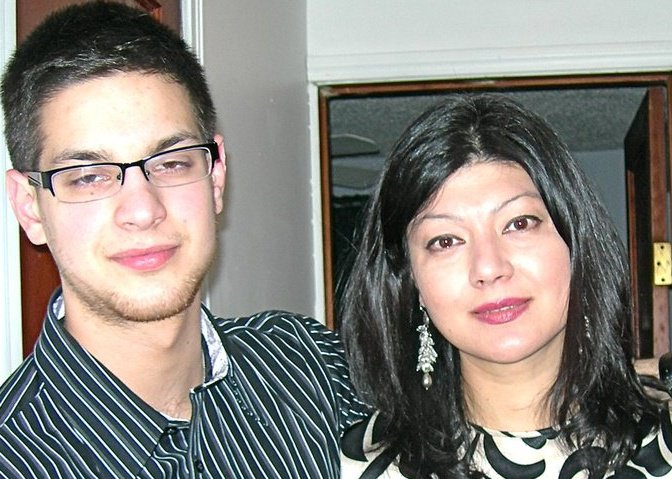
Aral and me May 1991Aral 6

This is in response to a post I read (http://thelithiumchronicles.org/2015/04/22/you-cant-have-kids-youre-bipolar/) which was actually written in response to someone asking the author why she didn’t feel guilty for having children because the she has bipolar 1 d/o.

This hit close to home for me too. Although I have NEVER thought I shouldn’t have had kids, I love my son more than anything in the world, I understand where the person who asked this question is coming from. It isn’t easy in the best of circumstances to raise a child, let alone raising a child when you have a mental illness. Yes it is difficult at times. And yes I have lived in fear of having passed this down to my son, at this point in life, my enormous anxiety about that is under control. But, although we have gone through some very difficult times, we have also recovered from these difficult times. That is the stuff that strength and resilience (my favorite word, of late 🙂 ) are made of. And besides that, we have also had some very good and happy times. If someone says that to a person with mental illness, what about people who have the genes for early onset alzheimer’s, or cancer, or autoimmune diseases, or ALS? Which one among us is genetically perfect? There is no guilt on my part from having my son, he has brought me untold, unfathomable happiness and the love I felt for him, as soon as I saw him, as soon as I saw him, after the doctor handed him to me after the C-section, cannot ever be measured. Truly, it is a love that is bottomless, fathomless, and endless. I would never have not had my precious son, never.

Anyway, my answer is below:

I have son and he is the love of my life! I would never have not had him. Anyway, your child doesn’t have a 100% chance of getting bipolar d/o, the chances are 30% max, that your child may inherit this infernal disease. Yes there were hair raising times, (a few) when parenting him was hard, yes he may have been exposed to some things that a child of a parent who is not mentally ill would never be exposed to. But he is a marvelous human being, compassionate, passionate, and he is in second year Law school. I wish him only love and laughter in his life and I am his biggest fan, and of course being his mom, worry incessantly about him. But to not have him here now, how sad that would have been.

Shall We Dance?

Cha cha cha Cha cha cha

I love this! It speaks to me in volumes and volumes. How many times have we done something that went really and how happy were we? Then, the next time we did it, we hit a few snags. Like in our work, we have a project that is going really well, until it’s not going so well anymore… Like our hobbies, we are loving reading a book and then we hit a really boring few chapters… Like in a relationship, a friendship, an acquaintanceship, in one instance we get along so well, we think we are making huge strides, our relationship is improving. But, in the next instant, we have a disagreement, or a misunderstanding and we are totally crestfallen. But it’s ok, really, one step forward and one step back IS the cha-cha! We are dancing, maybe with words, or thoughts, or ideas, we are dancing with our minds, with our bodies, with each other. I love this, The Cha-cha, nothing to be crestfallen about at all. Maybe that’s the rhythm of life and we are all the dancers, taking steps, forward, backwards, sideways, but always together, always in conjunction, when one steps forward, the other steps back, then the other way around. It is a wonderful, social, human thing to do and we are always doing it. So, shall we dance?

Control

flickr 2

When we are in one of our phases, we people with bipolar d/o, we do lose control of our minds. The degree to which we lose control is dependent upon the severity of the phase as well as the type of phase (manic or depressive.) Losing control is something I intensely fear. Losing control of my mind, losing control of my life (having to be hospitalized) losing control of my thoughts, my actions… I am a robot controlled by my illness when I’m in a severe mood phase. The real me disappears from hours to days. I can say things (F words, hateful, angry things) and do things (throw something at someone, go on a trip out of the blue) and I can definitely think things that may or may not have any basis in reality. Quite frightening. It may be a result of this that I need to be in control of things in my life. If something is out of my control, it causes me untold anxiety. However, I am also realizing that I cannot control everything. I cannot control situations. I cannot control people. They, like myself, come with their own specific set of issues and their own specific ways of reacting to things. I am also realizing that I need to respect that and not constantly demand that others be at my beck and call all the time (well I really don’t, but you know what I mean.) I have to let go of the strong urge to be in control and let things be. I have to let go of the fear of not being in control. And that fear is huge, the anxiety, sometimes, overwhelming! The more the fear and anxiety get ahold of me, the more controlling I become, and the more fearful and anxious my mind gets. It’s a vicious, vicious circle… I have to realize that the only thing I can be in control of is myself (most of the times) and the one thing that is of paramount importance is to stay on the optimal dose of my meds so that I can be in control of my self.

My Psychiatrists and Resilience

IMG_3620

When I was diagnosed with bipolar d/o in 1986 in New Orleans, my doctor at the time was an exceptional one. He was there for me whenever I needed him, in fact he even opened his clinic on weekends if one of his patients needed him. He listened to me, he prescribed state of the art medicines, he adjusted the doses when my side effects got too severe. When I went into hypomanic phases, he kept in very close touch with me, talking to me daily and adjusting my meds daily. I even had him as my psychiatrist when I moved out of town, even out of the United States to Turkey! We had phone sessions and it worked well. I still think he was one of the best doctors I had, empathetic, always there, listened to everything I told him. Finally, he took a job as the head of the Psychiatry department at a state hospital after hurricane Katrina wiped out not only New Orleans but his private practice as well. After that, he couldn’t be my doctor because he didn’t have insurance to see private patients anymore. I was pretty devastated. He had been with me since this awful, hellish roller coaster ride began, from 1985 to 2005, 20 years! All through the ups and downs and smooth patches. Of course, it had been hardest in the beginning and he had walked me through it. Through my first full blown manic phase, when I called him at 3 am screaming and yelling about people trying to prove I was schizophrenic, ugh … He was there when my husband proposed to me and we got married, there when I moved to Istanbul and the stresses that brought on, he was there when my son was born, a very joyous occasion. He was there (on the phone) when I bought my first house. In short, he was there through many major milestones in my life. I, haha, of course, tried to talk him into seeing me any way. But he didn’t concur… I was very upset, it is always a very traumatic time when you change psychiatrists. Of course, I was afraid I wouldn’t find anyone as good as him, who would understand me and listen to me and be such a good psychopharmacologist and psychotherapist. And I lived through this stress and went to a few psychiatrists who didn’t mesh with me (and one who sexually harasses me) and I suffered. Then in 2008 I found my next amazing psychiatrist. He listened, treated me extremely well, was trained in the psychoanalytic fashion and knew about drugs as well. However, to my dismay, he retired in 2011. Then again, a couple of years of limbo and one awful psychiatrist later, we moved to Louisville. I came to Louisville in very bad shape. Too many stresses, selling our house, leaving my son behind in Buffalo, leaving all my friends behind, one very, very sick beloved cat, and MOST importantly of all, I constantly took sub therapeutic levels of Lithium. I came to Louisville in an almost full blown manic phase and here I found the best doctor I’ve ever had. I was so lucky! He is extremely intelligent, works for the University, he has his own lab, he teaches, he is up on ALL the latest research and he treats patients and is an expert in mood disorders. I hit the jackpot with him, haha. I am so glad he is my doctor. He knew to increase my Synthroid dosage when my endocrinologist didn’t know. He knew that because Lithium blocks the action of thyroid hormone, I should be on higher levels of Synthroid. He has me on safe and therapeutic levels of Lithium and Seroquel. I am hoping, for my sake and my family’s, that he doesn’t retire any time soon. Fingers crossed.

But if there is one thing that my relationships with all my psychiatrists have taught me, it is that no matter what, I will survive. I will miss the good ones, and I will not look back on the bad ones, but I will survive. And so will you, my fellow readers, writers, moms, dads, brothers and sisters, my fellow people. Both you and I, we will. We have coping skills, we have communication skills, we have resilience. We will survive and we will thrive.

Heart Attack Symptoms In Young Women from NYTimes

14BRODY-tmagArticle

This article hits me right in my heart. They might as well have written this article about my mother. Everything that is in this article was true about her. She had a massive heart attack. She did not recognize it as such. She thought she was having a panic attack. She did call 911 or go to the hospital. She experienced panic, shortness of breath, non specific pain in her torso. She was a doctor, an OB/GYN. But she had these symptoms for possibly days before she told me she wasn’t feeling well and certainly before she called her friends, the husband was the head of the Cardiothoracic department of a big hospital in Buffalo NY. She called them and when they got to her home, she was on the verge of crashing. Of course they immediately called an ambulance and she was taken to the CCU. She never recovered. She stayed in the CCU for six weeks, underwent awful procedures, withstood terrible pain, as did we, her three children, who were by her side every minute, and she finally passed away. She was 66 years of age. We were devastated. It was a life changing event for all three of us. So I’m posting this, even though it is not a mental illness. But if women read this and know the symptoms and the risks, then perhaps what happened to my mother, the doctor, won’t happen to them.

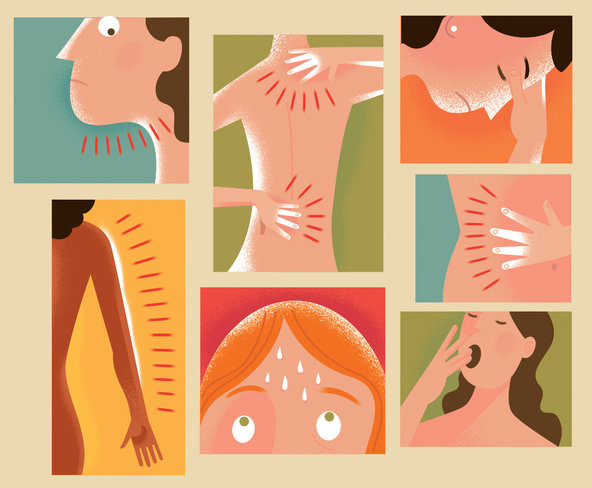
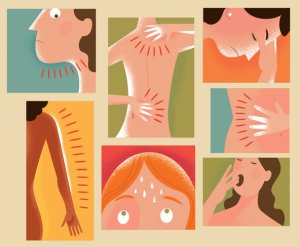
Women’s risks and symptoms of an impending heart attack are very different than men’s. Until recently, we all knew the crushing chest pain and the pain traveling down the left arm as symptoms of heart attack. But those men’s symptoms, women experience heart attack as a pain in the neck,  jaw, shoulder or abdomen, they experience right arm pain, and shortness of breath or nausea.

My mom also suffered from depression and anxiety and had Lupus, some of the risk factors mentioned in this article. She didn’t go to the hospital. If she’s gone to the hospital earlier, there is no reason she wouldn’t have survived. Her heart recovered, but all her other organs failed, probably due to the anoxia they experienced while her heart was weakened during and after her heart attack. I miss her so much. She was a remarkable woman, getting her MD in India in 1960. She was brilliant, a gourmet cook, an amazing gardener, a singer, a brilliant OB/GYN and surgeon, she loved poetry, she designed her own house. She loved us, her three children and three grandchildren to the moon and back. I miss her, we all miss her. Her obituary, which my brother wrote is below: https://www.facebook.com/notes/samina-zaineb-raza/my-mother-sabahat-ahsan/10152753718111892

Time is of the essence! Recognition of symptoms is of the essence. Understanding of risks is of the essence. Please read this article, and learn and understand.

http://well.blogs.nytimes.com/2015/04/13/young-womens-hearts-at-risk/?_r=2

Young Women’s Hearts at Risk

Attention, American women, especially young women: Have you got the heart to save yours?

Although long thought of as a man’s disease, heart disease afflicts as many women, though women tend to develop and die from it about 10 years later. And while coronary mortality rates have declined over all, there are signs that the disease, its precursors and its potentially fatal consequences are increasing among young women.

A 2007 study in The Journal of the American College of Cardiology referred to the rise in cardiovascular risk factors among young women as “the leading edge of a brewing storm.

While so many women worry about cancer, only slightly more than half realize that heart disease is their No. 1 killer, according to the Centers for Disease Control and Prevention. More women in the United States die from cardiovascular causes — heart disease and stroke — than from all forms of cancer combined.

Numerous campaigns by the American Heart Association and other organizations have raised awareness among women of their mostly self-inflicted risks and of symptoms that are typically far more subtle in women than in men.

“Even if they believe they’re having a heart attack, 36 percent don’t call 911,” said Dr. Holly S. Andersen, director of education and outreach at the Perelman Heart Institute at Weill Cornell Medical College, citing the latest heart association national survey. “Women are more likely to wait when they have symptoms and, when they get to the hospital, say that they have indigestion, not chest pain — a big mistake.”

Rather than crushing chest pain, women in the throes of a heart attack more often experience discomfort in the neck, jaw, shoulder, upper back or abdomen, dizziness, nausea, right arm pain, shortness of breath, and sweating or unusual fatigue. Almost two-thirds of women who die suddenly of a heart attack had no prior symptoms.

Doctors too often fail to take a woman’s risk seriously and treat it aggressively, or to provide adequate recommendations for prevention, Dr. Andersen and other experts say. “This is especially true for young women,” she said. Yet, she added, “among women between the ages of 29 and 45, it looks like the incidence of heart disease is rising.”

There are ample reasons. Stress, for example, is a known, though not often cited, risk factor, “and the youngest women in this country are more stressed than ever,” she said. “They’re always ‘on’ and self-comparing.”

Smoking — marijuana as well as cigarettes — is a coronary risk. And while smoking has declined among older women, “young women are the ones still smoking,” Dr. Andersen said. Women on birth control pills who smoke are especially at risk.

Two other major risk factors, obesity and diabetes, are more rampant than ever, especially among Hispanic women born in the United States, half of whom develop diabetes by age 70.

“We’re good at treating heart disease, but we’re failing at prevention,” Dr. Andersen said. As Dr. Nanette K. Wenger, a professor emeritus at the Emory University School of Medicine,noted in 2010, the steady annual decline in heart disease deaths among women since 2000 resulted more from better care than from prevention.

“A particular unmet need is prevention at younger age, the subset of women less likely to undertake preventive behaviors,” she wrote. Yet decades ago, heart disease was found to originate in the teenage years or early 20s and gradually worsen unless preventive measures were undertaken.

When women with high levels of artery-damaging LDL cholesterol are prescribed statins, the treatment often provides “false reassurance” that the drugs “can compensate for poor dietary choices and a sedentary life,” Dr. Rita F. Redberg, a cardiologist at the University of California, San Francisco, and editor of JAMA Internal Medicine, wrote last year. In one study she cited, “statin users significantly increased their fat intake and calorie consumption, along with their B.M.I. (body mass index), in the last decade. Focusing on cholesterol levels can be distracting from the more beneficial focus on healthy lifestyle to reduce heart disease risk.”

A diet rich in fruits and vegetables, which contain natural antioxidants that statins don’t provide, is more important, Dr. Andersen said. “So is getting regular aerobic exercise, spending time with friends and getting a good night’s sleep — six to eight hours,” she said. “Chronic lack of sleep doubles the risk of heart disease.”

Coronary risk is also greater among women who carry extra weight around the abdomen — the so-called apple shape. Abdominal fat is metabolically active and can result in high blood pressure and diabetes, even if a woman is otherwise slender.

“One’s waistline is more important than B.M.I.,” Dr. Andersen said. “Skinny people with big waists are less likely to live long.”

Depression and lack of social support, more common among older women, are also often underappreciated risk factors. “Social isolation is detrimental,” she said. “Women who regularly spend time with close friends live longer and have less heart disease.”

A positive outlook on life — laughing a lot, having a sense of humor, being optimistic and seeing the glass as half full — is also protective, Dr. Andersen said, adding that “15 minutes of laughter is equivalent in preventive value to 30 minutes of aerobic exercise.”

Although “marital stress increases a woman’s risk of coronary heart disease,” having a compatible partner or a pet is beneficial, she said.

Several factors that women may experience early in life, especially two pregnancy-related conditions — pre-eclampsia and gestational diabetes — have been linked to a greater coronary risk years later. Additional risk factors now emerging for women include migraines with aura and inflammatory diseases like lupus and rheumatoid arthritis.

Two other conditions more prevalent among women cause symptoms that are often overlooked by them and their doctors as likely due to heart attack. Women are more prone to develop blockages in the small vessels that feed the heart, which can cause pressure or tightness in the chest rather than crushing pain, according to the National Heart, Lung and Blood Institute.

They are also far more susceptible to “broken heart syndrome”brought on by events like the sudden loss of a loved one, the loss of a job or money, divorce, a bad accident, a natural disaster, or even a surprise party. The resulting intense stress reaction of chest pain and shortness of breath, although usually temporary, can mimic a heart attack, though it rarely causes one.
How Smartphone Apps Can Treat Bipolar Disorder and Schizophrenia

This smartphone app, called Priori, monitors your behavior. It can listen to your speech, if it starts to becomes very loud, rapid and shifting from topic to topic, as it does in mania, then after collecting all this data, in the future, the app will warn you and your doctor of an impending manic phase or depressive phase. Startup companies, universities, and research clinincs are developing apps that will “Through the discreet and continuous recording of social and physical behavior, these apps can detect changes in mental well-being, deliver micro-interventions when and where needed, and give patients a new awareness of their own illnesses. In the long run, they may even diminish the stigma attached to mental health disorders.”

This can be a wonderful aid to people such as me, who have bipolar d/o and are very aware and cognizant of this fact when they are in a normal phase. But when mania or, to a lesser degree, depression, hits, this awareness goes down and eventually disappears. That is the nature of mania and severe depression, your brain is not functioning well, so it cannot recognize you are sick. That is the ironic and heart breaking part of having mental illness, why people commit suicide… If there is a tool which can help you recognize the fact that you are getting ill when your own brain is unable to do it, then it will help so much in managing bipolar d/o, depression, even schizophrenia. This is one app that I would readily endorse, and I would definitely label it smart!

http://www.wired.com/2014/11/mental-health-apps/

“BRYAN TIMLIN ALWAYS carries an iPhone and an Android phone.

The 57-year-old is an app and graphic designer with a Michigan company called OptHub, but he doesn’t carry two phones for work. He carries the iPhone because that’s what he likes, and he carries the Android because it’s what he needs.

The Android phone monitors his behavior. Five years ago, Timlin was diagnosed with rapid-cycling bipolar disorder, a mental illness characterized by four or more manic or depressive episodes a year. Some episodes, he says, can last as long as eight weeks. “Being bipolar is like jumping out of an airplane knowing you don’t have a parachute on,” he says. “You know you’re going to be hurt, but the high is so euphoric that it’s worth the risk. You can deal with the consequences later.” With his Android phone, he hopes to deal with these moments in other ways.

At the moment, the app only collects data on his behavior. But the hope is that it eventually will use this information to warn Timlin and his doctor to an impending bipolar episode.The phone, provided by researchers at the University of Michigan, includes an app called Priori that runs constantly in the background, using the phone’s microphone to analyze his voice and track when he is, and isn’t, speaking. Mania is typically marked by speech that’s loud and rapid, often with erratic leaps from topic to topic. Longer pauses or breaks can indicate depression.

Priori is one of many efforts to address mental health through smartphone apps. Tools gestating within startups, academic institutions, and research clinics aim to help people manage everything from severe depression to bipolar disorder and schizophrenia. Through the discreet and continuous recording of social and physical behavior, these apps can detect changes in mental well-being, deliver micro-interventions when and where needed, and give patients a new awareness of their own illnesses. In the long run, they may even diminish the stigma attached to mental health disorders.

“The question isn’t whether or not this technology is going to be used in healthcare and monitoring individuals with psychiatric illnesses,” says University of Michigan psychiatrist Melvin McInnis, who developed Priori alongside computer scientists at the university’s College of Engineering. “The question is really: How?”

Most of these apps—which include CrossCheck, from Dartmouth Psychiatric Research Center, and Companion, from a Boston-based startup called Cogito—aren’t yet publicly available. But some projects have completed trials with small groups of patients, larger trials are underway, and preliminary results are encouraging. These apps are based on objective, contextual data, and they require little work on the part of patients.

But, certainly, there are many hurdles to overcome—most notably the potential for these tools to mislead patients and compromise their privacy. Finding ways of regulating such apps is as important as refining their technology.

“I think this will have a liberating effect, and will extend the boundaries of healthcare in a really enormous way,” says Dr. Jeffrey Lieberman, psychiatrist in chief at the New York-Presbyterian Hospital/Columbia University Medical Center. “But there are also ethical and legal principles that will need to be established.”

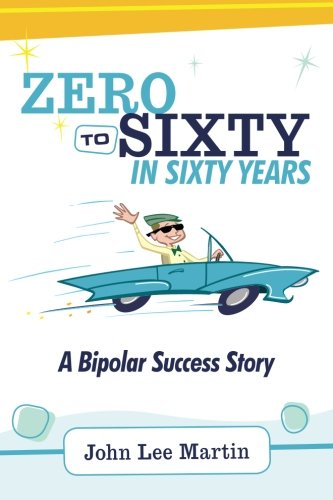
Zero to Sixty in Sixty Years: A Bipolar Success Story

41N1Tc6fWiL

A success story (below). John Martin attributes his success to exercise, a determined will, a supportive wife, God, and of course medication. Love to read success stories, gives me hope too! If Mr. Martin can do it, so can you and I. Seems the formula for success is always the same, a supportive person/people in your life, medication, exercise, belief in yourself and a higher power (!) and meditation and a support groups are beneficial as well. We were not born to live an easy, airy life, but we were born with amazing strength and determination to be able to thrive in spite of this illness. Cheers to us!

http://www.ahherald.com/columns-list/disabilities/19842-carolinian-with-bipolar-disorder-had-success

According to the National Institutes of Health, bipolar disorder (formerly manic-depressive illness) is a “brain disorder causing unusual shifts in mood, energy, activity levels, and the ability to carry out day-to-day tasks.” Affected people often have damaged relationships, poor school or occupational performance, and some commit suicide.

Sixty-seven year-old John Martin, who reads this column in the New Bern (NC) Sun Journal, has bipolar disorder 1, a form of the disorder in which the manic state dominates.

In a telephone interview, he said, “My symptoms started in 1966 at 18. I then made it through four years of the Navy, but boy did I struggle. I did my job, but (off work) sometimes stayed in bed for weeks due to depression. After the Navy, I put together two and a half good years at Oklahoma State, but the last semester I went crazy nuts.” After making up classes, he eventually graduated with a bachelor’s degree in engineering.

Over the years, Martin said his untreated manic periods often lasted two years each and included paranoia and delusions, after which he would have a couple “normal” months before slipping into depression. The cycle would then repeat. During manic periods, he had racing thoughts and was irritable, angry, paranoid, delusional, had insomnia, and, during one cycle, he drank heavily to dampen racing thoughts. To cope with insomnia, sometimes he boated on a local river in the middle of the night.

Martin said bipolar disorder often hurts family members most. For example, he and his wife married in 1983, separated several times before divorcing in 2004, and in 2008 re-united after his symptoms had improved considerably. He attributed his improved condition over the last decade to the Veteran’s Administration, exercise, a determined will, God, and a loving wife, Genevieve.

He said, “Over the years, I was in seven different (mental health) facilities in four different states.” To help others, Martin (using the name of John Lee Martin) chronicled his experiences in a 100-page book, Zero to Sixty in Sixty Years: A Bipolar Success Story.

He said, “Basically, I’ve outmanaged my symptoms. I read a lot about the disorder and got decent medication. I was always trying to get better. At one point, I was as bad off as anyone with bipolar disorder, but with some hard work, here I am. You’d be amazed how functional I am now (versus 2004).”

A Walk 

Went for a lovely walk at sunset. Still light enough to take pictures, but the sky was reddening in the west. Walked with my husband, he likes to walk in the neighborhood and I like to walk in the park, opposites even in this. Haha. We compromised, walked in the neighborhood to the park and walked home through the park. Feeling a bit low, not too low, just a bit. Just a bit slow. Oh well, nothing catastrophic. I’ll get over it. Exercise will help, have my FaceTime personal trainer session (my trainer is in California, I’m in Kentucky.) It works, he just sits at a Starbuck’s and drinks coffee while I exercise. Good for times when I have trouble motivating myself. The pics are from my walk. Nothing earth shattering and nothing catastrophic, I’d say that’s a good day! Does this even qualify as a Bipolar1Blog post? Hmmmm…