

 I marched. I marched with you my sisters and my brothers, my daughters and my sons. I marched for mother earth’s rights, I marched for sanity, for our rights, human rights, women’s rights, the right to love whom we want, the right to have love triumph. I wore my heart on my sleeve, confident the marchers wouldn’t crush it. My blood ran thick and red and strong and pure! My anger against this satanic administration drove me, my love for my great country and it’s equally great people propelled me. Expect Us! We Are Legion! Don’t discount us, in four years you’ll be gone and we’ll still be here. We’ll undo the damage you’ve done and pick up the pieces and proudly go on!
Posts
Urgent Alert from International Bipolar Foundation: Replace ACA Before Repealing.
 IBPF URGENT ADVOCACY ALERT
International Bipolar Foundation stands with public health experts and mental health advocates across the nation to urge Congress to preserve coverage and health benefits for Americans as the foremost priority in revising or repealing the Affordable Care Act (ACA or Obamacare). We urge our communities to join efforts to ensure that no one loses critical insurance or healthcare services.
The Senate is planning to pass a budget that will begin the process of repealing the ACA as soon as this Thursday, JANUARY 11. This will be the first step in taking health care away from people before having any plan to replace it.
“‘Replace, then repeal,’ is an essential strategy to assure that the 21 million Americans newly insured through the ACA continue to have health insurance to protect them in the face of medical emergencies and necessary routine care,” notes Ron Manderscheid, PhD, Executive Director of National Association of County Behavioral Health and Disability Directors and the National Association for Rural Mental Health. “It would be quite inhumane to suddenly drop these Americans from the insurance rolls. Such precipitous action also would have dire financial consequences for insurance companies providing ACA health insurance.”
“Millions of Americans affected by mental health conditions such as bipolar disorder need support and dependable healthcare,” says Eduardo Vega, IBPF senior policy advisor, “Repealing ACA without a replacement strategy puts 11 million Americans at risk of losing Medicaid coverage alone. Those who struggle with mental illness symptoms could have significant setbacks in their recovery if they were to lose or be denied coverage, and many more could be at risk of disability, financial distress or unemployment.”
TAKE ACTION NOW
Call the US Capitol Switchboard at (202) 224-3121 and ask to be connected to your Senators’ offices. Tell them we cannot take legislative or budget action to repeal ACA before replacing it.
Or
Go to https://www.senate.gov/senators/contact/ . Tell them we cannot take legislative or budget action to repeal ACA before replacing it.
The mission of International Bipolar Foundation is to improve understanding and treatment of bipolar disorder through research; to promote care and support resources for individuals and caregivers; and to erase stigma through education.
International Bipolar Foundation
858-598-5967 | hzupin@ibpf.org
International Bipolar Foundation
Sent by mleigh@ibpf.org
Cuddling is a Cost Effective, Drug-Free Solution To Treating Opioid Dependent Babies
I Struggle to Recover Myself
As I disappear into the abyss of anxiety and panic, my life suffers, my relationships suffer, I suffer, and my blog suffers. I don’t want to be here. I want to stop over thinking everything. I want to stop being a burden of fears upon my loved ones. I want to stop being terrified about my son and burdening him with my fears. I’ve tried Ativan, it worked for me in the past, but did not this time. I’m taking my L-Methylfolate, (see here: https://wordpress.com/post/bipolar1blog.com/3412)
I am taking 1200 mg if Lithium and 250 mg of quietipine.
I think the L-Methylfolate is helping a bit.
Letting go of my son and letting him handle his life will be better for him and me.
There are many reasons I have become an anxious, panic stricken wreck. Or is it only that I’ve developed an anxiety disorder and the reasons are tacked on to it after the fact? I don’t know. I only know I want my peace of mind back.
6 Ways To Spot the Differences Between ADHD and Bipolar in Children and Teens
Given the similarities between ADHD and Bipolar Disorder in children, it may oftentimes be difficult to distinguish between the two. Here are six general guidelines to spot the differences between the two disorders:
#1. Behavior/Attention vs. Mood
Bipolar disorder affects mood, whereas attention deficit/hyperactivity disorder (ADHD) affects attention, hyperactivity and impulsivity. Children and teens with ADHD typically have problems with cognitive functioning, distractibility and completing tasks/assignments. Bipolar disorder in this age group causes mood swings, which can move from manic (or hypomanic) to depressive lows. An ADHD child is inattentive due to his or her inability to focus on any one thing for a period of time. Conversely, a bipolar child going through a depressive state may be inattentive because he/she has lost any desire to care about the activity.
#2 Irritable Moods vs. Explosive Rage
Children with bipolar experience explosive rage. Different from anger, it is sudden and usually without provocation and can last for hours. It is closer to a seizure than an emotional event in that it is difficult to control. Children and teens with ADHD have temper tantrums and they typically don’t lose touch with reality or destroy property. As well, their angry outbursts are generally short in duration.
#3 Intensity of Moods
In a bipolar child, abnormal moods are intense—either low energy (depression) or high energy (mania). They have a more profound response to life events that can be out of proportion to the event, whereas the reaction to events in the lives of children with ADHD is generally considered expected and in relation to the event and less severe and intense.
#4 Duration of Mood Shifts
Moods for children with ADHD may come and go, and generally they don’t stay in a particular depressed or manic state. Bipolar children, on the other hand, have deep, life-disrupting manic feelings. Depression or mania can last for weeks or longer and these ongoing symptoms can cause significant life problems in key areas i.e. friends, school, at home.
#5 Mania vs. Hyperactivity
In bipolar mania, children and teens can exhibit grandiosity where they believe and insist they are the best in the world at something and then engage in risky behavior because of this. They may also need less sleep than other children. These children usually have racing thoughts, and affected speech. However, instead of grandiosity, children with ADHD are more prone to poor self-esteem due to negative feedback from adults regarding their behavior. They are also energetic when hyper but do not report racing thoughts.
#6 Treatment
A type of antipsychotic medication given to a bipolar child in a manic episode helps lower and even out the child’s energy level. As well, when a bipolar child in a depressive episode is given antidepressant, their mood typically improves after a few weeks and their energy and attention returns. Conversely, a child with ADHD is given a stimulant, which works more quickly than an antidepressant or antipsychotic medication and is able to better focus, with lower energy levels within a few days.
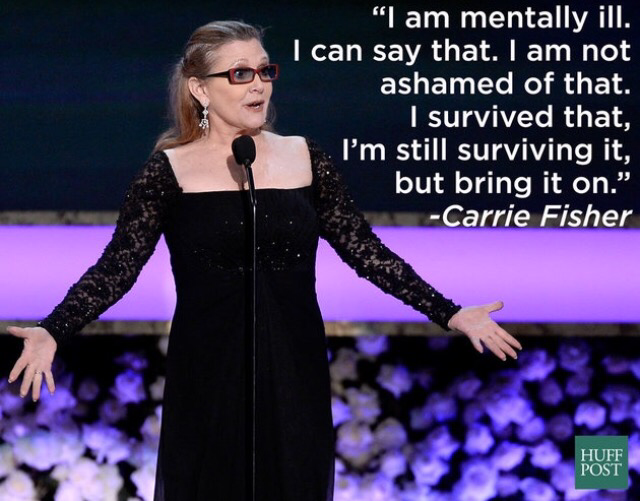
Carrie Fisher
E-Motion by Gaia.
E-Motion. Lose what needs to be lost, to find what needs to be found!
From Gaia
https://www.gaia.com/video/e-motion?fullplayer=preview
This is a preview, as you have to have a membership to watch the full 1.25 hours.
I do have a membership, but cannot put the member content on here.
This video is certainly intriguing and worth your while to listen to. I am planning on taking full advantage of this GAIA membership and reading/watching as many things that I can and then sharing them with my loved ones and friends. I’m adding some screenshots of the video below, they might entice some people to listen to this 🙂





Scientists discover neuron-producing stem cells in the membranes covering the brain

Discovery brings with it possible implications for brain regeneration –
In a cross-domain study directed by professor Peter Carmeliet (VIB – KU Leuven), researchers discovered unexpected cells in the protective membranes that enclose the brain, the so called meninges. These ‘neural progenitors’ (stem cells that differentiate into different kinds of neurons) are produced during embryonic development.
See Also: Stem cells in the brain: Limited self-renewal
These findings show that the neural progenitors found in the meninges produce new neurons after birth, highlighting the importance of meningeal tissue as well as these cells’ potential in the development of new therapies for brain damage or neurodegeneration. A paper highlighting the results is published in the journal Cell Stem Cell.
Scientists’ understanding of brain plasticity, or the ability of the brain to grow, develop, recover from injuries and adapt to changing conditions throughout our lives, has been greatly broadened in recent years. Before the discoveries of the last few decades, neurologists once thought that the brain became ‘static’ after childhood. This dogma has changed, with researchers finding more and more evidence that the brain is capable of healing and regenerating in adulthood, thanks to the presence of stem cells. However, neuronal stem cells were generally believed to only reside within the brain tissue, not in the membranes surrounding it.
The meninges: unappreciated no more
Believed in the past to serve a mainly protective function to dampen mechanical shocks, the meninges have been historically underappreciated by science as having neurological importance in its own right. The data gathered by the team challenges the current idea that neural precursors—or stem cells that give rise to neurons—can only be found inside actual brain tissue.
Learn More: Scientists sniff out unexpected role for stem cells in the brain
Prof. Peter Carmeliet notes: “The neuronal stems cells that we discovered inside the meninges differentiate to full neurons, electrically-active and functionally integrated into the neuronal circuit. To show that the stem cells reside in the meninges, we used the extremely powerful single-cell RNA sequencing technique, a very novel top-notch technique, capable of identifying the [complex gene expression signature] nature of individual cells in a previously unsurpassed manner, a première at VIB.”
Following up on future research avenues
When it comes to future leads for this discovery, the scientists also see possibilities for translation into clinical application, though future work is required.
“An intriguing question is whether these neuronal stem cells in the meninges could lead to better therapies for brain damage or neurodegeneration. However, answering this question would require a better understanding of the molecular mechanisms that regulate the differentiation of these stem cells,” says Carmeliet. “How are these meningeal stem cells activated to become different kinds of neurons? Can we therapeutically ‘hijack’ their regeneration potential to restore dying neurons in, for example, Alzheimer’ Disease, Parkinson’s Disease, amyotrophic lateral sclerosis (ALS), and other neurodegenerative disorders? Also, can we isolate these neurogenic progenitors from the meninges at birth and use them for later transplantation? These findings open up very exciting research opportunities for the future.”
Moving into unchartered territory is high risk, and can offer high gain, but securing funding for such type of research is challenging. However, Carmeliet’s discoveries were made possible to a large extent by funding through “Opening the Future: pioneering without boundaries”, a recently created Mecenas Funding Campaign for funding of high risk brain research but with potential for breakthrough discoveries, started up by the KU Leuven in 2013 and unique in Flanders.
Read Next: A better way to grow motor neurons from stem cells
“Being able to use such non-conventional funding channels is of utmost importance to break new boundaries in research,” says Carmeliet. “This unique Mecenas funding initiative by the KU Leuven is innovative and boundary-breaking by itself. Our entire team is enormously grateful for the opportunities it has created for our investigations”.
Note: Material may have been edited for length and content. For further information, please contact the cited source.
VIB – Flanders Institute for Biotechnology press release
Publication
Bifari F et al. Neurogenic Radial Glia-like Cells in Meninges Migrate and Differentiate into Functionally Integrated Neurons in the Neonatal Cortex. Cell Stem Cell, Published Online November 23 2016. doi: 10.1016/j.stem.2016.10.020
Recently on Twitter
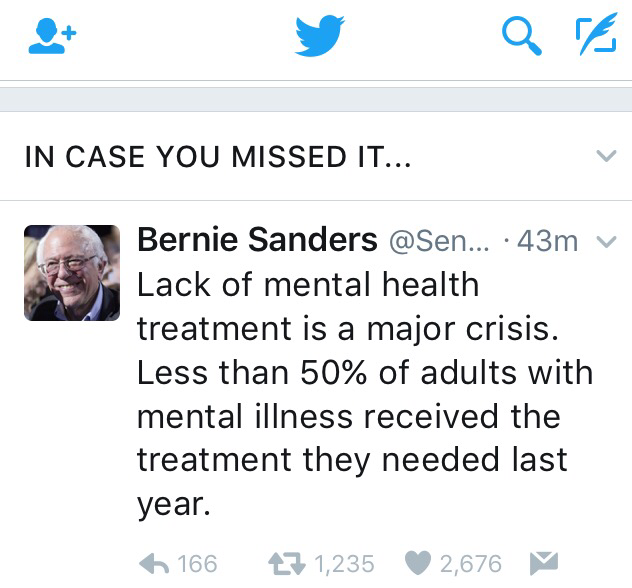

So the Anxiety is Unrelenting
As some of you may have noticed, I have not been blogging much of late. The reason you ask? Well the reason is anxiety. I have somehow developed an anxiety disorder, I awaken with what I can only describe as an anxiety or panic attack. Then I have to spend some time talking myself out of the anxious, fearful, panicked thoughts. Let me assure you this is not a fun way to start my day. The thoughts are always about my son. He recently became a lawyer, and passed the NYS Bar exam. He had found a job but it turns out the boss was the boss straight from hell, so my son had to leave this position. His boss said some extremely disgusting things to him. I’m pretty sure this man is a lunatic and a sociopath. I’m just sorry my son’s first experience as a lawyer was so awful.
He is still living in Buffalo, and I am in Louisville. He is looking for another job, and I am very worried about him finding said job. All the advertised jobs are asking for 2 – 8 years of experience. Not many entry level jobs are advertised at all. So that is worrisome.
He lives alone, and that is very worrisome to me. His girlfriend moved back to NYC to live with her family and although they are adorable together, it’s a long distance relationship.
I so wish we lived in the same city, a few miles away from each other, so if he needed anything, we would be there.
My heart breaks that I made this child of mine and now I have left him alone to fend for himself. I don’t like it. Everyone tells me that he has to live by himself to learn to be independent. I don’t like it. Yes I want him to be independent, but I also don’t want to be 600 miles away from him.
I keep telling myself that he is fine, that he is capable of taking care of himself, but I’m not really sure about that. I just keep telling myself he will be fine, and forcing myself to believe it. Trying to believe it. I want this awful anxiety and worry to go away. I’ve tried Ativan, it didn’t help that much.
 Palestine WILL Be Free