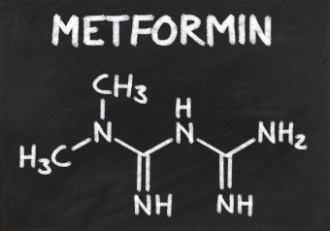
Metformin, also known as Glucophage, a drug used to treat Diabetes Type 2, has been shown to have a longterm protective effect against neurodegenrative diseases such as Alzheimer’s and Parkinson’s disease.
Metformin, also known as Glucophage, a drug used to treat Diabetes Type 2, has been shown to have a longterm protective effect against neurodegenrative diseases such as Alzheimer’s and Parkinson’s disease.
The mechanism of this protection is unclear, however it is known that Metformin does cross the blood brain barrier.
I think it is pretty amazing that a drug that is used to lower glucose levels in Type 2 Diabetes patients can have a protective effect against neurodegenerative diseases! It will be interesting to find out how this occurs. This may be an indication as to how it does this http://www.medscape.com/viewarticle/767139. This article says “Metformin may help renew neurons.” In this article they say that Metformin activates a key pathway that activates neurogenesis!
And yet another article http://www.medscape.com/viewarticle/807886, which says
Metformin cuts dementia risk in Type 2 Diabetes. Whereas other therapies such as Insulin increased dementia risk!
All amazing findings. I wonder what it would do people who don’t have diabetes? Well for one it would lower their blood sugar too much so it cannot be used on wildtype people. So the folks who have Type 2 Diabetes get to enjoy this neuro-protective effect.
The article in the title, or the titular article, haha, always wanted to use that word: http://www.medscape.com/viewarticle/864681
Metformin may exert a long-term protective effect against neurodegenerative diseases including Alzheimer’s and Parkinson’s, new research suggests.
Findings from a retrospective longitudinal study of data from Veterans’ Affairs electronic medical records were presented June 11 here at the annual American Diabetes Association (ADA) 2016 Scientific Sessions by Qian Shi, a PhD candidate at Tulane University, New Orleans, Louisiana.
“For metformin exposure longer than 2 years, we found a significant reduction in neurodegenerative disease.…Metformin may be neuroprotective,” Ms Shi told Medscape Medical News.
The results were consistent even after researchers controlled for kidney function, chronic renal disease, and other diabetes medications.
The mechanism is unclear, but metformin is known to cross the blood-brain barrier, she noted.
Asked to comment, session moderator Lawrence S Phillips, MD, professor of medicine at Emory University School of Medicine, Atlanta, Georgia, said: “Metformin has pleiotropic effects, and it is of great interest for a variety of reasons.”
He added that there was an entire symposium here yesterday at the ADA meeting devoted to emerging findings regarding metformin, including its possible preventive roles in cancer and heart disease.
But at the same time, Dr Phillips cautioned that even though the investigators controlled for renal function and other potential confounders, “the hard question in all of these epidemiologic analyses is ruling out confounding by indication.…You wonder if the patients who didn’t get metformin or stay on it were somehow sicker in ways other than what [estimated glomerular filtration rate] eGFR might have been picked up in the analysis. I think that’s very hard to tell in an epidemiologic analysis of an administrative database.”
Nonetheless, he told Medscape Medical News, “It absolutely deserves further study.”
Effect Seen After 2 Years
Ms Shi said that prior data on metformin and neurodegenerative diseases have been conflicting. While two previous population studies have shown that long-term treatment with metformin may reduce the risk of cognitive decline, other data indicated that cognitive performance was worse among patients taking metformin, possibly due to vitamin B12 deficiency. And long-term use of the drug was associated with a slightly increased risk for Alzheimer’s disease in another trial.
The current study population consisted of patients with type 2 diabetes older than 50 years from the Veterans Affairs electronic medical records database who were receiving insulin treatment. They were followed from the time of diagnosis until death or outcome.
Out of 150,435 who met those criteria, 41,696 were excluded for a variety of confounders, including neuropathy, vitamin B12 deficiency, prior neurodegenerative diseases, cognitive impairment, or late effects of cerebrovascular disease, cancer, or end-stage renal disease. Patients who took insulin for less than two-thirds of the study period were also excluded.
The final study sample was 6046 patients (over 90% male) with a mean age of 63 years. They were followed for a median of 5.25 years.
In addition to renal function and other diabetes medications, Ms Shi and colleagues also controlled for age, gender, race, tobacco use, obesity, and history of other complications and comorbidities at baseline.
During follow-up, 334 cases of dementia were diagnosed, as were 100 of Parkinson’s, 71 Alzheimer’s disease cases, and 19 with cognitive impairment.
The adjusted incidence of developing one or more neurodegenerative diseases per 100 person-years was 2.08 for those who never used metformin, 2.47 for those using metformin less than 1 year, 1.61 for less than 2 years, 1.30 for 2 to 4 years, and 0.49 for 4 or more years.
The protective relationship between metformin and neurodegenerative disease was statistically significant only after 2 years.
Compared with no metformin, the hazard ratios for 2 to 4 years of metformin therapy for all neurodegenerative diseases combined was 0.623 and for 4 or more years 0.216.
The findings were also significant for dementia specifically (0.567 at 2–4 years and 0.252 for 4+ years) and for Parkinson’s and Alzheimer’s diseases only beyond 4 years (0.038 and 0.229, respectively).
“Similar risk reductions occurred in dementia and Parkinson’s but were not duplicated to other subtype diseases, most likely due to the limited numbers of events,” Ms. Shi explained.
“A large-scale prospective cohort study may be needed to confirm the relationship and the causality between metformin exposure and the risk for neurodegenerative disease,” she concluded.























































 Home, what is home? Coming back to Buffalo, I always feel I’m home. However, that feeling is getting less strong and anyway, this is not my home any longer. I live in Louisville now, so technically that is my home. But if home is where the heart is, then Buffalo is my home, still. I moved here when I was just shy of my 12th birthday in 1972, and lived here pretty continuously till November 2013, when I moved to Louisville. From NY to KY, believe me I prefer NY. I still have my NY license. I’ll be changing it soon to KY though, so I can vote in Kentucky this November. Terrified of these elections. Hope I don’t have to move to CA, as in Canada and make that my home. Yes it’s the running joke for everyone terrified of this upcoming election’s results. But I digress. This post is about home, the ephemeral, emotional, sometimes imaginary, always beloved construct that all of us are trying to find. And lucky, the ones who have found it and inhabit it! Where are those darn ruby slippers when you need them!?

 : in my experience, it is the nicest, most supportive, most positive, informative, happy, socially conscious place to be! Love it. I could do without having everyone know when I’m on, and everyone knowing what I liked, oh and yes their owning all my data and pictures… But sharing with people, my relatives overseas and friends in US, as well as all over the world in one fell sweep is priceless!
 : I love it, there are some very pretty pictures on it, and everyone likes the pictures and the comments are always positive! I think the most likes I’ve gotten is about 15… I did get 28 views of a video (Zumba) I posted… but I recently discovered hashtags, haha, so lets see if that improves the likes…
 : It is quite indifferent to me and I am quite indifferent to it, (shrugging my shoulders, is there a shmsh?) I never get any replies or likes or anything on my once every month tweets. I also don’t comment much on anyone else’s. I find Twitter a bit meaningless, maybe just my age, as I know things can often go viral there and all… whatever, it doesn’t speak to me.
 : Youtube is great, I love the videos, I’ve posted some. Not as interactive as the other social media sites, but the videos can be amazing, and I like it.
 : This is the only site I’ve had a very negative experience with. I was posting my blog posts on, I think it was the bipolar subreddit, and people on there started saying “this person has an ulterior motive, stay away from them.” Then one of them looked at my blog and said I explicitly stated that I wanted to get more views by posting on Reddit. Duh, of course I wanted to get more views, that’s why I post on FB, Twitter, Google +. So anyway, I don’t post in that subreddit anymore, I just post in other ones. But it’s not very user friendly and tells you all the time that “You’re doing that too often, come back in 8 minutes!” Sheesh, a website with an attitude. Also you can’t make your own sunreddit till you’ve been on it for a month and received so many karma points. I may just stop using it.
 : Awww Flickr, I think that was the first such site I ever used, and posted a bunch of pictures, but I haven’t really been using it for years. There are some amazing photographs on it though.
 : I have a google+ account, basically all I ever use it for is to post my blogposts from this blog on it. I never get any likes on it, no one has ever indicated that they are reading the posts, no comments. So it’s not all that useful for me…
 : I have an account here, but I don’t think I’ve pinned much here. I don’t really understand the point of pinterest… but that’s just me. I’m sure many people find it absolutely fascinating!
 Palestine WILL Be Free