Palestine WILL Be Free

Is Depression Just Bad Chemistry?

Hmmm, seems it’s more than that. It’s not just lower levels of Serotonin, like those cute little rock people show us in the commercial for Zoloft. Some antidepressants that decrease Serotonin levels actually help with the symptoms of depression. Seems a lot of areas in the brain, eg. the amygdala, the hypothalamus, the anterior cingulate cortex, all may be of different sizes and activities than in people who do not suffer from depression. Also deep brain stimulation of the subcallosal cingulate gyrus alleviates depression symptoms. Well, it seems the whole thing is much more complicated than little rock people becoming happy and hopping around with little bluebirds… the red bolds are mine.

http://www.scientificamerican.com/article/is-depression-just-bad-chemistry/

A commercial sponsored by Pfizer, the drug company that manufactures the antidepressant Zoloft, asserts, “While the cause [of depression] is unknown, depression may be related to an imbalance of natural chemicals between nerve cells in the brain. Prescription Zoloft works to correct this imbalance.” Using advertisements such as this one, pharmaceutical companies have widely promoted the idea that depression results from a chemical imbalance in the brain.

The general idea is that a deficiency of certain neurotransmitters (chemical messengers) at synapses, or tiny gaps, between neurons interferes with the transmission of nerve impulses, causing or contributing to depression. One of these neurotransmitters, serotonin, has attracted the most attention, but many others, including norepinephrine and dopamine, have also been granted supporting roles in the story.

Much of the general public seems to have accepted the chemical imbalance hypothesis uncritically. For example, in a 2007 survey of 262 undergraduates, psychologist Christopher M. France of Cleveland State University and his colleagues found that 84.7 percent of participants found it “likely” that chemical imbalances cause depression. In reality, however, depression cannot be boiled down to an excess or deficit of any particular chemical or even a suite of chemicals. “Chemical imbalance is sort of last-century thinking. It’s much more complicated than that,” neuroscientist Joseph Coyle of Harvard Medical School was quoted as saying in a blog by National Public Radio’s Alix Spiegel.

Indeed, it is very likely that depression stems from influences other than neurotransmitter abnormalities. Among the problems correlated with the disease are irregularities in brain structure and function, disturbances in neural circuitry, and various psychological contributions, such as life stressors. Of course, all these influences ultimately operate at the level of physiology, but understanding them requires explanations from other vantage points.

Are Your Chemicals out of Balance?
Perhaps the most frequently cited evidence in support of the chemical imbalance hypothesis is the effectiveness of antidepressants, many of which increase the amounts of serotonin and other neurotransmitters at synapses. Zoloft, Prozac and similar selective serotonin reuptake inhibitors (SSRIs) result in such an increase and can often relieve depression, at least when it is severe. As a result, many believe that a deficiency in serotonin and other neurotransmitters causes the disorder. But just because a drug reduces symptoms of a disease does not mean that those symptoms were caused by a chemical problem the drug corrects. Aspirin alleviates headaches, but headaches are not caused by a deficiency of aspirin.

Evidence against the hypothesis comes from the efficacy of a newly developed antidepressant, Stablon (Tianeptine), which decreases levels of serotonin at synapses. Indeed, in different experiments, activation or blockage of certain serotonin receptors has improved or worsened depression symptoms in an unpredictable manner. A further challenge to the chemical imbalance hypothesis is that many depressed people are not helped by SSRIs. In a 2009 review article psychiatrist Michael Gitlin of the University of California, Los Angeles, reported that one third of those treated with antidepressants do not improve, and a significant proportion of the remainder get somewhat better but remain depressed. If antidepressants correct a chemical imbalance that underlies depression, all or most depressed people should get better after taking them. That they do not suggests that we have only barely begun to understand the disorder at a molecular level. As a result, we must consider other, nonchemical leads.

This Is Your Brain on Depression
A possible clue lies in brain structures. Imaging studies have revealed that certain brain areas differ in size between depressed and mentally healthy individuals. For example, the amygdala, which responds to the emotional significance of events, tends to be smaller in depressed people than in those without the disorder. Other emotional regulatory centers that appear to be reduced in volume are the hippocampus, an interior brain region involved in emotional memory, the anterior cingulate cortex, which helps to govern impulse control and empathy, and certain sections of the prefrontal cortex, which plays an important role in emotional regulation. Nevertheless, the effects of these shrinkages on depression, if any, remain an open question.

Neuroimaging studies have revealed that the amygdala, hypothalamus and anterior cingulate cortex are often less active in depressed people. Some parts of the prefrontal cortex also show diminished activity, whereas other regions display the opposite pattern. The subcallosal cingulate gyrus, a region near the anterior cingulate, often shows abnormal activity levels in depressed individuals. These differences may contribute to depression, but if they do, scientists are not sure how.

In 2012 neurosurgeon Andres M. Lozano of the University of Toronto and his associates studied the effects of deep brain stimulation of the subcallosal cingulate gyrus in depressed patients who had not benefited from standard treatments. The intervention led to a significant reduction in symptoms of depression, supporting the idea that a dysfunction in this brain area may be involved in the illness.

Findings also point to a crucial role for psychosocial factors such as stress, especially when it arises from a loss of someone close to you or a failure to meet a major life goal. When someone is under a good deal of stress, a hormone called cortisol is released into the bloodstream by the adrenal glands. Over the short term, cortisol helps humans cope with dangers by mobilizing energy stores for flight or fight. But chronically high cortisol levels can harm some bodily systems. For example, at least in animals, excess cortisol reduces the volume of the hippocampus, which in turn may contribute to depression. Despite such data, we still do not know if stress alters the human brain in ways that can lead to depression.

Seeing the Elephant
Throughout this column, we have described associations between various brain changes and depression. We have not talked about “causes,” because no studies have established a cause-and-effect relation between any brain or psychosocial dysfunction and the disorder. In addition, depression almost certainly does not result from just one change in the brain or environmental factor. A focus on one piece of the depression puzzle—be it brain chemistry, neural networks or stress—is shortsighted.

The tunnel-vision approach is reminiscent of a classic story in which a group of blind men touch an elephant to learn what the animal looks like. Each one feels a different part, such as the trunk or the tusk. The men then compare notes and learn that they are in complete disagreement about the animal’s appearance. To understand the causes of depression, we have to see the entire elephant—that is, we must integrate what we know at multiple scales, from molecules to the mind to the world we live in.


Exercise, Reading, Healing

I went to the gym today to begin using my personal training sessions. My trainer, Jaime, measured me and I am so thrilled, I found out my waist is 25 inches! Also, I did 25 sit ups, 20 pushups, and the “wall sit” for over 2 minutes! I could have kept sitting too 🙂 Pretty good stats for the beginning. I feel really happy, and excited to be embarking on a physical fitness journey again. I’ve let exercising slide a bit, but it is time. The beach is only a few months away haha.

Sorry for the “Dear Diary” tone of this post, but that’s all I have today, and actually, considering I feel a real sense of wellbeing, it is enough for me 🙂

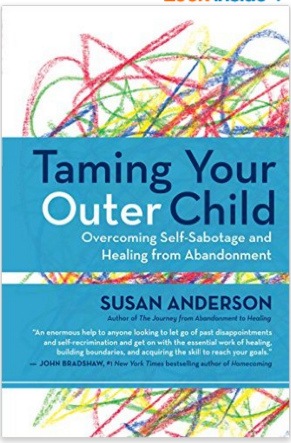
The reason I’ve been ignoring the physical side of me is because I’ve been intensively working on the emotional, abandonment, abuse issues and healing from them. I have read one book (a long one), and I still have many more on my list. And happily, what I have learned from the book I’ve read and from perusing many others, as well the wise people who wrote them, is that healing is possible! It is very possible! And unbelievably so, but I have been feeling the beginnings of healing inside me. I recognize my “inner child”, or Little, and I recognize when she is feeling scared and I know to give her love and reassurance. That is healing! Not to get beside myself, and feel bereft, and look to something or someone outside of my self for help or love or anything. But to give this love and reassurance to my self, that is healing! And I am doing this all the time now. And, so, as a result, I am feeling emotionally stronger, more resilient and much less needy. Hallelujah!

Below are the books I have ordered. I have read “From Abandonment to Healing” by Susan Anderson.  And  I’ll be starting “Changing Course” by Claudia Black next.

BOOKS

BOOK 1BOOK 2Book 3

“Anchored to the fate of my life” by Pieces of Bipolar

Such truth and pain in these words, and such strength. Unless you’ve been through this, you’ll never know. But then I’ll never know what you’ve walked through either. Life demands strength, we cannot be weak and wallow and expect to thrive. After everything, after the fall, after the storm, after it all, the one standing is the strong one.

How Walking in Nature Changes the Brain (hint: it’s good!)

http://mobile.nytimes.com/blogs/well/2015/07/22/how-nature-changes-the-brain/?utm_source=FB&utm_medium=social&utm_campaign=FB_paid&referer=http://m.facebook.com

JULY 22, 2015
A walk in the park may soothe the mind and, in the process, change the workings of our brains in ways that improve our mental health, according to an interesting new study of the physical effects on the brain of visiting nature.

Most of us today live in cities and spend far less time outside in green, natural spaces than people did several generations ago.
City dwellers also have a higher risk for anxiety, depression and other mental illnesses than people living outside urban centers, studies show.
These developments seem to be linked to some extent, according to a growing body of research. Various studies have found that urban dwellers with little access to green spaces have a higher incidence of psychological problems than people living near parks and that city dwellers who visit natural environments have lower levels of stress hormones immediately afterward than people who have not recently been outside.
But just how a visit to a park or other green space might alter mood has been unclear. Does experiencing nature actually change our brains in some way that affects our emotional health?
That possibility intrigued Gregory Bratman, a graduate student at the Emmett Interdisciplinary Program in Environment and Resources at Stanford University, who has been studying the psychological effects of urban living. In an earlier study published last month, he and his colleagues found that volunteers who walked briefly through a lush, green portion of the Stanford campus were more attentive and happier afterward than volunteers who strolled for the same amount of time near heavy traffic.
But that study did not examine the neurological mechanisms that might underlie the effects of being outside in nature.
So for the new study, which was published last week in Proceedings of the National Academy of Sciences, Mr. Bratman and his collaborators decided to closely scrutinize what effect a walk might have on a person’s tendency to brood.
Brooding, which is known among cognitive scientists as morbid rumination, is a mental state familiar to most of us, in which we can’t seem to stop chewing over the ways in which things are wrong with ourselves and our lives. This broken-record fretting is not healthy or helpful. It can be a precursor to depression and is disproportionately common among city dwellers compared with people living outside urban areas, studies show.
Perhaps most interesting for the purposes of Mr. Bratman and his colleagues, however, such rumination also is strongly associated with increased activity in a portion of the brain known as the subgenual prefrontal cortex.
If the researchers could track activity in that part of the brain before and after people visited nature, Mr. Bratman realized, they would have a better idea about whether and to what extent nature changes people’s minds.
Mr. Bratman and his colleagues first gathered 38 healthy, adult city dwellers and asked them to complete a questionnaire to determine their normal level of morbid rumination.
The researchers also checked for brain activity in each volunteer’s subgenual prefrontal cortex, using scans that track blood flow through the brain. Greater blood flow to parts of the brain usually signals more activity in those areas.
Then the scientists randomly assigned half of the volunteers to walk for 90 minutes through a leafy, quiet, parklike portion of the Stanford campus or next to a loud, hectic, multi-lane highway in Palo Alto. The volunteers were not allowed to have companions or listen to music. They were allowed to walk at their own pace.
Immediately after completing their walks, the volunteers returned to the lab and repeated both the questionnaire and the brain scan.
As might have been expected, walking along the highway had not soothed people’s minds. Blood flow to their subgenual prefrontal cortex was still high and their broodiness scores were unchanged.
But the volunteers who had strolled along the quiet, tree-lined paths showed slight but meaningful improvements in their mental health, according to their scores on the questionnaire. They were not dwelling on the negative aspects of their lives as much as they had been before the walk.
They also had less blood flow to the subgenual prefrontal cortex. That portion of their brains were quieter.
These results “strongly suggest that getting out into natural environments” could be an easy and almost immediate way to improve moods for city dwellers, Mr. Bratman said.
But of course many questions remain, he said, including how much time in nature is sufficient or ideal for our mental health, as well as what aspects of the natural world are most soothing. Is it the greenery, quiet, sunniness, loamy smells, all of those, or something else that lifts our moods? Do we need to be walking or otherwise physically active outside to gain the fullest psychological benefits? Should we be alone or could companionship amplify mood enhancements?
“There’s a tremendous amount of study that still needs to be done,” Mr. Bratman said.
But in the meantime, he pointed out, there is little downside to strolling through the nearest park, and some chance that you might beneficially muffle, at least for awhile, your subgenual prefrontal cortex.

“I spent five days looking up ways to kill myself.” by Shareen Mansfield

Wow, this is very powerful and scary yet such important information for anyone experiencing suicidal thoughts on antidepressants. It’s by Shareen Mansfield.

Reblogged on WordPress.com

Source: “I spent five days looking up ways to kill myself.”

Cool News: Raising Body Temperature Can Relieve Depression

 Apparently, depressed patients have higher body temperatures. So increasing their temp even more so that the body’s cooling mechanism kicks in and cools the body and brain is a good thing. It alleviates depression for up to 6 weeks. Ok.

http://bipolarnews.org/?p=3660&utm_source=twitterfeed&utm_medium=twitterRaising body temperature by a few degrees may produce antidepressant effects as the body’s cooling mechanisms kick in. At the US Psychiatric and Mental Health Congress in 2015, researcher Charles Raison described a study comparing the effects of exposing participants to a special heating coil in a tent that retained the heat until their body temperatures increased by a few degrees to those of a sham procedure that did not raise body temperature. Those participants whose body temperature was increased had a lower body temperature the following day, and their depression improved as their bodies cooled. These improvements lasted six weeks or more.
Depressed patients tend to have elevated body temperatures. Raison suggests that raising body temperatures even more prompts the body’s cooling mechanisms to compensate, bringing cooling activity to normal levels from the skin to the brain and improving depression.

Blocking inflammation prevents cell death, improves memory in Alzheimer’s disease

 Once again, the immune system, specifically inflammation, plays a huge role in Alzheimer’s, a neurodegenerative disease. Mental illness, in some ways, is very close to a neurodegenerative disease. I wonder, I always wonder, what if it’s the immune system and inflammation that is responsible for diseases such as bipolar d/o or schizophrenia. 

http://www.neuroscientistnews.com/research-news/blocking-inflammation-prevents-cell-death-improves-memory-alzheimers-disease

Using a drug compound created to treat cancer, University of California, Irvine (UCI) neurobiologists have disarmed the brain’s response to the distinctive beta-amyloid plaques that are the hallmark of Alzheimer’s disease.
Kim Green and colleagues with UCI’s Institute for Memory Impairments and Neurological Disorders found that flushing away the abundant inflammatory cells produced in reaction to beta-amyloid plaques restored memory function in test mice. Their study showed that these microglia cells contribute to the neuronal and memory deficits seen in this neurodegenerative disease. Results appear in the journal Brain.

“Our findings demonstrate the critical role that inflammation plays in Alzheimer’s-related memory and cognitive losses,” said Green, an assistant professor of neurobiology & behavior. “While we were successful in removing the elevated microglia resulting from beta-amyloid, further research is required to better understand the link among beta-amyloid, inflammation and neurodegeneration in Alzheimer’s.”  

The neurobiologists treated Alzheimer’s disease model mice with a small-molecule inhibitor compound called pexidartinib, or PLX3397, which is currently being used in several phase 2 oncology studies and a phase 3 clinical trial to treat a benign neoplasm of the joints.
The inhibitor works by selectively blocking signaling of microglial surface receptors, known as colony-stimulating factor 1 receptors, which are necessary for microglial survival and proliferation in response to various stimuli, including beta-amyloid. This led to a dramatic reduction of these inflammatory cells, allowing for analysis of their role in Alzheimer’s. The researchers noted a lack of neuron death and improved memory and cognition in the pexidartinib-treated mice, along with renewed growth of dendritic spines that enable brain neurons to communicate.
Green said that although the compound swept away microglia, the beta-amyloid remained, raising new questions about the part these plaques play in Alzheimer’s neurodegenerative process.
In healthy tissue, microglia act as the first and main form of immune defense in the central nervous system. But in a disease state, such as Alzheimer’s, microglia appear to turn against the healthy tissue they were originally assigned to protect, causing inflammation in the brain. The beta-amyloid plaques in brain areas related to Alzheimer’s disease are rich with these rogue microglia, Green added.
“Our work is telling us that these cells may contribute to the disease process, and targeting them with such specific drugs is a promising new approach,” he said.

What’s Mental Illness Got to Do With Success?

 You can read the whole article if you click on the link below. For me the most important thing in the article is what I have put in quotes below. And the sentence I’ve made bold is what I’m trying to achieve, and therefore it talks loudly to me. It’s not easy to recognize why you do the things you do, and keep on doing even when they are counterproductive. It’s only when you stop and examine your behavior, that’s when you realize the source of your behavior. And when you can pin it down, then you are able to change it. So that’s what I’ve been doing examining some things, some behaviors, actions, trying to understand where they come from and  once understood then I can stop engaging in those behaviors. And that is true change. To start out with being oblivious as to why you are doing certain things, that’s where you start, then you go onto trying to understand why you’re doing something, then you get some understanding and then you make a change. That is pretty revolutionary! I would say that is pretty inspirational, that you can change something, a behavior based on childhood trauma, (let’s say abandonment by your father or abuse by your mother.) That is the change I am capable of, it is the change we are all capable of! And that is success!

“The challenge, then, is twofold. The first part: Helping those suffering from mental illness learn to recognize, and then harness, their illness to their benefit. The second: To encourage an open dialogue that’ll encourage those who suffer to talk about their struggles in a way that encourages others to get the help they need if and when they need it. Certainly, these are minds that have the capability of imparting real change, both in themselves and in others.”

http://m.huffpost.com/us/entry/whats-mental-illness-got_b_9272768.html

Kamp Kessa, Cedar Fire Ranch

DSCN0014I spent a weekend at Cedar Fire Ranch. It was pretty amazing. I went on one 4 hour long ride on Saturday, no idea at all what lay in store for me! It was on a very advanced trail (for me), very hilly, raviny, with creeks, and almost worst of all, trees with some branches extending into the trail (had an accident with a branch, had to get 20 stitches on my eyelid once when I was riding a horse…) I haven’t ridden a horse for about 20 years, so this was really a terrifying experience for me. But with each step, and each breath, and each branch waved away, I conquered my fear. I learned how to run uphill (on the horse) and cantor or jog and actually relaxed enough to enjoy it by the end of the second ride (2 hours) on Sunday. My handsome, lovely, chill mount was TLC, who I renamed Ice T because of his amazing, chill temperament. Dr. T (Thecla) whose ranch this is, was amazing, when on the first ride, in the throes of fight or flight, I anxiously said “I want to get off, I don’t want to ride!” She said “No, that’s not happening.” Haha, yeah now it’s haha, then it was like wtf! But she took my horse’s lead and held it and we walked, she was first, I was second, and the rest of the riders following, and the whole ride she held my horse’s lead, the lead was long enough so I could ride seemingly on my own. Once Dr. T. was on one side of a tree and TLC and I ended up on the other side of the tree, TLC realized that the lead was in her hand, and backed up (!!!!!) and went over to the other side, so the lead wasn’t stuck around the tree. He backed up, how in the world does a horse know he needs to do that, without any prompting? He and I became good friends, he was giving me head bumps with his big old head, and I was feeding him carrots and apples and treats. It was an amazing weekend, with amazing people. When I get a chance, I will go back again.

Just one sad note, the barn cats, and one of the cats had decided to take residence in the main cabin, they didn’t like the cats and no one was really taking care of them. Apparently the big dog, part German Shepherd, had eaten some of the cats. Well as much of a cat lover as I am, that was heartbreaking for me. Everyone loved horses, they loved the dogs, but they didn’t love the cats. Everyone creature big, every creature small, every being deserves love. I’m having trouble with that. I wish I could just get this little one who has moved into the cabin, but I have my Fluff, too old now, at 20.5 years to deal with a young cat. I hope this little cat survives, she is adorable and sweet and so deserving of love and care and all good things. I’ve called no kill shelters, maybe I’ll go get her and take her to a shelter, but that will be traumatic for her too. I have to think about what to do, what’s best for her.

Anyway, in general, the weekend was amazing, and I rode and jogged on the horse, like I’ve never done before. I will go again. And next time, I’ll bring the cat with me, and give her to someone who will love her 🙂

ICED T

TLC, my beauty, and I, a special rider, hahaha. Forgot my sunglasses, these borrowed ones were huge and with the helmet, I certainly did look special! :)))

DSCN0133

With my new ride!

DSCN0130

My new love, TLC or as I called him Ice T, because he was SO chill!

DSCN0001

Beautiful skies!

DSCN0065

Another kind of Mustang!

DSCN0002DSCN0003

DSCN0016

TLC, my horse!

DSCN0032DSCN0042DSCN0044DSCN0045DSCN0050DSCN0052DSCN0062DSCN0063DSCN0064DSCN0067DSCN0071DSCN0072DSCN0073DSCN0077DSCN0079DSCN0083DSCN0101DSCN0108DSCN0110DSCN0111DSCN0114DSCN0115

DSCN0119

Dr. T, horsewoman extraordinaire and tough love expert!

DSCN0122DSCN0124

DSCN0009DSCN0082DSCN0092

Women’s Weekend at Cedar Fire Ranch

I am off to Cedar Fire Ranch, for the women’s weekend (description below). I absolutely love horses, and I am so looking forward to spending the whole weekend with them! Pictures, stories and descriptions to follow.

http://www.cedarfire.net/