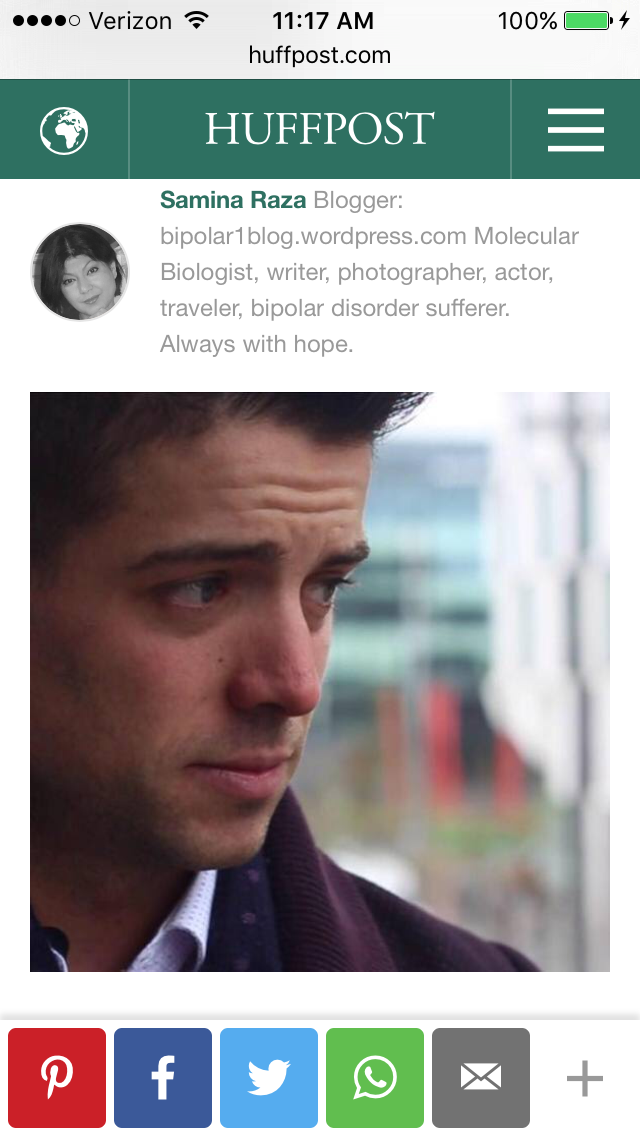
Doug Leddin Interviewed by Samina Raza

This brilliant young man, suffered from depression for 12 years. Finally he got so tired of keeping the depression a secret that he decided to tell everyone he knew in one fell swoop, by making a video (below) and posting it on Facebook! The video went viral! He has been asked to speak on talk shows and radio shows in Ireland. He is an eloquent spokesman for people who suffer from depression, or any mental illness. I was fortunate enough to speak with him and recorded this interview.
Samina: Hi Doug, so wonderful to be speaking with you! Just wanted to get your okay. I’m going to post your interview, this interview on my blog bipolar1blog and on the HuffPost blog I am now blogging on. Is that fine?
Doug: Yes. Brilliant!
1) Samina: Great! After suffering from depression for 10 years, what made you make your video and put it on FB?
Doug: I suppose for me, it was a weight off my shoulders. I was living two different lives, and no one knew what I was going through. That alone was hard, having a secret for so long, without your best friends or your extended family to know, that’s a hard thing to do, even my best friend. I just wanted to let everybody know, it scared the hell out of me! I thought it would be easier if I put it on Facebook. I work in social media and marketing, so I thought I’d make a video and put it online. For me, telling everyone was harder than making a video, and putting it on line. It was easy to make the video, tell my story, press post, close the laptop and walk away. So then I told everyone, my friends knew, colleagues I’d met online, everybody, people I’ve met throughout the years, various clubs and teams, everybody! It was an easy way for me to tell everybody. That’s why I did it, I needed to get the weight off my shoulders, I needed to tell everybody, not just a handful of people! It was easier, I felt better that everybody knew, not just my close friends!
Samina: Right, you told the whole world, basically, literally the whole world! Everyone knows now!
Doug: Yeah. Yeah, that’s scary, but it’s also amazing, that message reached everyone! That the message traveled from Ireland to America to Canada, to Australia, wherever, basically everywhere.
Samina: Yes, amazing, everywhere!
Doug: Yes, that people have taken comfort in it, that was a great thing, that it may have helped others. It took one video for four minutes to help somebody else, then that’s amazing as well.
2) Samina: Were you feeling better at the time when you made the video?
Doug: Ummm, no, I’m still on antidepressants everyday. And today I went to see my psychologist. And I’m still with him, I’m seeing him again in two weeks, and two weeks after that. This is a journey for me. I wasn’t feeling better but I was feeling more comfortable and somewhat confident in myself, that I knew that this was the right thing to do for me and it was my next step. It may not be the right thing for other people, but I feel it can’t make it any worse to talk about it, so I hope that’s the case. So I’m not better, the video has made me, maybe, better, and it’s my next step, and I’ve taken that step. Now, I am discovering what my trigger points are that bring me down and being more confident within myself and kind of accepting myself for who I am. I’m so happy I did this because I needed to move forward and help myself.
3) Samina: It’s sometimes the case that young men have a hard time accepting that they are sick because it means admitting weakness. I had a little brother who couldn’t accept that he had bipolar disorder and eventually he got so depressed that he committed suicide. Huge, giant loss in our lives, he was 26 years old. Young men have a difficult time admitting they are sick, or ill, or imperfect. It is a time when you are supposed to be young and strong. Evolution has sort of imprinted that on your brain, society accepts it of you, and now, because of your video, it’s going to make it easier for other young men to come out and talk about their mental health issues and seek help. You’ve become a role model. How does that make you feel?
Doug: Yeah if that happens, that’s amazing! That’s such a hard won feeling. But it’s not just young men, and you’re right what you say about young men and evolution, we are meant to be young and strong, we are meant to show a strong exterior. It’s not ok to not be ok. I just think women are so much braver than men in this regard, to open up like they do. Their friendships are so much deeper. They get more from their friendships than men, men just don’t talk to other men. I went 12 years without talking. I can’t be the one preaching but… But if it helps men, that’s brilliant!
And regarding your brother, it’s so sad to hear, 26 years old. In Ireland they say and you said it yourself, I don’t like the expression “commit suicide,” you commit a crime, and what your brother was going through, you just don’t know, feeling so much pain, and fear. And it’s just something that, some people refer to it as a selfish act, it’s not! You’re not thinking about anybody else, you can’t think about anybody else! You’re thinking the world will be better without you. It’s just such a horrible place to be! And I just think, as hard as it is, we need to talk about it, because if we talk about it, we’ll find out, it’ll help. It may not help everyone, but it’ll help. I just don’t think it can make it worse.
Samina: Talking definitely helps! All my friends have always known that I have bipolar 1 disorder and like you said, we’ve always talked about it.
Doug: That’s an amazing thing. Such a brave thing!
Samina: Now I have a blog so everyone knows (laughing.)
Doug: My friend, Éanna Walsh, has a blog about bipolar, I shared it on Facebook. He started blogging without two or three years after being diagnosed, I told him he is so brave!
Samina: Oh good, I’ll have to take a look.
Doug: Yes, my friend’s a great hulking Irish guy, he’s in phenomenal shape, he’s so intelligent, just so brave. It’s so amazing that so many more people around the world, like yourself, are writing about your feelings and putting it out there.
Samina: Yes, you know I never wanted to be the spokesperson for this illness, but that’s just what happened…
Doug: Yes, that’s amazing! I’m not the poster boy or spokesperson for this illness, but if it helps… I just hope this helps.
Samina: I think you are now, you sort of unintentionally made yourself the spokesperson for young men, and it’s a good thing, a very good thing!
4) Samina: You said you’d been suffering from depression for 10 years. Can you tell me how it began? And if you don’t want to answer this one, if it’ll take you to a bad spot, you don’t have to answer it.
Doug: No, I’ve left myself open for the last two weeks. I don’t mind answering any questions, I would have told you if I did. When I was 15, I developed an eating disorder and I lost about 6 stone (84 lbs!!!) in 5-6 months. Then my parents became aware of it, and I went to the doctors and nutritionists, then I went to a psychiatrist, from that point on I started seeing a psychiatrist weekly and found out that this was a little deeper than just an eating disorder. One thing about having body dysmorphia was I was going through something I couldn’t explain. I was in a dark place, I didn’t like myself. I had an amazing family, I had everything I ever needed. I felt really privileged. Plus for me, depression isn’t when things aren’t going fine, it’s when everything is well but I just couldn’t see that. A lot of people said what depression, you’re great at school, or you’ve got great friends and family, and I play sports, and I’m sociable and I’m popular, whatever. But, that doesn’t come into play for a lot of people, it certainly didn’t come into play for me. Just having a hard time, kind of pushing myself into a corner, alone and it’s dark and you just don’t want to get out of bed or meet your friends, it’s just a battle. And the last ten years it just got worse, wondering when you’re in that corner, there’s only one way out. That way will really scares you. But it’s a solution. And I just had to shake myself off, pull myself out of that dark, dark place, and I had a moment that I have to ring my doctor, that I’m not ok anymore.
Samina: Good for you! You realized it! And also when you have the flu and you feel bad, people don’t say: Oh why do you feel bad, you have a beautiful home, you have a beautiful wife/husband/children, you have a wonderful job. Just look at how many wonderful things you have, why do you feel bad? Well it’s because you have the flu! And the same thing goes for when your have depression, you feel bad because you have an illness called depression, all those wonderful things don’t take away the effects of the illness!
5) Samina: It must have been so difficult. How did you cope with it as a teenager? As an adult? Did you have a support system? Did you confide in anyone at all? Were you seeing a doctor? You know you might have even lost weight because you were in a depression, people lose weigh because they don’t have an appetite.
Doug: No, I had an appetite, I just didn’t keep my food down (laughing.) Yes I had the support of my mom, and my dad and my sister. They knew I was feeling depressed, they took me to the doctor. So I had great support. That was amazing to have such great support.
Samina: That’s great, some people don’t have that.
6) Samina: It is being discovered that the immune system may be intimately involved in the development and the continuance of mental illness. Are there any autoimmune illnesses in you or your family?
Doug: Yes. I’ve been diagnosed in 2012 with something called Crohn’s disease.
Samina: Wow! The intestines and your brain are so connected!
Doug: I don’t know much about it, but my father had asthma when he was a child.
7) Samina: What would you say to a young man who is suffering from depression now, but who is afraid to talk about it?
Doug: I’d tell him firstly not to be ashamed, don’t have any kind of shame. It’s ok not to feel ok (!) And if you’re not talking to someone, I’d highly recommend either some family or a friend, or someone they work with or maybe even someone they don’t know that well and see occasionally. Just to talk about it and seeking professional help will help. In America or anywhere where they have health organizations, I just think it is so important for young males and females to talk about it.
8) Samina: How does it feel to be open about your illness, with all your friends and family? How have most people reacted?
Doug: It feels amazing! I don’t regret it for one second! It’s such a weight off my shoulders. Everybody’s reacted so positively! The response has been overwhelming at times, but so heartwarming that I don’t have to hide from my friends and family and can talk to my friends and especially mom and dad. My mom and dad were there for all the 12 years, but now they can kind of see the light at the end of the tunnel is on! Now that everybody knows, we’re not alone anymore. We can help each other and we know what each person is going through. Feel the support and the love.
9) Samina: You have automatically become a mental health advocate, do you realize that?
Doug: (Laughs) No not really! But it’s ok if people see me as that.
Samina: So, where do you go from here? A book? A blog? A movie?
Doug: (Laughing) Yeah, a movie would be great! From here, it’s about me, about getting through this, and getting stronger every single day, and in the meantime. on my journey, being contacted by people doing TV, or speeches, or radio, or speaking on the News. Well that’s amazing because if I can help myself while helping other, well, that’s what I want to do.
10) Samina: Physical exercise, good nutrition, meditation, therapy, good friends, and of course medication all help with depression and mental illness generally. Phew! It’s a full time job! How many of these are you in favor of doing?
Doug: Everyday I take medication, I do a lot of exercise, it helps me, it might help others or it might not, but it definitely helps me! Going for that run, or going to the gym, lifting weights, relieves pressure, or if you’re down or anxious or mad about something, going to the gym and letting off some steam really helps. And medication, for me it helps, but it’s not for everybody, it’s sort of trial and error, some of them affected me badly, some didn’t help me and some did help me. And some people don’t agree with medication at all, But for me it’s definitely helped.
Samina: Yes, medication is good, of course, and yes it may take some trial and error, but the right medication helps a lot!
Doug: And nutrition, if you eat well, you feel well and that’s going to help.
Samina: And do you meditate at all?
Doug: I use an App called Mindfulness, I think it’s called Mindfulness, that’s the name that came to mind, if it’s not, I’ll get back to you. It’s a mediation App, it takes 5 minutes a day, 10 minutes a day, I use it a couple of times a week, and it’s good.
Samina: I use an App called Headspace.
Doug: Oh Headspace, Headspace, Headspace, Headspace, that’s it!!! I don’t know where I got Mindfulness from!
(We laughed and laughed and laughed.)
Samina: And those are all my questions. Would you like to add anything.
Doug: No, I think that covered it all.
Samina: Thank you so much. It was so lovely to talk to you. I’ll post this on my blog, send it to the Huffington Post, and post it on your Facebook page.
Doug: Cheers, brilliant!
Doug’s Facebook Video.
Up to 30,000 Views on Bipolar1Blog!
30,000 views! Pretty Amazing!
3 Reasons Why Complaining Rarely Gets You What You Want

Not Amused
Ugh, I’ve totally been guilty of complaining and negative thoughts. I’ve been complaining to my cast mates that I don’t wNt to be in the play. I’ve been complaining to my friends. I’ve been grumbling to myself about it. I said yes to being in this play and more than anything else, I wish I had said NO. I have awful amounts of anxiety, never used to have it, was always rip roaring to go play my part. My stomach churns when I think about how much I don’t want to be in this play. I’m memorizing lines and my head is kicking me in the shins for taking on this role. I am done with plays. I don’t want to do them anymore. I get too anxious now. I had promised myself last time I was in one that I wouldn’t take another role, not ever again. That had been a very unpleasant experience. And then when this role was offered to me I said yes! Hello, anybody home in my head? Why would I do such a thing? Anyway, the play is going on eight days, so there is nothing to do now except for learn my lines, finish the play and never, and I mean NEVER, accept another part ever again. And stop complaining. Someone tell me it’s not that bad, please!
https://www.psychologytoday.com/blog/smashing-the-brainblocks/201604/3-reasons-why-complaining-rarely-gets-you-what-you-wantThere are many reasons why complaining is a bad habit: It puts you in a bad mood. It keeps you focused on flaws and problems. It makes you sound suspicious and distrustful. It annoys the people who have to listen, or makes them feel that they are incompetent and unhelpful. Overall, complaining makes life feel like an ordeal instead of a gift, for both givers and receivers.
The biggest problem with complaining is that it doesn’t always get to the heart of the matter. In fact, it may distract you from what you really need to be thinking about. Instead, it keeps you busy ruminating about how horrible your life is, blaming others for it, and shutting down any hope for a different future.
Complaining is the verbal expression of negativity, a pervasive, self-imposed, unfavorable view of the world. Complaints fall into three categories—self-pity, judging, and warning. What determines the type of complaining we do depends on whether our negative narrative is focused on ourselves, on other people, or on our fears about the future.
Self-pity. Self-pity involves bemoaning. This type of complaining focuses on how tough, unfair, and unforgiving life has been. Favorite topics for discussion include how disappointed you may be in yourself, how little appreciation and recognition you get for your efforts, and how unlucky you are with anything you try. Feeling misunderstood, unappreciated, and unloved often could put you in a chronically bad mood. Self-pity aims to get you sympathy and validation.
Judging. This type of complaining focuses on criticizing and condemning others and revealing their flaws and shortcomings. Favorite topics include talking about how incompetent, dumb, arrogant, or flaky other people are. Anyone who doesn’t meet your arbitrary standards of excellence could become a target of scorn and ridicule. Sometimes, you deliver your judgments indirectly, as jokes, sarcasm, or even constructive feedback. Negativity, however, is negativity, regardless of how you serve it. Criticizers like agreement. If anyone doesn’t agree with you, there must be something wrong with them.
Warning. This type of complaining involves catastrophizing—reacting excessively to normal events. You are constantly worried about consequences. You tend to make negative predictions. Where other people see safety, you see risk and danger, and you make it your mission to warn and protect them from what they can’t see: Beware! The economy is tanking! Unemployment is soaring! Crime is on the rise! Politicians are corrupt! The most likely reason for engaging in this type of complaining is to find someone to share gloomy prophecies with and be scared together.
The truth is we have all tasted and served all three varieties of negativity. We have all complained in the past and we will do it again in the future. Complaining is robust. It has survived time. And while it is not a good predictor of success, there is one big advantage to complaining.
Whether we complain about ourselves or others, whether the negativity manifests as self-pity, criticism of others, or ominous predictions about the future, the reason why people complain is always the same: We complain when we are not getting what we want. Behind every complaint, then, lies an unfulfilled goal—and that is the key to undoing complaining.
Some people find complaining cathartic. They may enjoy venting about the things that bother them. Nevertheless, when all they do is complain, they have only done half the work. Complaining alone does not change anyone’s life. You have to do something more about it.
Complaining is the beginning of the problem-solving process. It moves the spotlight on the pain points. It prompts you to explore and discover the reason behind the incessant rant. It makes you become aware of your unmet needs, your unfulfilled desires, and your goals that remain unaccomplished.
How can you make complaining work for you? To start, every time you complain about something, ask yourself three questions:
What am I complaining about?
What do I want that I am not getting?
How can I get what I want?
The answers to these questions will give you relief from complaining. They will also help you shift your focus from wallowing in negativity to creating meaningful goals that you can work toward, so you can get what you want. Begin to notice the things that you complain about the most. Discover what the unfulfilled desire behind the complaining might be. What are the things you want and are not getting? And lastly, what can you do to acquire or achieve them?
To learn more about how dreamers become achievers, check out Brainblocks: Overcoming the 7 Hidden Barriers to Success (Penguin, 2015).
If you don’t have time to read an entire book but still want to know how the brainblocks prevent dreamers from becoming achievers, check this out.
And if procrastination is getting in the way of doing either, get a free copy of my ebook Getting Things Done SOONERR™!
Farooq



You left us much too soon.
Did you know how much we loved you?
Didn’t you know how much you had to live for?
It was just an illness.
It was just a thought.
They were only emotions, gone awry.
You were stronger than that, yet for an instant you thought you weren’t.
Do you know how much I wish I had been there.
How much I wish I had held your hand and walked you across the precarious bridge of your darkest thoughts?
That’s all it would have taken, just my hand grasping yours, but I wasn’t there.
It was just one little instant that wrought catastrophe…
We loved you with all our hearts, we still do.
You live in our hearts, you really do.
My son has your eyes, when I look at him, sometimes I see you looking back at me.
Your son and your daughter are…
View original post 34 more words
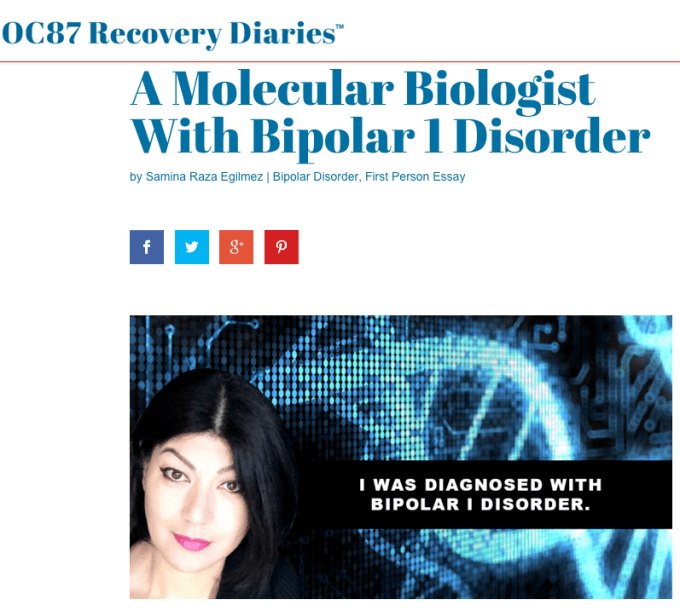
A Molecular Biologist With Bipolar 1 Disorder by Samina Raza | Bipolar Disorder, First Person Essay
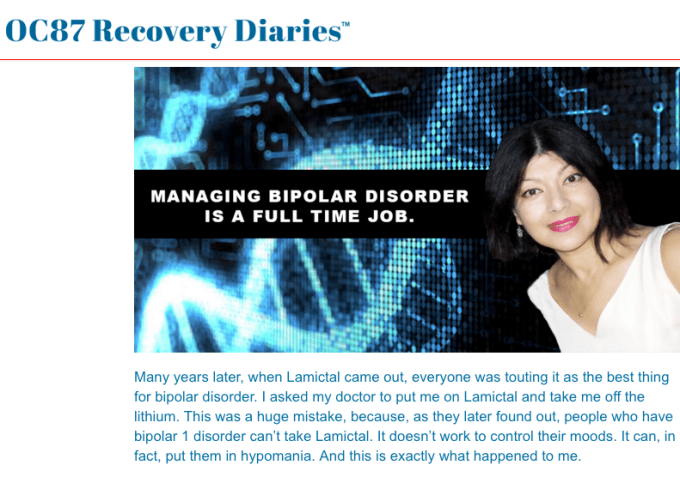
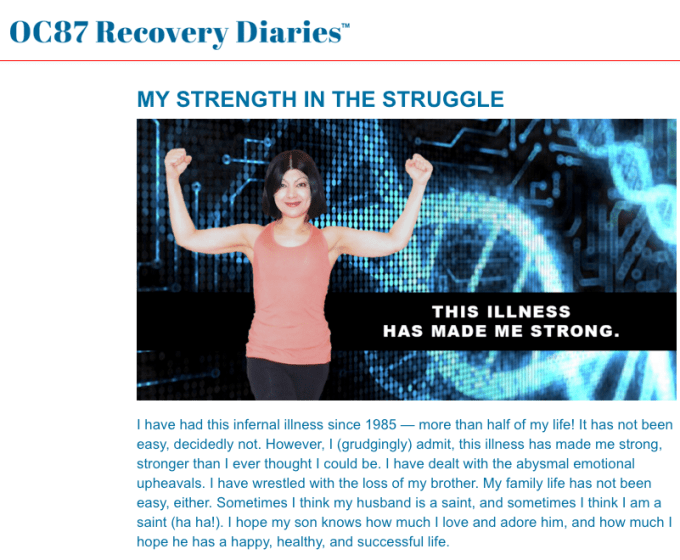
This just got published on OC87 Recovery diaries. I am posting some screenshots, for the whole post, please visit: http://oc87recoverydiaries.com/bipolar-1-disorder/


Nature Smiles in Flowers!


Two More Huffpost Blog Posts!! 😊😊


well it’s a bipolar linkdump
Blahpolar is a genius! And thank you for the Huffpost shout out!

Thanks to socialworkerangela for the reminder of this shot straight to the heart mhm… “I think there’s a flaw in my code”. Halsey is bipolar and also genius. Volume UP.
Now go listen to more y’all. Girl got game.

The them section coming up is dominated by Patty Duke, which I think is more than fair considering the sheer length of time she was vocal about her stuff. Aw and then she went and gave us lovely Sam Gamgee Sean Astin too. Rest in Peace, warrior woman.
Them:

Sean Astin on Mom Patty Duke’s Bipolar Disorder: ‘We Were All in the Storm Together’
ARCHIVAL VIDEO: Patty Duke Seeks to Promote Understanding of Manic Depression in 1989
From the PEOPLE Archive: Patty Duke Opens Up About Her Battle with Bipolar Disorder
10 Celebrities With Depression, Bipolar Disorder, or Both
Don Cheadle: ‘Miles Davis was probably bipolar‘
Blah F. Polar: yo…
View original post 548 more words
Love and Other Drugs

 So many of us who have been traumatized as children, who were unloved or not loved enough, who were rejected, abandoned, abused, develop addictions later on in life. The trauma that we suffered in our childhood leads to pain, anxiety, emptiness, depression, self hate, and on and on and on. All these feelings are extremely unpleasant and painful to feel, therefore we try to get away from them by using something or someone to mask the pain. This can lead to addictive behavior. Addiction is not only to substances like alcohol, or drugs, you can also be addicted to a person. In the case of alcohol, although a depressant, it increases dopamine in your brain. Dopamine is a neurotransmitter, and one of our feel good chemicals. So initially, alcohol makes us feel good, due to the increase in dopamine. However, its depressant effect takes over soon after, and also one needs to drink more and more to get the mood enhancing effect, all of this can lead to alcohol addiction or alcoholism. Same with drugs, they can alleviate anxiety, make us feel good temporarily, but again, it may take higher doses to achieve the same effects and that can lead to addiction. And people can have the same effect on us, this is known as “love addiction,” one can be addicted to a lover or friend, as this also produces feel good chemicals in our brain.
Love addiction is extremely destructive. You are dependent on a whole other human being for your happiness! Really?! I know, I get it, I’ve been there. The feelings swirling inside of you from your childhood trauma are so painful and heartbreaking, that you, without even knowing it, put the responsibility of your happiness on to someone else’s unsuspecting shoulders!
This is because you do not know how to soothe yourself, so when you are thinking of your “love” interest, you’re not thinking painful thoughts, or you think this person you’re addicted to will do it. And believe me this has nothing to do with love, and everything to do with addiction. You think you can’t live without this person, you get a high when you see this person, it’s all about you. True love is selfless and you care about the person you love more than yourself, ok if not more than, at least as much as… Addiction is different, it’s a fix, it’s something you crave, it’s a very self involved thing. With addiction, most people are trying to reduce their own suffering, unfortunately, they are using self destructive behaviors to accomplish their goal of no suffering. The goal is positive, the methods… perhaps not so much…
It’s because you don’t know how to tamp down your fight or flight from going from 0 to 500 in 5 seconds, you think the presence of the person you’re addicted to will do this.
It’s because no one taught you to love yourself, to value yourself, to forgive yourself, you think the poor person you are addicted to will do it.
Your boundaries were continuously violated, you never learned what a boundary was, so you want to be totally enmeshed with this unfortunate person you are addicted to, and whose boundaries you don’t know how to respect.
The above three are skills that people who grow up in loving, nurturing, normal homes learn when they are young children.
We people, who grew up in abusive, abandoning homes, do not learn these skills when we are children.
Well it’s never too late to learn. Never too late to reparent yourself, or work with your inner child. Meditation can be used to calm your flight or flight response. There are apps for your cell phones such as Headspace (https://www.headspace.com/) that will help you learn meditation. This can take as little as 10 minutes! There are resources that will help you heal from love addiction, here’s a link to a book that helped me a lot; http://www.amazon.com/gp/product/B004HW88LU/ref=dp-kindle-redirect?ie=UTF8&btkr=1
And one last thing, this is very important, we adult survivors of child abuse and abandonment sometimes get so involved in our feelings and feel so sorry for our own selves that we don’t even realize that we are trespassing on other people’s rights. We do it totally unknowingly, however, we do do it. Let me give you an example, the person we’re addicted to, known as “poor person” from hereon in, is busy, hasn’t answered our texts in a few days. Our abandonment issues are extensively triggered by this because we think this poor person has now abandoned us. So we bombard them with every manner of contact we have for them, Facebook messenger, Snapchat, texting, emailing, Whatsapp, and many others in this age of technology, all begging, apologizing, and generally making as big a pest of ourselves as possible. We have no boundaries, we think this is ok. Well it’s not ok. This poor person should not have to put up with this level of, frankly, harassment. If this poor person is our friend, they did not sign on to deal with this. The bottom line is: You and I are responsible for our issues and for healing from them! Some friends will hold our hand and walk with us, and some won’t. But, no one has to. It is wholly our own responsibility to get help, to realize what our issues are and to heal from them. And once the healing has taken place, at least to some degree, we can be friends with anyone, yet be dependent on no one. We’ve won the war of independence, congratulations! This is not to be harsh, but to help us realize what we’re doing is not in anyone’s best interests, including our own. It’s a difficult lesson to learn, but once we learn it, and we (and I am definitely included here) can live our lives without being dependent on anyone else to make us happy, once we own our own lives and become responsible for ourselves, then really and truly, we’ve healed and we have arrived! 🙂
Yours in mental wellness and health,
Samina.
Bipolar1blog

