Life

As s person with a mood disorder, needless to say this has been an extremely difficult few days. First, the anniversary of my sweet little brother’s passing then my very beloved uncle’s passing away. It’s been very, very difficult indeed. Interspersed among those awfully sad things, my 28th wedding anniversary and in a few days my birthday… Life imitates life. What is one to do but mourn the sad occasions and celebrate the happy ones. Of course, from now on, my uncle’s anniversary will fall a day before my wedding anniversary, in addition to the anniversary of my dearest brother’s passing. 

Maybe I’ll just stop celebrating my birthday and wedding anniversary. Speaking of wedding anniversaries, my uncle and my aunt were married for 63 years!! How beautiful and now, how sad. Just can’t get away from it, this sadness. This life, full of such lovely things and such awful things. I am trying to look at how fortunate we were to have my brother, even though for such a short time. Also, of course, I count myself as exceptionally lucky to have had my extraordinary uncle and his loving presence in my life. I saw him in January, when I’d visited Islamabad. He was aged, but in perfect health then. I am so glad I went to visit him. Life is so precarious. We must make the most of it. We must tell the people we love that we do indeed love them. We must live happily, enjoying every moment. The nature of “precariousness” is we never know when it will all come to an end. So carpe diem, and eat drink and be merry for tomorrow…

The Nawab of the Newsroom

http://www.dawn.com/news/1266889/mirza-hassan-akhtar-the-nawab-of-the-newsroom

An amazing tribute to my uncle by Dawn, the newspaper where he was bureau chief. What an amazing career he had, what an amazing man he was, in his professional and very decidedly in his personal life. A giant whose shoes will never be filled. ❤️

Mirza Hassan Akhtar — the nawab of the newsroom

AMIR WASIM — PUBLISHED ABOUT 21 HOURS AGO

ISLAMABAD: “This is a newspaper office, not the fire brigade,” veteran journalist Mirza Hassan Akhtar had exclaimed when someone from a government department called the Dawn office to ask for coverage of an event that was due to begin in an hour’s time.

This was a time long before the advent of electronic media; when assignment editors and bureau chiefs would assign events for coverage at least one day in advance.
Known as ‘Nawab Sahib’ to friends and colleagues, the former Dawn bureau chief in Islamabad passed away peacefully on Thursday after a brief illness. He was 88.
Born in Lahore in 1928 to family of educationists, Akhtar was brought up in a household that directly contributed to the creation of Pakistan and performed invaluable services towards the promotion of education, particularly among the Muslims of pre-partition India.
Former Dawn Islamabad bureau chief laid to rest on Thursday
His father, Mirza Mohammad Saeed, was a well-known professor of English at the Government College, Lahore; his mother was the great-granddaughter of Sir Syed Ahmed Khan, founder of the historic MAO College, which later became Aligarh University.

Unlike the stereotype of journalists as disorganised individuals, Akhtar led a disciplined life, close associates and old colleagues recall. According to his old colleagues, he was very punctual and always reached the spot on time.
“We nicknamed him ‘Nawab Sahib’ because of his sophisticated personality,” senior journalist Shahid-ur-Rehman, a long-time colleague and close friend of Akhtar’s, told Dawn.
“I remember that long before mineral water became common, he always brought his own drinking water with him. He was watched what he ate and was meticulous about his diet,” recalled Mr Rehman, whose 42-year professional association with Akhtar began in 1974 at the Daily Morning News in Rawalpindi.
According to Mr Rehman, Akhtar was very “selective about his friends”. “He was a thorough professional and very set in his ways. Whatever he wrote, he wrote with authenticity,” he added.
Akhtar began his career at the age of 20 with the Associated Press of Pakistan (APP) in Karachi, soon after independence, when the news agency was being run under a trust.
Later, he served APP in various cities, including Rawalpindi, Quetta and Dhaka. He had also worked as an APP correspondent in India for some time.
In 1961, the news agency was taken over by the government through an ordinance. This was ostensibly promulgated to put APP on sound financial footing, but journalists associated with it were allowed to retain their independent status. They were not regarded as government or semi-government employees and were governed by labour laws, which also govern those working in the newspaper industry.
During his career in journalism, spanning over five decades, Akhtar had the privilege to work with some of leading personalities in Pakistan’s history, such as Quaid-i-Azam Mohammad Ali Jinnah, Fatima Jinnah and former prime minister Zulfikar Ali Bhutto. He had also briefly assisted Fatima Jinnah in her political career.
It was perhaps due to his support for Ms Jinnah in her campaign against military dictator Field Marshal Ayub Khan that Akhtar earned a great deal of respect from the founder of the PPP. According to colleagues and family members, he frequently remained in direct contact with Mr Bhutto.
He also witnessed and covered the signing of the historic Simla Agreement between India and Pakistan in 1972.
It was due to his independent nature that Akhtar later quit the APP and joined an English daily, the Morning News Karachi as its Rawalpindi bureau chief. He also worked for the BBC Urdu Service and as a correspondent for the London Times in Pakistan.
He replaced M.A. Mansuri as bureau chief of Dawn in Islamabad when the latter resigned to move to the UK in the early 1980s. Akhtar remained associated with Dawn till his retirement in 1988, but continued to write parliamentary diaries and other reports for the newspaper. He also wrote on foreign policy matters and covered visits by foreign dignitaries.
Akhtar leaves behind a widow, a son, a daughter and seven grandchildren to mourn his death. His funeral prayers were offered in Islamabad on Thursday evening. He was then laid to rest at the H-11 graveyard.
His funeral prayers were attended by a number of local journalists, besides old friends and family members. His qul will be offered after Asr prayers on Friday at his residence: House 96, Street 22, Sector F-10/2.
Published in Dawn, June 24th, 2016

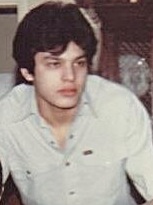
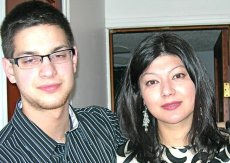
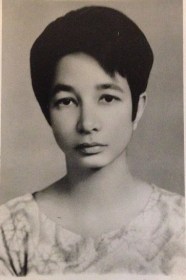
My Abba Mian <3

Abba MianAbba Mian 2

My dearest uncle, with a loving heart,  twinkly eyes, and a ready smile. He had a bass, booming voice. He was intelligent to the nth degree. He was a journalist for Pakistani newspapers as well the London Times. He had a lively sense of humor and usually a twinkle in his mischievous eyes. We would also get yelled at if we disturbed his afternoon siesta. Once, my brother, my two cousins and I were running around the house, and I mean really running, in the afternoon, we knocked over a wooden divan that was standing on its side in the veranda. It came down with a crash! And all four of us skidaddled, gone, out. of. sight! My aunt and uncle came out and couldn’t for the life of them understand how it fell. They assumed it was just a breeze or something that knocked it over. There are so many funny and livening stories like this, I will have to sit down and write them all down.

He was the grandson of Sir Syed Ahmad Khan, who was an Indian Muslim pragmatist, Islamic modernist, philosopher and social activist of nineteenth century India. And the son of Mirza Mohammad Syed. He was truly a gem without compare, he loved us all, he had integrity and moral principles to no end. He is gone, and there will never be another. Such a loss, such an awful loss for all of us who loved him.

My Uncle, he was always an angel and now he is with the angels. 

My Abba Mian is not in pain anymore. He is with the angels now. But how we will miss him. I’ll miss his humor, his wit, his charming and handsome face. But the greatest thing I will miss is his huge, loving heart. He not only lived his wife and two children unconditionally, but he showered his nieces (me being one) and nephews with all his love. He truly was an angel and we are all the sorrier, and poorer for his leaving. But we are also truly blessed that we had him in our lives. Truly blessed. 

Hasan Akhter January 13, 1927-June 23, 2016

Most loving husband, father, uncle. One of the truly great human beings in this world. Loved by his whole family and multitude of friends. 

Journalist for Dawn, Morning News, the London Times. 

He covered the war for Independence for Pakistan in 1947

My dearest Abba Mian,  I am so happy you are not in pain anymore. But I will miss you so much. The world is a much less loving and lovely place now that you’re not in it. I wish you would have recovered your health and been here with us for years to come. I so wish that. But I am so thankful that you are not suffering anymore. 

8 WAYS

This is a beautiful, but sad article from my relative Abbas Raza’s erudite website called 3 Quarks Daily or 3QD as we affectionately call it 😊 It’s a poignant description of what we with bipolar disorder and our loved ones, who love us and try to help us through it, go through because of bipolar disorder. I guess I could say what we, people with bipolar disorder, put our loved ones through 😔. I’m sure, at times, I am not easy to live with and I commend my husband for always being there for me. It reminded me how lucky I am that I will soon be celebrating my 28th wedding anniversary, while how many relationships are trashed and left by the wayside by this infernal disease. Yes, this disease can be infernal! The piece below is beautifully and wistfully and poetically written. (Just one note: as usual I would have said people who have bipolar disorder, not bipolar people or manic depressives. That’s just what I always prefer.)


From: http://www.3quarksdaily.com/3quarksdaily/2016/06/8-ways.html

8 WAYS
by Tamuira Reid
According to an article written by Therese J. Bouchard for the site, World of Psychology, there are “8 Ways to Help Your Bipolar Loved One Cope”.
1. Educate yourself. “Education is always the starting point. Because until a spouse or daughter or friend of a manic-depressive understands the illness, it is impossible to say and do the right thing.” -TB
I try to imagine your rage as something beautiful. Lightning raging across the sky. Wind raging across a thirsty desert. But all I see is you, Giant Man. Trapped in a body with a broken mind. What does it feel like? I don’t recognize you in these moments, not even in the eyes. They go grey, flat. Like still water or trapped rain.
2. Learn how to talk to your loved one. “[He] doesn’t say much when I’m clutching tissue paper, crying my eyes out. And he’s hesitant to speak when I’m manic. When I don’t want to get out of bed in the morning, he reminds me why I need to.” – TB
I feel like I’ve lost my mind, T.
Then let’s find it.
It’s not funny.
I’m not laughing.
Go fuck yourself.
3. Make some rules. “All those times the school administrators rehearsed what, exactly, would happen in the case of an emergency? Families of bipolar persons need them as well: a plan of action for those times when the bipolar person is sick.” – TB
You cut the deck and wait and cut it again. We open our Pepsi’s and sit on the floor in our underwear.
We learned to play cards like this in rehab. To kill the boredom. To pass time thinking about anything other than how much we wanted to use.
When I went into treatment for my drinking problem, everyone warned me not to fall in love. Rehab booty is bad booty. Ridiculous, I thought. Who the hell finds love in a place like this?
It was my 25th day. Morning meeting. Bunch of newly sober drones reading from the Big Book. I was knitting a scarf for Linda, because she finally kicked dope and was leaving and had no chance in the world really but we all liked to pretend she did. A scarf with blue and black squiggly lines. That’s when I heard it. Your voice. It cut through the room on some silvery thread. I looked up and saw you, Giant Man, with a stream of light pouring down on you from a hole in the cabin ceiling. Perfectly illuminated. It was so cheesy and over-the-top but there you have it. Fuck, I remember thinking. Oh fuck.  
If I could go back to that morning and change it all. Stay in my room instead of going to morning meeting. If I’d gone to the center by the beach instead of the rehab on the mountain. 
Go fish, you say and smile.
4. Plan for emergencies. “When you are dealing with a disease that has the potential to become life-threatening, the last thing you want is an improvised response to an emergency situation,” writes Francis Mark Mondimore, M.D. in his book “Bipolar Disorder: A Guide for Patients and Families.”
You scratch your arms. You scratch your face until it is red and torn. You scratch and howl at a moon that is not there. Trying to fight off a piece of yourself. I say, come sit with me a while. I say, it will be over soon, not knowing this is true. The neighbors hit the wall on their side, kick it. They are tired of the noise. They are tired of this shit. So is he, I want to tell them.
When you were six your neighbor and his buddies took you fishing for the first time off the coast of Ireland where you still lived. You had on a little wool cap and sunscreen and held tight to a borrowed fishing rod. They drank beer and laughed and talked about the things men talk about when their wives aren’t around. You had to pee but held it because you didn’t want to miss anything. The ocean looked huge and you wondered if the fish ever got bored swimming around all day with no TV to watch or comics to read. When a fish was caught it was thrown into a cooler near your feet. You looked down at them, shimmery and cold and gasping for air. With all your strength you lifted the cooler and dumped them back out into the water. They landed with a thud, like the one your body made when you jumped into a pool. The men put their beers down and stared at you or maybe they screamed but the fish were free now.
5. Listen. “Don’t hesitate to say nothing. Because silence often speaks the most loving message.” – TB
After rehab, you move to New York to be with me and take the window dressing job at Donna Karan and your Giant Man hands dismember the mannequins instead of dressing them. Snap off pretty plastic arms and legs. You try to fit in, try to fold yourself into the world of normal people doing their normal things. Waking up. Going to work. Buying lunch from the halal guy on the corner, the greasy rice leaking through the Styrofoam and onto your pants. Sometimes you don’t even get on the train but sit on the station bench instead for hours like it is your job. Like staying alive is your job.
I can’t do it.
Can’t do what?
Work. I don’t know. Think? I can’t think.
I think you’re being lazy and bills are coming in and now I have to do the thinking for both of us.
And I’m sorry for that. I’d like to tell you I’m sorry for that.
6. Go Gentle. “A little kindness and gentleness toward your loved one–especially at those times that you feel incapable of affection and care– goes a long way to aid recovery.” – TB
I stop caring about you sometime between January and May. When the weather changes and the leaves come back. You go on the new meds and can’t have aged cheese or avocado and I sit at the table in the kitchen, watching you watch me. We try to drive the crazy away but it has us by the throat, sleeps where we sleep.
7. Laugh together. “Recent studies indicate that humor reduces pain and boosts a person’s immune system.” – TB
The hypnotist snaps his fingers and then there you are again in the office, sprawled out on the sofa like a beautiful smashed bird. And for a moment, you are unaware of who you are and what you are returning to. Hi, I say. Your hand feels light in mine and I remember that day so long ago when we rode the subway for the first time and it shot out of the tunnel at 125th street and sunlight hit us from all around and we kissed.
But then it’s back to the real world of our apartment, all five bolts locked, and you, Giant Man, stand in front of the Giant Ikea Bookshelf – the one you built in a manic episode (I just need a project, a fucking project!) – pulling the thesaurus down from it’s spot, conundrum, you whisper. Mystery, secret, head-scratcher.
Head-scratcher. Yep, totally you, I say.
8. Get support for yourself. “It can be exhausting to live with a hypomanic person and frustrating to deal with a seriously depressed person day after day,” says Dr. Mondimore. “The changes and unpredictability of the moods of someone with bipolar disorder intrude into home life and can be the source of severe stress in relationships, straining them to breaking point.” – TB
You call me from the fourth treatment center. I feel like Seabiscuit. Champing at the bit. So ready to get out of here. I’m like a new person, T. I have great meds, man. I mean, they work, like I feel them working.
You will call me in the years following this, from the next center and the next, from hospitals with crap beds and the psych wards with horrible fucking food and the places in-between that neither of us want to remember. In and out of doors for the rest of your life.
Your calls have mostly ended. Sometimes I think I hear your voice in my sleep, all big and Giant, and I want to ask where you are but I don’t because it matters and it doesn’t. The only real thing is you aren’t here anymore.

– See more at: http://www.3quarksdaily.com/3quarksdaily/2016/06/8-ways.html#sthash.rF0pDK9v.dpuf

Farooq Ahsan 1964-1991

IMG_3720 suicide prev Tulip

Once again the calendar has rolled around to this unbearably sad, this sad tragic day in our lives. My 26 year old brother, my beautiful, loving, sensitive, intelligent Farooq took his own life today. In fact, I believe that is a bit of a misconception. His depression took his life today. He did not. If someone could have been there to hold his hand and walk him away from certain doom, I firmly believe he would have been here today, and his two beautiful children would not have grown up fatherless. Father’s day for them, so close to when they lost their father every year, must seem like some sort of cosmic joke.

I wish I had been there for him when he was suffering so intensely. I miss him and love him very much. I always will.

Did the Orlando shooter have bipolar d/o? No!

IMG_0390

Whenever a tragedy happens, some people throw around the word “Bipolar.” As in this latest atrocity in Orlando, the shooter’s wife pronounced that he was “bipolar.” No he was not bipolar! He may have been gay, he may have been abusing substances and steroids, and his wives, and most assuredly he may have had anger issues and Antisocial personality disorder, but he had no symptoms of bipolar disorder whatsoever.

Abusing steroids can cause all kinds of issues including massive anger, irritability, rage, aggression not to mention stroke and heart attack.

Antisocial personality disorder comes with these lovely (not) symptoms straight from the Mayo Clinic website :

Symptoms

Antisocial personality disorder (APD) signs and symptoms may include:

  • Disregard for right and wrong
  • Persistent lying or deceit to exploit others (?)
  • Being callous, cynical and disrespectful of others
  • Using charm or wit to manipulate others for personal gain or personal pleasure (?)
  • Arrogance, a sense of superiority and being extremely opinionated (?)
  • Recurring problems with the law, including criminal behavior
  • Repeatedly violating the rights of others through intimidation and dishonesty
  • Impulsiveness or failure to plan ahead (?)
  • Hostility, significant irritability, agitation, aggression or violence
  • Lack of empathy for others and lack of remorse about harming others
  • Unnecessary risk-taking or dangerous behavior with no regard for the safety of self or others
  • Poor or abusive relationships
  • Failure to consider the negative consequences of behavior or learn from them
  • Being consistently irresponsible and repeatedly failing to fulfill work or financial obligations (?)

I have made bold the issues that seem to come forth when looking at the Orlando shooter. I have put question marks by the ones that are possible, but upon which I don’t have any information. He abused his first wife, and basically held her hostage. He had anger issues, also probably compounded by steroid abuse, he obviously had no empathy for others. All the symptoms he exhibited are those of antisocial personality disorder. And also, apparently he was struggling with his own homosexual feelings, and that’s why he decided to take out his rage on innocent gay people.

Nothing here says bipolar disorder, the disorder people love to blame when things of this kind happen. Look at this post to see what bipolar disorder is. People who shoot and kill innocent people most likely do not have bipolar disorder, Even if they have bipolar disorder, they are NOT shooting others because of it, there is another comorbid issue such as possibly antisocial personality disorder that might cause them to commit the awful crime. People who have antisocial personality disorder are the sociopaths and psychopaths of the world. People who have bipolar disorder are decidedly not!

And his wife, the ultimate victim, he is slapping her around, and she is thinking of his future! Maybe if she had had him arrested for abusing her, who knows, this could all have been avoided. Who knows. I mean with a felony conviction, surely he could not have bought a gun. Surely. If they did a background check.

So people who have antisocial personality disorder are the sociopaths and the psychopaths of this world. The people who have bipolar disorder are decidedly NOT! SO the next time someone says “The shooter/murderer/heinous person must have been bipolar!” Answer them and say “Most probably not!” And you would be right!

Summary of What Bipolar Disorder Is

This is bipolar disorder. People who shoot and kill innocent people most likely do not have bipolar disorder, Even if they have bipolar disorder, they are NOT shooting others because of it, there is another comorbid issue such as possibly antisocial personality disorder. People who have antisocial personality disorder are the sociopaths and psychopaths of the world. People who have bipolar disorder are decidedly not! Please look at this post as well: Did the Orlando shooter have bipolar d/o? No!

Bipolar disorder (from the Mayo Clinic website) is: Bipolar disorder, formerly called manic depression, causes extreme mood swings that include emotional highs (mania or hypomania) and lows (depression). When you become depressed, you may feel sad or hopeless and lose interest or pleasure in most activities. When your mood shifts in the other direction, you may feel euphoric and full of energy. Mood shifts may occur only a few times a year or as often as several times a week.

For both a manic and a hypomanic episode, during the period of disturbed mood and increased energy, three or more of the following symptoms (four if the mood is only irritable) must be present and represent a noticeable change from your usual behavior:

Criteria for a manic or hypomanic episode

The DSM-5 has specific criteria for the diagnosis of manic and hypomanic episodes:

  • A manic episode is a distinct period of abnormally and persistently elevated, expansive or irritable mood that lasts at least one week (or less than a week if hospitalization is necessary). The episode includes persistently increased goal-directed activity or energy.
  • A hypomanic episode is a distinct period of abnormally and persistently elevated, expansive or irritable mood that lasts at least four consecutive days.

For both a manic and a hypomanic episode, during the period of disturbed mood and increased energy, three or more of the following symptoms (four if the mood is only irritable) must be present and represent a noticeable change from your usual behavior:

  • Inflated self-esteem or grandiosity
  • Decreased need for sleep (for example, you feel rested after only three hours of sleep)
  • Unusual talkativeness
  • Racing thoughts
  • Distractibility
  • Increased goal-directed activity (either socially, at work or school, or sexually) or agitation
  • Doing things that are unusual and that have a high potential for painful consequences — for example, unrestrained buying sprees, sexual indiscretions or foolish business investments

To be considered a manic episode:

  • The mood disturbance must be severe enough to cause noticeable difficulty at work, at school or in social activities or relationships; or to require hospitalization to prevent harm to yourself or others; or to trigger a break from reality (psychosis).
  • Symptoms are not due to the direct effects of something else, such as alcohol or drug use; a medication; or a medical condition.

To be considered a hypomanic episode:

  • The episode is a distinct change in mood and functioning that is not characteristic of you when the symptoms are not present, and enough of a change that other people notice.
  • The episode isn’t severe enough to cause significant difficulty at work, at school or in social activities or relationships, and it doesn’t require hospitalization or trigger a break from reality.
  • Symptoms are not due to the direct effects of something else, such as alcohol or drug use; a medication; or a medical condition.

Criteria for a major depressive episode

The DSM-5 also lists criteria for diagnosis of a major depressive episode:

  • Five or more of the symptoms below over a two-week period that represent a change from previous mood and functioning. At least one of the symptoms is either depressed mood or loss of interest or pleasure.
  • Symptoms can be based on your own feelings or on the observations of someone else.

Signs and symptoms include:

  • Depressed mood most of the day, nearly every day, such as feeling sad, empty, hopeless or tearful (in children and teens, depressed mood can appear as irritability)
  • Markedly reduced interest or feeling no pleasure in all — or almost all — activities most of the day, nearly every day
  • Significant weight loss when not dieting, weight gain, or decrease or increase in appetite nearly every day (in children, failure to gain weight as expected can be a sign of depression)
  • Either insomnia or sleeping excessively nearly every day
  • Either restlessness or slowed behavior that can be observed by others
  • Fatigue or loss of energy nearly every day
  • Feelings of worthlessness or excessive or inappropriate guilt, such as believing things that are not true, nearly every day
  • Decreased ability to think or concentrate, or indecisiveness, nearly every day
  • Recurrent thoughts of death or suicide, or suicide planning or attempt

To be considered a major depressive episode:

  • Symptoms must be severe enough to cause noticeable difficulty in day-to-day activities, such as work, school, social activities or relationships
  • Symptoms are not due to the direct effects of something else, such as alcohol or drug use, a medication or a medical condition
  • Symptoms are not caused by grieving, such as after the loss of a loved one

How Exercise May Help the Brain Grow Stronger

B.D.N.F. baby! That’s the key. It’s called Brain Derived Neurotrophic Factor, and it stimulates the growth of neurons, as well as protects the baby neurons from dying and even strengthens synapses in the brain. And exercise increases the levels of BDNF in mice and indications are in our brains as well. Scientists often refer to BDNF as “Miracle Gro” for the brain.

Time to get off our duffs and start exercising, and believe me I am saying to myself first of all!

http://well.blogs.nytimes.com/2016/06/15/how-exercise-may-help-the-brain-grow-stronger/?_r=0

Physical activity is good for our brains. A wealth of science supports that idea. But precisely how exercise alters and improves the brain remains somewhat mysterious.

A new study with mice fills in one piece of that puzzle. It shows that, in rodents at least, strenuous exercise seems to beneficially change how certain genes work inside the brain. Though the study was in mice, and not people, there are encouraging hints that similar things may be going on inside our own skulls.

For years, scientists have known that the brains of animals and people who regularly exercise are different than the brains of those who are sedentary. Experiments in animals show that, for instance, exercise induces the creation of many new cells in the hippocampus, which is a part of the brain essential for memory and learning, and also improves the survival of those fragile, newborn neurons.

Researchers believe that exercise performs these feats at least in part by goosing the body’s production of a substance called brain-derived neurotrophic factor, or B.D.N.F., which is a protein that scientists sometimes refer to as “Miracle-Gro” for the brain. B.D.N.F. helps neurons to grow and remain vigorous and also strengthens the synapses that connect neurons, allowing the brain to function better. Low levels of B.D.N.F. have been associated with cognitive decline in both people and animals. Exercise increases levels of B.D.N.F. in brain tissue.

But scientists have not understood just what it is about exercise that prompts the brain to start pumping out additional B.D.N.F.

So for the new study, which was published this month in the journal eLIFE, researchers with New York University’s Langone Medical Center and other institutions decided to microscopically examine and reverse engineer the steps that lead to a surge in B.D.N.F. after exercise.

They began by gathering healthy mice. Half of the animals were put into cages that contained running wheels. The others were housed without wheels. For a month, all of the animals were allowed to get on with their lives. Those living with wheels ran often, generally covering several miles a day, since mice like to run. The others remained sedentary.

After four weeks, the scientists looked at brain tissue from the hippocampus of both groups of animals, checking for B.D.N.F. levels. As expected, the levels were much higher in the brains of the runners.

But then, to better understand why the runners had more B.D.N.F., the researchers turned to the particular gene in the animals’ DNA that is known to create B.D.N.F. For some reason, the scientists realized, this gene was more active among the animals that exercised than those that did not.

Using sophisticated testing methods, the scientists soon learned why. In both groups of animals, the B.D.N.F. gene was partially covered with clusters of a particular type of molecule that binds to the gene, though in different amounts.

In the sedentary mice, these molecules swarmed so densely over the gene that they blocked signals that tell the gene to turn on. As a result, the B.D.N.F. genes of the sedentary animals were relatively muted, pumping out little B.D.N.F.

But among the runners, the molecular blockade was much less effective. The molecules couldn’t seem to cover and bind to the entire B.D.N.F. gene. So messages from the body continued to reach the gene and tell it to turn on and produce more B.D.N.F.

Perhaps most remarkably, the researchers also found a particular substance in the runners’ brains that fended off the action of these obstructionist molecules. The runners’ brains contained high levels of ketones, which are a byproduct of the breakdown of fat. During strenuous exercise, the body relies in part on fat for fuel and winds up creating ketones, some of which migrate to the brain. (They are tiny enough to cross the blood-brain barrier.) The brain uses these ketones for fuel when blood sugar levels grow low.

But it appears that ketones also cause the molecules that hinder the B.D.N.F. gene to loosen their grip, as the scientists realized when they experimentally added ketones to brain tissue from some of the mice. Afterward, their B.D.N.F. genes were not blocked by nearly as many of the bothersome molecules, and those genes could get on with the job of making B.D.N.F.

None of this occurred in the brains of the sedentary mice.

“It’s incredible just how pervasive and complex the effects of exercise are on the brain,” said Moses Chao, a professor at the Skirball Institute of Biomolecular Medicine at N.Y.U. who oversaw the study.

Whether the same mechanisms that occur in mice occur in our own brains when we exercise is still unknown. But, Dr. Chao pointed out, like the mice, we have more B.D.N.F. in our bodies after exercise. We also create ketones when we exercise, and those ketones are known to migrate to our brains..

Generally, however, this process requires exerting yourself vigorously for an hour or more, after which time your body, having exhausted its stores of sugar, starts burning stored fat and making ketones.

If an hour or more of intense exercise seems daunting — and it does to me — don’t despair. “We are only starting to understand” the many ways in which exercise of any kind and amount is likely to alter our brains, Dr. Chao said. For now, he says, “it’s a very good idea to just keep moving.”

Related:

A single species of gut bacteria can reverse autism-related social behavior in mice

Wow! Probiotics may relieve symptoms of Autism in mice and then their effect can also be looked at in people.

http://www.neuroscientistnews.com/research-news/single-species-gut-bacteria-can-reverse-autism-related-social-behavior-mice

A single species of gut bacteria can reverse autism-related social behavior in mice

June 16, 2016 | by Editor

oxytocinergic cells

While the number of oxytocinergic cells (green) are reduced in the brains of maternal high-fat diet offspring, treatment with Lactobacillus reuteri increases their number. Credit: Baylor College of Medicine

AddThis Sharing Buttons

The absence of one specific species of gut bacteria causes social deficits in mice, researchers at Baylor College of Medicine report in the journal Cell. By adding this bacterial species back to the guts of affected mice, the researchers were able to reverse some of the mice’s behavioral deficits, which are reminiscent of symptoms of autism spectrum disorders (ASDs) in humans. The investigators are now looking to explore the effects of probiotics on neurodevelopmental disorders in future work.

See Also: Finnish study establishes connection between gut microbiota and Parkinson’s disease

“Other research groups are trying to use drugs or electrical brain stimulation as a way to reverse some of the behavioral symptoms associated with neurodevelopmental disorders—but here we have, perhaps, a new approach,” says senior author Dr. Mauro Costa-Mattioli, associate professor of neuroscience at Baylor. “Whether it would be effective in humans, we don’t know yet, but it is an extremely exciting way of affecting the brain from the gut.”

The inspiration for the paper came from human epidemiological studies that have found that maternal obesity during pregnancy could increase children’s risk of developing neurodevelopmental disorders, including ASDs. In addition, some individuals with ASD also report recurring gastrointestinal problems. With emerging research showing how diet can change the gut microbiome and how gut microbes can influence the brain, Costa-Mattioli and his co-authors suspected there could be a connection.

To begin, the researchers fed approximately 60 female mice a high-fat diet that was the rough equivalent of consistently eating fast food multiple times a day. They bred the mice and waited for them to bear young. The offspring stayed with their mother for three weeks and then were weaned onto a normal diet. After a month, these offspring showed behavioral deficits, such as spending less time in contact with their peers and not initiating interactions.

Learn More: Healthy intestinal flora keeps the mind sharp—with some help from the immune system

“First we wanted to see whether there was a difference in the microbiome between the offspring of mouse mothers fed a normal diet versus those of mothers fed a high-fat diet. So, we used 16S ribosomal RNA gene sequencing to determine the bacterial composition of their gut. We found a clear difference in the microbiota of the two maternal diet groups,” says first author Shelly Buffington, a postdoctoral fellow in Costa-Mattioli’s lab. “The sequencing data was so consistent that by looking at the microbiome of an individual mouse we could predict whether its behavior would be impaired.”

Buffington next tested whether the specific differences in the microbiome were causative factors underlying the social impairments in offspring of mothers fed a high-fat diet. Because mice eat each other’s poop, the researchers housed the animals together so that they would acquire microbiota from their cagemates. When socially impaired three-week-old mice born to mothers on a high-fat diet were paired with normal mice, a full restoration of the gut microbiome and a concurrent improvement in behavior was observed within four weeks. The investigators concluded that one or more beneficial bacterial species might be important for normal social behavior. Fecal-transplant experiments in mice without microbiota (germ-free mice) provided causal evidence that an imbalanced microbial ecology in the mice born to mothers on a high-fat diet is responsible for their social deficits.

The investigators next wanted to know the specific bacterial species that could be affecting the social behavior of the mice. Whole-genome shotgun sequencing revealed one type of bacteria,Lactobacillus reuteri, which was reduced more than nine-fold in the microbiome of mice born to mothers on the high-fat diet.

“We cultured a strain of L. reuteri originally isolated from human breast milk and introduced it into the water of the high-fat-diet offspring. We found that treatment with this single bacterial strain was able to rescue their social behavior,” Buffington says. Other ASD-related behaviors, such as anxiety, were not restored by the reconstitution of the bacteria. Interestingly, the authors found that L. reuteri also promoted the production of the “bonding hormone” oxytocin, which is known to play a crucial role in social behavior and has been associated with autism in humans.

Don’t Miss: Scientists show a link between intestinal bacteria and depression

The authors wondered whether the reward circuitry in the socially impaired mice was dysfunctional. “We found that in response to social interaction there was a lack of synaptic potentiation in a key reward area of the brain that could be seen in the normal control mice,” Costa-Mattioli says. “When we put the bacteria back in the maternal-high-fat-diet offspring, we could also restore the changes in synaptic function in the reward circuitry.”

The researchers believe that their work, which uses a human bacterial species to promote oxytocin levels and improve social behavioral deficits in deficient mice, could be explored as a probiotic intervention for the treatment of neurodevelopmental disorders in humans. “This is where the science is unexpectedly leading us. We could potentially see this type of approach developing quite quickly not only for the treatment of ASD but also for other neurodevelopmental disorders; anyway, this is my gut feeling,” Costa-Mattioli says.