Scientists show a link between intestinal bacteria and depression and anxiety (!!!)

gut bac

Scientists from McMaster University have discovered that intestinal bacteria play an important role in inducing anxiety and depression. The new study, published in Nature Communications, is the first to explore the role of intestinal microbiota in the altered behavior that is a consequence of early life stress. “We have shown for the first time in an established mouse model of anxiety and depression that bacteria play a crucial role in inducing this abnormal behavior,” said Premysl Bercik, senior author of the paper.

“Exploring the role of intestinal microbiota in the altered behavior that is a consequence of early life stress

Scientists from the Farncombe Family Digestive Health Research Institute at McMaster University have discovered that intestinal bacteria play an important role in inducing anxiety and depression.

The new study, published in Nature Communications, is the first to explore the role of intestinal microbiota in the altered behavior that is a consequence of early life stress.

“We have shown for the first time in an established mouse model of anxiety and depression that bacteria play a crucial role in inducing this abnormal behavior,” said Premysl Bercik, senior author of the paper and an associate professor of medicine with McMaster’s Michael G. DeGroote School of Medicine. “But it’s not only bacteria, it’s the altered bi-directional communication between the stressed host — mice subjected to early life stress — and its microbiota, that leads to anxiety and depression.”

It has been known for some time that intestinal bacteria can affect behavior, but much of the previous research has used healthy, normal mice, said Bercik.

In this study, researchers subjected mice to early life stress with a procedure of maternal separation, meaning that from day three to 21, newborn mice were separated for three hours each day from their mothers and then put back with them.

First, Bercik and his team confirmed that conventional mice with complex microbiota, which had been maternally separated, displayed anxiety and depression-like behavior, with abnormal levels of the stress hormone corticosterone. These mice also showed gut dysfunction based on the release of a major neurotransmitter, acetylcholine.

Then, they repeated the same experiment in germ-free conditions and found that in the absence of bacteria mice which were maternally separated still have altered stress hormone levels and gut dysfunction, but they behaved similar to the control mice, not showing any signs of anxiety or depression.

Next, they found that when the maternally separated germ-free mice are colonized with bacteria from control mice, the bacterial composition and metabolic activity changed within several weeks, and the mice started exhibiting anxiety and depression.

“However, if we transfer the bacteria from stressed mice into non stressed germ-free mice, no abnormalities are observed. This suggests that in this model, both host and microbial factors are required for the development of anxiety and depression-like behavior. Neonatal stress leads to increased stress reactivity and gut dysfunction that changes the gut microbiota which, in turn, alters brain function,” said Bercik.

He said that with this new research, “We are starting to explain the complex mechanisms of interaction and dynamics between the gut microbiota and its host. Our data show that relatively minor changes in microbiota profiles or its metabolic activity induced by neonatal stress can have profound effects on host behavior in adulthood.”

Bercik said this is another step in understanding how microbiota can shape host behaviour, and that it may extend the original observations into the field of psychiatric disorders.

“It would be important to determine whether this also applies to humans. For instance, whether we can detect abnormal microbiota profiles or different microbial metabolic activity in patients with primary psychiatric disorders, like anxiety and depression,” said Bercik.”

http://www.neuroscientistnews.com/research-news/scientists-show-link-between-intestinal-bacteria-and-depression

Dr. Patrick McKeon presents Bipolar Disorder

A wonderful video describing the mental, emotional, and physical symptoms of bipolar d/o.

He talks about slowing down in depression and speeding up in mania, or elation as he calls it.

Very informative, highly recommend watching it.

Thank you Christina Tacaclu for this video. Christina is the newest member of my Bipolar1Blog group on Facebook 🙂

Oseltamivir aka Tamiflu and theatrical events…

DSCN6400 DSCN6401 DSCN6402 DSCN6404 DSCN6405 DSCN6408

This is my 3rd day taking Tamiflu, my flu symptoms have gotten better, but now is something else happening? Something of the neuropsychiatric variety? Feeling depressed and weepy…wow can I not get a break, please? Does everything have to always be this difficult? Sisyphus ain’t got nothin’ on me!

Ok, so I have been in this play, which has not been a very pleasant experience to begin with, at all… then I got the flu, becoming less pleasant by the second… so I took Tamiflu and now I feel very depressed… least pleasant of all… What am I supposed to do? Does it always have to be such an uphill climb? God, does it never get any easier? Is it just my filter from when I was a child experiencing negative events, or are these events really so bad that they deserve this magnitude of a negative response from me, or is it depression caused by Tamiflu? How the hell am I supposed to know! All I know is whether because of the flu, the antiviral, or my mood disorder, my past, or present events, hell lets say all of the above, add to that the disrespect and negativity that I have encountered with this particular play, I totally feel like shit… and yet I am going to perform tonight for opening night, and then for the rest of the six performances, because that is what you do when you take on a play, you do it till the end.

Of course, I could walk out and tell them to eff off, but I won’t, I’m too responsible and too much of a miss goodie two shoes to do that. However, I am NEVER doing any more plays, ever again. I don’t trust the process, I will never put myself at the mercy of someone, who has power over me. Not after this god awful experience. Not ever again.

Sorry for the rant, dear readers. I am just very distressed and quite puzzled and… oh whatever… I’m going to take a hot shower, get my hair done and walk into the theater with my head held high and perform for the audience, perform the story that is being told. That is the important thing! Not my ego, or slights to it!

Oh and below is a link of an article of a young Korean girl who became suicidally depressed and then developed bipolar disorder (BPD) after taking Tamiflu. Coincidence? Tamiflu brought out the BPD? Can’t say.

http://www.ncbi.nlm.nih.gov/pmc/articles/PMC3022319/

Brain Inflammation triggered by Chronic Pain Linked to Depression and Anxiety

MICRO

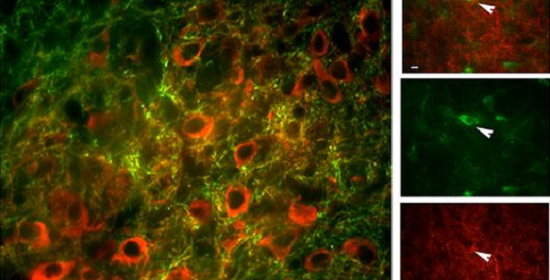
Brain inflammation caused by chronic nerve pain alters activity in regions that regulate mood and motivation. This, for the first time, shows a direct biophysical link exists between long-term pain and the depression, anxiety and substance abuse seen in more than half of these patients.

These findings also point the way to new treatment options for those with chronic pain, the incidence of suicide in patients with chronic pain is second only to those with bipolar d/o. Therefore it would be wonderful to have new treatments.

Researchers found that that pain-derived brain inflammation causes the accelerated growth and activation of immune cells called microglia. These cells trigger chemical signals within neurons that restrict the release of dopamine, a neurotransmitter that helps control the brain’s reward and pleasure centers.

Morphine and its derivatives can be ineffective in treating chronic pain. This study explains why, normally morphine and its derivatives stimulate the release of dopamine, but in rats with chronic pain, administration of morphine does not cause them to produce dopamine, resulting in impaired reward-motivated behavior. However, when these rats are treated with drugs that inhibit microglial activation, they then start producing dopamine.

Next the researchers aim to look at human chronic pain, and determine whether pain derived behaviors might account for mood disorders in these patients.

This can also shed light on mood disorders that are not caused by chronic pain. Of course dopamine is an integral part of the neurotransmitter system that contributes to mood stability. It is also the main neurotransmitter involved in Parkinson’s disease. Hoping for good things to come out of this research.

_________________________________________________________________________________

Article reference below:

Microglia Disrupt Mesolimbic Reward Circuitry in Chronic Pain

http://www.jneurosci.org/content/35/22/8442.full.pdf+html

Study links brain inflammation triggered by chronic pain to anxiety and depression

Brain inflammation caused by chronic nerve pain alters activity in regions that regulate mood and motivation, suggesting for the first time that a direct biophysical link exists between long-term pain and the depression, anxiety and substance abuse seen in more than half of these patients, University of California (UC), Irvine and UCLA researchers report.

This breakthrough finding also points to new approaches for treating chronic pain, which is second only to bipolar disorder among illness-related causes of suicide. About a quarter of Americans suffer from chronic pain, making it the most common form of enduring illness for those under the age of 60. The Institute of Medicine estimates that this costs our society more than $635 billion per year.

In work with rodents, Catherine Cahill, associate professor of anesthesiology & perioperative care at UCI, Christopher Evans of UCLA’s Brain Research Institute, and colleagues discovered that pain-derived brain inflammation causes the accelerated growth and activation of immune cells called microglia. These cells trigger chemical signals within neurons that restrict the release of dopamine, a neurotransmitter that helps control the brain’s reward and pleasure centers.

The study also reveals why opioid drugs such as morphine can be ineffective against chronic pain. Morphine and its derivatives normally stimulate the release of dopamine. But in research on mice and rats in chronic pain, Cahill and her colleagues learned that these drugs failed to stimulate a dopamine response, resulting in impaired reward-motivated behavior.

Treating these animals in chronic pain with a drug that inhibits microglial activation restored dopamine release and reward-motivated behavior, Cahill said.

‘For over 20 years, scientists have been trying to unlock the mechanisms at work that connect opioid use, pain relief, depression and addiction,’ she added. ‘Our findings represent a paradigm shift which has broad implications that are not restricted to the problem of pain and may translate to other disorders.’

The results of the five-year study appear online in the Journal of Neuroscience.

Next, Cahill and her team aim to establish that pain-derived changes in human brain circuitry can account for mood disorders. “We have a drug compound that has the potential to normalize reward-like behavior,” she said, “and subsequent clinical research could then employ imaging studies to identify how the same disruption in reward circuitry found in rodents occurs in chronic pain patients.”

http://neuroscientistnews.com/research-news/study-links-brain-inflammation-triggered-chronic-pain-anxiety-and-depression

Depression, Ugh!!!

My comment (below) to a post I read about a blogger who is feeling severely depressed, yet is afraid to tell anyone, and this blogger doesn’t have a doctor!

“It sounds like you are suffering from severe depression, that’s what depression does, it makes you feel like a shadow of your former self 😦 I also read you post “————————” Please see a psychiatrist, they can help you. I have bipolar disorder, but with medication, I am living a good life, with ups and downs, yes, but still good. There is help for you, the test results were not a slap in your face, they were just telling you that you are not well at the moment. It is not your fault that you are depressed, it is an illness! And guilt and feeling awful are a part of this terrible illness. I am so glad that you are not even thinking about suicide, that shows how strong you are! Please go see a doctor and tell them how you’re feeling, they will help you. Best wishes for a speedy recovery. xxxxoooo”

God! Depression! What it makes you feel like. Like you’re nothing, like it’s your fault you’re feeling depressed, the guilt is overwhelming. It makes you feel like a failure, you feel like nothing, you haven’t amounted to much, and you’re never going to amount to anything. This evil disease, it robs you of your personality, your joy, your optimism, even your will to live. I feel awful for this blogger, I will keep an eye on them and keep encouraging them to seek help. In my deepest, darkest, abysmal depression, a song saved me, my aunt saved me, my psychiatrist saved me, my medication saved me, and ultimately I saved myself. I hope so much that this blogger will be able to save herself. And if I can offer her any words, comfort or advice that will help her, I will be overjoyed. Each of us is so precious. There will only ever be ONE of you, one of me, one of any of us. That, all by itself, is a miracle. With help from each other, we can and will be saved. In the face of depression, a song, a word, a friend, a doctor, help from even a stranger can turn it around. Have faith, at such a faithless time, be strong, even at such a weak time. You are not weak, it is your depression making you think you are. Don’t listen to it. Stay strong, get help, and live and shine like the unique, joyous, loving and beloved human being you are.

Doses and Roses

IMG_5143

When we, people with bipolar disorder, are in a full blown manic phase or a severe depressed phase, the doses of medication we have to take to control those phases are astronomically higher than the doses of the same medicine we take when we are in a normal phase or euthymic.

I have been on as high a dose of Seroquel as 800 mg when I was in a full blown manic phase. If I were to take 800 mg of Seroquel today, I seriously think I would not wake up. My body at this normal phase would not be able to handle that large dose. Our metabolic rate increases a LOT when we are manic, therefore the weight loss and the staying awake all the time. So, our body, in that increased metabolic rate state, can metabolize al LOT more medication than it can in a normal or euthymic state. My lithium dose has been pretty large as well when I was in a full blown manic state, and without bad side effects such as loss of fine motor coordination, tremor, diureresis, even hair loss, and acne.

Many psychiatrists think that if I was on 800 mg of Seroquel when I was in a full blown manic state, that 800 mg is my maintenance dose. But they are WRONG! No one needs the high doses that we take in extreme phases as maintenance doses. Maintenance doses are much smaller. For example, I am currently on 75 mg of Seroquel, less than one tenth of the dose that I took in my severe phase.

I have been on such high doses of Depakote that literally half the hair on my head fell out, among other things, and still the doctor who prescribed it to me wanted to keep increasing the dose!

I’ve actually had arguments with previous psychiatrists about this, when they have tried to keep increasing my dose when I was normal or euthymic. Eventually, I would have to find a new psychiatrist and hope that they realized the dosage issue.

Thank goodness, I now have a doctor who realizes this fully, and was explaining it to me when I stopped him mid sentence and exclaimed “Hallelujah, finally, someone who understands this!!!”

These medications are powerful medications with awful side effects. The thing that is most beneficial is to use the smallest dose necessary to control our symptoms while having the fewest side effects. Of course the key is controlling your symptoms, so the dose has to do that adequately.

Just thought I would write about this because I have struggled a lot with this in the past. Now, I feel lucky to have the doctor I have.

And now my Seroquel is kicking in and I am about to fall into a deep slumber, so good night all!

Just In Case You Wondered, This Is What Depression Is.

Written in 2014. In a brief depressed phase. And yet there is hope, and yet I am alive. You can be in a severe depression such as described below, but you can survive it. You can go through it and come out on the other side and live and thrive. Just know that you can. I did it, I have done it many times, and I will keep on fighting. Fight with me.

DSCN3011

How much should I tell you, how much should I disclose? How much of myself should I give away? How much of the façade should I let crumble? I feel sick, awful, teary, bad… yes depression is on its way…again. The pictures I post on Facebook with smiles on my face, happy, normal looking, that person is gone again. I know it doesn’t make any sense. But this is what bipolar d/o does. One day, you are fine, enjoying life, smiling, thinking about things, and then the next day, you are basically a lifeless statue, expressionless, thought-less, emotionless. All the positives gone. And you feel nothingness and pain. There is a weight on my chest, hard to take a deep breath. My muscles ache, my heart aches. My mind feels dull and empty, no happy, positive thoughts, no ideas, no plans. Tired, so tired. Don’t want to get out of bed in the morning. Don’t want to do anything. Can’t publish this. Don’t want people to know how much of a wreck I am right now. Can’t give it all away. Don’t want everyone to see me deconstructed. Have to keep up some pretense of who I am. Fine, look at me, see this mentally ill person in a depression. See me and count your blessings you were not born with a mental illness.

Depression help

irisIris, it means heavenly colors.

Being in a severe depression is one of the most excruciatingly psychically (and even physically) painful experiences any one can ever experience. That’s when the bottom falls out from under you, the rug is yanked out from under your feet and in either case, there is a black, terrifying bottomless abyss into which you fall. At first you claw and scratch to get out, but then as the days go by, you give up. You sit down, you stay put. All hope is gone, you have no energy to fight, your inner voice has maliciously turned against you. It tells you you are worthless, garbage, not worth saving. You don’t want to listen but you have no choice, you have no energy left to fight this. You have no hope of getting better. And anyway, are you sick or is the the way you always were? Useless, hopeless, ugly, stupid, wrong, just plain wrong. Well this kind of depression, a severe depression definitely needs medication. But might someone in this kind of severe depression, or someone in a less severe depression be helped by another technique? My very good friend once told me of their experience with depression and how they cope with it in a very compassionate and positive way, which is to treat yourself like you are your good friend. So, you wake up, you feel so awful that you don’t feel like getting out of bed. Now you are treating yourself as your own good friend, so you say “Hmm, don’t feel like getting out of bed? That’s ok, just rest if you need to.” Then you check in with yourself and ask :How about now? You feelin’ any better?” Then later “Feel like takin’ a shower? No? That’s ok, maybe later.” And you go on like this, treating yourself as you would a good friend. With compassion, love, caring. No name calling, derision, hate. Remember depression is an illness, you are not doing this to yourself, you are suffering from an illness. What if you broke your arm and started calling yourself names and saying hateful things to yourself? You wouldn’t, you’d go to the emergency room, get a cast and NURSE your arm back to health. This takes me to the second thing I wanted to say, my fellow blogger Gentle Kindness just posted a post (http://gentlementalannie.com/2015/02/13/personal-care-and-depression-be-your-own-nurse/) about depression, in this post she describes depression to a tee and then offers the suggestion that when you are in a depression, you should be your own compassionate nurse! Another brilliant idea. Who wouldn’t benefit from a good friend and a compassionate nurse? Lately, I have been feeling the choking, ugly, bony fingers of depression around my throat. Tasks have once again become more difficult to do. There is dread in my heart and tears that spill easily from my eyes, and my heart feels like it’s breaking for things that would not normally phase me. yes, depression, unfortunately, definitely depression.Well, I am going to try an experiment. Instead of saying what I normally do to myself when I’m feeling depressed “You useless, sick, sad excuse for oxygen consumption.” I am going to treat myself with compassion and love, as a sick person deserves. Well it’s already working to lift my mood a little, it’s infinitely better to hear “It’s ok honey, you are sick, take it easy. You’ll feel better, you always do!” than the above dialogue. Be kind, be compassionate, use loving words and have hope and be resilient. You are hope and resilience. Hugs and positive thoughts for all those suffering from depression or other maladies of the mind or body.

Men & Depression: NHL Goalie, Clint Malarchuck

Clint-Malarchuk-hockey-depression

This is an interview that Clint Malarchuk did for ESPERANZA Hope Magazine. I’ve been looking for it and finally found it. It’s a brilliant interview. Very worth everyone’s time to read.

http://www.hopetocope.com/men-depression-nhl-goalie-clint-malarchuck/

The former hockey goalie shares his story on confronting his depression and anxiety.

By Linda Childers

There was a time when the face mask Clint Malarchuk wore as protection against hurtling hockey pucks mirrored the façade he donned to get through the day. In a rough-and-tumble sport where players are valued for their “manly” ability to get physical and play aggressively, the award-winning goaltender became a master at hiding the inner turmoil of anxiety and depression.

“Goalies are the guy everyone looks to for confidence,” explains Malarchuk, who began his professional hockey career before he turned 21. With his high-pressure job plus the stress of keeping up appearances, he says, “I felt that I had to be twice as strong.”

Over 14 years, Malarchuk tended the crease for the National Hockey League’s Quebec Nordiques, Washington Capitals, and Buffalo Sabres before finishing out his playing days with the Las Vegas Thunder of the International Hockey League. When he was out on the ice, immersed in a game, he was able to find some peace. Off the ice, not so much.

“In the locker room, I was the easygoing clown of the team, yet inside, I felt like my brain was on fire,” he recalls.

From puck drop to final whistle, Malarchuk was focused on “the save”—keeping the puck from entering the net. Nowadays “save” has a different interpretation for him—as in, keeping others who grapple with mental distress from feeling alone and hopeless.

He’s a powerful role model for other men. When he speaks in public, Malarchuk tries to stress that depression isn’t just a “woman’s disease” and how important it is for men to confront their depression and seek out treatment.

“I always knew I was physically tough, but I believed I was mentally weak until I started talking to other men and finding out how many of them also suffered from depression,” he says.

At a recent event, Malarchuk recalls, he was approached by a father and his teenage son.  Malarchuk told the young man something he wished someone had shared with him at an earlier age.

“I emphasized how there’s help … not only in the form of medication, but also in therapy, and in talking openly with others.”

‘COWBOY UP’

Malarchuk, 53, details his own struggles in his new memoir, A Matter of Inches: How I Survived in the Crease and Beyond (titled The Crazy Game in Canada). Take that “survived” literally: In a horrifying 1989 incident—witnessed by a nation of TV viewers tuned in to a Buffalo Sabres game—Malarchuk nearly lost his life when a skate blade slashed his neck.

The accident left Malarchuk with post-traumatic stress disorder—although it wasn’t diagnosed until years later—and deepened an emotional maelstrom that began during his difficult boyhood. He got a very different message then from the one he now promotes.

“From childhood, I was taught to cowboy up and move on,” says Malarchuk, who was raised on a ranch in Edmonton, Alberta.

His mask was already in place as he struggled through school and spent restless nights at the mercy of his anxiety and fear. “I remember thinking I was the only person on the planet who felt like their head was always spinning,” he says.

When he was skating, hockey stick in hand, the spinning stopped. The ice was his refuge, and the ebb and flow of the game would override his troubled thoughts. Malarchuk threw himself into the sport—and into obsessive conditioning. He would run 12 to 20 miles each day, lift weights, and box.

The “man up” message also drove Malarchuk to less healthy ways of coping: drinking heavily and erupting in anger.

“I don’t get angry anymore, but in the past, my drinking would often lead to me picking fights and being verbally abusive. I wasn’t even aware of some of the things I said when I lashed out,” Malarchuk recalls. “When I relapsed, I was angry at myself for not being strong enough to control the feelings I thought I had put behind me.”

After working with the team’s doctors and then a psychiatrist who diagnosed his obsessive-compulsive disorder and depression, Malarchuk finally found medication “that helped tremendously.” It also helped with shame and self-doubt when the psychiatrist “compared taking antidepressants to a diabetic needing insulin,” he recalls. “The doctor was the first to explain that my OCD and depression were the result of a chemical imbalance.”

While medication didn’t erase all Malarchuk’s symptoms, it did serve to quiet his mind. He continued his hockey career as a goalie and, after hanging up his jersey in 1996, as a coach.

BETTER TOOLS

Learning to manage his depression has been an ongoing enterprise. After a serious relapse in 2008, Malarchuk finally sought out talk therapy. He was challenged to face unresolved emotions related to his traumatic neck injury years earlier.

“In therapy, I had to … cry, and to acknowledge my feelings,” he admits.

He also learned more about overall mental wellness.

“I’ve tried to change my habits and focus on staying in the right emotional, mental and spiritual state,” he says.

Malarchuk relapsed again while writing his memoir, turning back to old coping methods as old anguish resurfaced. He was goaltender coach for the Calgary Flames at the time, and team administrators offered to send him to a treatment center. Part of the month-long rehab involved targeting the underlying causes of his alcohol use.

Malarchuk says he learned more about tools like self-talk, personal time-outs, problem-solving and relaxation techniques.

Last summer, Malarchuk began a new chapter in his life. He retired from hockey to live full-time on his ranch in Nevada, where he’s been raising emus for years. He is devoting himself to a second career as an equine chiropractor and dentist.

Malarchuk is living the dream, part 2. As a teen, he worked as a ranch hand during summers and thought about becoming a veterinarian. Throughout his hockey years—the dream, part 1—he maintained a love for horses, ranching, and rodeo. (Thus his nickname “the cowboy goalie.”)

“Being around horses comforts me,” Malarchuk says. “The smell of the barn and the horses, even watching them eat calms me.”

(He also gets some animal therapy from one of the house dogs, a Yorkie, “who senses when I’m anxious or upset,” Malarchuk says. “He’ll come up to me and want to nuzzle close to my neck and offer comfort.”)

FAMILY MAN

Where playing hockey was once his escape, now the barn is Malarchuk’s refuge. His office is there, and a gym space where he lifts weights and works out every day he’s home.

“Sometimes when I start to feel down or anxious, I’ll tell my wife, Joanie that I need to take some time out and go to the barn to meditate,” Malarchuk says. “Joanie has been very supportive and is great about encouraging me to do whatever I need to, in order to stay healthy mentally.”

A father of three, with one teenage daughter still in the nest, Malarchuk tries to be open with his children about his depression. He recalls one occasion last winter when depressive symptoms arose and he began to cry. Instead of hiding away, he asked his daughter to come sit with him.

“I asked if she had ever felt depressed, and I told her that no matter what she was going through, that she could always talk to me,” he explains.
Malarchuk hopes he can be there for his own children the way his mom, Jean, has been there for him.

“My mom and I are very close,” he says. “She has always supported me through good and bad, and I don’t know what I would do without her and Joanie in my life.”

In recent months, Malarchuk and his wife have been traveling across North America to promote his book. At book signings and in emails, other men often thank him for “being honest about my feelings because it has helped them to be more open and to better manage their own depression,” Malarchuk says. “I also get e-mails from women who thank me for helping their husband or their son realize that depression is a true illness.”

In the past, Malarchuk’s honesty has opened him up to attacks that he’s somehow weak. He’s heard taunts—“Hey, Malarchuk, pop another pill.” He recognizes that depression can be hard to understand for someone who hasn’t been through it. That’s partly why he’s so passionate about speaking out.

“I used to think my purpose in life was being in the NHL as a player and then a coach,” Malarchuk says. “I realize now that playing hockey gave me the platform for my real purpose—to raise awareness of mental illness, and to help reduce the stigma surrounding depression and anxiety so that no one has to feel alone.”

Sidebar: How Clint copes

By looking outward: Malarchuk has learned that focusing his energy on helping others is an antidote for his own depression, whether it’s caring for horses or answering e-mails from people who write him about their struggles.

By looking inward: Malarchuk practices his own form of meditation. “I lay down and read a book of daily reflections, and I meditate on the reflection,” he says. “I also use this time to pray about the things in my life that I have control over, and that I can take charge of, while releasing the things that are beyond my control to a higher power.”

By looking beyond: When Malarchuk begins to feel anxious or depressed, he searches for the root cause. He was experiencing symptoms after a recent trip and determined that he hadn’t been sleeping enough while traveling. “I’ve learned that it’s important for me to get 8 to 10 hours of sleep each night in order to feel my best,” he notes.