The Peacock

The peacock’s voice is melancholy, its feet are unlovely, but its plumage, its plumage is miraculous! I was just thinking that we can be unlovely and sorrowful as the peacock’s feet and voice when we live in anxiety, fear, and negativity. But when we act from love, and caring, and warmth, we are as miraculous and beautiful as the plumage of the peacock. Our actions and intentions are as miraculous as the peacock dancing with its feathers spread out in all their glory. I am attaching a video of a peacock dancing, it really is a miracle of nature. So are we. I intend to keep this image in mind as I leave anxiety and fear behind and embrace the love and beauty I know live in me. I know they live in all of us.

To all my friends and family, love and beauty and peace.

Bipolar1Blog: Over 10,000 views in a year!

Well my blog reached more than 10,000 views in a year, sometimes yesterday it seems. That means my blog posts have been seen over 10,000 times! I’d been keeping an eye on the number, waiting till it reached 10,000. It’s a pretty amazing milestone and I have a big smile on my face as I type this :-)))

10,123 VIEWS!!!

Tool kit


For people like us, with mood disorders, managing our moods is paramount. Not being dragged to the ends of the earth by our moods is paramount. Zen Buddhism is a good tool for us, a powerful tool for us, to manage our unruly emotions. What Pema Chodron is teaching is a powerful tool for us. Our medications are the most powerful, but meditation, relaxation, the tenets of Buddhism, the not allowing yourself to be hooked, these in conjunction with our meds can help us live less emotional, more sane lives.

Another close call with an 18 wheeler

I am absolutely not trying to be a drama queen, this really happened! I was driving to the airport yesterday, in Buffalo, to get my flight back to Louisville. They have rotaries there now, and when I got to the rotary from Aero Drive to Holtz Drive, I was going to go to the right, around the circle when I saw a UPS 18 wheeler driving around the rotary from my left, he was exiting on to Holtz as I was entering. At the last minute he decided to come the same way as I was going, I mean come into the circle where I was. I don’t know how he didn’t hit me. I was driving a Nissan with not much pickup, I sped up as much as I could and somehow avoided being hit. After that happened, of course, I was a bit shocked. The radio was playing, the sun was shining, the amazing clouds were scudding about, and seconds ago, I was almost in an accident which I seriously don’t think I would have survived!

My first thought was, would my son know how much I loved him if I was gone? Thankfully, the answer was yes. Secondly, I went down the list of everyone I love and with whom I am friends, would they know how much I loved them? Have I apologized for any transgressions against anyone? Again the answer was Yes!

I am so happy to be here, and also to realize that if I had not survived in that moment, I could have gone knowing all my loved ones knew I loved them and I’d tried to make amends where I had erred.

Is this the way we should live life? Perhaps. It may not be such a bad way to live, always making sure people you love knew it, and whether inadvertently, or not, if you upset anyone, making amends for it.

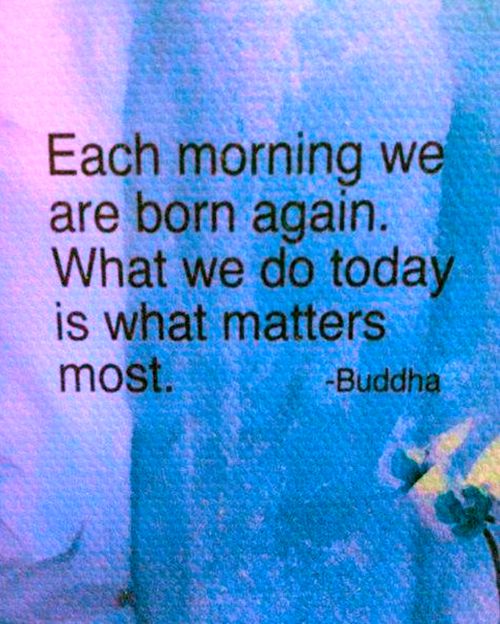
A Wake Up Call!

Buddha

A new day

New possibilities to act in new ways

Shed the past, it’s over, don’t have to keep replaying it

Yesterday is gone, today you start again

Yesterday’s dramas and emotions are gone, you have a new slate

Don’t waste today thinking about what’s done

Live it the best way you can, with joy, and laughter

A habit, forever after

(Stole the picture from Christian Mihai at http://cristianmihai.net/)

Session 4: Pema Chödrön: The Three Difficulties.

DSCN6572 DSCN6572

Here Pema talks about “becoming hooked” and “Shenpa, the quality of being hooked.” If we don’t feed the energy of being hooked by adding thoughts and scenarios about what hooked us, if we can recognize that we are hooked by a situation, a person, a conversation, and just sit with this feeling and let it pass through us, it will dissipate. Thoughts and stories that we tell ourselves fan the spark of shenpa into a raging forest fire. So recognizing shenpa, and not scratching the itch, or not turning the spark into a raging fire by our stories and thoughts can then help us go through the hooking.

The best sentence in this lecture to me is this (I made the letters bold): “It is very possible to drop the storyline and let this energy pass through you, tasting the freedom from suffering and the natural joy of experiencing exactly what is there. When the hook arises, it’s like a bell going off that you can begin to see as an opportunity to not feed the chain reaction of suffering. This is the great gift of these teachings.”


Yes, that is what I am looking for, the freedom from suffering for myself as well as not subjecting my friends and family to suffering because of my words and actions. That to me, would be a miracle! And I am determined to get to this freedom for my self and my friends and family, therefore I will. I am on my way! It is not easy, but like I said in my last post, I have been catching myself getting hooked, and then choosing to do something different than becoming anxious, sad, and ranting, raving, and being upset.

My dear friends and family, a new and improved version of Samina is on its way, the model S, lol! And this me is going to be kind, understanding, loving, and open to you. This me is going to listen to you when you talk, not just to say something back, but just to listen to what you are saying. Because what you are sharing with me is valuable and deserves to be listened to, and deserves my understanding. Without becoming reactive and getting hooked by what you are saying, I want to listen and understand and know the freedom from suffering and the natural joy of the experience of being with you. How amazing it would be if we could all do that! Come along with me on this journey of choosing to do something different, and freedom from suffering and natural joy!

Below is the whole text of the introduction of session 4.

“Pema begins section two with a review of the Three Difficult Practices: recognizing that you’re stuck or hooked, doing something different, and making this new response a way of life.

In this section, we’ll be focusing on the first of the difficult practices: acknowledging how we become hooked. Pema introduces a Tibetan term, shenpa, which refers to the quality of being “hooked” or “caught.” Pema then lays out for us the typical shenpa scenario: You’re in a conversation with someone and everything is going just fine. All of a sudden, they say or do something that just doesn’t sit right with you. You feel yourself tighten, perhaps your jaw or your stomach. You feel defensive or angry or resentful, but you don’t know why; things start to speed up. You start spinning stories in your mind. You are hooked.

Shenpa is not conceptual, teaches Pema. It occurs at a pre-thought level. Something in this other person or in some circumstance triggers you, and you react. It always begins at a subtle level, but has a very distinct quality nonetheless. You can really feel it.

Shenpa does not always occur in conversation. For example, you might be sitting in a park or at the dentist’s office or even standing in line at the grocery store. Then suddenly, someone you don’t know walks by or sits near you and just the way they look or talk causes you to start to shut down; there is a knee-jerk tightening that you feel throughout your entire being. Or, when someone sees you walk by, it happens to thim. You two don’t even know one another, and still the shenpa is there.

The mere arising of shenpa is a natural experience for human beings and, in this sense, is in no way problematic in and of itself. What happens, however, is that along with the shenpa there is usually an urgency to do something as a reaction—to escape, to say something, to somehow flee the discomfort of the feeling. It’s not natural for us to simply rest in the hooked feeling, and fully experience what is there. Instead, we get carried away by its momentum.

Another analogy for shenpa is an “itch” as a result of poison ivy or allergies. The simple truth of the matter is that when we have an itch, scratching it feels really good; while we’re scratching the itch, it feels so wonderful! But, as we all know, scratching only worsens the itch and spreads the rash.

For example, you might have a slight dislike for someone. Not a big deal—you can sit with it, everything’s okay. But then you might start to build a case against him—about how he’s wrong or unkind, or something is just not right about him. You go into your thoughts and create a whole atmosphere around the person and the situation. Or, you might do the same about yourself, about how neurotic or bad you are. In this way, the situation escalates from being minor and no big deal to being more difficult and even like a raging fire.

It’s quite uncomfortable—almost unbearable—to sit with the shenpa, with the poison ivy, without scratching. Our habit of following the chain reaction into the storyline and away from our direct experience is very ancient and well-established. It’s not as if we stop and are then left with a relaxed, peaceful feeling. At first, we will feel the underlying uneasiness, the insecurity, and the positive groundlessness Pema spoke about in section one. Facing this requires practice, real courage, and commitment.

Next, Pema introduces the Buddhist teaching on the Eight Worldly Dharmas, the various ways in which we get caught in hope and fear. Through careful observation, we begin to see precisely how we get hooked in certain habits, all arising as a way to find comfort and security. Despite the depth at which these habits are entrenched, Pema offers the possibility for all of us to go beyond hope and fear altogether.

At its initial arising, Pema teaches, shenpa is a like a tiny spark. In response to this spark, however, we scramble to do whatever we can to move away from its discomfort, from the hooked feeling. In this process of moving away, we tend to “throw kerosene” on the spark, and unconsciously ignite it into a full-blown fire. Through this course, Pema will help us to heighten our awareness of how we escalate the spark in our lives.

Our main method for throwing kerosene on the spark of shenpa, we learn, is by going into the mind and talking to ourselves. We tell ourselves stories about other people and about the situations in our life, and then believe the stories and proceed as if they were completely true. One of the most important reasons we train in meditation and other practices is to recognize when we’re thinking, and to let that thinking go and then return to our immediate experience. With the shenpa practice, it is these thoughts that are the kerosene which turns the little spark into a full-blown forest fire; it is these thoughts that most often make matters worse. We start to see that the difficult emotions we experience cannot be kept alive unless we are talking to ourselves, telling stories about our lives and those around us.

In reality, shenpa is there underneath the thinking process; that small spark exists at a pre-verbal level. It is there in a way that we could say is pregnant with the possibility of a forest fire. But, if we can just pause at the point when we notice the shenpa, and experience its non-verbal energy instead of feeding it with our thoughts, we find ourselves standing at the doorway to true freedom. Instead of throwing kerosene on the fire, we start to discover the inexpressible wisdom and goodness of our own hearts and minds. But we cannot access this depth of experience when we keep going with the chain reaction of habitual response.

Pema then offers us the shenpa instruction, in its simplest form: notice that you’re hooked, and pause. Just notice that you’re breathing in and breathing out. Simply pause and relax, in the awareness that you’re hooked. And then keep letting the thoughts go, and come back to the body. Go beneath the thoughts and the verbal discussion about what’s happening and have a direct, immediate experience of “hooked.” What is this “hooked”? What is it that is being experienced in the most direct and immediate way? What is really there below the storyline about who said what and who hurt you and how bad you are and so forth?

When we observe carefully in this way, we can start to see that every state of mind is impermanent, fluid, and passing; all thoughts and emotions in fact have an amazingly short duration when we’re not throwing kerosene on the fire. However, we tend to make them last a long time, remaining hooked weeks after a difficult conversation or even after a glance that someone gave us. But if we do not feed the shenpa, it will just dissolve on its own, sometimes surprisingly quickly.

We begin by looking at shenpa in its subtlest form, as this heat, tightening, and subtle tension. Very often, we will not catch this very subtle level, or this first movement of the hook. More often, in the drama of our everyday life, we won’t catch it until we’ve already said something, acted in a particular way, or found ourselves quite worked up. Obviously, it is much more difficult to rein in the momentum once it’s taken off. But the truth is that it’s never too late to see the shenpa and choose something different. Even if you can just say “shenpa,” Pema tells us, you can at least realize it’s there, recognize what is happening, and to some degree interrupt the momentum of a further chain reaction.

As you become more familiar with this process, you will start to recognize what Pema refers to as “shenpa speak”— how you talk to yourself in order to justify the shenpa logic. You get hooked and you believe you have the right to be hooked, with a particular person or situation: “I have the right to have shenpa! In this situation, I have the right to be hooked! This is the exception!” This is shenpa-speak. We can learn to acknowledge that we’re caught when we notice ourselves speaking in this way, to ourselves or others.

The purpose of this course is to help you to see that when you’re hooked, you actually have a choice. You can choose shenpa logic and follow the momentum of the chain reaction, or you can go in the direction of practice, pausing and relaxing into the energy of your underlying experience. It is very possible to drop the storyline and let this energy pass through you, tasting the freedom from suffering and the natural joy of experiencing exactly what is there. When the hook arises, it’s like a bell going off that you can begin to see as an opportunity to not feed the chain reaction of suffering. This is the great gift of these teachings.”
The Freedom to Choose Something Different by Pema Chödrön. 3rd Session.

crocus 1 crocus 2

I just listened to the 2nd video. My reactions may be a part of my illness (bipolar d/o) or may be exacerbated by my illness, but if these techniques can help me react differently, calmly, lovingly, then I am all for them and will be so grateful! So far what I’ve learnt is to use the breath as the new way. Very Buddhist, very standard. Well I have been practicing this all day, and I have not been 100% successful at it, but any success at doing something other than getting anxious, scared, or angry is amazing! It’s funny, just the realization that you are getting hooked again is enough to change the way you react, really, just the simple realization that it is happening again can almost stop it from happening! I plan to keep on catching myself when I am getting hooked and then doing something different. One example of this from today is that I was thinking of a friend of mine who hadn’t called me back despite my calling her twice this trip. I caught myself getting hooked into the story that she hates me, doesn’t care about me, will never call me, doesn’t want to be my friend anymore! BUT, I caught myself, and consciously said to myself to try something different and actually called and left her a message saying I was sorry I didn’t connect with her, and I hope we’ll get together next time!! Well, that’s pretty sane, and not angry, not anxious, not sad, and not drama queenish. I’m pretty happy about that. I did that many times through the course of the day, whenever I started getting hooked, I consciously told myself to try something else. It’s working, I’ll keep on doing it. 🙂 I still have fear about many issues and feel sad and anxious, but I am not letting those feelings hook me into an old response which is not serving me in the least bit. I am seriously sick and tired of doing the angry/drama queen/anxious thing and I am going to learn NOT to do it anymore!

Also, she said to pick one person, or more than one person, or you pick all sentient beings and dedicate this retreat to that person or people, so that the person/ people you choose will benefit from any insight, support, connection, inner wisdom, innate openness, innate wisdom, that you gain, any tools you gain. and she said if you have a “stuckness” between you and another person would come loose. Just share the benefits of the retreat with any person you choose, or all sentient beings. Interesting and philanthropic idea! And I did think of one person with whom I am experiencing “stuckness” and dedicated this retreat and all I learn in it to them 🙂

Below are pretty much the exact word from the video.

Pema answered two questions. A woman asked “How do we find something different, as the Second Difficulty says, when we all live according to our recycled ignorance,and habituated patterns, so where does the something different come from? Where do we find this within ourselves?”

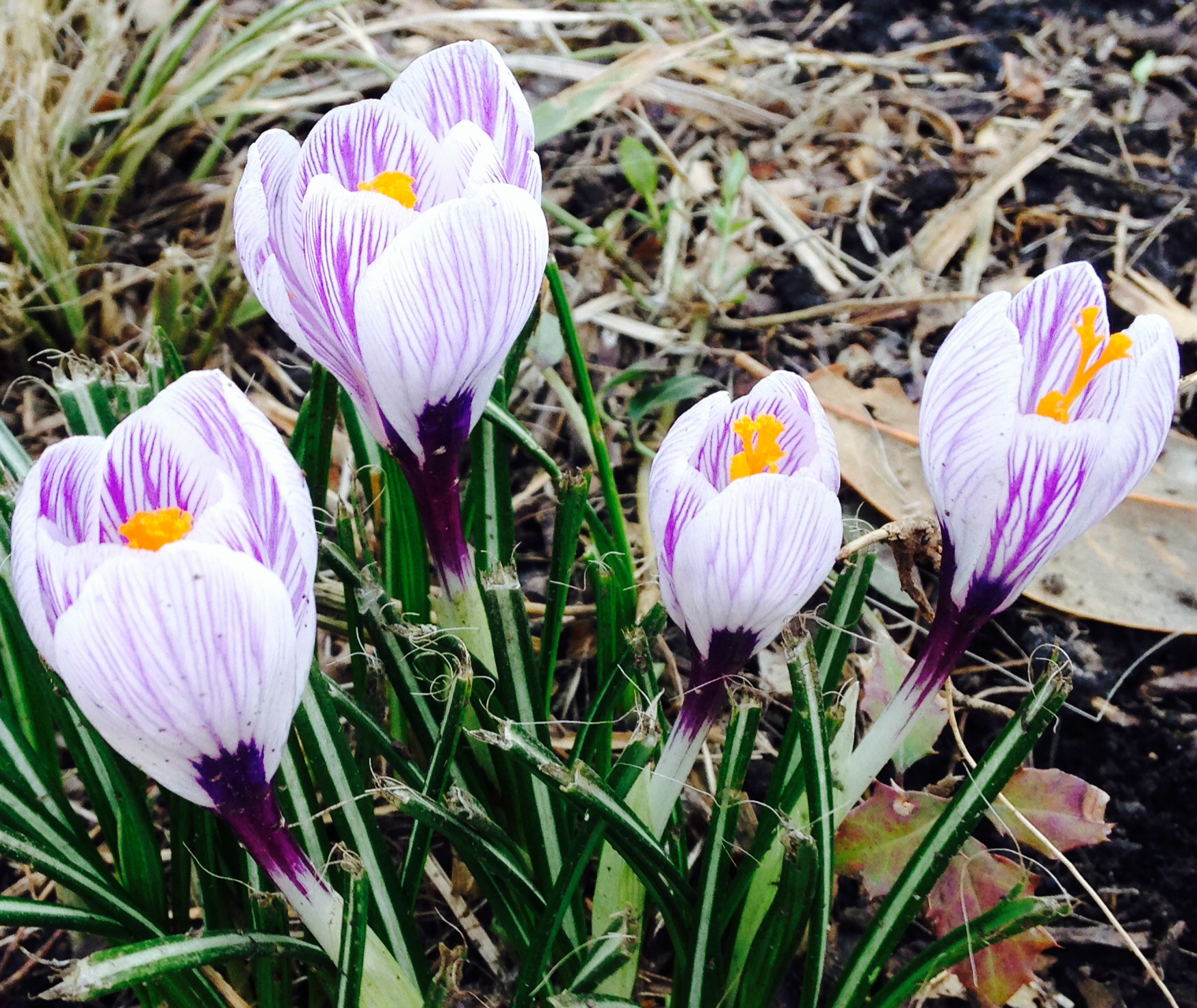
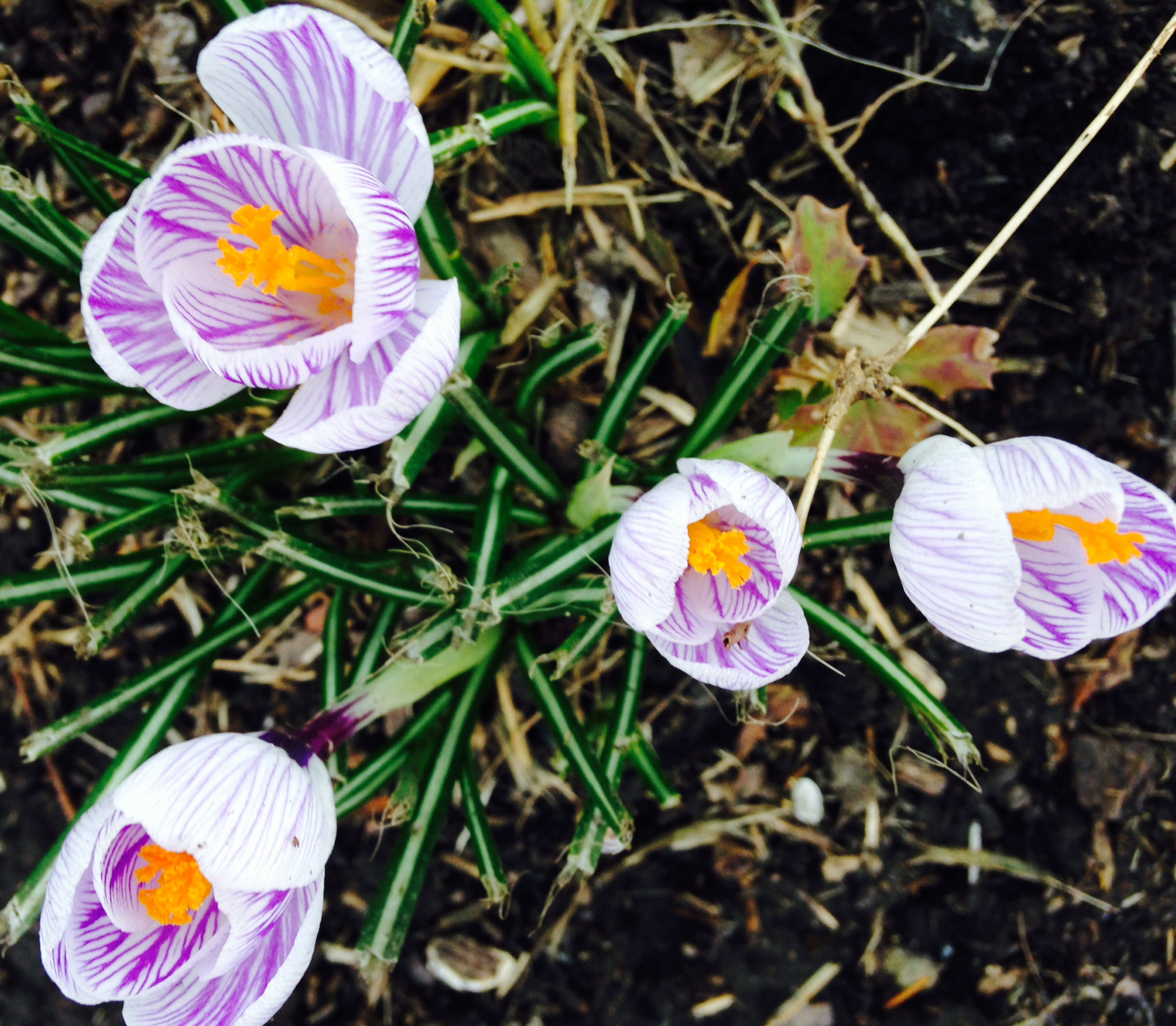
Pema said: The truth is because our fundamental nature is open and fresh, and has kindness in it, therefore almost everyone resonates with some kind of yearning that’s bigger than themselves, like a book, a piece of music, someone’s unexpected kindness, some kind of awe or wonder, or even seeing the first crocus blooming in the early spring,  we are drawn to wanting to know and to do it differently. It’s based on natural wisdom that we have and also based on being pretty fed up of our own habitual recycled ignorance. We know the habitual patterns are not working, yet when we get the phone call or letter, we still do it. So if we get some instruction of how to do something new, then we can learn.

She also said not to take the thought of “I am bad” or “Bad me” seriously. She said: We are so hard on ourselves in the West, so what? Say to ourself: I can feel it, see it, taste it. So I can stay with the feeling of “bad me” but also say that I will definitely entertain the thought that it is fiction. Bring that thought in the present moment and let the buck stop here. The fresh alternative is to breathe and let the thought stay instead of trying actively to chase the thought away.

Another person asked about his friend with heroin addiction who in rehab. They talk about being hooked and triggers in rehab. He wanted to know how he could help his friend.

Pema said: We all know the feeling of being hooked, when we get that letter and we start ranting and raving, we’re hooked, when we say “Yes, but…” we’re hooked in the moment when we are unable to refrain from saying an unkind word about someone.

We are talking about addiction, a deep seated addiction to a solid identity of ourselves, a fixed view of ourselves, the ego, and a fixed view of everything else out there. When in fact nothing is solid or fixed. This is a deep addiction, we don’t even know we’re doing it. Ingrained, unworkable, dangerous.

She also asked people to think of somebody, who they would like to dedicate this retreat to.

She said: Any insight, support, connection, inner wisdom, innate openness, innate wisdom, that you gain, any tools you gain not just doing it for yourself, but the benefit can be shared with that person or group of people or all sentient beings.

Some sense of bigger than just you, maybe you’d like some “stuckness” between you and another person would come loose. Just to share the benefits of the retreat with any person you choose, or all sentient beings.

Then she did a meditation, feeling from head to toes, your body, and keeping in the now and concentrating on your breath.

https://mattearl1964.wordpress.com

https://mattearl1964.wordpress.com

This is so incredibly sad. I just leaned that Matt Earl, the author of this blog that I followed took his own life. His last post was:
Rip

Suicide imminent

Rest in peace

Love to all followers
Matt

I’m taking this course: The Freedom to Choose Something Different by Pema Chödrön. 1st Session.

Screen Shot 2015-08-10 at 11.21.44 PM Screen Shot 2015-08-10 at 11.21.50 PM Screen Shot 2015-08-10 at 11.21.55 PM

My last two posts were about this course, that having gotten sick of reacting and being miserable, anxious and stressed about life stressors and issues… I got sick and tired of being triggered all the time, so much so that I decided to take this course. I just watched the first video in the course. The freedom to choose something different. What a wonderful concept! I absolutely love the idea. In the video, Ms. Chödrön talks about the three difficult practices. The first is to acknowledging you are hooked, recognize that we have been hooked by a situation, event, emotion, anything. The second difficult practice is doing something different, not having your usual reaction of ranting and raving, but doing something different, not saying “Yes, but …” or even if you say “Yes, but …” and recognize that and then go on to doing something different. The third difficult practice is you have to do this every day, for the rest of your life. It is not enough to do this once, you are not done. You have to do this with every situation, every day of your life.

Great concepts, especially for someone like me, or someone like you, or someone like anyone, a human, we do get hooked by things, situations, occurrences. But we have to recognize this and do something different instead of raving and ranting, and blaming and feeling righteously indignant. Do something different. Don’t let the situation get you hooked. Get in touch with your kind, loving, compassionate, big heart, and act out of that, not out of fear and anger.

I love it. It speaks to me, I feel like I am going to learn a lot from this course and hopefully change the way I react to life, change it from a negative, angry, fearful way to a positive, loving, kind way. I am going to watch one video a day and blog about it so all of you, my dear readers, friends, and family will take this course right along with me.