Seroquel to the rescue, I hope.

IMG_5313

My doctor, as it happens, is out of town, but when I texted him,  he answered immediately! I am to increase my Seroquel from the recently decreased amount of 75 mg to back up to 100 mg. I decreased my dose with my doctor’s approval, on May 19th, started feeling (more) anxious the next day, and the depression started on May 28 (on the way home from Buffalo.) Of course, it is my biochemistry that I have depression, but events do precipitate depression. So being on a lower dose of Seroquel, which not only acts as a mood stabilizer, but also as an antidepressant, and undergoing stressful events such as having to leave my son, will precipitate depression. I hope increasing the dose will stop the depression symptoms.

Unfortunately, Seroquel causes weight gain in the belly region and I was experiencing that. One reason for cutting down the dose. I, never in my life have had a jiggly stomach! But if it means I will not be depressed, then jiggly stomach it is, haha. My friends and loved ones will love me despite that I’m sure 🙂 Or I could start doing 1,500 crunches every day, probably not!

As you may be able to tell, I feel better already! Talking  (or texting) with your doctor does have that effect. The fact that he cares and responds and then has a strategy (increase Seroquel) to make one feel better is very heartening. So looking forward to feeling better, jiggles and all!

Up to me

self

Depression. It works that way. It robs you of your laughter. It makes you feel shaky and unsure, weak. You need more stimuli to feel good. My son called me and told me he got another A in his course this semester, that was a joyful moment! I got texts from my niece, those were joyful moments. Talked to my lovely girl friends, of course, wonderful! Saw some funny videos on FB, laughed. But, the internal happiness, contentedness, surety is gone. Replaced by a shakiness, a longing, a sadness, and sighs. I cannot rely on things outside of myself to make me happy, I have to find my own compass, my own solid ground. Who has time to be my vigilant guard? Everyone is busy, and rightly so, with their own lives. I have to do this for myself, calling my doctor is a good first step.

Damn it depression, snuck up on me again. Well, this time, as every other time, I’ll fight you and I will win. You don’t have any place here, you are not welcome here. Away with you, with your chest crushing weight, and darkness, lethargy, and stillness. Go! Be gone!

And let in the lightness, the airiness, the expansiveness, the “everything is well with the world” ness. Up to me, yes it is. But in a depression, not so easy to accomplish. Ok! That’s it! I’m bringing out the big guns!

“The greatest glory in living lies not in never failing, but in rising every time we fail.”
Nelson Mandela

“Sometimes your joy is the source of your smile, but sometimes your smile can be the source of your joy.”
Thich Nhat Hanh

“When you feel like giving up, remember why you held on for so long in the first place.”
Unknown

“The greatest degree of inner tranquility comes from the development of love and compassion. The more we care for the happiness of others, the greater is our own sense of well-being.”
Tenzin Gyatso, the 14th Dalai Lama

“Pain insists upon being attended to. God whispers to us in our pleasures, speaks in our consciences, but shouts in our pains. It is his megaphone to rouse a deaf world.”
C.S. Lewis

“Success is the ability to go from failure to failure without losing your enthusiasm.”
Winston Churchill

“Too often we underestimate the power of a touch, a smile, a kind word, a listening ear, an honest compliment, or the smallest act of caring, all of which have the potential to turn a life around.”
Leo Buscaglia

Love, Empty Nest Syndrome, and From kind of a meltdown to Almost back to normal

DSCN5836 - Version 2 DSCN5837

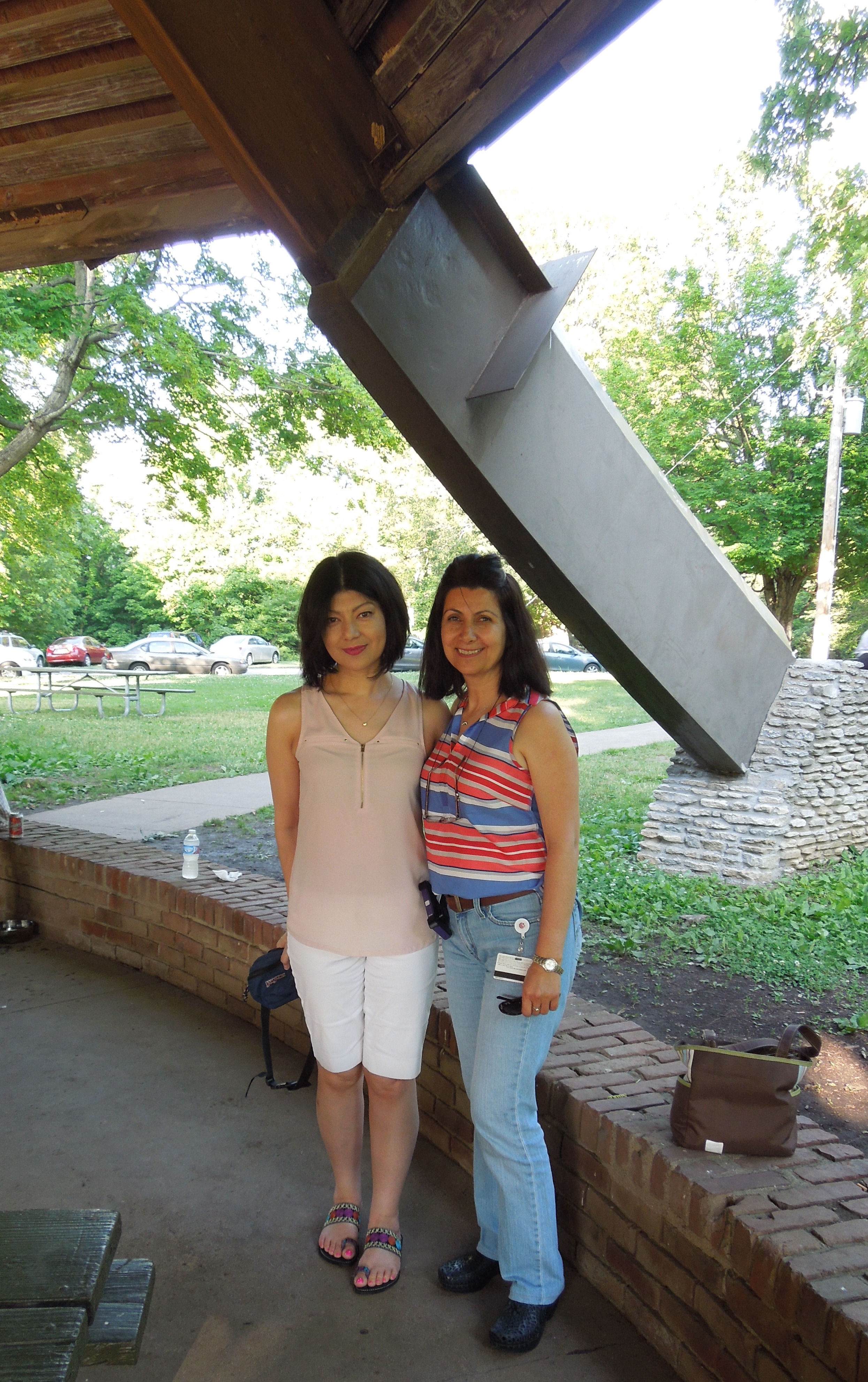
At least Fluff still lives at home. And a picnic below.

DSCN5840 - Version 2 DSCN5842

I still miss my Aral tons. I really think we were meant to live as family units all our lives. This nuclear family bs is just that, bs!

Anyway, I sort of had a meltdown, crying all the way here from Buffalo, and this morning was no cake and ice cream walk either.

They say love is what a mother feels for her newborn, I mean the emotion of love is based totally on what a mother feels when she sees her newborn. Romantic love is just that feeling transferred to your romantic partner. So of course, when a mother is separated from her child, she is going to experience heartbreak, elementary my dear Watson. The first time I felt that awful, sickening heartbreak was when Aral went to college. I didn’t get out of bed for a week, could not stop crying for the Kohinoor diamond, and just felt, in the pit of my stomach, that nothing was ever going to be right again. Not ever. And I know other moms who felt the same way as me. Just today, at a picnic, a friend who is a mom said she is planning on buying three lots of land adjacent to each other, to build three houses, one for herself and her husband, one for her son, and one for her daughter, so they cal always live close to one another and never be separated. Yesterday, on the plane, the woman seated next to me and I were talking, and she said that when her first son went to college, she basically went to bed for four days and couldn’t even talk to her son for weeks because her emotions were so raw, that she was afraid she was going to upset him. Another friend used the exact same phrase as I did, “Nothing will ever be ok again” when her daughter went off to college.

This is what we women have to go through. Maybe mine is a little more extreme because I have a mood disorder, but not much more extreme. Or more likely, at this extremely stressful time, all moms “develop” mood disorders, temporarily. These are extremely powerful emotions, maybe the most powerful emotion in the world, the love of a mother for her child. It is a survival of the species thing, if mothers didn’t love and adore their children, they would not take care of them, if they didn’t take care of them, the babies would not survive, and if the babies didn’t survive, the human race would die out. Therefore, this love a mother feels for her child has to be so powerful that it leads to the survival of the human species. And when that bond is broken, then the strength of the pain is proportional to the strength of the powerful love. And so we have empty nest syndrome. Awful, awful, awful, heartbreaking, most horrible feeling in the world. I sort of go through that every time I leave Aral in Buffalo after my visit. If love is a drug, and as I have hypothesized, maternal love is the most powerful of loves, then we mothers experience the most powerful of withdrawal symptoms when our babies leave the nest. Aaaah! So not fair. And so awful.

Well anyway, I am getting over my Aral withdrawals, and becoming a person again instead of a human water (tear) producing system.

I have to learn my lines! My play practice is in a day, and I have to learn my lines. I’m taking today off for empty nest, and tomorrow, back to business and learning lines.

The Storms in Your Mind

Aral 6

The Storms in Your Mind

Rivers flowing from your anguished eyes

Tectonic shifts in your heart

The plates smashing, grinding, breaking

Your son, a piece of your heart, a piece of yourself

You have left behind

Heaviness and heaving, pain in your chest

Unkempt and undressed

I was just with him yesterday, and now so far away

This is not the way it should be

My son should live with me

Then the weather would be fair and calm

No winds no storms

But a tiny voice cries out: Yes it is the way it should be

He has to live his own life and find his own way

You are in close contact, with him often

This is just your illness, making you feel too much

And I listen, and I listen, trying to calm the storm in my mind

Trying to quell the tears in my eyes

trying to stop my heart from aching

trying to stop feeling too much, too intensely,

trying to be the normal me

to give my son room to be the normal him

Feeling awful at 1000’s of feet in the air…

 
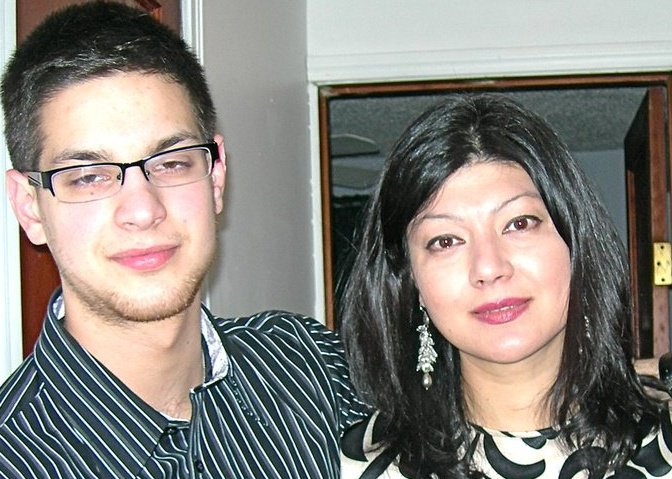
Leo playing with his incredibly young grandma  lol

On my way from Buffalo yo Louisville. All of a sudden, as the plane ascends, I am experiencing plummeting moods. Believe me, I am thankful it is not the other way around, but leaving my son in Buffalo is always a heart rending process for me. He’s fine now, thank all the gods in heaven, I am generally fine in Louisville, but this separation from my son, every time it happens is heart breaking for me. I was just sitting at the gate and sobbing. Probably not a good idea in this climate of the “t-ism” word. I am sitting in my seat and feeling weepy, trying not to cry. I feel bad. Is this bipolar disorder? Is it over attachment to my son, my only son? Is it just worry about him, since we have been through so many trying things together? Is it simply missing him? It may be a combination of all of the things I mentioned. And writing about it is helping, putting things into perspective. He is fine, I will see him soon. I will see my friends in September. Buffalo still feels like my home. And we Cancer people are very attached to our homes. When I go there, I know it, there is my bank, my Wegmans, my friend’s house. The street I used to live off of. Sob. My university, the stores which were my favorites. Of course, my son is there, and I spend as much time with him as possible. His apartment is impeccable, I made sure of that 😊, we talked about his going to get an MA in American history, so he can teach Legal History. I played with Leonidas, such a sweet boy. I saw my friends. My  uncle. It was a wonderful visit. I should be happy. And I am. But leaving is the hardest, most heart breaking  part. 😞 Just wish so much we could all live together. In a family and friends colony… Sigh…

Are you even trying to get better??

This is a video called ” If Physical Health Problems Were Treated Like Mental Health Problems” also known as “Are You Even Trying To Get Better?” It is absolutely Brilliant and funny and gets the point across in such an obvious, duh, “oh my god why didn’t I realize this before” way, everyone needs to see this and internalize this! And stop asking depressed people or anxious people, or mentally ill people “Are you even trying to get better?” We also need to stop doing that to ourselves. Easier said than done, sometimes it’s difficult to realize that you are again in the grips of your mental illness. And sometimes, situational things feel like illness and it’s hard to distinguish. But we must try, all of us, the sick, the well, and even the in between. 🙂

Depression, Ugh!!!

My comment (below) to a post I read about a blogger who is feeling severely depressed, yet is afraid to tell anyone, and this blogger doesn’t have a doctor!

“It sounds like you are suffering from severe depression, that’s what depression does, it makes you feel like a shadow of your former self 😦 I also read you post “————————” Please see a psychiatrist, they can help you. I have bipolar disorder, but with medication, I am living a good life, with ups and downs, yes, but still good. There is help for you, the test results were not a slap in your face, they were just telling you that you are not well at the moment. It is not your fault that you are depressed, it is an illness! And guilt and feeling awful are a part of this terrible illness. I am so glad that you are not even thinking about suicide, that shows how strong you are! Please go see a doctor and tell them how you’re feeling, they will help you. Best wishes for a speedy recovery. xxxxoooo”

God! Depression! What it makes you feel like. Like you’re nothing, like it’s your fault you’re feeling depressed, the guilt is overwhelming. It makes you feel like a failure, you feel like nothing, you haven’t amounted to much, and you’re never going to amount to anything. This evil disease, it robs you of your personality, your joy, your optimism, even your will to live. I feel awful for this blogger, I will keep an eye on them and keep encouraging them to seek help. In my deepest, darkest, abysmal depression, a song saved me, my aunt saved me, my psychiatrist saved me, my medication saved me, and ultimately I saved myself. I hope so much that this blogger will be able to save herself. And if I can offer her any words, comfort or advice that will help her, I will be overjoyed. Each of us is so precious. There will only ever be ONE of you, one of me, one of any of us. That, all by itself, is a miracle. With help from each other, we can and will be saved. In the face of depression, a song, a word, a friend, a doctor, help from even a stranger can turn it around. Have faith, at such a faithless time, be strong, even at such a weak time. You are not weak, it is your depression making you think you are. Don’t listen to it. Stay strong, get help, and live and shine like the unique, joyous, loving and beloved human being you are.

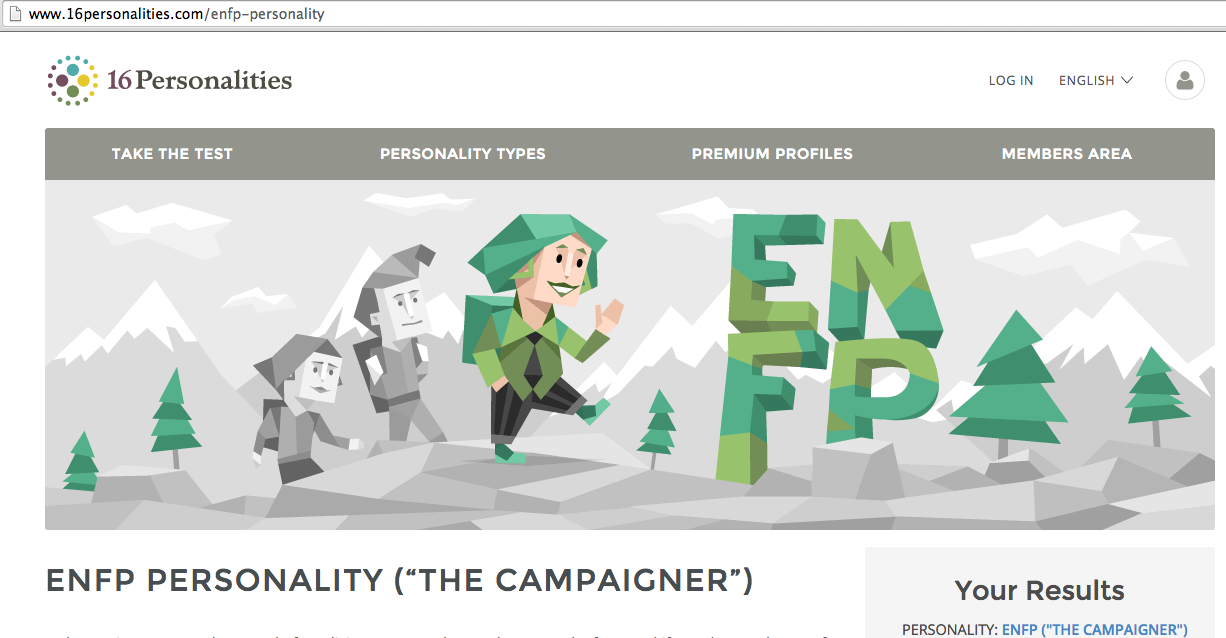
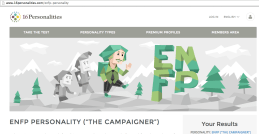
Extraverted, Intuitive, Feeling, Perceiving is what I am!

ENFP

I just took this personality quiz, just for laughs. But there just may be something to this one. My personality type, apparently is ENFP, which is extraverted, intuitive, feeling, and perceiving. It would be interesting to know if people who have mood disorders all sort of group in here.

(ENFP in a Nutshell

ENFPs are people-centered creators with a focus on possibilities and a contagious enthusiasm for new ideas, people and activities. Energetic, warm, and passionate, ENFPs love to help other people explore their creative potential.

ENFPs are typically agile and expressive communicators, using their wit, humor, and mastery of language to create engaging stories. Imaginative and original, ENFPs often have a strong artistic side. They are drawn to art because of its ability to express inventive ideas and create a deeper understanding of human experience.)

They call me the “Campaigner”, which I truly am. I can bargain a piece of a wedge of cheese from a mouse! There so many things here that are so true for me, eg. it says I am independent to a fault, and funnily enough, my mother used to say the same thing about me! And the thing that had me laughing out loud, literally, which made my son turn around from his video game (!!!) to see what I was doing, was the advice “Do Not Lose That Little Spark of Madness!” It also says I am highly emotional… ummm… yes… Also, I am curious, and observant, agree with that as well. Some of my results are below. Fun to read. And here is the website, in case anyone wants to take this quiz themselves: http://www.16personalities.com/free-personality-test And please share your results as well.

ENFP PERSONALITY (“THE CAMPAIGNER”)

It doesn’t interest me what you do for a living. I want to know what you ache for – and if you dare to dream of meeting your heart’s longing. It doesn’t interest me how old you are. I want to know if you will risk looking like a fool – for love – for your dreams – for the adventure of being alive.

Oriah Mountain Dreamer

The ENFP personality is a true free spirit. They are often the life of the party, but unlike Explorers, they are less interested in the sheer excitement and pleasure of the moment than they are in enjoying the social and emotional connections they make with others. Charming, independent, energetic and compassionate, the 7% of the population that they comprise can certainly be felt in any crowd.

You Can Change the World With Just an Idea

More than just sociable people-pleasers though, ENFPs, like all their Diplomat cousins, are shaped by their Intuitive (N) quality, allowing them to read between the lines with curiosity and energy. They tend to see life as a big, complex puzzle where everything is connected – but unlike Analysts, who tend to see that puzzle as a series of systemic machinations, ENFPs see it through a prism of emotion, compassion and mysticism, and are always looking for a deeper meaning.

ENFPs are fiercely independent, and much more than stability and security, they crave creativity and freedom.

Many other types are likely to find these qualities irresistible, and if they’ve found a cause that sparks their imagination, ENFPs will bring an energy that oftentimes thrusts them into the spotlight, held up by their peers as a leader and a guru – but this isn’t always where independence-loving ENFPs want to be. Worse still if they find themselves beset by the administrative tasks and routine maintenance that can accompany a leadership position. ENFPs’ self-esteem is dependent on their ability to come up with original solutions, and they need to know that they have the freedom to be innovative – they can quickly lose patience or become dejected if they get trapped in a boring role.

Don’t Lose That ‘Little Spark of Madness’

Luckily, ENFPs know how to relax, and they are perfectly capable of switching from a passionate, driven idealist in the workplace to that imaginative and enthusiastic free spirit on the dance floor, often with a suddenness that can surprise even their closest friends. Being in the mix also gives them a chance to connect emotionally with others, giving them cherished insight into what motivates their friends and colleagues. They believe that everyone should take the time to recognize and express their feelings, and their empathy and sociability make that a natural conversation topic.

The ENFP personality type needs to be careful, however – if they rely too much on their intuition, assume or anticipate too much about a friend’s motivations, they can misread the signals and frustrate plans that a more straightforward approach would have made simple. This kind of social stress is the bugbear that keeps harmony-focused Diplomats awake at night. ENFPs are very emotional and sensitive, and when they step on someone’s toes, they both feel it.

ENFPs will spend a lot of time exploring social relationships, feelings and ideas before they find something that really rings true. But when they finally do find their place in the world, their imagination, empathy and courage are likely to produce incredible results.

ENFP RELATIONSHIPS

When it comes to relationships, there’s hardly anyone around who is more excited than ENFPs to share with their partners the bounty of ideas and eye-opening experiences that life has to offer. For people with the ENFP personality type, relationships are a joyous process of mutual exploration and imagination, a chance to connect with another soul. ENFPs take their relationships seriously, and are known for their uninhibited and unshakeable devotion to the people to whom they’ve committed their hearts.

ENFPs have the advantage of irresistible charm when it comes to attracting a partner – ENFPs’ warmth, excitement and passion are simply alluring.

In the dating phase, if ENFPs can be said to tolerate such a formal process to begin with, they will show these qualities by showering their new flames with affection, and will do everything they can to build a strong relationship by demonstrating their devotion and reliability by whatever means available.

You Cannot Live Without a Fire

Long-distance relationships are quite common among ENFPs, as they view physical distance as just another idea, no match for concepts like love. This gives them the chance to demonstrate their commitment, both by staying true despite the physical separation, and with overtures of effort to surprise their partners, crossing that distance on a whim. These are demonstrations of ENFPs’ mystery, idealism and deep emotion, and such efforts often keep the flames of a relationship burning bright.

People with the ENFP personality type express these ideals sexually as well, exploring the physical with imagination and passion, viewing these times together as a chance to let their feelings for each other shine, sharing their love and affection. ENFPs will willingly experiment with their partners, even early in a relationship, but they can also be oddly perfectionistic, believing that these physical acts are a representation of their deeper love, and as such should not be performed carelessly. This perfectionism is also a reflection of their sensitivity, their desire to not disappoint, and ENFPs appreciate a well-placed compliment.

Not everyone can handle the excitement, occasional neediness, and emotional ups and downs that this philosophy entails, whether long-distance or long-term, mystical or physical. ENFPs constantly explore new ideas and improvements, fantasize about future possibilities – in dating, this tendency to look at potential rather than the present can be self-defeating, and their spontaneity makes it harder to stay focused on their end goal of a long-term relationship. If their partners aren’t able to reciprocate these acts of excitement and devotion, ENFPs will likely end up feeling unhappy and misunderstood.

So, You Think You Know the Real Me?

ENFPs go all-in with their relationships, and if they fall apart despite their efforts, they can end up plagued with questions about why the relationship failed and what they could have done differently – without a buoy, these thoughts can crush ENFPs’ self-esteem as they sink into depression. It’s important for ENFP personalities, as with anyone, to remember that relationships are in all ways mutual – mutual interest, mutual growth, and mutual responsibility – and they can’t be solely accountable.

After a trial like this, ENFPs may be reluctant to open up and commit, and it can take years for a partner to navigate their bewildering depth and intensity, falsely believing that ENFPs’ enthusiasm and apparent openness means that they wear everything on their sleeves. The reality is that ENFPs’ spontaneity, the seeming inconsistency and erraticism the untrained eye sees, isn’t a product of flightiness or lack of depth, but the opposite – it is a drive to express ideas about a mystical, all-encompassing energy, in the confines of a physical world, and underlying it all is the uniting principle of love, expressed in many different ways, but unshakeable and infinite at its core.


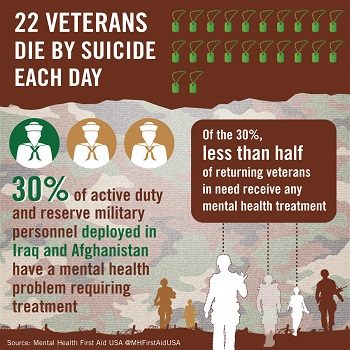
22 Veterans die by suicide EACH day!

Memorial day

Yes, lets thank them for their duty and appreciate them today, but let us also take care of them, so that this awful statistic is a thing of the past.

Seeing a Psychologist

DSCN3353

I’ve seen a few psychologists, some good and some so bad that under their influence, my life took a huge hit! The good ones tried to make me understand my problems, and come to a solution, resolution, or answer myself. I think that’s what a psychologist is supposed to do. You go to them, for a specific problem, a whole set of problems, or for your whole giant messed up life. They talk with you, ask question, make you come to your own realizations, your own answers to your questions.

Once I had a therapist, she did not have a PhD in Psychology, she was a sexologist and had absolutely no business treating someone with bipolar disorder. She was referred to me by someone I knew. She listened to me talk about my problems and then she directed me as to how to solve them. She told me what to email whom, and how often. She told me to call her when I got up during a depression so she could then talk to me about exercising, showering, working, basically my whole day. She decided what was good for me and what was bad for me. This was the worst kind of therapist, she had basically taken over my life and was trying to make me so dependent on her that I couldn’t function without her. Some of the advice she gave me had dire consequences, almost destroying my life! Actually, I lost about 5 years of my life, came off Lithium, was constantly in a hypomanic phase due to being on Lamictal (not meant for bipolar 1 at all) my illness got much worse, and I was finally hospitalized for the 2nd time in 2009, all pretty much due to this therapists influence! She failed starting with the very first tenet: Do no harm! Oy ve! Luckily, I found good doctors, went back on Lithium, and have got things more under control now than I have had since 2002!

This is absolutely NOT the way to counsel someone. You never tell them what to do, you never dictate emails for them, you do not try to make them dependent on you.

Also if a psychologist’s own issues are triggered by talking to a client about their problem, the ethical thing to do is to refer them to someone else. Because if you are personally emotionally involved in an issue, you certainly cannot, in a unbiased fashion, counsel somebody else about it.

Here are the general APA ethical guidelines:

This section consists of General Principles. General Principles, as opposed to Ethical Standards, are aspirational in nature. Their intent is to guide and inspire psychologists toward the very highest ethical ideals of the profession. General Principles, in contrast to Ethical Standards, do not represent obligations and should not form the basis for imposing sanctions. Relying upon General Principles for either of these reasons distorts both their meaning and purpose.

Principle A: Beneficence and Nonmaleficence
Psychologists strive to benefit those with whom they work and take care to do no harm. In their professional actions, psychologists seek to safeguard the welfare and rights of those with whom they interact professionally and other affected persons and the welfare of animal subjects of research. When conflicts occur among psychologists’ obligations or concerns, they attempt to resolve these conflicts in a responsible fashion that avoids or minimizes harm. Because psychologists’ scientific and professional judgments and actions may affect the lives of others, they are alert to and guard against personal, financial, social, organizational or political factors that might lead to misuse of their influence. Psychologists strive to be aware of the possible effect of their own physical and mental health on their ability to help those with whom they work.

Principle B: Fidelity and Responsibility
Psychologists establish relationships of trust with those with whom they work. They are aware of their professional and scientific responsibilities to society and to the specific communities in which they work. Psychologists uphold professional standards of conduct, clarify their professional roles and obligations, accept appropriate responsibility for their behavior and seek to manage conflicts of interest that could lead to exploitation or harm. Psychologists consult with, refer to, or cooperate with other professionals and institutions to the extent needed to serve the best interests of those with whom they work. They are concerned about the ethical compliance of their colleagues’ scientific and professional conduct. Psychologists strive to contribute a portion of their professional time for little or no compensation or personal advantage.

Principle C: Integrity
Psychologists seek to promote accuracy, honesty and truthfulness in the science, teaching and practice of psychology. In these activities psychologists do not steal, cheat or engage in fraud, subterfuge or intentional misrepresentation of fact. Psychologists strive to keep their promises and to avoid unwise or unclear commitments. In situations in which deception may be ethically justifiable to maximize benefits and minimize harm, psychologists have a serious obligation to consider the need for, the possible consequences of, and their responsibility to correct any resulting mistrust or other harmful effects that arise from the use of such techniques.

Principle D: Justice
Psychologists recognize that fairness and justice entitle all persons to access to and benefit from the contributions of psychology and to equal quality in the processes, procedures and services being conducted by psychologists. Psychologists exercise reasonable judgment and take precautions to ensure that their potential biases, the boundaries of their competence and the limitations of their expertise do not lead to or condone unjust practices.

Principle E: Respect for People’s Rights and Dignity
Psychologists respect the dignity and worth of all people, and the rights of individuals to privacy, confidentiality, and self-determination. Psychologists are aware that special safeguards may be necessary to protect the rights and welfare of persons or communities whose vulnerabilities impair autonomous decision making. Psychologists are aware of and respect cultural, individual and role differences, including those based on age, gender, gender identity, race, ethnicity, culture, national origin, religion, sexual orientation, disability, language and socioeconomic status and consider these factors when working with members of such groups. Psychologists try to eliminate the effect on their work of biases based on those factors, and they do not knowingly participate in or condone activities of others based upon such prejudices.

Here is a link to the APA Ethics Code:

http://www.apa.org/ethics/code/