Bipolar1Blog

World Suicide Prevention Day

My very beloved brother, Farooq, committed suicide at the age of 26. He had bipolar disorder, unfortunately he never quite got a handle on this awful illness. He went into a severe depression and we lost him forever on June 21st, 1991. One of the saddest days in my life and in the lives of my family.

That’s why this day is important, to shed light on this devastating act, to help prevent it, to help people who may be considering this tragic action. There are resources below and here is a link for resources in North America: https://www.iasp.info/resources/Crisis_Centres/North_America/

If you are thinking about taking your own life, please don’t. It truly is a permanent solution for a temporary problem. Please get help. I’m sure you will be happy that you did.

https://iasp.info/wspd2017/

World Suicide Prevention Day 2017

Welcome to the Official World Suicide Prevention Day 2017 Website!

Every year, more than 800,000 people die by suicide and up to 25 times as many make a suicide attempt. Behind these statistics are the individual stories of those who have, for many different reasons, questioned the value of their own lives.

Each one of these individuals is part of a community. Some may be well linked in to this community, and have a network of family, friends and work colleagues or school mates. Others may be less well connected, and some may be quite isolated. Regardless of the circumstances, communities have an important role to play in supporting those who are vulnerable.

This sentiment is reflected in the theme of the 2017 World Suicide Prevention Day: ‘Take a minute, change a life.’ As members of communities, it is our responsibility to look out for those who may be struggling, check in with them, and encourage them to tell their story in their own way and at their own pace. Offering a gentle word of support and listening in a non-judgemental way can make all the difference.

Taking a minute can change a life

People who have lived through a suicide attempt have much to teach us about how the words and actions of others are important. They often talk movingly about reaching the point where they could see no alternative but to take their own life, and about the days, hours and minutes leading up to this. They often describe realising that they did not want to die but instead wanted someone to intervene and stop them. Many say that they actively sought someone who would sense their despair and ask them whether they were okay.

Sometimes they say that they made a pact with themselves that if someone did ask if they were okay, they would tell them everything and allow them to intervene. Sadly, they often reflect that no one asked.

The individuals telling these stories are inspirational. Many of them recount reaching the point where they did try to take their own lives, and tell about coming through it. Many of them are now working as advocates for suicide prevention. Almost universally, they say that if someone had taken a minute, the trajectory that they were on could have been interrupted.

Life is precious and sometimes precarious. Taking a minute to reach out to someone – a complete stranger or close family member or friend – can change the course of their life.

No one has to have all the answers

People are often reluctant to intervene, even if they are quite concerned about someone. There are many reasons for this, not least that they fear they will not know what to say. It is important to remember, however, that there is no hard and fast formula. Individuals who have come through an episode of severe suicidal thinking often say that they were not looking for specific advice, but that compassion and empathy from others helped to turn things around for them and point them towards recovery.

Another factor that deters people from starting the conversation is that they worry that they may make the situation worse. Again, this hesitation is understandable; broaching the topic of suicide is difficult and there is a myth that talking about suicide with someone can put the idea into their head or trigger the act.

The evidence suggests that this is not the case. Being caring and listening with a non-judgemental ear are far more likely to reduce distress than exacerbate it.

Resources are available

There are various well-established resources that are designed to equip people to communicate effectively with those who might be vulnerable to suicide. Mental Health First Aid, for example, is premised on the idea that many people know what to do if they encounter someone who has had a physical health emergency, like a heart attack (dial an ambulance, administer cardiopulmonary resuscitation), but feel out of their depth if they are faced with someone experiencing a mental or emotional crisis. Mental Health First Aid teaches a range of skills, including how to provide initial support to someone in these circumstances. There are numerous other examples too; relevant resources can be found on the websites of the International Association for Suicide Prevention (https://www.iasp.info/resources) and the World Health Organization (http://www.who.int).

Join in on World Suicide Prevention Day

2017 marks the 15th World Suicide Prevention Day. The day was first recognised in 2003, as an initiative of the International Association for Suicide Prevention and endorsed by the World Health Organization. World Suicide Prevention Day takes place each year on September 10.

On September 10, join with others around the world who are working towards the common goal of preventing suicide. Show your support by taking part in our Cycle Around the Globe campaign aimed at raising awareness through community action. Find out what local activities have been scheduled as well – or initiate one yourself!

Finally, if there is anyone you are concerned about, take a minute to check in with them. It could change their life.

Ride with us! World Suicide Prevention Day – Cycle Around the Globe: https://goo.gl/DFZCE3

A Fall Poem

Poems written the end of the year

Solitude and forlorness

Aloneness and emptiness

Rain drizzling, overcast skies

Sitting here wondering where the year went by

Started with the Women’s March, so hopefully

Now the political climate is dismal

The actual climate is dismal

Heading towards Fall maybe I should call it Autumn

Just sadness and longing for the hopeful times, the beginnings

Raindrops become my teardrops

Dancing can reverse the signs of aging in the brain

Love this article! Dancing is one of my very favorite things to do, and it is wonderful that it can have such beneficial effects upon our health!

https://m.medicalxpress.com/news/2017-08-reverse-aging-brain.html

August 25, 2017

As we grow older we suffer a decline in mental and physical fitness, which can be made worse by conditions like Alzheimer’s disease. A new study, published in the open-access journal Frontiers in Human Neuroscience, shows that older people who routinely partake in physical exercise can reverse the signs of aging in the brain, and dancing has the most profound effect.

“Exercise has the beneficial effect of slowing down or even counteracting age-related decline in mental and physical capacity,” says Dr Kathrin Rehfeld, lead author of the study, based at the German center for Neurodegenerative Diseases, Magdeburg, Germany. “In this study, we show that two different types of physical exercise (dancing and endurance training) both increase the area of the brain that declines with age. In comparison, it was only dancing that lead to noticeable behavioral changes in terms of improved balance.”

Elderly volunteers, with an average age of 68, were recruited to the study and assigned either an eighteen-month weekly course of learning dance routines, or endurance and flexibility training. Both groups showed an increase in the hippocampus region of the brain. This is important because this area can be prone to age-related decline and is affected by diseases like Alzheimer’s. It also plays a key role in memory and learning, as well as keeping one’s balance.

While previous research has shown that physical exercise can combat age-related brain decline, it is not known if one type of exercise can be better than another. To assess this, the exercise routines given to the volunteers differed. The traditional fitness training program conducted mainly repetitive exercises, such as cycling or Nordic walking, but the dance group were challenged with something new each week.

Dr Rehfeld explains, “We tried to provide our seniors in the dance group with constantly changing dance routines of different genres (Jazz, Square, Latin-American and Line Dance). Steps, arm-patterns, formations, speed and rhythms were changed every second week to keep them in a constant learning process. The most challenging aspect for them was to recall the routines under the pressure of time and without any cues from the instructor.”

These extra challenges are thought to account for the noticeable difference in balance displayed by those participants in dancing group. Dr Rehfeld and her colleagues are building on this research to trial new fitness programs that have the potential of maximizing anti-aging effects on the brain.

“Right now, we are evaluating a new system called “Jymmin” (jamming and gymnastic). This is a sensor-based system which generates sounds (melodies, rhythm) based on physical activity. We know that dementia patients react strongly when listening to music. We want to combine the promising aspects of physical activity and active music making in a feasibility study with dementia patients.”

Dr Rehfeld concludes with advice that could get us up out of our seats and dancing to our favorite beat.

“I believe that everybody would like to live an independent and healthy life, for as long as possible. Physical activity is one of the lifestyle factors that can contribute to this, counteracting several risk factors and slowing down age-related decline. I think dancing is a powerful tool to set new challenges for body and mind, especially in older age.”

This study falls into a broader collection of research investigating the cognitive and neural effects of physical and cognitive activity across the lifespan.

Keith O’Neil: Tackling Bipolar Disorder

Pretty great story! Especially the help and support the coaches gave him when he went to them seeking help. Wonderful success story! When even one persons offers support, listens, tries to understand, it can make a world of a difference to someone who has bipolar disorder. It can make a world of difference to our lives. One such person in my life was my aunt. I truly believe without her support, I would not be here today.

http://www.bphope.com/keith-oneil-game-plan/

AUGUST 7, 2014, 4:28 AM

Keith O’Neil: Tackling Bipolar Disorder

For former NFL linebacker Keith O’Neil, bipolar was too big to tackle alone.

By Chrissy Carew


As an All-American linebacker in college and a pro with the National Football League, Keith O’Neil was a champ at bringing down the other team’s players. He won a Super Bowl ring in his second season with the Indianapolis Colts, playing under celebrated coach Tony Dungy.

Blocking and tackling enormous athletes came naturally to him—but an opponent he couldn’t bring down lived inside his own mind. In fact, symptoms of his undiagnosed bipolar disorder kept him out of his first game with the team in September 2005.

“I was very excited to play for Coach Dungy and be part of such a great organization,” he says. “But the stress and change proved to be a very negative trigger for my mental health.”

For the most part, O’Neil tried to mask his debilitating fears and other issues. But as the Colts prepared for their season opener against the Baltimore Ravens, O’Neil realized he was in no shape to play.

“I’d gone four nights without sleep and I was frantic and desperate,” O’Neil recalls. “I finally went to Coach Dungy and said, ‘I need help.’”

The depth of caring, empathy, and emotional generosity with which the coach responded still amazes O’Neil. Over the years, the older man has become a source of hope, a mentor, and a role model.

“The only reason I’m able to talk about what I went through is because of Coach Dungy,” O’Neil says now.

At the time, O’Neil says, Dungy listened with his full attention, then pulled in the team doctor, trainer and general manager. The doctor prescribed medications to combat his anxiety and help him sleep.

O’Neil was able to join the Colts for their next game. Several weeks later, he was selected as a team captain.

Dungy’s intervention was just one instance of the helping hands that kept O’Neil moving forward and, ultimately, put him on the path to wellness.


Pressure cooker

Sleepless nights and anxiety were nothing new for O’Neil. He remembers lying awake as young as 8 or 9, plagued by racing thoughts and ideas of suicide. But neither was success a stranger: He was a standout linebacker at his high school in western New York and a four-year letterman at Northern Arizona University. (Football runs in the family: His father is former NFL linebacker and college coach Ed O’Neil.)

Off the field, however, he began to buckle under the pressure to do well at the college level. Looking back, he thinks being so far from home was also a factor. He began drinking heavily, partly as a coping mechanism and partly as a result of the poor impulse control typical of bipolar.

On the plus side, O’Neil made fast friends with his teammate and roommate Kaaina Keawe. In his darkest days, that friendship would become a sustaining force in his life. O’Neil now calls Keawe his spiritual mentor, and the two still talk on the phone regularly.

Starting his NFL career with the Dallas Cowboys in 2003 meant even bigger changes and bigger pressures. Playing in front of 60,000 fans brought on acute anxiety. O’Neil worried that he would forget the playbook. He was reckless in games.

When he mustered the courage to approach Coach Bill Parcells about his anxiety and sleeping problems, O’Neil says, he found empathy and encouragement.

“He sat me down and we talked for some time. We had a great discussion and he helped me through it,” O’Neil recalls. “I saw a different side of him through that experience that most people don’t see.”

While support from his coaches in moments of crisis helped O’Neil continue playing, he never dug down into the root of his problems. When he decided to retire from the NFL in 2008, it all began to catch up with him.


Faith heals

O’Neil’s most substantial and life-saving help came in 2012, when his parents’ priest put him in touch with Steven Dubovsky, MD, chairman of the psychiatry department at the University at Buffalo’s School of Medicine and Biomedical Sciences and an expert in the field of pharmaceutical treatments for bipolar.

The only reason I’m able to talk about what I went through is because of Coach [Tony] Dungy.

By that point, O’Neil had gone through an extreme manic episode marked by paranoia and hallucinations, received a bipolar diagnosis, and endured a severe depression that lingered for 18 months.

After declining an opportunity to play with the New York Giants, O’Neil had returned to Buffalo with his wife, Jill, and started a new career in medical device sales. Then his wife had a miscarriage. Sadness over the loss shifted to euphoria and hyper-motivation. That gave way to a spending spree totaling $25,000 over a few days. Then he segued into paranoid delusions.

Awful as the situation was, it did have a somewhat positive outcome: It forced O’Neil to seek professional help. The medication he was prescribed calmed the psychotic symptoms, but O’Neil pitched to the other extreme.

“The former name for bipolar disorder is manic depressive, and I really think that’s more accurate than bipolar. I went from being manic into a depression, and it was awful,” he says. “I slept all the time. I was mentally in a cold, dark, sad place and no one could help me.

Finding the right medications, along with my faith, has made all the difference in the world.

“My wife quit her job to take care of me, family and friends tried to understand, but no one could really help.”

In the midst of impenetrable darkness, O’Neil came across a memoir by Brian “Head” Welch, guitarist for the heavy metal band Korn. Titled Save Me From Myself, it was about how Welch discovered his faith and overcame his addiction to methamphetamines.

“I bought the book and read it cover to cover in two days. In the book I found a passage from Scripture, Matthew 11:28: ‘Come to me all who are weary and burdened and I will give you rest.’ I started crying,” O’Neil says.

“When I read his book and especially that line of Scripture, I thought, ‘If Brian “Head” Welch can get himself off methamphetamines and get well, then I can get well, too.”

The birth of his son, Connor, in summer 2012 gave O’Neil something positive to focus on and the critical motivation to somehow get better. Connecting with Dubovsky was the final piece of the puzzle.

“Finding the right medications, along with my faith, has made all the difference in the world,” he said. “Faith is absolutely my greatest source of strength, and after that my family and especially my wife, Jill.”


Pay it forward

Regular religious study is now part of his wellness regimen, along with near-daily distance running and spending as much time as possible outdoors—one of the reasons the family relocated to Arizona.

Not least, O’Neil is talking about his situation. For years, he didn’t understand it; then stigma compelled him to keep silent. Now he is writing a memoir which he hopes will help further destigmatize bipolar and help society understand what people with the illness go through.

Having been helped along his journey by coaches, doctors, family and friends, he feels driven to reach out to others who are in the same kind of pain he was once in. An in-demand motivational speaker, he shares frank explanations of bipolar illness and recovery with his audiences.

A member of the consumer advisory council of the International Bipolar Foundation, he was recently elected to the organization’s board of directors. He has also launched the 4th and Forever Foundation (www.keithoneil.com/foundation) to raise awareness of and fund research into mental disorders. (The name refers to a football team’s fourth and final chance to complete a 10-yard advance with the ball. O’Neil says people with bipolar may feel they have “forever” to go to get to recovery.)

O’Neil believes children as young as grade school need to be taught about mental illness so that they will be comfortable when they encounter it, whether in themselves or someone they know. Although winning the Super Bowl with the Colts was a peak experience, he’s set his eyes on a very different kind of goal-post than in his playing days.

“My mission is to educate people and help them to be accepting,” he says.


*   *   *   *   *


Keith O’Neil’s tips

Ask for help. You can’t solve everything yourself. When you reach the point where you can’t do it on your own, reach out.

Never give up. You may have problems that seem insurmountable, but a solution lies somewhere, and with persistence you will find it.

Build a support team. Find people to serve as guides, advisors and mentors. Even if they don’t know everything, their presence will add to your sense of stability.

Give as well as get. Treat your friends and family with love and kindness, just as they do with you.

Look to your faith. It’s your most important source of sustenance and survival.


On the roster: More athletes living with bipolar

Having bipolar certainly isn’t a barrier to success in pro football. Here are a few more role models:

Greg Montgomery

When an injury in high school meant Montgomery couldn’t play linebacker anymore, he re-created himself in a new position—becoming a star punter with the Houston Oilers, Detroit Lions and Baltimore Ravens.

When he got a bipolar diagnosis in his ninth season in the NFL, Montgomery set about learning to handle this new challenge with the same spirit. And from the beginning he discussed his illness in interviews. In recent years he has become more active in outreach and advocacy.

Now 49, he is still on a spiritual journey. As he said in his 2011 video Madness in the NFL, “I’ll never stop growing.”

Jordan Matechuk

A long snapper with the Canadian Football League’s BC Lions (Vancouver), Matechuk is a rare example of a player who openly manages bipolar and a pro career at the same time. Matechuk, 28, has been in treatment since his early 20s.

A run-in with the law in 2011, during a period when he’d gone off his meds, made him more committed to his wellness plan. “I have worked hard to make my mistakes help me become a stronger person,” he told his hometown newspaper in Yorkton, Saskatchewan.

Matechuk became a spokesman for the Canadian Mental Health Association, with a focus on informing young people “that other people have fought through their struggles, so they can too.”

Charles Haley

With five Super Bowl rings from his days as a pass rusher with the San Francisco 49ers and the Dallas Cowboys, it’s a matter of time before Haley gets voted into the U.S. National Football Hall of Fame. For now, he’s enjoying the hard-earned peace of recovery from bipolar.

His then-wife suspected bipolar as early as 1990, but Haley didn’t accept the possibility and get a diagnosis until 2002, a few years after he left the NFL. Haley, 50, has said he found balance through medication, regular therapy, and participating in a men’s prayer group.


*   *   *   *   *


Printed as “Keith O’Neil: Game Plan”, Spring 2014

Linking Mental Health and the Gut Microbiome

Link between gut mucrobiome and depression shown in this review of the literature.

http://neurosciencenews.com/mental-health-microbiome-7356/

Summary: A new study explores the potential link between the gut microbiome and mental health. Researchers report depression may be influenced by disturbances to gut bacteria, suggesting nutrition and diet, in combination with other strategies, could help treat the disorder.

Source: Frontiers.

Researchers continue to explore the role of the gut microbiome in neurodevelopment and mental health.

Better understanding the gastrointestinal microbiome may help psychiatrists treat mental health disorders such as depression, highlights a review in Frontiers in Psychiatry.

From a psychiatric standpoint, the underlying causes of depression are still not fully understood and depression remains difficult to treat in some cases. Given increasing interest in the role of the microbiome in a range of human health issues, this has led many researchers to also investigate potential links between mental health and the microbiome — specifically the microbial flora of the gut.

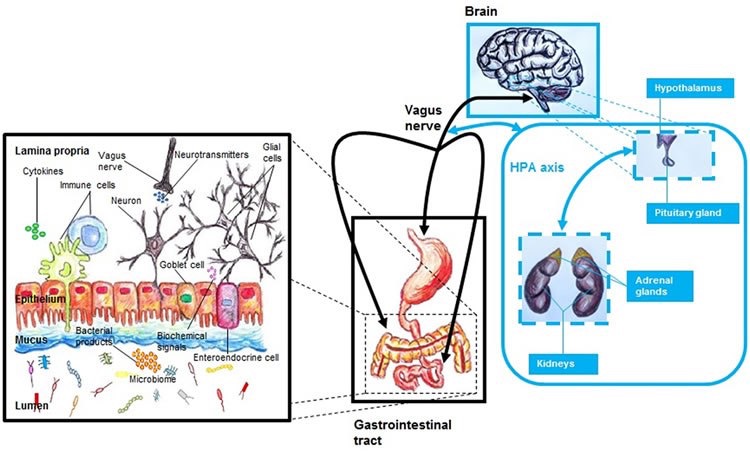
“The main idea of our review is that there is strong communication between the gastrointestinal tract and the brain, and that changes to the microbiome-gut-brain axis could be associated with the etiology of different neuropsychiatric disorders such as depression,” says Juan M. Lima-Ojeda, lead author of the review and a physician and researcher at the University of Regensburg, Germany.

Lima-Ojeda and his colleagues reviewed the body of literature on the role of the gut microbiome with a particular emphasis on the connections, or axis, formed between the microbiome, the gut, and the brain. The brain and the gastrointestinal tract are bi-directionally linked through the central nervous system, endocrine system, and immune system, and perturbations to any of these systems can have repercussions across the others, in turn potentially influencing a person’s overall wellbeing.

“This review was motivated by the interest to obtain a better understanding of both the etiology and pathophysiology of the depressive syndrome,” says Lima-Ojeda. “If we want to improve the treatment strategies that we have for our patients, it is necessary to understand this heterogenic neuropsychiatric disorder.”

The MGB axis, including the hypothalamic–pituitary–adrenal (HPA) axis. The MGB axis is a bidirectional system that links the gastrointestinal tract with the brain. It is a complex system characterized by a neuroendocrine–immune communication. The gut microbiome influences the function of the brain by modulation of both immune and endocrine systems, HPA axis, neurotransmitter pathways, and growth factors. Alterations of this network—that includes numerous molecules and cells—may be the basis of pathological processes. NeuroscienceNews.com image is credited to Lima-Ojeda et al./Frontiers in Psychology.
Their findings included evidence of the gut-microbiome’s formation and influence beginning already in the very earliest stages of life in-utero. Some of these publications propose that the interactions between the brain and gut are just as influential, if not possibly more important, during neurodevelopment, suggesting that depressive syndromes might be traced back to imbalances during neurodevelopment.

However, Lima-Ojeda additionally uncovered evidence that depression may also be attributable to disturbances to the gut microbiome at any point during a person’s life, which can be due to stress, diet, and of course medications such as antibiotics. These findings promote the idea that attention to nutrition and diet may be a practical and effective complement to existing strategies for the treatment of depression.

“Our habits — including our diet–are important factors modulating the microbiome-gut-brain axis,” says Lima-Ojeda. “So, an appropriate diet is important for adequate mental health, where an appropriate diet is one that includes vegetables, fruits, whole grains, fish, and enough water.”

Funding: This research was funded by German Federal Ministry of Education and Research.

Source: Melissa Cochrane – Frontiers

Image Source: NeuroscienceNews.com image is credited to Lima-Ojeda et al./Frontiers in Psychology.

Original Research: Abstract for ““I Am I and My Bacterial Circumstances”: Linking Gut Microbiome, Neurodevelopment, and Depression” by Juan M. Lima-Ojeda, Rainer Rupprecht and Thomas C. Baghaiin Frontiers in Psychiatry. Published online August 22 2017 doi:10.3389/fpsyt.2017.00153

Frontiers “Linking Mental Health and the Gut Microbiome.” NeuroscienceNews. NeuroscienceNews, 23 August 2017.

<http://neurosciencenews.com/mental-health-microbiome-7356/&gt;.

Abstract

“I Am I and My Bacterial Circumstances”: Linking Gut Microbiome, Neurodevelopment, and Depression

Recently, there has been renewed interest in the role played by microbiome in both human health and human disease. A correct equilibrium between the human host and their microorganisms is important for an appropriate physiological function. Extensive research has shown that microbes that inhabit the gastrointestinal tract—or gut microbiota—are involved not only in both nutritive and digestive activities but also in immunological processes. Moreover, the gut microbiome influences both central nervous system and energy homeostasis. An altered gut microbiome has been associated with the pathophysiology of different diseases, including neuropsychiatric disorders. Apparently, both environmental—diet, exposition to antibiotics, and infections—and host-genetic factors have a strong influence on gut microbiome, modulating the risk for neuropsychiatric illness. Also, early life disruption of the microbiome–gut–brain (MGB) axis has been associated with an increased risk of developing depression later in life, suggesting a link between gut microbiome, neurodevelopment, and depression. This review aims to contribute to this growing area of research by exploring the role played by the gut microbiome in neurodevelopment and in the etiology of the depressive syndrome, including nutritional, immunological, and energy homeostasis approaches.

““I Am I and My Bacterial Circumstances”: Linking Gut Microbiome, Neurodevelopment, and Depression” by Juan M. Lima-Ojeda, Rainer Rupprecht and Thomas C. Baghaiin Frontiers in Psychiatry. Published online August 22 2017 doi:10.3389/fpsyt.2017.00153

IBM’s AI can predict schizophrenia by looking at the brain’s blood flow

With 74% accuracy!

https://www.engadget.com/2017/07/20/ibms-ai-can-predict-schizophrenia-by-looking-at-the-brains-blo/?sr_source=Twitter

IBM’s AI can predict schizophrenia by looking at the brain’s blood flow

And it does so with 74 percent accuracy

Schizophrenia is not a particularly common mental health disorder in America, affecting just 1.2 percent of the population (around 3.2 million people), but its effects can be debilitating. However, pioneering research conducted by IBM and the University of Alberta could soon help doctors diagnose the onset of the disease and the severity of its symptoms using a simple MRI scan and a neural network built to look at blood flow within the brain.

“This unique, innovative multidisciplinary approach opens new insights and advances our understanding of the neurobiology of schizophrenia, which may help to improve the treatment and management of the disease,” Dr. Serdar Dursun, a Professor of Psychiatry & Neuroscience with the University of Alberta, said in a statement.

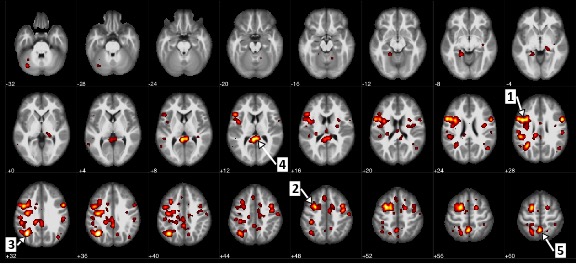
MRI scans showing statistically significant differing blood flows within the brain – Image: IBM

The research team first trained its neural network on a 95-member dataset of anonymized fMRI images from the Function Biomedical Informatics Research Network which included scans of both patients with schizophrenia and a healthy control group. These images illustrated the flow of blood through various parts of the brain as the patients completed a simple audio-based exercise. From this data, the neural network cobbled together a predictive model of the likelihood that a patient suffered from schizophrenia based on the blood flow. It was able to accurately discern between the control group and those with schizophrenia 74 percent of the time.

“We’ve discovered a number of significant abnormal connections in the brain that can be explored in future studies,” Dursun continued, “and AI-created models bring us one step closer to finding objective neuroimaging-based patterns that are diagnostic and prognostic markers of schizophrenia.”

What’s more, the model managed to also predict the severity of symptoms once they set in. These insights could lead researchers to more effective diagnostic tools and treatment options. And why wouldn’t they? IBM’s most famous AI, Watson, has already shown that neural networks are surprisingly adept at coming up with effective cancer treatment regimens.


Scientists Discover that the Immune System Controls Social Interaction

More amazing news, the immune system actually controls social behavior. It used to be thought that the immune system and the brain functioned independently of each other. However, that has been shown to be untrue. It has been shown that the immune system and the brain interact closely with each other and some of our behavior traits might have evolved because of our immune response to pathogens. “The relationship between people and pathogens, the researchers suggest, could have directly affected the development of our social behavior, allowing us to engage in the social interactions necessary for the survival of the species while developing ways for our immune systems to protect us from the diseases that accompany those interactions.”

Interferon γ, an immune molecule,  seems to be the molecule that is involved in both immune activity and how social organisms are! If interferon γ is knocked out in mice, they become much less social, and if it is restored, their social life gets better as well!

The theory is that even though we need to be social for survival, procreating, etc. being social increases our chances to get diseases. So interferon γ not only makes us more social but also protects us from getting sick.

And here are the amazing implications: “The researchers note that a malfunctioning immune system may be responsible for “social deficits in numerous neurological and psychiatric disorders.””

And: Litvak said. “Our findings contribute to a deeper understanding of social dysfunction in neurological disorders, such as autism and schizophrenia, and may open new avenues for therapeutic approaches.”

Incredibly amazing!


https://explorist.futurism.com/scientists-discover-immune-system-controls-social-interaction/
Health
Scientists Discover that the Immune System Controls Social Interaction
by explorist on July 19, 2017
Scientists Discover that the Immune System Controls Social Interaction
A Startling Discovery
In a startling discovery that raises fundamental questions about human behavior, researchers at the University of Virginia School of Medicine have determined that the immune system directly affects — and even controls — creatures’ social behavior, such as their desire to interact with others. So could immune system problems contribute to an inability to have normal social interactions? The answer appears to be yes, and that finding could have great implications for neurological conditions such as autism-spectrum disorders and schizophrenia.
“The brain and the adaptive immune system were thought to be isolated from each other, and any immune activity in the brain was perceived as sign of a pathology. And now, not only are we showing that they are closely interacting, but some of our behavior traits might have evolved because of our immune response to pathogens,” explained Jonathan Kipnis, PhD, chairman of UVA’s Department of Neuroscience. “It’s crazy, but maybe we are just multicellular battlefields for two ancient forces: pathogens and the immune system. Part of our personality may actually be dictated by the immune system.”
Evolutionary Forces at Work
It was only last year that Kipnis, the director of UVA’s Center for Brain Immunology and Glia, and his team discovered that meningeal vessels directly link the brain with the lymphatic system. That overturned decades of textbook teaching that the brain was “immune privileged,” lacking a direct connection to the immune system. The discovery opened the door for entirely new ways of thinking about how the brain and the immune system interact.
The follow-up finding is equally illuminating, shedding light on both the workings of the brain and on evolution itself. The relationship between people and pathogens, the researchers suggest, could have directly affected the development of our social behavior, allowing us to engage in the social interactions necessary for the survival of the species while developing ways for our immune systems to protect us from the diseases that accompany those interactions. Social behavior is, of course, in the interest of pathogens, as it allows them to spread.
The UVA researchers have shown that a specific immune molecule, interferon gamma, seems to be critical for social behavior and that a variety of creatures, such as flies, zebrafish, mice and rats, activate interferon gamma responses when they are social. Normally, this molecule is produced by the immune system in response to bacteria, viruses or parasites. Blocking the molecule in mice using genetic modification made regions of the brain hyperactive, causing the mice to become less social. Restoring the molecule restored the brain connectivity and behavior to normal. In a paper outlining their findings, the researchers note the immune molecule plays a “profound role in maintaining proper social function.”

Mikael Häggström/Wikimedia Commons
“It’s extremely critical for an organism to be social for the survival of the species. It’s important for foraging, sexual reproduction, gathering, hunting,” said Anthony J. Filiano, PhD, Hartwell postdoctoral fellow in the Kipnis lab and lead author of the study. “So the hypothesis is that when organisms come together, you have a higher propensity to spread infection. So you need to be social, but [in doing so] you have a higher chance of spreading pathogens. The idea is that interferon gamma, in evolution, has been used as a more efficient way to both boost social behavior while boosting an anti-pathogen response.”
Understanding the Implications
The researchers note that a malfunctioning immune system may be responsible for “social deficits in numerous neurological and psychiatric disorders.” But exactly what this might mean for autism and other specific conditions requires further investigation. It is unlikely that any one molecule will be responsible for disease or the key to a cure, the researchers believe; instead, the causes are likely to be much more complex. But the discovery that the immune system — and possibly germs, by extension — can control our interactions raises many exciting avenues for scientists to explore, both in terms of battling neurological disorders and understanding human behavior.
“Immune molecules are actually defining how the brain is functioning. So, what is the overall impact of the immune system on our brain development and function?” Kipnis said. “I think the philosophical aspects of this work are very interesting, but it also has potentially very important clinical implications.”
Findings Published
Kipnis and his team worked closely with UVA’s Department of Pharmacology and the group of Vladimir Litvak, PhD, at the University of Massachusetts Medical School. Litvak’s team developed a computational approach to investigate the complex dialogue between immune signaling and brain function in health and disease. “Using this approach we predicted a role for interferon gamma, an important cytokine secreted by T lymphocytes, in promoting social brain functions,” Litvak said. “Our findings contribute to a deeper understanding of social dysfunction in neurological disorders, such as autism and schizophrenia, and may open new avenues for therapeutic approaches.”
The findings have been published online in the journal Nature. The article was written by Filiano, Yang Xu, Nicholas J. Tustison, Rachel L. Marsh, Wendy Baker, Igor Smirnov, Christopher C. Overall, Sachin P. Gadani, Stephen D. Turner, Zhiping Weng, Sayeda Najamussahar Peerzade, Hao Chen, Kevin S. Lee, Michael M. Scott, Mark P. Beenhakker, Litvak and Kipnis.
This work was supported by the National Institutes of Health (grants No. AG034113, NS081026 and T32-AI007496) and the Hartwell Foundation.
This article was provided by  University of Virginia Health System. Materials may have been edited for clarity and brevity.

New Research Discovers That Depression Is An Allergic Reaction To Inflammation

The immune system!!! My pet theory of what causes mental illness!
Well actually allergic reactions are inflammation. And cytokines are produced in inflammation during allergic reactions. Well cytokines are also present in high levels in people suffering from depression. And " adding anti-inflammatory medicines to antidepressants not only improves symptoms, it also increases the proportion of people who respond to treatment,"
“Cytokines skyrocket during depressive episodes and, in those with bipolar disorder, halt in remission. The fact that ‘normal,’ healthy people can become temporarily anxious or depressed after receiving an inflammatory vaccine — like typhoid — lends further credence to the theory. There are even those who think we should re-brand depression altogether as an infectious disease … Carmine Pariante, a Kings College psychiatrist who is quoted in The Guardian report, says that we’re between five and ten years away from a blood test that can measure levels of inflammation in depressed people.  If both Pariante’s estimate and the inflammation-depression theory are correct, we could potentially be just five years from an adequate ‘cure’ for depression.”

Yes, another piece of the puzzle pointing towards the immune system being the culprit in mental illnesses!!!

https://www.feelguide.com/2015/01/06/new-research-discovers-tha-depression-is-an-allergic-reaction-to-inflammation/

New Research Discovers That Depression Is An Allergic Reaction To Inflammation
BY BRENT LAMBERT • JANUARY 6, 2015 • HEALTH, NEUROSCIENCE, SCIENCE • COMMENTS (0) • 3000844

New research is revealing that many cases of depression are caused by an allergic reaction to inflammation.  Tim de Chant of NOVA writes: “Inflammation is our immune system’s natural response to injuries, infections, or foreign compounds. When triggered, the body pumps various cells and proteins to the site through the blood stream, including cytokines, a class of proteins that facilitate intercellular communication.  It also happens that people suffering from depression are loaded with cytokines.”  Inflammation is caused by obesity, high sugar diets, high quantities of trans fats, unhealthy diets in general, and other causes.
By treating the inflammatory symptoms of depression — rather than the neurological ones — researchers and doctors are opening up an exciting new dimension in the fight against what has become a global epidemic.  Caroline Williams of The Guardian writes: “The good news is that the few clinical trials done so far have found that adding anti-inflammatory medicines to antidepressants not only improves symptoms, it also increases the proportion of people who respond to treatment, although more trials will be needed to confirm this. There is also some evidence that omega 3 and curcumin, an extract of the spice turmeric, might have similar effects. Both are available over the counter and might be worth a try, although as an add-on to any prescribed treatment – there’s definitely not enough evidence to use them as a replacement.”
Eleanor Morgan of VICE adds: “Cytokines skyrocket during depressive episodes and, in those with bipolar disorder, halt in remission. The fact that ‘normal,’ healthy people can become temporarily anxious or depressed after receiving an inflammatory vaccine — like typhoid — lends further credence to the theory. There are even those who think we should re-brand depression altogether as an infectious disease … Carmine Pariante, a Kings College psychiatrist who is quoted in The Guardian report, says that we’re between five and ten years away from a blood test that can measure levels of inflammation in depressed people.  If both Pariante’s estimate and the inflammation-depression theory are correct, we could potentially be just five years from an adequate ‘cure’ for depression.”
You can read much more by visiting The Guardian, VICE, and NOVA.  And to learn much more about how food and mood are powerfully connected, be sure to read this fascinating article on Kripalu.org. (Image courtesy of the American Heart Association).

So far… :-(

2017

Something’s wrong. Since March of 2017. That was when my son got attacked by gang members in a convenient store parking lot and had to literally fight them off with his bare hands for his life. Then his car window got smashed by, presumably, some kids. A few nights ago, he was approached by some menacing people again, bringing his PTSD from the March attack to the fore, again. In the mean time I have whacked my head against a cast iron pipe so hard that I have a concussion. Also broke my little toe. Also accidentally got sliced on my arm by a very sharp knife. And yesterday was the kicker! My son’s apartment building’s roof got struck by lightening, a fire broke out in the attic. He was asleep. He smelled the smoke, NONE of the fire alarms worked! He awoke because his nose is so sensitive. It was late morning. Being on the top floor, his apartment was filling up with smoke. He searched for his cat, so very fortunately found him, threw him in his carrier and legged it out of there. His carbon monoxide level was 4 parts per million. With thoughts of his own mortality, and again, extreme danger, on his mind. But everyone made it safe it and sound. The firefighters put out the fire. The Red Cross was there, ambulances, fire trucks.

What? What is going on? This many disasters in one family? How do you tolerate the stress of one after another, yet another, yet another disaster? The what if’s are always what kill me. I know there is no such thing as what if this had happened, because very simply, it DIDN’T happen. Of course when you survive disasters, you feel fortunate and grateful. But what if he hadn’t found his cat, what if he hadn’t woken up, what if a million times over! And not just what if, but also Now What? What’s going to happen a second from now, an hour from now, a day from now? I don’t want to, but I am living in fear and anxiety and so is my son. He doesn’t sleep at night and yesterday he was saying he wishes this spate of bad luck would end. He was seeing a therapist after the March attack but stopped and doesn’t want to see her anymore. I know she was helping him, so I don’t understand why he won’t talk to her. PTSD is a bitch, she attacks you when you least expect it, anxiety levels soar, fear punches you in your solar plexus, and the rumination doesn’t leave you alone, and being on guard, hyper vigilant all the time. Too much stress, too much anxiety and with my family history, I am afraid, very afraid.

Time for Ativan? Sure, I can dull my feelings of anxiety with an Ativan, but how will that make us safer, how will it stop these bad things from happening to us?

And this brings us to one more scary thing, how much control do you really have over anything in your life? At this moment, I would say very little.

And yes I know, what happens is not the important thing, Our Reaction To What Happens Is!

Yes I am grateful that, although things could have been far worse, we survived them. I mean I could have been lying face down in a stairwell in New York City, dead from a brain bleed when I hit my head against the pipe. But I survived. My son is unharmed. Fine and good, I know that. Looking at things positively doesn’t mean you have no fear, or anxiety, you do have those when bad things happen to you. And when a string of them happen, and seemingly keep happening, then what?


My fervent wish, my solemn prayer is that these strange, negative things stop happening to me and my family, and we live our lives in safety, peace, harmony and love. Amen.