Bipolar1Blog

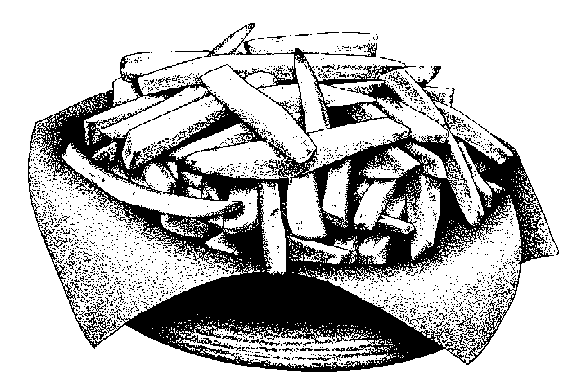
“Sharing French Fries With a Stranger in the Chicago Airport” – By Carmelene Melanie Siani

Love this post! Puts things in perspective.

Kindness Blog's avatarKindness Blog

I had been sitting at the bar in the Chicago airport talking congenially over drinks for 20 minutes or so with a young woman from Berkeley, California. 

She worked in production for a film company, was flying to Burbank and was a total stranger.

“Are you done with your French fries?” I asked as she pushed her plate away.

“Oh, sure” she said, nudging that same plate towards me. “Help yourself.”

The TV was on. She had just finished saying that she was worried about the election and about the terrorist shootings.

“It’s like the world is falling apart,” she lamented.

She was worried about our future, about our country and about feeling unsafe in an unsafe world.

“Pay attention to the world around you,” I told her, “The one you live in.  Don’t pay attention to the one that is translated for you by that,” I said, gesturing towards…

View original post 479 more words

Brain Training Cuts Dementia Risk a Decade Later

The findings, if they hold up, are pretty spectacular!

http://www.scientificamerican.com/article/brain-training-cuts-dementia-risk-a-decade-later/# For the first time ever, researchers have managed to reduce people’s risk for dementia — not through a medicine, special diet, or exercise, but by having healthy older adults play a computer-based brain-training game.

The training nearly halved the incidence of Alzheimer’s disease and other devastating forms of cognitive and memory loss in older adults a decade after they completed it, scientists reported on Sunday. If the surprising finding holds up, the intervention would be the first of any kind — including drugs, diet, and exercise — to do that.

“I think these results are highly, highly promising,” said George Rebok of the Johns Hopkins Bloomberg School of Public Health, an expert on cognitive aging who was not involved in the study. “It’s exciting that this intervention pays dividends so far down the line.”

The results, presented at the Alzheimer’s Association International Conference in Toronto, come from the government-funded ACTIVE (Advanced Cognitive Training for Independent and Vital Elderly) study. Starting in 1998, ACTIVE’s 2,832 healthy older adults (average age at the start: 74) received one of three forms of cognitive training, or none, and were evaluated periodically in the years after.

In actual numbers, 14 percent of ACTIVE participants who received no training had dementia 10 years later, said psychologist Jerri Edwards of the University of South Florida, who led the study. Among those who completed up to 10 60-to-75-minute sessions of computer-based training in speed-of-processing — basically, how quickly and accurately they can pay attention to, process, and remember brief images on a computer screen — 12.1 percent developed dementia. Of those who completed all 10 initial training sessions plus four booster sessions a few years later, 8.2 percent developed dementia.

Such a “dose-response effect” — more intervention, more chance of avoiding dementia — is often a clue that the intervention is, indeed, making a difference.

Nevertheless, the finding of a significant benefit from such a modest intervention long ago had dementia experts scratching their heads.

“It’s hard to understand how such a brief intervention could have a long-lasting impact,” said Dr. Howard Fillit, executive director of the Alzheimer’s Drug Discovery Foundation, which supports pharmaceutical research on the disease. “But you have to respect the data.”

Because the results have not been submitted to a peer-reviewed journal, however, they are considered tentative.

ACTIVE is a well-respected study that, until now, had found only modest effects from cognitive training which, in addition to speed-of-processing, included classroom training in memory or reasoning strategies. Each participant was randomly assigned to receive one of the three or none. The randomization reduced the chances that the different outcomes were the result of, say, more cognitively-spry people choosing to undergo computerized brain training.

There is growing evidence that remaining intellectually engaged (“lifelong learning”) and certain forms of cognitive training can reduce the risk of plain old cognitive decline. But the new ACTIVE findings “are evidence that [that] may hold true for dementia, as well,” said Maria Carrillo, chief science officer of the Alzheimer’s Association.

“Brain training” has been likened to snake oil. Federal regulators accused the makers of Lumosity, for instance, of fraud for suggesting its games could prevent memory loss and dementia; the company paid $2 million this year to settle the charges.

The ACTIVE trial had been somewhat disappointing until now. Participants who trained on one skill did better on that skill right after, as well as five years later, compared to those who had different training or none at all. But training in one skill did not improve the others, suggesting that overall brain function wasn’t getting better. And five years after training, there was no effect on their risk of dementia.

Even then, however, there were hints that speed-of-processing might be different, Rebok said, targeting underlying brain activity and physiology rather than skills, as a 2006 study suggested. In 2013, researchers found that speed-of-processing training might improve such “executive functions” as planning and reasoning. A study published last month reported that it improved brain connectivity and cognitive ability in a way that might slow the descent into dementia.

Improving processing speed “changes fundamental processes in the brain,” said Henry Mahncke, CEO of Posit Science Corporation. “It’s not that one particular link in the brain gets improved, but that the whole brain is rejuvenated,” he said.

The company licensed ACTIVE’s speed-of-processing module as the “Double Decision” exercise in its BrainIQ.com product ($96 a year).

A key question is, if speed-of-processing training can reduce the risk of Alzheimer’s, can more be better? The ACTIVE participants got, at most, 14 hours of it nearly 20 years ago. But “given that 10 to 14 sessions had these benefits, just think what we could do with more,” Edwards said. “We should be thrilled about this.”

Scientists not associated with Posit or the new study said they would be more persuaded if it were clear how speed-of-processing training works its magic.

One possibility is a bootstrapping effect. Maybe people who received speed-of-processing training “did something different over the years,” said Laurie Ryan, who oversees Alzheimer’s research at the National Institute on Aging. “Maybe they changed their lifestyle in some way,” with the training giving them a little cognitive boost that they parlayed into more reading, more travel, more social engagement, and more of other activities that boost “cognitive reserve,” the brain’s cushion against dementia.

In fact, some ACTIVE participants told scientists that the cognitive boost they felt from the training inspired them to enroll in classes at a local college or keep driving, said Rebok, both of which can keep people socially and intellectually engaged.

Other studies presented at the Alzheimer’s meeting on Sunday provided more evidence for the power of cognitive reserve:

*A traditional “Western” diet of red meat, processed foods, white bread, sugar, and saturated fat has long been associated with cognitive decline, though only in observational studies. But older adults eating that way who had more education, mentally stimulating work, and social engagement did not suffer as much decline, scientists reported. The study followed participants for only three years, however, leaving open the possibility that unhealthy habits eventually catch up with the brain.

*Healthy older adults whose jobs required them to work with people rather than “data or things” also seemed to be protected. They were less likely to develop Alzheimer’s even when they had brain lesions called white matter hyperintensities, which have been linked to the disease.
If Only…

Screen Shot 2016-07-23 at 7.40.10 PM

I just saw this graphic on Twitter, and it caught my attention. I actually have food allergies or sensitivities to many foods, especially corn, can’t eat it at all. I am also allergic to casein (a milk protein, so all dairy that has protein in it but not dairy fat 🙂 ) bananas, avocados, pork, cumin, and a few more things. So I’ve actually been on elimination diets for years, to find out definitively what I am allergic to. First you eliminate the foods that the allergy tests show you as being allergic to them. You eliminate these foods for a few months, then you add back one food at a time to see if your symptoms come back. My symptoms are not gastrointestinal, my symptoms are joint pain, so sometimes it’s difficult to say whether I am reacting to a food. Anyway, I have tried to tease out the foods that I can eat and the ones I can’t.

Also it’s very interesting to note that people with mental illness often have inflammation and immune illnesses as well. There is definitely a connection, although it is not known for certain what it is. The gut has it’s own immune system (GALT) and it own “brain” also known as the enteric nervous system, and there is extensive signaling between the gut and the nervous system. Anxiety and depression affect conditions like irritable bowel syndrome and vice versa. Also the neurons in the gut make a lot of the body’s serotonin and this is influenced by our microbiota in the gut.

All is interconnected!

About the graphic above, I really like it, if only it was easy to undertake and be successful at eliminating anger, regret, resentment, guilt, blame and worry! Life would be quite divine. I don’t know why these negative emotions are so difficult to banish, whereas the positive ones just fly away so easily.

One more I’d definitely add to this list is fear. In fact, might all of the emotions not be some derivation of fear? Fear is a survival tool, but feeling it at times when it is not warranted for our survival is so counterproductive and also leads to anxiety, a downwards spiral from which it may be difficult to recover.

Practicing fearlessness, when in the midst of anxiety and fear, it is very difficult, but in instances when I have done it, I have mostly been rewarded by a sense of accomplishment and bravery.

Anyway, I will try to go on this particular elimination diet as much as I can.


Power

IMG_3254You can do anything you want, say anything you want, and people will still follow you. Trump is running for president, who would have thought such a thing was possible? This man who was a laughingstock of the world, somehow found a base who will support him, enough to be one of the candidates for the presidential election. It boggles my mind, totally!

David Duke the head of the KKK is running for Louisiana’s Senate seat! Really? What is the world coming to? And what will happen if he wins?

Of course, the police are shooting people and have been targeted in return.

There was a shooting in Munich, Germany, which the authorities there are labeling a terrorist attack.

Turkey is being purged of, most likely, all intelligent and able civil servants, by the dictator named Erdogan.

Three names I wish I’d never heard: Trump, Duke, Erdogan.

Unfortunately, as I said in my last two posts, there is nothing much I can do about any of this, so I’m going to make dinner for my son. Maybe that’ll take my mind off things that are outside of my control, heinous as they are.

Alcohol is the Direct Cause of Seven Cancers!

Whoa! This is pretty incredible. According to the study below, alcohol directly caused seven different types of cancer, if not more! This is related to dose, but even people having moderate to low amounts of alcohol are affected. They recommend alcohol free days. 

Goodness, who knew? Until now, we heard about the cardio protective effects of alcohol, and now this!
https://www.theguardian.com/society/2016/jul/22/alcohol-direct-cause-seven-forms-of-cancer-study

Alcohol causes seven forms of cancer, and people consuming even low to moderate amounts are at risk, according to new analysis.
Health experts endorsed the findings and said they showed that ministers should initiate more education campaigns in order to tackle widespread public ignorance about how closely alcohol and cancer are connected. The study sparked renewed calls for regular drinkers to be encouraged to take alcohol-free days, and for alcohol packaging to carry warning labels. Fresh analysis of evidence accumulated over recent years implicates alcohol in the development of breast, colon, liver and other types of cancer.
The study, published in the scientific journal Addiction, concludes that there is more than simply a link or statistical association between alcohol and cancer that could be explained by something else. There is now enough credible evidence to say conclusively that drinking is a direct cause of the disease, according to Jennie Connor, of the preventive and social medicine department at Otago University in New Zealand.
“There is strong evidence that alcohol causes cancer at seven sites in the body and probably others,” Connor said. “Even without complete knowledge of biological mechanisms [of how alcohol causes cancer], the epidemiological evidence can support the judgment that alcohol causes cancer of the oropharynx, larynx, oesophagus, liver, colon, rectum and breast.”
Growing evidence suggested that alcohol was also likely to cause skin, prostate and pancreatic cancer, she added. Emphasising that a drinker’s risk increased in relation to the amount consumed, Connor said: “For all these there is a dose-response relationship.” Connor arrived at her conclusions after studying reviews undertaken over the past 10 years by the World Cancer Research Fund, the International Agency for Research on Cancer, the World Health Organisation’s cancer body, and other authoritative bodies.
“The highest risks are associated with the heaviest drinking but a considerable burden is experienced by drinkers with low to moderate consumption, due to the distribution of drinking in the population,” Connor said. Campaigns to reduce alcohol consumption should therefore try to encourage everyone to cut down, as targeting only heavy drinkers had “limited potential” to reduce alcohol-related cancer, she added.
In February Prof Dame Sally Davies, the chief medical officer for England, caused a stir by warning women that drinking alcohol could cause breast cancer. She told a parliamentary hearing: “Do as I do when I reach for my glass of wine. Think: do I want the glass of wine or do I want to raise my own risk of breast cancer? I take a decision each time I have a glass.”
Davies played a key role in drawing up new government guidelines on safe drinking limits, published in January, which recommended that men reduce their maximum weekly intake of alcohol from 21 to 14 units, or seven pints of beer a week, which is the longstanding threshold that women are advised not to exceed.
The growing evidence of alcohol’s role in causing cancer, underlined by a report by the UK Committee on Carcinogenicity, was a key reason behind Davies and her counterparts in Scotland, Wales and Northern Ireland issuing advice that some said was impractical and would be ignored. Sticking to the new guidelines would help keep drinkers’ risk of cancer low, the proponents said.
Dr Jana Witt, Cancer Research UK’s health information officer, said: “We know that nine in 10 people aren’t aware of the link between alcohol and cancer. And this review is a stark reminder that there’s strong evidence linking the two.” A recent CRUK study found that when people were shown a list of different cancers, only one in five of them knew that breast cancer could be caused by drinking, compared to four out of five people who knew that alcohol could cause liver cancer.
“Having some alcohol-free days each week is a good way to cut down on the amount you’re drinking,” Witt said. “Also, try swapping every other alcoholic drink for a soft drink, choosing smaller servings or less alcoholic versions of drinks, and not keeping a stock of booze at home.”
Alan Boobis, professor of biochemical pharmacology at Imperial College London, said the science showing alcohol’s role in cancer was well established. “The main difficulty is communicating effectively with the public,” he said.
Connor’s study also found that people who smoke and drink are at even greater risk of developing cancer.
More positively, there was some evidence that drinkers who gave up alcohol could reverse their risk of laryngeal, pharyngeal and liver cancer, and that their risk reduced the longer they avoided alcohol, Connor’s research found.
Elaine Hindal, chief executive of Drinkaware, the alcohol industry-funded education charity, agreed that drinking and cancer risk were closely linked.
“Regularly drinking more than the government’s low-risk guidelines puts you at increased risk of some types of cancer, and can also increase your risk of heart and liver disease, strokes and pancreatitis,” she said. “Smoking and drinking together increases your risk of developing throat and mouth cancer more than doing either on their own.”
People drinking more than the recommended limits should cut down in order to safeguard their future health, she added

Disquietude…

img_0120In my last post (https://bipolar1blog.com/2016/07/20/depression-or-lithium-dullness/) I described how dull, blank and lethargic I had been feeling of late, and I hoped it would change. Well today, it seems to have changed, however not in the direction I had hoped it would. Ah yes, isn’t that the way it usually happens… Instead of feeling bright and energetic like I’d wished I would, I actually feel quite anxious and a bit restless and don’t really know what to do with myself. 😦 There is a sort of nauseous feeling in the pit of my stomach, and just a feeling of unease. I am still in Buffalo, with my son, who is studying for his Bar exam. So many disquieting things happening these days. And there is nothing I can do about any of them. Whether my son passes the bar or not, nothing I can do about it. I’m here, helping him as much as I can, but that is the extent of what I can do, the rest is up to him…

Whether, and this my nightmare!!! Trump gets elected or not, nothing I can do about it. Move to Canada? Yes that would really be my preference, but seriously, I don’t think that’s going to happen.

Whether Turkey, under the dictatorship of that awful Erdogan, becomes more and more Islamist, nothing I can do about it. I am absolutely a Kemalist, a follower of Mustafa Kemal Ataturk. And this Erdogan has literally, actively ruined this beautiful, once modern and prosperous country, my adopted country, and there’s nothing I can do about it. Did I mention there are 50 nuclear warheads in the NATO base in Incirlik, Turkey, these are now under the control of this vile Erdogan. And yes, there’s nothing I can do about it.

Just all disquietude and anxiety. Is it my state of mind? Is it due to my illness? Or is it due to what’s happening in the world? All of the above? I don’t know, but yesterday’s blankness would be welcome right about now.

Depression or Lithium dullness?


Feeling much less than inspired these days. Usual summer depression? Or is it that I an so stable on 900 mg of Lithium, that I have no emotions or any ideas for creating blogposts? Don’t know which is the case, just know I feel blah. Generally fine though, just seems like the “little grey cells” aren’t working as well. What to do? Wait it out or start reading voraciously in the hope of being stimulated by something I read? Speaking of reading, I recently discovered Anna Brönte, Charlotte’s sister. I’m reading a book she wrote called “The Tenant of Wildfell Hall.” It’s a really good book, very well written and so witty and funny in spots that I find myself laughing quite out loud at times. Well that’s it for today. Hope to have something inspirational and riveting soon. Hugs. 

Researchers Homing in on the Genetic Causes of Bipolar Disorder

They have found some rare genetic mutations that may be linked to bipolar disorder. They used next generation sequencing and sequenced millions of nucleotides from affected individuals. They looked at eight families with a history of bipolar disorder through several generations. The researchers used next-generation sequencing to examine the DNA of 36 of the family members. They sequenced 50 million nucleotides from each individual, however, before any conclusive results are gotten, they have to do this with several thousand more people. They are confident that new treatments for bipolar disorder will come out of this research. Amen and godspeed!

http://www.healthline.com/health-news/genetic-causes-of-bipolar-disorder

Scientists are comparing DNA from families with histories of bipolar disorder with the hope of better understanding what causes the mental illness.

genetics and bipolar

Researchers may be one step closer to identifying the genetic cause of bipolar disorder.

A study published in the Journal of the American Medical Association (JAMA) Psychiatry has identified 84 potential inherited gene mutations that could contribute to the most severe forms of bipolar disorder.

 “We have known since the 1920s that the illness has a large inherited component to it. But in the last eight years we have uncovered particular genetic variations that play a role in setting bipolar disorder in motion,” Dr. James Potash, chair of psychiatry at the University of Iowa and co-author of the study, told Healthline. “These variations explain some of what is going on, but there is plenty still to discover.”

According to the World Health Organization (WHO), bipolar disorder affects 60 million people worldwide.

The disorder is characterized by “manic and depressive episodes separated by periods of normal mood.”

Manic episodes involve irritable or elevated moods, inflated self-esteem, overactivity, and a decreased need for sleep.

Data from the National Institute of Mental Health shows 2.6 percent, or approximately 5.7 million adults in the United States, are living with bipolar disorder.

Read more: Get the facts on bipolar disorder »

Searching for a cause

The exact cause of bipolar disorder is unknown.

However, the Mayo Clinic says several factors may be involved. These include physical changes in the brain, an imbalance of naturally occurring brain chemicals, and inherited traits.

“If someone has bipolar disorder type I, the severe form of the illness, the odds that their child will have it are about 5 to 10 percent. That is 5 to 10 times the rate in the general population,” Potash said.

The study Potash was involved in looked at eight families with a history of bipolar disorder through several generations. The researchers used next-generation sequencing to examine the DNA of 36 of the family members.

“Next-generation sequencing is a way of combing through each of the chemical letters in DNA (called nucleotides) that spell out genes,” Potash explained. “In our study we went through about 50 million of these for each person we looked at. The idea is to look for misspellings that are present in people with bipolar disorder.”

Earlier studies examining the genetic cause of bipolar disorder focused on identifying common DNA changes that could only explain a small percentage of the risk for bipolar disorder.

This latest research, led by Dr. Fernando Goes of the Johns Hopkins University School of Medicine, instead focused on identifying more rare genetic mutations that are less common, but may be linked to the more severe forms of bipolar disorder.

However, the researchers caution that the data is not yet strong enough to show a direct link between a specific mutation and bipolar disorder.

“One thing we learned is that it will take genetic data from at least several thousand more people with bipolar disorder to confirm that these rare mutations do in fact directly cause the disease,” Goes said in a press release. “We are working with the Bipolar Sequencing Consortium to gather more data and collaborators so we can definitively figure out causes.”

Read more: How to help someone with bipolar disorder »

New treatments possible

Researchers hope that identifying a genetic cause for bipolar disorder may pave the way for improvements in treatment and diagnosis.

“Many of the pieces of the puzzle of what may cause bipolar disorder are coming together,” Dr. Hilary Blumberg, director of the Mood Disorder Research Program at Yale University, said. “Putting these pieces together will help us to better understand the causes for bipolar disorder, find new ways to detect bipolar disorder earlier, and find new and more targeted treatment strategies.”

Potash is confident that researchers are getting closer to identifying the root cause of bipolar disorder after decades of research.

 This is a very exciting time because we have unprecedented tools that we can use to get to the bottom of what is going wrong in the DNA in bipolar disorder.
Dr. James Potash, University of Iowa
“Given that we as a field have been working on this problem for 100 years, you’d think we’d have gotten further. But if you realize that the human brain is the single most complex thing in the known universe, then you begin to see why progress has been slow,“ he said.

Advances in research methods and the advent of next-generation sequencing technology means scientists are able to examine DNA more quickly and cost effectively than was possible 10 years ago.

“This is a very exciting time because we have unprecedented tools that we can use to get to the bottom of what is going wrong in the DNA in bipolar disorder,” Potash said. “New treatments should emerge from these new insights. These are much needed as those we have now work for about two-thirds of people, but that leaves a lot of people suffering, and many who do not survive the onslaught of bipolar disorder.”

Bipolar Disorder Linked With Gene Expression in Unexpected Brain Region

Genes in the striatum have been implicated in bipolar disorder. This is a novel discovery, as research studies done previously had looked at cortical regions of the brain. The impulsivity and risk-taking behavior observed during manic episodes may stem from impaired reward processing and implicate the striatum as a possible region of dysfunction in bipolar disorder. Interesting finding. More research needs to be done which “may shed additional light on the role of specific molecular pathways and neuronal circuits in the etiology of BD, and provide new targets for the development of therapies,” the authors concluded.

http://www.psychiatryadvisor.com/news/bd-linked-with-gene-expression-in-striatum/article/509719/New findings by scientists at The Scripps Research Institute in Jupiter, Florida, reveal striatum-specific genetic associations with bipolar disorder.

An estimated 2.4% of people worldwide are estimated to have bipolar spectrum disorders, which are a significant cause of neuropsychiatric disability. The impulsive and risk-taking behavior observed during manic episodes may stem from impaired reward processing and implicate the striatum as a possible region of dysfunction in bipolar disorder (BD). Neuroimaging data reveal variations between BD subjects and controls in striatal volume, functional activity, and dopamine transporter availability. 

BD heritability estimates are high–between 59–85%, and if the striatum has a role in BD pathophysiology, relevant gene expression changes might be expected in this region. Before the current study, however, transcriptomic research using postmortem brain samples of people with BD has focused primarily on cortical regions.

The study published in Molecular Psychiatry is the first to report the transcriptome sequencing of postmortem striatum samples from individuals diagnosed with BD (n=18) and control individuals (n=17), and they also performed analyses with bioinformatics tools. Changes in expression were observed in 14 genes, and 8 of these were validated by qPCR. These included several immune system genes–LILRA4 and FCGBP, as well as NLRC5 and S100A12, which have been associated with BD and schizophrenia–and various non-protein coding genes.

Functional pathway analysis detected an “enrichment of upregulated genes across many immune/inflammation pathways and an enrichment of downregulated genes among oxidative phosphorylation pathways,” the authors reported. Twenty modules of highly interconnected genes were identified in co-expression network analysis, and 2 of the modules were enriched in BD susceptibility single-nucleotide polymorphisms (SNPs). Notably, the module found to have the “highest genetic association signal for BD, which contained many genes from signaling pathways, was also enriched in markers characteristic of gene expression in dorsal striatum medium spiny neurons…,” they wrote.

The current results linking the striatum with BD etiology at the gene level are in line with research showing the same association at the anatomical level. In 2 functional imaging studies, for example, decreased activity was found in the dorsal striatum of individuals with BD during reward-related tasks.

The authors speculate that in some BD patients, genetic susceptibility affecting striatal MSN signaling, combined with chronic inflammatory stress, may impair striatal circuits and lead to some of the BD-associated behaviors.

These findings underline the potential importance of striatal signaling pathways in understanding BD pathophysiology. Future human and animal research on the topic “may shed additional light on the role of specific molecular pathways and neuronal circuits in the etiology of BD, and provide new targets for the development of therapies,” the authors concluded.