Just got interviewed for

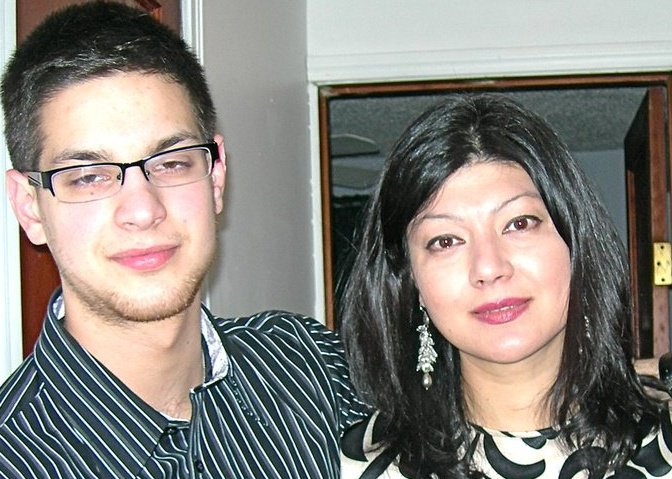
Aralee and me
Just got interviewed by Debbie Olsen for www.healthmonitor.com She is compiling a guide to bipolar 1 disorder, for people who have it and for their caregivers. The guide I was interviewed for will provide information and strategies as to how to cope with this not so amazing illness. The guide will be distributed to 16,000 psychiatrists’ and primary care doctors’ offices across the country. It will be published by Health Monitor Network (www.healthmonitor.com), which publishes many consumer health guides and magazines.
Once it’s published, I will, of course, post it here.
PS
The picture is the reason I want to be well 🙂

New role for insulin: Studies tie the hormone to brain’s “pleasure” center

http://www.neuroscientistnews.com/research-news/new-role-insulin-studies-tie-hormone-brains-pleasure-center

Insulin, the hormone essential to all mammals for controlling blood sugar levels and a feeling of being full after eating, plays a much stronger role than previously known in regulating release of dopamine, a neurotransmitter that helps control the brain’s reward and pleasure centers, new studies by researchers at NYU Langone Medical Center show.
“We found that when there’s more insulin in the brain, there will be more dopamine released, not less,” says study senior investigator and NYU Langone neuroscientist Margaret Rice, PhD. Her team’s new findings from laboratory and behavioral studies with rodents are set to appear in the journal Nature Communications.

Rice says the experiments she and her colleagues conducted not only reaffirm that insulin helps trigger the reuptake of dopamine when insulin levels rise, but also are the first to show that the net effect is a rise in dopamine levels. The results may also be the first to demonstrate that insulin’s role in the dopamine pathway may affect and explain food choices.

In one set of experiments, Rice and her colleagues recorded a 20 percent to 55 percent increase in dopamine released in the striatal region of the rodent brain (where dopamine’s effects on the brain are felt and which governs the body’s response to getting a reward). The rise occurred along the same timeframe as the rise in insulin activity needed to process any food sugars the mice and rats ate. And this occurred despite the reabsorption, or reuptake, of dopamine that in other regions of the brain tells an animal that its appetite is satisfied.
Rice and study co-principal investigator Kenneth Carr, PhD, also conducted separate experiments with rats in which they found that animals fed low-calorie diets had a 10-fold greater sensitivity to increasing insulin levels in the brain (meaning that it took only a tenth of a rise in insulin levels as seen in rats on a normal diet to spur dopamine release). By contrast, rats on high-calorie diets lost all striatal-brain insulin responsiveness. In addition, rats offered a choice between a drink reward that was paired with either an insulin antibody injection to block hormone signaling or a mock placebo injection always favored the drink-injection combination that led to intact insulin signaling (and more dopamine).

“Our work establishes what we believe is a new role for insulin as part of the brain’s reward system and suggests that rodents, and presumably people, may choose to consume high-carb or low-fat meals that release more insulin – all to heighten dopamine release,” says Rice, a professor in the Department of Neurosurgery at NYU Langone and a member of its Neuroscience Institute.

Rice says this finding is important because chronically elevated insulin levels and lowered insulin sensitivity in the brain are closely tied to obesity and type II diabetes, both very prevalent in the United States.

Rice says the team plans further experiments on how insulin influences the mammalian brain’s control over food motivation and reward pathways, and whether changes in insulin sensitivity brought about by obesity can be reversed or even prevented.

“If our future experiments prove successful,” says Rice, “it could confirm our hypothesis that when people refer to an insulin-glucose rush, they may really be referring to a dopamine reward rush. And there are healthy ways to get that by making smart food choices.”

Note: Material may have been edited for length and content. For further information, please contact the cited source.

NYU Langone Medical Center press release

Publication

Rice ME et al. Insulin enhances striatal dopamine release by activating cholinergic interneurons and thereby signals reward. Nature Communications, Published October 27 2015. doi: 10.1038/ncomms9543

A Reminder That ‘Princess Leia’ Is An O.G. Mental Health Hero

image

http://m.huffpost.com/us/entry/562795dbe4b0bce347031e34?utm_hp_ref=gps-for-the-soul&ir=GPS+for+the+Soul&section=gps-for-the-soul

She’s been speaking out against stigma for years.
Carrie Fisher is a total badass.
The actress, who is reprising her role as the formidable Princess Leia in the next installment of the Star Wars franchise, has been speaking out on mental illness for more than 10 years — something that was almost unheard of in Hollywood at the time she began.
She’s given honest testimonies of the trials and triumphs of battling addiction and bipolar disorder, displaying a no-holds-barred attitude when it comes to discussing the realities of mental health conditions.
Since we’re going to be seeing a lot more of Fisher in the coming days (thanks, Disney!), we wanted to make sure to revere the original Princess Leia for her groundbreaking stance on mental health in the public eye. Below are few times Fisher stood up against stigma:
Carrie Fisher is a total badass.
The actress, who is reprising her role as the formidable Princess Leia in the next installment of the Star Wars franchise, has been speaking out on mental illness for more than 10 years — something that was almost unheard of in Hollywood at the time she began.
She’s given honest testimonies of the trials and triumphs of battling addiction and bipolar disorder, displaying a no-holds-barred attitude when it comes to discussing the realities of mental health conditions.
Since we’re going to be seeing a lot more of Fisher in the coming days (thanks, Disney!), we wanted to make sure to revere the original Princess Leia for her groundbreaking stance on mental health in the public eye. Below are few times Fisher stood up against stigma:
When she owned what was happening with her mental health

“I have a chemical imbalance that, in its most extreme state, will lead me to a mental hospital … I am mentally ill. I can say that. I am not ashamed of that. I survived that, I’m still surviving it, but bring it on.”
The time she had this great response to being called the “poster child” of bipolar disorder.
“Well, I am hoping to get the centerfold in Psychology Today. … Now, it seems every show I watch there’s always someone bipolar in it! It’s going through the vernacular like ‘May the force be with you’ did. But I define it, rather than it defining me.”
When she offered sound advice on pursuing dreams despite mental illness.
“Stay afraid, but do it anyway. What’s important is the action. You don’t have to wait to be confident. Just do it and eventually the confidence will follow.”
The time she got real about how it feels to go through manic episodes.
“You can’t stop. It’s very painful. It’s raw. You know, it’s rough … your bones burn … when you’re not busy talking and trying to drown it out.”
When she explained the only real way to manage a mental health condition.
“The only lesson for me, or for anybody, is that you have to get help. It’s not a neat illness. It doesn’t go away.”
And finally, when she shut down the shamers by explaining just how strong you have to be to deal with a mental health condition.
“One of the things that baffles me (and there are quite a few) is how there can be so much lingering stigma with regards to mental illness, specifically bipolar disorder. In my opinion, living with manic depression takes a tremendous amount of balls. … At times, being bipolar can be an all-consuming challenge, requiring a lot of stamina and even more courage, so if you’re living with this illness and functioning at all, it’s something to be proud of, not ashamed of.”
Nailed it.

I’m trying!

IMG_9029 IMG_9029

I have been stuck in the past forever, going over things that happened years ago, in fact I just posted a post about why I didn’t finish my PhD, and the comment left on that post by my good friend Barb led me to write this post.

Her comment: “My friend…..this is my new ideology…..maybe it will help you.
NO REGRETS!
I USE to feel guilty about EVERYTHING and repeat these scenes in my head over and over….now NO REGRETS…we are here right now on this planet to learn and become better humans….so if we did everything perfectly there would be nothing for us to learn…..therefore…NO REGRETS!”

She is so right. Regrets and rumination, they will keep you stuck in the past, and keep you in a depressed mood, they may not put you in a depression but they will definitely exacerbate it. The past is over, get over it! Can’t change it, have to move forward from here on out. No point in second guessing it, you can’t go back there and change anything.

Actually I have not been feeling well since I came back from Philadelphia. It was such a positive experience, my heart soared, and what goes up must come down… at least that is what happens if you have bipolar disorder. Sigh…

So not only do regrets keep you depressed, but they are the direct result of having gone into a depressive phase. So there, I admitted it, I have been in a depressed phase for the last few days. And it feels awful. I am tired, don’t want to do anything or go anywhere.

How do I pull myself out? Well, I’m having a Halloween party and the house isn’t going to decorate itself. Also heeding Barb’s advice will help, actually I think just reading her words made my brain produce some much needed neurotransmitters, in other words reading her comment made me feel better. That’s how simple it is. We get by with a little help from our friends!

No regrets! Onwards and upwards! I’m trying!

Depression

This is what I know of depression: Depressed people don’t take responsibility for their own happiness or feelings. They don’t take ownership of their own life. They are so depressed, their mood is always plummeting, they are in so much pain that they cling to things on the outside. Their happiness depends on the attention, the approval, the love of others or such and such a thing happening. Their happiness is conditional. If I hear from so and so I will be happy. If such and such happens, I will be happy. The locus of control is external. This leads to more depression if you don’t hear from so and so or such and such doesn’t happen. And it leads to addiction if you do hear from so and so. The reason to be happy is because you want to be happy, because you are thankful for being alive and for your life. The reason to be happy is not so and so or such and such. You cannot make one person or one situation responsible for your happiness. The locus of control has to be internal. The happiness has to come from inside. Ha! Try being depressed and having happiness inside! There is none. There is a deep dark, sad, empty, painful,  bottomless pit of depression inside you. So you grasp at and hang on to things/people outside of yourself so you don’t fall into the abyss. And this only makes it worse, because people are not put in this earth to conduct their actions to ensure your happiness. And things can’t always happen exactly the way you’d like them to. No one is responsible for your happiness but you! Not your friends, not your children, not your significant others, not even winning the lottery. So what do you do? You take a deep breath and you let go of the attachments you have. You let your friends, children, significant others, you let them all off the hook. Yes it feels like you’re teetering at the precipice of the abyss, you are walking a tight rope without a net. But it also feels good because now you are in control, you’ve taken it back, whether you’re happy or not is back in your hands.

Getting out of the depression can be done with medications and talk therapy. Getting back control of your emotions, being responsible for your own happiness can only help the recovery from depression.

Sorry, a rant about why I walked away from my PhD 😏

DepressionI am realizing that I have been in a depression for much longer than I ever imagined. Sadness, bouts of crying, no confidence in my self, bleak outlook, all those, of course. Walking away from things, like my PhD, ok granted my boss, Dr. A, was the biggest a-hole in the world, people in the lab called him pig vomit, but if I really wanted that PhD, I should have persevered. My friend Tina did, even though it took her 9 years!!! Much too long, unheard of in Biology, most people get done in 3-5 years. And I was on track to finish mine in 3 years when Dr. A-hole decided not to let me do the experiments I knew I had to do in order to finish my PhD. So I quit. And he promptly gave my project to his favorite student who finished in 3 years, because most of the work had already been done by me. Ouch! Bitterness, Samina! Leaves a bad taste in your mouth and probably shortens your life. However, it was sexism, and Dr. A-hole truly was intimidated by my intelligence, and I was cycling through being manicky and depressed, and I did not have my husband’s support. All excuses, I know, yet it really was kind of a bad situation through and through. But, now looking back, I know I should have persisted. Is it too late to go back? No! It’s never too late, as long as you’re alive. For example, when I was getting my Master’s degree in Molecular Biology in 1985, there was a student named Victor, who was 70 years old, starting his PhD! So I have another 15 years to think about it, haha. 

“Get It Done When You’re Depressed”

IMG_9214 - Version 2 IMG_9241

“Get It Done When You’re Depressed” is the title of my new blogger friend Julie Fast’s book. She is a bestselling author, speaker and coach, here is her website: http://www.juliefast.com/ This book, which I am reading, is right on the money and offers many helpful strategies for coping and overcoming the effects of depression! I love it and recommend it whole heartedly! She’s written other books as well, the information is on her website.

Her wordpress blog is bipolarhappens.wordpress.com

She knows an enormous amount about bipolar d/o through experiencing it herself and the experience of friends. I am so happy I had the opportunity to meet her, she is like a force of nature, outspoken, confident, knowledgeable and helpful and strong to her core! She asked me to do 2 small videos for her, 1) How does traveling affect my mood and 2) what would I say to someone newly diagnosed with bipolar d/o. I will do these tomorrow and email them forthwith.

“Could Depression Be Caused By An Infection?” I would say Inflammation…

More accurately, could depression be caused by inflammation? People with mental illnesses often experience autoimmune illnesses, meaning their immune systems are over reactive, so much so that they are reacting against their own bodies. I am a case in point, I have food “allergies”, where my immune system reacts to certain foods and then epitopes that look similar to it in my joints and I suffer from joint pain, especially if I eat dairy. Also my thyroid has been knocked out by my own immune system. I have antibodies (autoantibodies) against my own thyroid in my blood, this is called Hashimoto’s thyroiditis. Normally TSH (thyroid stimulating hormone) levels are 0.5 – 4 mIU/L, when I found out that my thyroid had stopped working, my TSH level was 102! Which meant that my pituitary gland kept making TSH to try to make my thyroid work, but unfortunately my thyroid had been disabled by my own immune cells and couldn’t “wake up”! I also have eczema, an autoimmune disease of the skin, thank goodness it’s not too severe. The composer Robert Schumann’s sister suffered from severe eczema and eventually committed suicide. I wonder how much depression played a part in this? I suspect it played a big part.

Another case in point, my mother, who suffered from drug resistant depression with bipolar II, also suffered from rheumatoid arthritis and lupus, both autoimmune illnesses. Same gene pool you say, well look at this article called “Autoimmune Diseases and Severe Infections as Risk Factors for Mood DisordersA Nationwide Study” from: http://archpsyc.jamanetwork.com/article.aspx?articleid=1696348 In this study, Danish researches “found a strong correlation between infection, autoimmune disorders, and mood disorders, strengthening the hypothesis that depression is directly linked to inflammation.” Also from the same study “In a population-based study, Eaton et al found a 70% increased risk of developing bipolar disorder (n = 9920) within 4 years of an autoimmune disease diagnosis and a 20% increased risk in the time span from 5 years onward after the diagnosis compared with the background population.” This pretty significant. Why aren’t drug companies investigating this? A drug that is used widely called Lamictal, a treatment for bipolar II, actually increases the activity of the immune system, making people more prone to “the deadly rash” aka Stevens-Johnson syndrome, an immunologically induced rash which can be deadly if not treated. When I was on it (disastrously, I might add) between 2002 -2008, that was when my joint ache, tendonitis, bursitis problems started. And my mood became worse and worse until I had myself hospitalized at Columbia Presbyterian, and Lithium saved the day!

Moods, autoimmunity and inflammation, definitely related, I actually wrote a long discourse on this very thing in late 2008 in a manic phase, if I can find it and if it makes sense, I will post it here, In the meantime, pharmaceutical companies seriously need to start doing some research on autoimmunity, inflammation and mood disorders. Perhaps an email to my new friends at Astra Zeneca is in order 🙂

_________________________________________________________________________________

http://www.npr.org/sections/health-shots/2015/10/25/451169292/could-depression-be-caused-by-an-infection?utm_source=facebook.com&utm_medium=social&utm_campaign=npr&utm_term=nprnews&utm_content=2050

Could Depression Be Caused By An Infection?

OCTOBER 25, 2015 6:01 AM ET
Katherine Streeter for NPR

Katherine Streeter for NPR

Sometime around 1907, well before the modern randomized clinical trial was routine, American psychiatrist Henry Cotton began removing decaying teeth from his patients in hopes of curing their mental disorders. If that didn’t work he moved on to more invasive excisions: tonsils, testicles, ovaries and, in some cases, colons.

Cotton was the newly appointed director of the New Jersey State Hospital for the Insane and was acting on a theory proposed by influential Johns Hopkins psychiatrist Adolph Meyer, under whom Cotton had studied, that psychiatric illness is the result of chronic infection. Meyer’s idea was based on observations that patients with high fevers sometimes experience delusions and hallucinations.

Cotton ran with the idea, scalpel in hand.

Pulled Teeth Eliminate Hallucinations

This 1920 newspaper clipping from The Washington Herald highlights Dr. Henry Cotton’s practice of removing infected teeth to treat mental health problems.

A 1920 newspaper clipping from The Washington Herald.

Library of Congress

In 1921 he published a well-received book on the theory called The Defective Delinquent and Insane: the Relation of Focal Infections to Their Causation, Treatment and Prevention. A few years later The New York Times wrote, “eminent physicians and surgeons testified that the New Jersey State Hospital for the Insane was the most progressive institution in the world for the care of the insane, and that the newer method of treating the insane by the removal of focal infection placed the institution in a unique position with respect to hospitals for the mentally ill.” Eventually Cotton opened a hugely successful private practice, catering to the infected molars of Trenton, N.J., high society.

Following his death in 1933, interest in Cotton’s cures waned. His mortality rates hovered at a troubling 45 percent, and in all likelihood his treatments didn’t work. But though his rogue surgeries were dreadfully misguided and disfiguring, a growing body of research suggests that there might be something to his belief that infection – and with it inflammation – is involved in some forms of mental illness.

Symptoms Of Mental And Physical Illness Can Overlap

Late last year Turhan Canli, an associate professor of psychology and radiology at Stony Brook University, published a paper in the journal Biology of Mood and Anxiety Disorders asserting that depression should be thought of as an infectious disease. “Depressed patients act physically sick,” says Canli. “They’re tired, they lose their appetite, they don’t want to get out of bed.” He notes that while Western medicine practitioners tend to focus on the psychological symptoms of depression, in many non-Western cultures patients who would qualify for a depression diagnosis report primarily physical symptoms, in part because of the stigmatization of mental illness.

“The idea that depression is caused simply by changes in serotonin is not panning out. We need to think about other possible causes and treatments for psychiatric disorders,” says Canli.

His assertion that depression results from infection might seem far-fetched, or at least premature, but there are some data to bolster his claim.

Harkening back to Adolph Meyer’s early 20th century theory, Canli notes how certain infections of the brain – perhaps most notably Toxoplasma gondii — can result in emotional disturbances that mimic psychiatric conditions. He also notes that numerous pathogens have been associated with mental illnesses, including Borna disease virus, Epstein-Barr and certain strains of herpes, including varicella zoster, the virus that causes chickenpox and shingles.

Toxoplasma gondii, a parasitic protozoan, afflicts cats and other mammals. Acute toxoplasmosis produces flu-like symptoms and has been linked to behavioral changes in humans.

Toxoplasma gondii, a parasitic protozoan, afflicts cats and other mammals. Acute toxoplasmosis produces flu-like symptoms and has been linked to behavioral changes in humans.

Eye of Science/Science Source

A Danish study published in JAMA Psychiatry in 2013 looked at the medical records of over three million people and found that any history of hospitalization for infection was associated with a 62 percent increased risk of later developing a mood disorder, including depression and bipolar disorder.

Canli believes that pathogens acting directly on the brain may result in psychiatric symptoms; but also that autoimmune activity — or the body’s immune system attacking itself — triggered by infection may also contribute. The Danish study also reported that a past history of an autoimmune disorder increases the risk of a future mood disorder by 45 percent.

Antibodies Provide A Clue

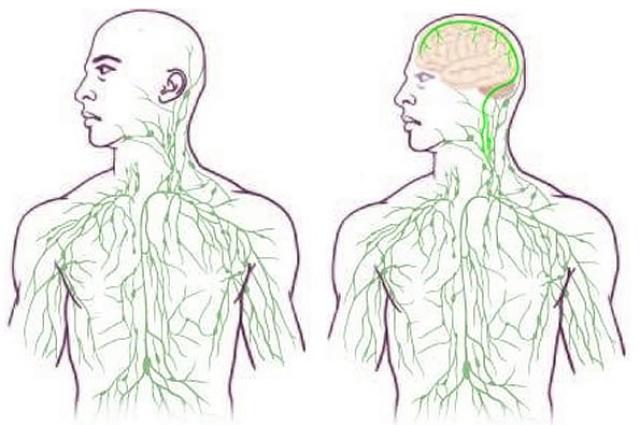
The idea there could be a relationship between the immune system and brain disease isn’t new. Autoantibodies were reported in schizophrenia patients in the 1930s. Subsequent work has detected antibodies to various neurotransmitter receptors in the brains of psychiatric patients, while a number of brain disorders, including multiple sclerosis, are known to involve abnormal immune system activity. Researchers at the University of Virginia recently identified a previously undiscovered network of vessels directly connecting the brain with the immune system; the authors concluded that an interplay between the two could significantly contribute to certain neurologic and psychiatric conditions.

Both infection and autoimmune activity result in inflammation, our body’s response to harmful stimuli, which in part involves a surge in immune system activity. And it’sthought by many in the psychiatric research community that inflammation is somehow involved in depression and perhaps other mental illnesses.

Multiple studies have linked depression with elevated markers of inflammation, including two analyses from 2010 and 2012 that collectively reviewed data from 53 studies, as well as several post-mortem studies. A large body of related research confirms that autoimmune and inflammatory activity in the brain is linked with psychiatric symptoms.

Still, for the most part the research so far finds associations but doesn’t prove cause and effect between inflammation and mental health issues. The apparent links could be a matter of chance or there might be some another factor that hasn’t been identified.

Dr. Roger McIntyre, a professor of psychiatry and pharmacology at the University of Toronto, tells Shots that he believes an upset in the “immune-inflammatory system” is at the core of mental illness and that psychiatric disorders might be an unfortunate cost of our powerful immune defenses. “Throughout evolution our enemy up until vaccines and antibiotics were developed was infection,” he says, “Our immune system evolved to fight infections so we could survive and pass our genes to the next generation. However our immune-inflammatory system doesn’t distinguish between what’s provoking it.” McIntyre explains how stressors of any kind – physical or sexual abuse, sleep deprivation, grief – can activate our immune alarms. “For reasons other than fighting infection our immune-inflammatory response can stay activated for weeks, months or years and result in collateral damage,” he says.

Unlike Canli, McIntyre implicates inflammation in general, not exclusively inflammation caused by infection or direct effects of infection itself, as a major contributor to mental maladies. “It’s unlikely that most people with a mental illness have it as a result of infection,” he says, “But it would be reasonable to hypothesize that a subpopulation of people with depression or bipolar disorder or schizophrenia ended up that way because an infection activated their immune-inflammatory system.” McIntyre says that infection, particularly in the womb, could work in concert with genetics, psychosocial factors and our diet and microbiome to influence immune and inflammatory activity and, in turn, our risk of psychiatric disease.

Trying Drugs Against Inflammation For Mental Illness

The idea that inflammation – whether stirred up by infection or other factors — contributes to or causes mental illness comes with caveats, at least in terms of potential treatments. Trials testing anti-inflammatory drugs have been overall mixed or underwhelming.

A recent meta-analysis reported that supplementing SSRIs like Prozac with regular low-dose aspirin use is associated with a reduced risk of depression and ibuprofen supplementation is linked with lower chances of obtaining psychiatric care. However concomitant treatment with SSRIs and diclofenac or celecoxib – two other anti-inflammatories often used to treat arthritis – was associated with increased risk of needing hospital care due to psychiatric symptoms.

A 2013 study explored the antidepressant potential of Remicade, an drug used in rheumatoid arthritis. Overall, three infusions of the medication were found to be no more effective than a placebo, but patients whose blood had higher levels of an inflammatory marker called C-reactive protein did experience modest benefit.

“The truth of the matter is that there is probably a subset of people who get depressed in response to inflammation,” says lead author Dr. Charles Raison, a psychiatry professor at the University of Arizona. “Maybe their bodies generate more inflammation, or maybe they’re more sensitive to it.”

How infection and other causes of inflammation and overly-aggressive immune activity may contribute to depression and other mental illnesses – and whether or not it’s actually depression driving the inflammation — is still being investigated, and likely will be for some time. But plenty of leading psychiatrists agree that the search for alternative pathologic explanations and treatments for psychiatric disorders is could help jump-start the field.

“I’m not convinced that anti-inflammatory strategies are going to turn out to be the most powerful treatments around,” cautions Raison. “But I think if we really want to understand depression, we definitely have to understand how the immune system talks to the brain. I just don’t think we’ve identified immune-based or anti-inflammatory treatments yet that are going to have big effects in depression.”

But the University of Toronto’s McIntyre has a slightly brighter outlook. “Is depression due to infection, or is it due to something else?” he asks. “The answer is yes and yes. The bottom line is inflammation appears to contribute to depression, and we have interventions to address this.”

McIntyre notes that while the science of psychiatry has a long way to go, and that these interventions haven’t been proved effective, numerous approaches with minimal side effects exist that appear to be generally anti-inflammatory, including exercise, meditation and healthy sleep habits.

He also finds promise in the work of his colleague: “Like most cases in medicine, Charles Raison showed that anti-inflammatory approaches may benefit some people with depression, but not everybody. If you try on your friend’s eyeglasses, chances are they won’t help your vision very much.”