My talk in Philadelphia (video)

I was invited to give a talk about my story of bipolar d/o and my experience with medications for bipolar d/o. The invitation was extended by Healthline.com and the talk was for Astra Zeneca drug reps and ad reps. This is a video of this talk, I made it with my iPhone. The talk was given on October 22nd, 2015, in Philadelphia. My talk was really well received 🙂 There were also two other bloggers, Jon Pressman and Julie Fast, who gave talks as well. After our talks, we had a question and answer period, where the Astra Zeneca people asked us many questions about the illness and treatment and what patients needed from them. It was a singular experience, drug companies don’t usually talk to people who suffer from illnesses for which they make medications! Even more singular for them to speak to people who have a mental illness. I commend them, and really thank Healthline.com for putting this together and allowing the drug companies and we, people who suffer from bipolar d/o, to convene and discuss issues that are important to us as patients, and to voice our opinions about what drug companies need to do to ensure better health for us. We, with all our experience and insight into this terrible illness, were given the opportunity to speak to a large pharmaceutical company such as Astra Zeneca, and they listened! And we were taken seriously! Phenomenal!

I fell in love with Philadelphia, it is such a beautiful city! I’ll post pictures I took there in another post.

Off to Philadelphia

  the city of brotherly love, tomorrow, to give my talk about my experience with bipolar disorder and its sometimes horrendous medications. Wish a sister luck! 

Talk Therapy Found to Ease Schizophrenia

http://mobile.nytimes.com/2015/10/20/health/talk-therapy-found-to-ease-schizophrenia.html?smid=fb-nytscience&smtyp=cur&_r=0&referer=http://m.facebook.com

By BENEDICT CAREYOCTOBER 20, 2015

More than two million people in the United States have a diagnosis of schizophrenia, and the treatment for most of them mainly involves strong doses of antipsychotic drugs that blunt hallucinations and delusions but can come with unbearable side effects, like severe weight gain or debilitating tremors.

Now, results of a landmark government-funded study call that approach into question. The findings, from by far the most rigorous trial to date conducted in the United States, concluded that schizophrenia patients who received smaller doses of antipsychotic medication and a bigger emphasis on one-on-one talk therapy and family support made greater strides in recovery over the first two years of treatment than patients who got the usual drug-focused care.
The report, to be published on Tuesday in The American Journal of Psychiatry and funded by the National Institute of Mental Health, comes as Congress debates mental health reform and as interest in the effectiveness of treatments grows amid a debate over the possible role of mental illness in mass shootings.
Its findings have already trickled out to government agencies: On Friday, the Centers for Medicare & Medicaid Services published in its influential guidelines a strong endorsement of the combined-therapy approach. Mental health reform bills now being circulated in Congress “mention the study by name,” said Dr. Robert K. Heinssen, the director of services and intervention research at the centers, who oversaw the research.
In 2014, Congress awarded $25 million in block grants to the states to be set aside for early-intervention mental health programs. So far, 32 states have begun using those grants to fund combined-treatment services, Dr. Heinssen said.
Experts said the findings could help set a new standard of care in an area of medicine that many consider woefully inadequate: the management of so-called first episode psychosis, that first break with reality in which patients (usually people in their late teens or early 20s) become afraid and deeply suspicious. The sooner people started the combined treatment after that first episode, the better they did, the study found. The average time between the first episode and receiving medical care — for those who do get it — is currently about a year and half.
The more holistic approach that the study tested is based in part on programs in Australia, Scandinavia and elsewhere that have improved patients’ lives in those countries for decades. This study is the first test of the approach in this country — in the “real world” as researchers described it, meaning delivered through the existing infrastructure, by community mental health centers.
The drugs used to treat schizophrenia, called antipsychotics, work extremely well for some people, eliminating psychosis with few side effects; but most who take them find that their bad effects, whether weight gain, extreme drowsiness, or emotional numbing, are hard to live with. Nearly three quarters of people prescribed medications for the disorder stop taking them within a year and a half, studies find.
“As for medications, I have had every side effect out there, from chills and shakes to lockjaw and lactation,” said a participant in the trial, Maggie, 20, who asked that her last name be omitted. She did well in the trial and is now attending nursing school.
Doctors praised the study results.
“I’m very favorably impressed they were able to pull this study off so successfully, and it clearly shows the importance of early intervention,” said Dr. William T. Carpenter, a professor of psychiatry at the University of Maryland School of Medicine, who was not involved in the study.
Dr. Mary E. Olson, an assistant professor of psychiatry at the University of Massachusetts Medical School, who has worked to promote approaches to psychosis that are less reliant on drugs, said the combined treatment had a lot in common with Open Dialogue, a Finnish program developed in the 1980s. “These are zeitgeist ideas, and I think it’s thrilling that this trial got such good results,” Dr. Olson said.
In the new study, doctors used the medications as part of a package of treatments and worked to keep the doses as low as possible — in some cases 50 percent lower — minimizing their bad effects. The sprawling research team, led by Dr. John M. Kane, chairman of the psychiatry department at Hofstra North Shore-LIJ School of Medicine, randomly assigned 34 community care clinics in 21 states to provide either treatment as usual, or the combined package.
The team trained staff members at the selected clinics to deliver that package, and it included three elements in addition to the medication. First, help with work or school such as assistance in deciding which classes or opportunities are most appropriate, given a person’s symptoms. Second, education for family members to increase their understanding of the disorder. And finally, one-on-one talk therapy in which the person with the diagnosis learns tools to build social relationships, reduce substance use and help manage the symptoms, which include mood problems as well as hallucinations and delusions.
For example, some patients can learn to defuse the voices in their head — depending on the severity of the episode — by ignoring them or talking back. The team recruited 404 people with first-episode psychosis, mostly diagnosed in their late teens or 20s. About half got the combined approach and half received treatment as usual. Clinicians monitored both groups using standardized checklists that rate symptom severity and quality of life, like whether a person is working, and how well he or she is getting along with family members.
The group that started on the combined treatment scored, on average, more poorly on both measures at the beginning of the trial. Over two years, both groups showed steady improvement. But by the end, those who had been in the combined program had more symptom relief, and were functioning better as well. They had also been on drug doses that were 20 percent to 50 percent lower, Dr. Kane said.
“One way to think about it is, if you look at the people who did the best — those we caught earliest after their first episode — their improvement by the end was easily noticeable by friends and family,” Dr. Kane said. The gains for those in typical treatment were apparent to doctors, but much less obvious.
Dr. Kenneth Duckworth, medical director for the National Alliance on Mental Illness, an advocacy group, called the findings “a game-changer for the field” in the way it combines multiple, individualized therapies, suited to the stage of the psychosis.

The study, begun in 2009, almost collapsed under the weight of its ambition. The original proposal called for two parallel trials, each including hundreds of first-episode patients. But recruiting was so slow for one of the trials that it was abandoned, said Dr. Heinssen.

“It’s been a long haul,” Dr. Heinssen added, “but it’s worth noting that it usually takes about 17 years for a new discovery to make it into clinical practice; or that’s the number people throw around. But this process only took seven years.”

Ravi Shavi

https://m.youtube.com/watch?v=Lqd2Pdyc55A

https://m.youtube.com/watch?v=c4oTrNTbKcU/

My nephew’s band. He is the lead singer and song writer, guitarist and dancer. Such a little heart throb!

So happy to report 

That my nephew is home! He is, obviously in a lot of pain, but that is being managed by pain medication. He sat with a couple of friends and had dinner, which I had cooked, and watched a movie. It is truly a blessing to have him home from the hospital. My cousin is relieved though still in very watchful mode. This child of hers, he graduated at the top, I mean the very top, of his class from college. Then he decided to give his rock band a go, and they are well known in Rhode Island, as well as in the rock world. He has an amazing voice and musical ability. His band has recorded at least two albums! He is very creative, he’s made a lot of videos, been in many of my brother’s art projects. He was filming a video for another friend’s band when he fell, from three stories, breaking 11 of his ribs, two vertebrae had hairline fractures, and broke seven other bones on his left side. Oh my god! It could have been so much worse, this is no picnic, but it could have been so, so much worse. I mean if he’d hit his head! I can’t even think about it.  So, we are all very grateful that he is home. He says he may have developed acrophobia, to which I said: Smart! Acrophpbia is good. Happy to have him home, healing, reflecting on his actions and learning. Love this nephew of mine very much. Hoping he has learned some valuable lessons from this awful experience.

In Providence, RI. 

I’m here, in Providence, RI. Just got here today. Yesterday, after hearing the horrific news of my dearest cousin’s son, I immediately made reservations to come here. He fell from a structure 35 ft high, broke 10 ribs, 6 other bones and perforated a lung. He is in the ICU, he is young and is slated to make a full recovery. I am so happy about that. I came here for my cousin. We grew up together, spent every summer vacation together. Played, quarreled, made up, grew up together, like sisters. I couldn’t bear for her to live through this near catastrophe by herself, so I jumped in a plane and got here as quickly as I could. Saw my nephew in the ICU, obviously not anything I wanted to have ever seen. But he will recover. He was on top of this structure in downtown Providence, filming a video for his friends’ band when he lost his footing. Luckily, oh so luckily, his friends called 911 and he was taken to the hospital. Were they drinking? Probably. Was it an incredibly stupid thing to do? Absolutely! Is my cousin terrified? Yes. It’s not this incident, it’s worrying from now on, a mother’s anxiety about her son’s safety. I know this well, so I came to help her with all of it. And to drum it in her head that yes, bad things can happen, but there is recovery, and better times ahead. I hope my nephew has learnt a valuable lesson, to never be so careless with himself, with his own safety. When he is not in so much pain, I will gently talk to him. And I hope his parents will talk to him and make him promise to be infinitely more careful! No more death defying feats, as my brother said, it’s been defied. Now only a promise, one, I hope and pray for my cousin, his mother’s sake, that my nephew will keep.

New Pilot Study Finds the Fisher Wallace Stimulator® Effective in Treating Bipolar Depression

http://www.fisherwallace.com/pages/safety-and-efficacy-of-cranial-electrotherapy-stimulation

A pilot study conducted at Mount Sinai Beth Israel and published in the Journal of Nervous and Mental Disease shows that Bipolar II Depression (BD II) patients who received daily treatment with the Fisher Wallace Stimulator® experienced significant reduction in self-reported depression symptoms compared to patients using a placebo device. No side effects or adverse events were experienced by patients in the study.
The double-blind, placebo-controlled study investigated the safety and effectiveness of the Fisher Wallace Stimulator®, the leading brand of cranial electrotherapy stimulation device, for the treatment of Bipolar II Depression (BD II). After randomization, the active group received 2 mA of cranial electrotherapy stimulation for 20 minutes on a daily basis, five days a week for two weeks, whereas the placebo group had the placebo device turned on and off. Symptom nonremitters from both groups received an additional 2 weeks of open-label active treatment. Active treatment but not placebo treatment was associated with a significant decrease in the Beck Depression Inventory (BDI) scores from baseline to the second week maintaining significance until week 4.
Chip Fisher, President of Fisher Wallace Laboratories, said: “We are very grateful to the world-class team at Mount Sinai, led by Dr. Igor Galynker, that performed this research and statistical analysis with a level of integrity that is unimpeachable. The emergence of our device as a low-risk treatment option for bipolar depression will profoundly improve outcomes for millions of patients.”
Designed to be used at home for 20 minutes on a daily basis, the device works by gently stimulating the brain to produce serotonin and other neurotransmitters that improve mood and sleep, and there is evidence that it improves the brain’s ability to regulate the limbic system. The Fisher Wallace Stimulator® has been proven to be safe and effective in multiple published studies and causes no serious side effects.
Kelly Roman, CMO of Fisher Wallace Laboratories, said: “Today is a milestone in the evolution of wearable technology. Patients who suffer from bipolar depression can start using this device today, and psychiatrists can feel confident about it from a risk benefit perspective.”
Fisher Wallace Laboratories manufactures and markets the Fisher Wallace Stimulator®, a patented cranial electrotherapy stimulation device that was cleared by the FDA in 1991 for the treatment of depression, anxiety and insomnia. The Fisher Wallace Stimulator® is also approved by Health Canada for over-the-counter treatment of insomnia and chronic pain, and by the European Union for over-the-counter treatment of depression, anxiety and insomnia. To purchase or rent a device, patients may visit http://www.fisherwallace.com.
The Richard and Cynthia Zirinsky Center for Bipolar Disorder at Mount Sinai Beth Israel, formerly the Family Center for Bipolar Disorder, is one of the nation’s leading research institutions and clinics that focuses on the treatment of bipolar disorder. Director Igor Galynker, MD, PhD, is also Professor of Psychiatry and Associate Chairman for Research, Icahn School of Medicine.

Amazng! Reconstruction and Simulation of Neocortical Microcircuitry (digitally building a slice of a rat neocortex)

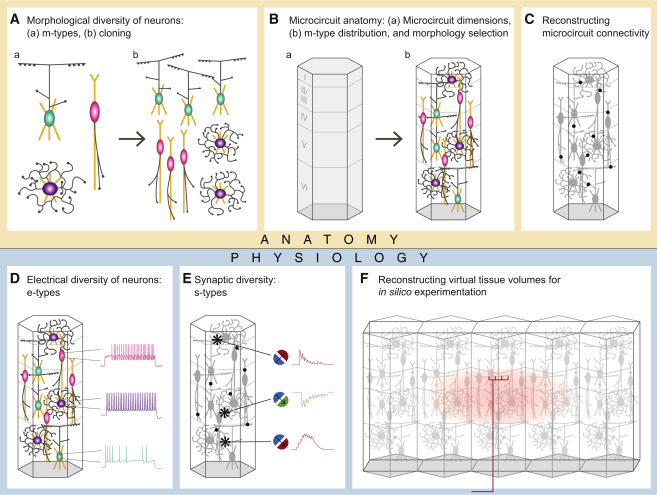
FIGURE 1 Reconstruction Workflow v1

Digitally reconstructing a slice (just a slice) of the rat neocortex allowed these scientists to study many slices of neocortex (using supercomputers) under different conditions such as sleep and when the brain is under stress! Then they saw that changing just one parameter, such as Ca++ ion concentration, can change the state of the brain. Then they theorized what if, in illness, the brain is stuck is the “wrong” mode! For example, when the fight or flight response is initiated through adrenocorticotrophic hormone, how do tunnel vision and aggression occur as a result of that? This is AMAZING! And this could be a valuable, valuable tool in studying mental illness. Imagine if they took a slice of my brain and reconstructed it digitally, then even a comparison to someone’s brain who doesn’t have bipolar d/o (BPD) would be enormously valuable. Also studying how my neurons fire, what are the ionic levels, how do these differ than “normal” neurons? How can we treat my neurons to better resemble normal neurons? This is an AMAZING technology that has been developed! Please, someone, start studying BPD with this and who knows, a cure may be imminent! I know people say “the sky’s the limit” all the time, but in this case, the sky really is the limit, in fact beyond the sky is the limit! Genius work, hope it affords us some tangible help and treatment options, and soon!

Summary: Scientists digitally reconstructed a slice of juvenile rat brain. This digital slice has over 31,000 neurons, 55 layers of cells and 207 different neuron subtypes. They have discovered nearly 40 million synapses and over 2,000 connections between each brain cell type. Wow!

The scientists then used super computers to see how these virtual brain slices work during sleep or when under stress!  The principal scientist, Henry Markram said “It paves the way for predicting the location, numbers, and even the amount of ion currents flowing through all 40 million synapses.”

Once the reconstruction was complete, the investigators used powerful supercomputers to simulate the behavior of neurons under different conditions. Remarkably, the researchers found that, by slightly adjusting just one parameter, the level of calcium ions, they could produce broader patterns of circuit-level activity that could not be predicted based on features of the individual neurons. For instance, slow synchronous waves of neuronal activity, which have been observed in the brain during sleep, were triggered in their simulations, suggesting that neural circuits may be able to switch into different “states” that could underlie important behaviors.

“An analogy would be a computer processer that can reconfigure to focus on certain tasks,” Markram says. “The experiments suggest the existence of a spectrum of states, so this raises new types of questions, such as ‘what if you’re stuck in the wrong state?'” For instance, Markram suggests that the findings may open up new avenues for explaining how initiating the fight-or-flight response through the adrenocorticotropic hormone yields tunnel vision and aggression.

Article reference and part of article below: http://www.cell.com/cell/abstract/S0092-8674(15)01191-5?_returnURL=http%3A%2F%2Flinkinghub.elsevier.com%2Fretrieve%2Fpii%2FS0092867415011915%3Fshowall%3Dtrue

Reconstruction and Simulation of Neocortical Microcircuitry Introduction

Since Santiago Ramón y Cajal’s seminal work on the neocortex (DeFelipe and Jones, 1988, Ramón y Cajal, 1909, 1911), a vast number of studies have attempted to unravel its multiple levels of anatomical organization (types of neurons, synaptic connections, layering, afferent and efferent projections within and between neocortical regions, etc.) and functional properties (neuronal response characteristics, synaptic responses and plasticity, receptive fields, functional neocortical columns, emergent activity maps, interactions between neocortical regions, etc.). However, there are still large gaps in our knowledge, especially concerning the anatomical and physiological organization of the neocortex at the cellular and synaptic levels.

Specifically, while neurons have been classified in terms of their electrophysiological behaviors (Connors and Gutnick, 1990, Kasper et al., 1994,McCormick et al., 1985), expression of different calcium-binding proteins and neuropeptides (Celio, 1986, DeFelipe, 1993, Gonchar and Burkhalter, 1997,Kawaguchi and Kubota, 1997, Toledo-Rodriguez et al., 2005) and morphological features (Kisvárday et al., 1985, Larkman, 1991a, Tamás et al., 1998, Wang et al., 2002), there is still no consensus on an objective and comprehensive classification of neuron types. Although the distribution of protein and genetic markers for different neurons (Grange et al., 2014, Hendry et al., 1989,Kawaguchi and Kubota, 1997, Meyer et al., 2002, Toledo-Rodriguez et al., 2004) and the relative proportions of some morphologically and electrically classified neurons (Beaulieu and Colonnier, 1983, Cauli et al., 1997, Hendry et al., 1984,Meyer et al., 2010a, Rudy et al., 2011) have been described, we lack a comprehensive view of the number of each type of neuron in each layer. Since the advent of paired recording techniques, several studies have characterized the anatomical and physiological properties of synaptic connections between some types of neurons (Cobb et al., 1997, Feldmeyer et al., 1999, Frick et al., 2008,Gupta et al., 2000, Mason et al., 1991, Reyes et al., 1998, Thomson et al., 1993), but a large proportion have yet to be studied. Although labeling with retrograde and anterograde tracers and trans-synaptic viral vectors, imaging with array tomography, and saturated reconstruction with electron microscopy have made it possible to begin mapping pre- and postsynaptic neurons for individual neocortical neurons (Boyd and Matsubara, 1991, Callaway, 2008, Glenn et al., 1982, Kasthuri et al., 2015, Killackey et al., 1983, Micheva and Smith, 2007,Micheva et al., 2010, Wickersham et al., 2007), we know neither the numbers and types of the pre- and postsynaptic neurons associated with any specific neuron type nor the numbers and locations of the synapses that they form with their immediate neighbors.

At a functional level, there have been many investigations of emergent behavior in neocortical slices (Cunningham et al., 2004, Mao et al., 2001, McCormick et al., 2003, Sanchez-Vives and McCormick, 2000, Yuste et al., 1997), correlated activity (Hasenstaub et al., 2005, Livingstone, 1996, Salinas and Sejnowski, 2001, Shu et al., 2003, Silberberg et al., 2004, Singer, 1993), and the functional impact of individual neurons across cortical layers (Sakata and Harris, 2009,Schroeder and Foxe, 2002, Silva et al., 1991, Steriade et al., 1993), as well as in vivo activity in somatosensory and other cortical areas (Chen et al., 2015,Klausberger et al., 2003, Leinekugel et al., 2002, Luczak et al., 2007, Reyes-Puerta et al., 2015, Wilson et al., 2012), However, we still lack an understanding of the cellular and synaptic mechanisms and the role of the different layers in the simplest of behaviors, such as correlated and uncorrelated single-neuron activity and, more generally, synchronous and asynchronous population activity. For example, it is known that different types of neurons are connected through synapses with different dynamics and strengths, strategically positioned at different locations on the neurons’ dendrites, somata, and axons, but the functional significance of this organization remains unclear. Computational approaches that abstract away this level of biological detail have not been able to explain the functional significance of such intricate cellular and synaptic organization. Although future experimental research will undoubtedly advance our knowledge, it is debatable whether experimental mapping alone can provide enough data to answer these questions.

Here, we present a complementary algorithmic approach that reconstructs neuronal microcircuitry across all layers using available sparse data and that leverages biological principles and interdependencies between datasets to predict missing biological data. As a test case, we digitally reconstructed a small volume of tissue from layers 1 to 6 of the hind-limb somatosensory cortex of 2-week-old Wistar (Han) rat. This model system was chosen not only because it is one of the most comprehensively characterized in the neocortex, but also because experimental data on its cellular and synaptic organization are readily available and validation experiments are relatively easy to perform. In brief, we recorded and digitally reconstructed neurons from in vitro brain slices and classified the neurons in terms of well-established morphological types (m-types;Figure 1A), positioned the neurons in a digital volume of objectively defined dimensions according to experimentally based estimates of their layer specific densities (Figure 1B), and reconstructed the connectivity between the neurons (Figure 1C). Neurons were then classified into electrical types (e-types), using an extended version of the classification proposed in the Petilla convention (Ascoli et al., 2008), and models were produced that captured the characteristic electrical behavior of each type. (Figure 1D); similarly, synapses were modeled to capture the characteristic synaptic dynamics and kinetics of particular synapse types (s-types; Figure 1E). Finally, we constructed a virtual slice and reconstructed thalamic input using experimental data (Figure 1F; Meyer et al., 2010b).

This approach yielded a first-draft digital reconstruction of the microcircuitry, which was validated against a multitude of experimental datasets not used in the reconstruction. The results suggest that it is possible to obtain dense maps of neural microcircuitry without measuring every conceivable biological parameter and point to minimal datasets required, i.e., strategic data. Integrating complementary, albeit sparse, datasets also makes it possible to reconcile discrepancies in the literature, at least partially addressing the problem of data quality and reproducibility. Simulations exploring some of the emergent behaviors of the reconstructed microcircuitry reproduce a number of previous in vitro and in vivo findings and provide insights into the design and functioning of neocortical microcircuitry. The experimental data, the digital reconstruction, and the simulation results are available at the Neocortical Microcircuit Collaboration Portal (NMC Portal; https://bbp.epfl.ch/nmc-portal; see Ramaswamy et al., 2015).

One man is trying to help the mentally ill and stop the horrific way in which they are treated in West Africa

This is so horrific. Mentally ill people chained to trees, outdoors, living in their own filth. Just prayers being used to cure them.  I had trouble watching the video. Thank goodness, one man is trying to help mentally ill people with diagnosis and medical treatment.

http://www.nytimes.com/video/health/100000003764816/praying-for-a-cure.html?smid=fb-nytimes&smtyp=cur