I’ve seen this before and was pretty amazed by it. This is so inspirational to me, I wanted to share it with all of you. Don’t ever give up!
Month: February 2016
‘Touched with Fire’ explores bipolar disorder

The movie “Touched with Fire” (also the title of Kay Redfield Jamison’s book) is coming out on Feb. 12th. The synopsis and comments of film maker Paul Dalio are hopeful, especially this “If I had any hope at all that there was any chance, any possibility that I could be happy and full of creativity, and even better than I was before, which now is the case, I would fight.” Hope, that is the one thing we all need and the one thing that sustains us, whether we have bipolar disorder or not.
“Set to be released on Feb. 12, Paul Dalio’s new film, “Touched with Fire,” depicts Dalio’s personal experiences with bipolar disorder. The title of the film is taken from Kay Redfield Jamison’s 1996 book, “Touched with Fire,” which explored how many of the greatest artistic minds in history had bipolar disorder. Jamison herself acknowledges having bipolar disorder since early adulthood. Dalio explains that the book helped him see himself not just as an individual with a “defect” but as having a gift that taps into something that most people can’t. “Touched with Fire” takes Dalio’s personal experiences with bipolar disorder and uses two characters, Carla and Marco, to contrast the different emotions Dalio has felt toward bipolar in his life. The love story between these two characters is a metaphor for Dalio’s “love-and-hate relationship with bipolar: the way they bring out the romance in each other, but also the devastation in each other, and the way they have to reconcile those two things.” He stated, “The journey that I went through that I think a lot of people with bipolar go through is that you get it and you’re lost, but then you easily romanticize that fire ultimately to your own destruction. It ultimately takes most people repeated devastations to let go of the mania. What I wanted to do was have that journey of how they learned that they can have real meaningful emotions and sustain them. My hope is that people are able to watch the film and see where Marco and Carla make mistakes and know that they don’t have to make them themselves.”
One of the biggest themes throughout the film is the relationship that the two main characters must manage with their parents and offers glimpses into each person’s actions. Dalio describes how his family would frequently talk him out of suicide when he was in the midst of a depressive episode. “It was very draining on them, but they really struggled to try and give me hope. The best a family can do is to give hope to their family member, but ultimately it has to come down to the individual. The loss of hope – in my own experience – was the only time I had thoughts of suicide. If I had any hope at all that there was any chance, any possibility that I could be happy and full of creativity, and even better than I was before, which now is the case, I would fight.” Dalio stated that his goal for the film was to show a truthful situation between individuals and “well-intentioned parents.” “The truth is, even well intentioned parents, don’t always know what to do. They are dealing with a situation that there is no perfect guidebook for. My hope was to create characters that the audience could see themselves in. If there were any well intentioned parents in the audience, that they could not only see themselves in the parents, but also through their children’s eyes. That they could at least be able to understand their children enough so they could understand where they are coming from so that they can communicate with them.” Dalio’s final thoughts include describing bipolar disorder like a pendulum, and using exercise, meditation, and a low-sugar diet along with his prescribed medications to help manage the emotional swings. According to Dalio, “True happiness is having an appreciation of the darkest and brightest emotions and being able to experience both of them equally.””
If by Rudyard Kipling

This is one of my all time favorite poems, perhaps the most favorite. There is so much strength, resolve, determination, understanding and optimism in it. I cry every time I read it, yet love it all the more after each reading. For my readers, friends and family.
_____________________________________________________
If you can keep your head when all about you
Are losing theirs and blaming it on you,
If you can trust yourself when all men doubt you,
But make allowance for their doubting too;
If you can wait and not be tired by waiting,
Or being lied about, don’t deal in lies,
Or being hated, don’t give way to hating,
And yet don’t look too good, nor talk too wise:
If you can dream—and not make dreams your master;
If you can think—and not make thoughts your aim;
If you can meet with Triumph and Disaster
And treat those two impostors just the same;
If you can bear to hear the truth you’ve spoken
Twisted by knaves to make a trap for fools,
Or watch the things you gave your life to, broken,
And stoop and build ’em up with worn-out tools:
If you can make one heap of all your winnings
And risk it on one turn of pitch-and-toss,
And lose, and start again at your beginnings
And never breathe a word about your loss;
If you can force your heart and nerve and sinew
To serve your turn long after they are gone,
And so hold on when there is nothing in you
Except the Will which says to them: ‘Hold on!’
If you can talk with crowds and keep your virtue,
Or walk with Kings—nor lose the common touch,
If neither foes nor loving friends can hurt you,
If all men count with you, but none too much;
If you can fill the unforgiving minute
With sixty seconds’ worth of distance run,
Yours is the Earth and everything that’s in it,
And—which is more—you’ll be a Man, my son!
Abandonment
There is a well adjusted, normal child. He is sitting at his desk, coloring in a book. This child’s mother says “I’m going to the store and I’m in a hurry so this time you can’t come.” He says “Fine” and goes back to coloring.
There is another child. Her mother is also going to the store and says to her “I’m going to the store, this time you can’t come, I’m going to be going to a work party after.” The child gets alarmed, and says “Please can I come?” Mom says no. The child is now upset, and tells her mom that she’ll be really good if her mom takes her. Mom still says no. The child is now agitated and upset and runs over to her mom and begs to be take to the store. Then she wraps herself around her mother’s leg and will not let her mother leave. This is an abandoned child.
How do you heal the abandoned child? How do you heal the hurt, the fear, the terror of abandonment?
Well I did a search on “How to heal abandonment issues?” and here is the link to the search: https://www.google.com/webhp?sourceid=chrome-instant&ion=1&espv=2&ie=UTF-8#q=how%20to%20heal%20abandonment%20issuesand I got many articles, a few look very interesting like two below: 1) https://www.psychologytoday.com/blog/the-many-faces-addiction/201006/understanding-the-pain-abandonment 2) http://www.outerchild.net/book/export/html/5 and
Of course I will be going to my therapist and talking to her about all this as soon as I get back to Louisville.
I will blog about the process. Stay tuned. Same Bat Channel, same Bat time.
 And Zumba helps inordinately
Bipolar1Blog on weRNsane.com!
The ladies at weRNsane.com put this in their blog about my blog! So amazing! Thank you Alex and Dalia, I appreciate the endorsement very much. You also have a fan of your blog in me!
http://wernsane.com/bipolar1blog/#comment-9
Living with a chronic condition can be a challenge. Living with a persistent and severe mental illness is more than a challenge, it can consume one’s whole life.
One of the things that helps one cope with a persistent mental illness is connecting with others who are struggling with similar issues. Talking about the illness and its issues, normalizing them and finding communal solutions and coping mechanisms can ease the burden of being ill, and give the caregiver new hope.
The problem with mental illness is that these is such a stigma few people are comfortable being completely open about what they are going through. Perhaps in small sessions behind closed doors, but seldom out in the open, unless you are a hollywood celebrity of course, where money buffers societal prejudice. See my blog article called “Prejudice” for a classic misconception about bipolar and those that struggle with this diagnosis.

It takes a special type of person to reach out and open up about her struggles with mental illness, it takes bravery and a willingness to be transparent despite the possible cost.
Bipolar1Blog https://bipolar1blog.wordpress.com/ is written by Samina, who carries a biopolar I diagnosis. Her blog is open and honest, and a very real look into the life of an intelligent (and functional) person living with a chronic mental illness. It’s not always easy, it’s not always pretty – although it can be beautiful life. This blog is an honest look at being bipolar, spanning the highs and the lows and life in between.
I recommend it highly https://bipolar1blog.wordpress.com/
Blessings,
Alex
http://wernsane.com/ Check it out!
http://wernsane.com/ weRNsane Deconstructing the brain with humor and insight
Alex and Dalia found my blog and asked me to say something about theirs. I am so flattered! They are two Registered nurses or RNs hence the name, and they have started this blog about, as they so aptly put it on their blog: “How we think and reason in sickness and in health is important to how we function in life. Here we explore topics in psychiatry, psychology and just practical everyday stuff. We are two nurses both working with the brain. This is our voice, reaching out to connect with others.”
Please have a look at their blog, it is very well done, and instructional and deals with brain issues, illnesses, and even self esteem and weight loss. And this post called “(Don’t) PANIC!!! which hits home for me with all my latest.. ugh… feelings and posts  It’s a great post, with many techniques to deal with panic! Oy vey, where were thou 5 days ago!
Anyway, check it out!
Time to grow up and take responsibility for myself!
Ok, here I am. Bipolar disorder, past trauma, fear, panic and all. But I am not going to stop living, I am especially not going to live in fear! I am going to go on, make myself better, heal myself, make myself whole. And I am going to live my life as well as I can. The self pity and the drowning in fear is done, I’ve wallowed in it for the last 5 days. It stops now. I go on now to healing, to being brave, I have ALWAYS been braver than brave and I will continue to be so. Even though fear has been my constant companion too, since I was 2 years old; I have lived, married, given birth to a phenomenal son to whom I am a good mother. I will continue to be a good friend to all my friends, and I will not be afraid of demons from my past. I will live my life bravely and to the fullest extent. Nothing will beat me. I will not cower under my bed covers. I will walk out into the sunshine, or the snowstorm, as it may be, and I will live my life.
I have made mistakes, by being afraid and panic stricken, and I know I have wronged some friends. I beg their forgiveness. And I assure everyone that I will never live in fear again. The fear that makes me panicked and act erratically, I will not let it do so anymore.
This is a promise to myself and to all my friends and family. A time comes when you have to stop making excuses for your actions, emotions, even beliefs. A time comes when you have to take responsibility for your own actions and live life thoughtfully and responsibly. Well, happily, that time has come for me now. It is time to grow up, leave the past behind and take responsibility for my own life and make my life with my very own hands. Period.
Delivering genes across the blood-brain barrier
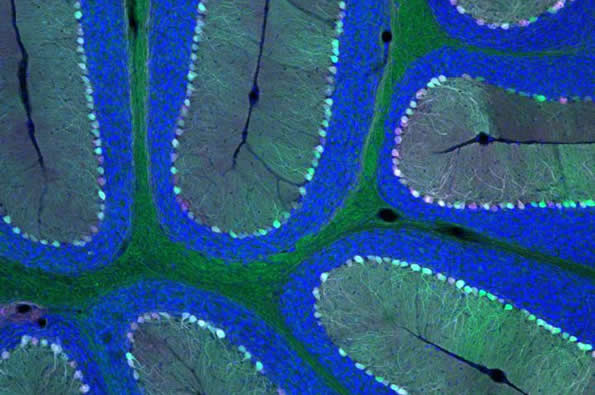 Researchers, using high throughput AAV (Adeno Associated Virus) have been able to inject specific sequences into the brain, across the blood brain barrier! This will allow genes to be introduced into the brain and treat diseases such as Alzheimer’s and Huntington’s. This is a remarkable feat. The blood brain barrier is a blockade of tightly packed cells that does not allow pathogens or harmful chemicals circulating in the blood to enter the spinal cord or brain. However, this also makes it difficult to impossible to get many drugs or other molecules to be delivered to the central Nervous System (CNS). So this new technique is amazing, in that genes can be delivered to the CNS in viral vectors, genes that can be translated into proteins such as drugs, antibodies, enzymes, or a large variety of other proteins and molecules for treating CNS illnesses. So the possibility also exists to treat mental illnesses, which are after all diseases of the brain. Very exciting!
http://www.neuroscientistnews.com/research-news/delivering-genes-across-blood-brain-barrier
Caltech biologists have developed a vector capable of noninvasive delivery of genetic cargo throughout the adult central nervous system –
Caltech biologists have modified a harmless virus in such a way that it can successfully enter the adult mouse brain through the bloodstream and deliver genes to cells of the nervous system. The virus could help researchers map the intricacies of the brain and holds promise for the delivery of novel therapeutics to address diseases such as Alzheimer’s and Huntington’s. In addition, the screening approach the researchers developed to identify the virus could be used to make additional vectors capable of targeting cells in other organs.
“By figuring out a way to get genes across the blood-brain barrier, we are able to deliver them throughout the adult brain with high efficiency,” says Ben Deverman, a senior research scientist at Caltech and lead author of a paper describing the work in the journal Nature Biotechnology.
The blood-brain barrier allows the body to keep pathogens and potentially harmful chemicals circulating in the blood from entering the brain and spinal cord. The semi-permeable blockade, composed of tightly packed cells, is crucial for maintaining a controlled environment to allow the central nervous system to function properly. However, the barrier also makes it nearly impossible for many drugs and other molecules to be delivered to the brain via the bloodstream.
To sneak genes past the blood-brain barrier, the Caltech researchers used a new variant of a small, harmless virus called an adeno-associated virus (AAV). Over the past two decades, researchers have used various AAVs as vehicles to transport specific genes into the nuclei of cells; once there, the genes can be expressed, or translated, from DNA into proteins. In some applications, the AAVs carry functional copies of genes to replace mutated forms present in individuals with genetic diseases. In other applications, they are used to deliver genes that provide instructions for generating molecules such as antibodies or fluorescent proteins that help researchers study, identify, and track certain cells.
Largely because of the blood-brain barrier problem, scientists have had only limited success delivering AAVs and their genetic cargo to the central nervous system. In general, they have relied on surgical injections, which deliver high concentrations of the virus at the injection site but little to the outlying areas. Such injections are also quite invasive. “One has to drill a hole through skull, then pierce tissue with a needle to the injection site,” explains Viviana Gradinaru (BS ’05), assistant professor of biology and biological engineering at Caltech and senior author on the paper. “The deeper the injection, the higher the risk of hemorrhage. With systemic injection, using the bloodstream, none of that damage happens, and the delivery is more uniform.”
In addition, Gradinaru notes, “many disorders are not tightly localized. Neurodegenerative disorders like Huntington’s disease affect very large brain areas. Also, many complex behaviors are mediated by distributed interacting networks. Our ability to target those networks is key in terms of our efforts to understand what those pathways are doing and how to improve them when they are not working well.”
In 2009, a group led by Brian Kaspar of Ohio State University published a paper, also in Nature Biotechnology, showing that an AAV strain called AAV9 injected into the bloodstream could make its way into the brain–but it was only efficient when used in neonatal, or infant, mice.
“The big challenge was how do we achieve the same efficiency in an adult,” says Gradinaru.
Although one might like to design an AAV that is up to the task, the number of variables that dictate the behavior of any given virus, as well as the intricacies of the brain and its barrier, make that extremely challenging. Instead, the researchers developed a high-throughput selection assay, CREATE (Cre REcombinase-based AAV Targeted Evolution), that allowed them to test millions of viruses in vivo simultaneously and to identify those that were best at entering the brain and delivering genes to a specific class of brain cells, astrocytes.
They started with the AAV9 virus and modified a gene fragment that codes for a small loop on the surface of the capsid—the protein shell of the virus that envelops all of the virus’ genetic material. Using a common amplification technique, known as polymerase chain reaction (PCR), they created millions of viral variants. Each variant carried within it the genetic instructions to produce more capsids like itself.
Then they used their novel selection process to determine which variants most effectively delivered genes to astrocytes in the brain. Importantly, the new process relies on strategically positioning the gene encoding the capsid variants on the DNA strand between two short sequences of DNA, known as lox sites. These sites are recognized by an enzyme called Cre recombinase, which binds to them and inverts the genetic sequence between them. By injecting the modified viruses into transgenic mice that only express Cre recombinase in astrocytes, the researchers knew that any sequences flagged by the lox site inversion had successfully transferred their genetic cargo to the target cell type—here, astrocytes.
After one week, the researchers isolated DNA from brain and spinal cord tissue, and amplified the flagged sequences, thereby recovering only the variants that had entered astrocytes.
Next, they took those sequences and inserted them back into the modified viral genome to create a new library that could be injected into the same type of transgenic mice. After only two such rounds of injection and amplification, a handful of variants emerged as those that were best at crossing the blood-brain barrier and entering astrocytes.
“We went from millions of viruses to a handful of testable, potentially useful hits that we could go through systematically and see which ones emerged with desirable properties,” says Gradinaru.
Through this selection process, the researchers identified a variant dubbed AAV-PHP.B as a top performer. They gave the virus its acronym in honor of the late Caltech biologist Paul H. Patterson because Deverman began this work in Patterson’s group. “Paul had a commitment to understanding brain disorders, and he saw the value in pushing tool development,” says Gradinaru, who also worked in Patterson’s lab as an undergraduate student.
To test AAV-PHP.B, the researchers used it to deliver a gene that codes for a protein that glows green, making it easy to visualize which cells were expressing it. They injected the AAV-PHP.B or AAV9 (as a control) into different adult mice and after three weeks used the amount of green fluorescence to assess the efficacy with which the viruses entered the brain, the spinal cord, and the retina.
“We could see that AAV-PHP.B was expressed throughout the adult central nervous system with high efficiency in most cell types,” says Gradinaru. Indeed, compared to AAV9, AAV-PHP.B delivers genes to the brain and spinal cord at least 40 times more efficiently.
“What provides most of AAV-PHP.B’s benefit is its increased ability to get through the vasculature into the brain,” says Deverman. “Once there, many AAVs, including AAV9 are quite good at delivering genes to neurons and glia.”
Gradinaru notes that since AAV-PHP.B is delivered through the bloodstream, it reaches other parts of the body. “Although in this study we were focused on the brain, we were also able to use whole-body tissue clearing to look at its biodistribution throughout the body,” she says.
Whole-body tissue clearing by PARS CLARITY, a technique developed previously in the Gradinaru lab to make normally opaque mammalian tissues transparent, allows organs to be examined without the laborious task of making thin slide-mounted sections. Thus, tissue clearing allows researchers to more quickly screen the viral vectors for those that best target the cells and organs of interest.
“In this case, the priority was to express the gene in the brain, but we can see by using whole-body clearing that you can actually have expression in many other organs and even in the peripheral nerves,” explains Gradinaru. “By making tissues transparent and looking through them, we can obtain more information about these viruses and identify targets that we might overlook otherwise.”
The biologists conducted follow-up studies up to a year after the initial injections and found that the protein continued to be expressed efficiently. Such long-term expression is important for gene therapy studies in humans.
In collaboration with colleagues from Stanford University, Deverman and Gradinaru also showed that AAV-PHP.B is better than AAV9 at delivering genes to human neurons and glia.
The researchers hope to begin testing AAV-PHP.B’s ability to deliver potentially therapeutic genes in disease models. They are also working to further evolve the virus to make even better performing variants and to produce variants that target certain cell types with more specificity.
Deverman says that the CREATE system could indeed be applied to develop AAVs capable of delivering genes specifically to many different cell types. “There are hundreds of different Cre transgenic lines available,” he says. “Researchers have put Cre recombinase under the control of gene regulatory elements so that it is only made in certain cell types. That means that regardless of whether your objective is to target liver cells or a particular type of neuron, you can almost always find a mouse that has Cre recombinase expressed in those cells.”
“The CREATE system gave us a good hit early on, but we are excited about the future potential of using this approach to generate viruses that have very good cell-type specificity in different organisms, especially the less genetically tractable ones,” says Gradinaru. “This is just the first step. We can take these tools and concepts in many exciting directions to further enhance this work, and we—with the Beckman Institute and collaborators—are ready to pursue those possibilities.”
The Beckman Institute at Caltech recently opened a resource center called CLOVER (CLARITY, Optogenetics, and Vector Engineering Research Center) to support such research efforts involving tissue clearing and imaging, optogenetic studies, and custom gene-delivery vehicle development. Deverman is the center’s director, and Gradinaru is the principal investigator.
A Question
 A question for my readers: Do you think it is possible for us to heal from trauma and change the way our brains and minds function and live peaceful, normal lives?
Please do me a favor and let me know what you think.
Thank you and hugs.
A walk in Delaware Park
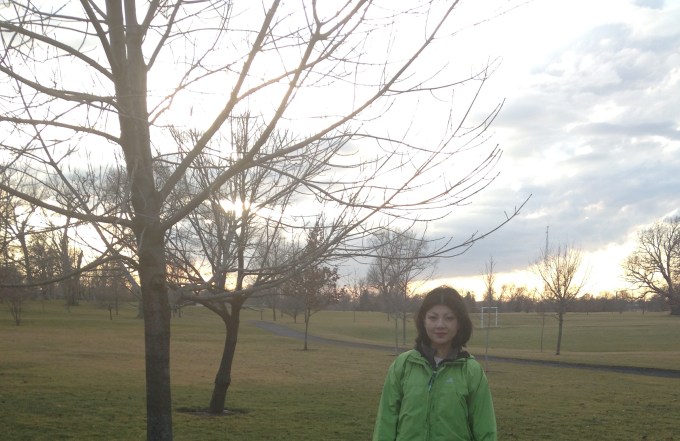
This was lovely, a walk in Delaware Park, an urban green space in Buffalo, designed by Frederick Law Olmstead. I had such a lovely time there with my friend Deb. Thank god for green spaces, clouds, bisons and best friends!













 Palestine WILL Be Free