And Science’s Breakthrough of the Year is …

So incredibly cool! Gene editing techniques, a lymphatic system in the brain, heretofore unknown, and an Ebola vaccine, among the amazing discoveries of 2015!


http://news.sciencemag.org/scientific-community/2015/12/and-science-s-breakthrough-year?utm_source=newsfromscience&utm_medium=facebook-text&utm_campaign=boydrupal-1528

Every December, the staff of Science singles out a significant development or achievement as the Breakthrough of the Year. This year, visitors to Science’s website could pick their own favorite from the short list of candidates. Below are descriptions of Science’s Breakthrough—the powerful genome-editing technique known as CRISPR—along with nine Runners-up and the results of the “People’s Choice” poll. Rounding out the package are a few “Areas to Watch” likely to make news in the 2016; a retrospective Scorecard of last year’s prognostications; and a look back at Breakdowns that set back or tarnished the scientific enterprise in 2015.—By Robert Coontz, deputy news editor

Breakthrough of the Year: CRISPR makes the cut

CRISPR genome-editing technology shows its power (PDF version)

By John Travis

It was conceived after a yogurt company in 2007 identified an unexpected defense mechanism that its bacteria use to fight off viruses. A birth announcement came in 2012, followed by crucial first steps in 2013 and a massive growth spurt last year. Now, it has matured into a molecular marvel, and much of the world—not just biologists—is taking notice of the genome-editing method CRISPR, Science’s 2015 Breakthrough of the Year.

CRISPR has appeared in Breakthrough sections twice before, in 2012 and 2013, each time as a runner-up in combination with other genome-editing techniques. But this is the year it broke away from the pack, revealing its true power in a series of spectacular achievements. Two striking examples—the creation of a long-sought “gene drive” that could eliminate pests or the diseases they carry, and the first deliberate editing of the DNA of human embryos—debuted to headlines and concern. Each announcement roiled the science policy world. The embryo work (done in China with nonviable embryos from a fertility clinic) even prompted an international summit this month to discuss human gene editing. The summit confronted a fraught—and newly plausible—prospect: altering human sperm, eggs, or early embryos to correct disease genes or offer “enhancements.” As a genetic counselor quipped during the discussion: “When we couldn’t do it, it was easy to say we shouldn’t.”

What sets CRISPR apart? Its competitors—designer proteins called zinc finger nucleases and TALENs—also precisely alter chosen DNA sequences, and several companies are already exploiting them for therapeutic purposes in clinical trials. But CRISPR has proven so easy and inexpensive that Dana Carroll of the University of Utah, Salt Lake City, who spearheaded the development of zinc finger nucleases, says it has brought about the “democratization of gene targeting.” Quoted in a recent issue of The New Yorker, bioethicist Hank Greely of Stanford University in Palo Alto, California, compares CRISPR to the Model T Ford: far from the first automobile, but the one whose simplicity of production, dependability, and affordability transformed society. “Any molecular biology lab that wants to do CRISPR can,” says Harvard University’s George Church, whose lab was one of the first to show that it efficiently edits human and other eukaryotic cells.

Already, the nonprofit group Addgene has distributed about 50,000 plasmids—circlets of DNA—containing genetic code for the two basic components of CRISPR, the “guide RNA” used to target a specific DNA sequence and the DNA-cutting enzyme, or nuclease, usually one called Cas9. “It’s going to be like PCR, a tool in the toolbox,” says Jennifer Doudna of the University of California, Berkeley, whose group, in collaboration with one led by Emmanuelle Charpentier, now at the Max Planck Institute for Infection Biology in Berlin, published the first report that CRISPR could cut specific DNA targets.

DAVIDE BONAZZI/@SALZMANART

CRISPR’s ability to edit DNA has helped scientists create a menagerie of genetically new organisms.

Their work grew out of a surprising observation that bacteria could remember viruses. Looking for a mechanism, researchers found remnants of genes from past infections, sandwiched between odd, repeated bacterial DNA sequences—the “clustered regularly interspaced short palindromic repeats” that give CRISPR its name. The viral scraps serve as an infection memory bank: From them, bacteria create guide RNAs that can seek out the DNA of returning viruses before chopping up the viral genes with a nuclease. Once this mechanism was understood, Doudna and Charpentier, among others, raced to adapt it to editing DNA in higher organisms.

A torrent of applications followed. One of them—the CRISPR-powered gene drive—is a case study in the power, and potential risks, of genome-editing technology. In 2003, Austin Burt, an evolutionary biologist at Imperial College London, envisioned attaching a gene for a desired trait to “selfish” DNA elements that could copy themselves from one chromosome spot to another. That would bias the offspring of a parent carrying the trait to inherit it, quickly spreading it throughout a population. Earlier this year, a U.S. team adapted CRISPR to just that purpose, succeeding well beyond the original vision.

In a method ominously dubbed “mutagenic chain reaction,” the researchers drove a pigmentation trait in lab-grown fruit flies to the next generation with 97% efficiency. They then teamed up with another research group to create a gene drive that, unleashed in a lab population of mosquitoes, spread genes that prevent the insects from harboring malaria parasites. Weeks later, working with another malaria-carrying mosquito, Burt and colleagues reported the same thing with genes that rendered the females infertile and could quickly wipe out a population. Debates are now erupting over the benefits and ecological risks of releasing such insects into the wild—and whether gene drives could also thwart invasive species such as Asian carp and cane toads, or combat other animal-borne pathogens such as the one causing Lyme disease.

In other labs, researchers harnessed the technique to create a growing menagerie of genetically engineered animals and plants: extramuscular beagles, pigs resistant to several viruses, and wheat that can fend off a widespread fungus. Longer-lasting tomatoes, allergen-free peanuts, and biofuel-friendly poplars are all on the drawing board. Depending on how it’s wielded, CRISPR can do its work without leaving any foreign DNA behind, unlike earlier techniques for genetically modifying organisms, which poses a challenge for regulations based on the presence of foreign DNA.

There is much, much more. By making “dead” versions of Cas9, scientists eliminated CRISPR’s DNA-cutting ability but preserved its talent for finding sequences. Tack molecules onto Cas9 and CRISPR suddenly becomes a versatile, precise delivery vehicle. Several groups, for example, have outfitted dead Cas9s with various regulatory factors, enabling them to turn almost any gene on or off or subtly adjust its level of activity. In one experiment this year, a team led by another CRISPR pioneer, Feng Zhang of the Broad Institute in Cambridge, Massachusetts, targeted the 20,000 or so known human genes, turning them on one by one in groups of cells to identify those involved in resistance to a melanoma drug.

The biomedical applications of CRISPR are just starting to emerge. Clinical researchers are already applying it to create tissue-based treatments for cancer and other diseases. CRISPR may also revive the moribund concept of transplanting animal organs into people. Many people feared that retroviruses lurking in animal genomes could harm transplant recipients, but this year a team eliminated, in one fell swoop, 62 copies of a retrovirus’s DNA littering the pig genome. And the international summit saw many discussions of CRISPR’s promise for repairing genetic defects in human embryos, if society dares to cross what many regard as an ethical threshold and alter the human germline.

In short, it’s only slightly hyperbolic to say that if scientists can dream of a genetic manipulation, CRISPR can now make it happen. At one point during the human gene-editing summit, Charpentier described its capabilities as “mind-blowing.” It’s the simple truth. For better or worse, we all now live in CRISPR’s world.

Podcast: Listen as Science editors discuss this year’s breakthrough, breakdowns, and top news stories

People’s choice

Visitors to Science‘s website voted on our 10 Breakthrough finalists. Their top picks:

  • Pluto—35%
  • CRISPR—20%
  • Lymphatic system in the central nervous system—15%
  • Ebola vaccine—10%
  • (Tie) Psychology replication/quantum entanglement—6%

For the second year in a row, the public weighed in through the Internet, voting for its top discovery while the Breakthrough team was hammering out its choices. High on the list, the results mirrored Science staffers’ own deliberations. CRISPR surged to an early lead, as high-profile meetings and magazine articles focused public attention on the genome-editing technique. Pluto, a media darling in July when the New Horizons probe swooped past it en route to points beyond, was a distant second.

But the dwarf planet rallied, as New Horizons scientists blitzed Twitter with get-out-the-vote tweets. When the final returns were in, Pluto finished comfortably ahead of CRISPR in the popular vote.

Further down the list, it was a bad year for old bones. Homo naledi (a new human species!) finished in seventh place, and Kennewick Man, the ancient Native American whose DNA was recently sequenced, was dead last. Better luck next time, O my people.

Backside Learning Center

Backside is the learning center for Churchill Downs. Yes where the Kentucky Derby is run! I go there every week and tutor kids and help them with their homework. We had our holiday party today and each one of us was in charge of buying presents for one student. I bought presents for my favorite student, Darwin! He is adorable and so smart. It is a pleasure helping him in any subject. I told him all about how he was named after the most famous biologist in the world! I won’t be back to BLC till after Jan. 7th, after I get back from Pakistan, so I’m really happy I saw all the children today.


Oh my god, getting manic after a concussion is a thing

And I think that is exactly what is happening to me 😦 I mean who posts 22 posts in 7 days? A manic person, that’s who! So anyway, I am increasing my lithium and Seroquel tonight, and getting a hold of my doctor tomorrow. And I will try not to post anything anymore, I have to calm down, relax and get better, I have a trip to Pakistan coming up, I have the holidays here to attend to, I don’t really have the luxury to get sick. Wish me luck, and look for a lot less from me. That will mean I am getting healthy again.

Happy Holidays my dear blogging tribe which includes but is not limited to Dyane, Laura, Kitt, Blahpolar, Jess, Deanne, Vic, And many others and to all my friends and family who read my blog. Love and peace and many hugs.

http://www.ncbi.nlm.nih.gov/pmc/articles/PMC2424119/

Mild traumatic brain injury: a neuropsychiatric approach to diagnosis, evaluation, and treatment

“…. Although irritability, paroxysmal aggression, and mania may develop after a mild Traumatic Brain Injury (TBI) (Hibbard et al 1998) … The limited published case literature and expert opinions suggest that anticonvulsant mood stabilizers are preferable to lithium carbonate for the treatment of these problems (Arciniegas, Topkoff, et al 2000), although lithium carbonate may be of benefit in some persons with such symptoms following TBI (Zwil et al 1993). In general, when severe irritability, paroxysmal aggression, and mania are the predominant features of the clinical presentation in a person with TBI we recommend consultation with a neuropsychiatrist, behavioral neurologist, or neurorehabilitation specialist with expertise in the management of these postconcussive symptoms…”

Concussion, I thank you!

pink lilyBuff Erie Co Bot Gardens.December 6, 1990

The day my son was born, the happiest day of my life!


There is a positive to having had this concussion for me. What? You may exclaim: What are you talking about!? How can whacking your head against rock hard ice and having your brain hit your skull, how can there be a positive in that?

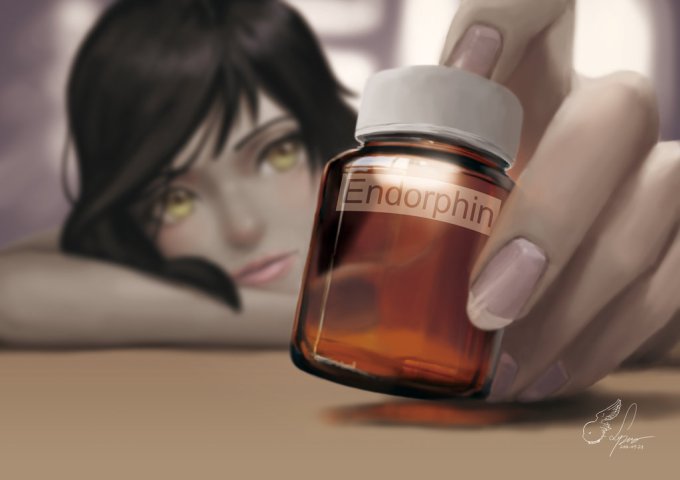
Well, my answer to that would be: Endorphins!

With bipolar disorder, one has anxiety, one is depressed, one is manicky, in short there is no peace of mind.

When (I’m sure) my brain produced the endorphins (our brain produces these, our natural pain killers) after the concussion, et voilá, peace! My mind stopped chattering, the anxiety was gone, the ruminating thoughts disappeared. And miraculously, all was well. Nothing had changed in my life, only my brain was processing things differently! Everything was fine, no matter what, I was fine with it all. There was peace in my mind and my heart, my stomach was not tied up in knots. All was well with the world and everyone in it. My anxiety and depression were gone.

This is the gift that my concussion gave me. It reminded me that this kind of peace of mind was possible. Unfortunately, with bipolar d/o, it is rare to have this kind of mental wellness. No matter what was happening in the world externally, I was fine with it, I was at peace. I can still invoke that feeling to some extent, I can still remind myself that it is possible to feel this way, no matter what!

So thank you concussion, for reminding me that this “blissful” state was possible for me, no matter what was going on in my life!

A genome-wide association study of kynurenic acid in cerebrospinal fluid: implications for psychosis and cognitive impairment in bipolar disorder


A variant of the SNX7 gene and its reduced expression, is associated with levels of a protein called kynurenic acid aka KYNA (an end metabolite in tryptophan metabolism.) This is associated with the psychotic (out of touch with reality) symptoms and cognitive impairment seen in bipolar disorder and schizophrenia. Interestingly, this pathway involves signaling via the immune cells (glia) of the brain! Another immune cell connection to mental illness! And KYNA could be targeted for drug development, as reducing it should lead to a decrease in psychotic symptoms as well as cognitive impairment.

http://www.nature.com/mp/journal/vaop/ncurrent/full/mp2015186a.html

Abstract

Elevated cerebrospinal fluid (CSF) levels of the glia-derived N-methyl-d-aspartic acid receptor antagonist kynurenic acid (KYNA) have consistently been implicated in schizophrenia and bipolar disorder. Here, we conducted a genome-wide association study based on CSF KYNA in bipolar disorder and found support for an association with a common variant within 1p21.3. After replication in an independent cohort, we linked this genetic variant—associated with reduced SNX7 expression—to positive psychotic symptoms and executive function deficits in bipolar disorder. A series of post-mortem brain tissue and in vitro experiments suggested SNX7 downregulation to result in a caspase-8-driven activation of interleukin-1β and a subsequent induction of the brain kynurenine pathway. The current study demonstrates the potential of using biomarkers in genetic studies of psychiatric disorders, and may help to identify novel drug targets in bipolar disorder.

Top

Introduction

Elevation of brain kynurenic acid (KYNA) is a consistently found biochemical aberration in schizophrenia and bipolar disorder (BD).1, 2, 3, 4, 5, 6, 7 Brain KYNA is mainly produced in astrocytes as an end-metabolite of the kynurenine pathway of tryptophan metabolism. This pathway is highly inducible by inflammatory stimuli,8 and we have previously reported that cerebrospinal fluid (CSF) levels of the proinflammatory cytokine interleukin (IL)-1β are markedly increased in patients with BD or schizophrenia, although the majority of other cytokines measured in this study were undetectable.9, 10

KYNA is a neuroactive metabolite that antagonizes the glycine co-agonist site of the N-methyl-d-aspartic acid receptor (NMDAR).8 Administration of synthetic NMDAR antagonists causes psychotic symptoms in healthy individuals,11 and exacerbates psychotic features in patients with schizophrenia.12 Psychotic symptoms are core features of schizophrenia, and more than half of patients with BD will experience psychosis in their lifetime.13 Supporting that KYNA might be specifically involved in the pathophysiology underlying psychotic symptoms, we have found higher levels of CSF KYNA in BD-I patients with a history of psychosis compared with those who had never experienced psychosis.14 KYNA also noncompetitively antagonizes the cholinergic α7 nicotinic receptor, and animal studies indicate that increased brain KYNA might cause cognitive deficits.8 In rats, increased brain KYNA causes behavioral responses analogous to impaired set-shifting in humans,15 an index of executive function. Set-shifting dysfunction as measured by the trail making test (TMT) is indeed a feature of schizophrenia and euthymic BD,16, 17 especially in BD patients with a history of psychosis.18

Family history is the strongest risk factor for BD, but an important obstacle for progress in psychiatric genetics is that psychiatric syndromes—based solely on symptom clustering—do not necessarily reflect specific underlying biological dysfunctions and may be insufficient to delineate heritable phenotypes.19 Indeed, epidemiological and molecular genetic studies have blurred the diagnostic boundary between schizophrenia and BD by demonstrating that these disorders have partly shared genetic causes.20, 21 Complementary approaches to unearth causal genetic mutations are therefore needed. One approach is to focus on biomarkers, that is, measurable key components in biological pathways between genotype and disease.22 For this purpose, the use of CSF KYNA may be particularly rewarding given its biological links to distinct subdomains of pathology present in both BD and schizophrenia.

In this study of euthymic BD patients, we found CSF IL-1β and KYNA to be associated with a history of psychosis and set-shifting impairment. CSF levels of KYNA were also strongly associated with the dopamine metabolite homovanillic acid (HVA). We conducted a genome-wide association study (GWAS) against CSF levels of KYNA in BD that revealed a genome-wide significant association with the single-nucleotide polymorphism (SNP) rs10158645 within 1p21.3, a finding that was replicated in an independent cohort of BD patients. Furthermore, we analyzed this SNP in relation to CSF HVA, a history of psychosis (followed by a replication in a large data set of 565 BD patients) and set-shifting ability. As the minor allele in rs10158645 was associated with decreased expression of sorting nexin 7 (SNX7), we attempted to decipher the biochemical chain of events using a multipronged approach including causal inference analyses of clinical data, post-mortem data and cell culture studies. These experiments converged on the proposal that decreased SNX7 expression is linked to increased CSF KYNA concentration and ultimately psychosis and set-shifting difficulties in BD through caspase-8-driven activation of IL-1β.


A baby doe

As I sit in the doctor’s  office for my follow up appointment for my concussion, what do I do but look at FB?  I saw this precious story of an injured baby doe, rescued by an amazing  young man and then reunited with her family. Very heartwarming for me. Who can resist babies, of any kind, especially  this little one! How kind and gentle of this man, who looks to be a hunter, to save this little one from  quite certain ruin. Yes nature is cruel, nature would have let this adorable, little mite die. If the weakness was the result of illness, then the illness genes would have been eliminated from the gene pool. But so would this wondrous, beautiful creature. As humans, we choose kindness over a better gene pool. I am human and I am all for kindness.
http://www.hlntv.com/shows/the-daily-share/articles/2015/10/27/man-rescues-injured-cute-baby-deer-and-returns-it-to-its-mother​

http://youtu.be/eStXV_TYFFw

Word press shows me which countries my views came from!

Pretty amazing! This is from Dec. 11th, when I had 141 views. It only shows the countries, not the identity of the actual viewers. I only see the identity if someone comments, and then I only see the email they used to comment with.  Pretty cool still! Sometimes, I have a lot more countries in my views than even these ones. So cool to have a global audience. Blogging is definitely one good thing and rewarding thing I do. 🙂

Screen Shot 2015-12-14 at 9.03.19 PM

Extended release vs. Immediate release

This is my most looked at blog post ever! Who knew it would be so popular!

PalestineWILLbefree's avatarPalestine WILL Be Free

DSCN0373

Many of the medications we take for our disorders come in immediate release or extended release forms.

Immediate release, as the name implies, dissolves immediately within our stomachs and is taken up into the bloodstream. This can cause side effects, it is also taken up quickly and then degraded quickly. So the concentration of the medicine does not stay constant in our bodies, we get a quick spike and the drug is quickly degraded. It is actually better to have a constant concentration as opposed to this increase and decrease. Lithium is one drug that is known to cause major gastrointestinal side effects if taken in large doses in an immediate release form and can be quite corrosive to the stomach.

Extended release, also known as Controlled release, has a coating that allows it to dissolve slowly either in the stomach or small intestine (enteric coated). These medicines are then slowly dissolved…

View original post 418 more words

The art of recovering gracefully

I am dedicating this post to my friend Dyane Leshin Harwood, whose amazing blog: https://proudlybipolar.wordpress.com/  has inspired me so much! And whose support and positive comments are so valuable to me. Love you my lithium sister!

Do you ever think you over react? Me? I say to myself, over react? Never! I am the modicum of tempered emotional reactions. Ummm no, actually I’m not. Happiness for me is joy, glee, giddiness. Sadness for me is ultimate doom, and blackness. Where is the middle ground? The happy medium? I do live there sometimes and sometimes I do not. Actually for someone with bipolar disorder, I am a fairly balanced person, but when something out of the ordinary happens, such as a concussion, well, I may lose it just a little, really, just a tiny, little bit.

Starry Night.jpg

Actually after I hit my head, I felt so amazingly good LOL! I haven’t felt that good in forever. All the worry, the depression, anxiety, all of it was gone. In its place was a peace, an acceptance of everything, a pleasantness and an optimism, and happiness and a calm. This lasted for almost two heavenly days, after which the anxiety, depression, sadness, pessimism, all came rushing back. Sigh, I’m almost willing to hit my head again to get that feeling back. Is there any way to whack your head, just a bit, yet prevent brain damage? If anyone knows of one, by all means let me know! Please.

endorphin_by_lepusplus-d80chg6.jpg

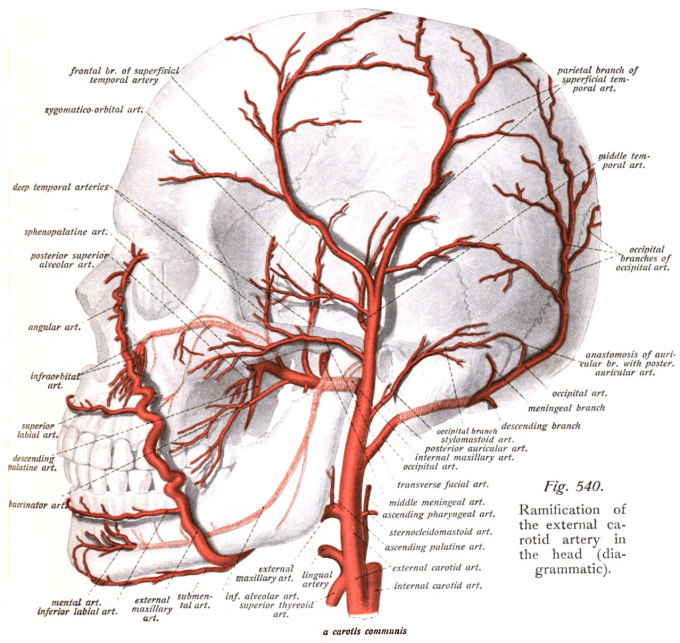
I believe the good feelings were due to my brain producing endorphins to relieve the pain of the concussion. Yes, concussions are pretty painful. You, or in this case, I hit the back of my head against one of the most unyielding and hard substances in the world, ice! A whack of my head, against the ice, and my neck snapped back and my brain hit the wall of my skull. Luckily I fell backwards. Apparently that is the direction of choice. If I’d fallen sideways, I could have ruptured an artery, such as the middle meningeal artery, and that would have been a whole lot worse. As in subdural hematomas, coma, and death, if the pressure was not relieved by a craniotomy (a hole in your skull.)

arteries.png

So I dodged a bullet there, Generally I’d say that I got away easy, as the CAT scan showed no bleeding and even my tail bone was not fractured, though it feels like it is. Even the headaches I had for two days in Buffalo weren’t as bad as the worst migraines I have ever had.

The plane ride seems to have exacerbated the symptoms a bit in that I’m having headaches again, but not really, really bad ones.

I count myself as lucky, that even though I did do something as stupid as not wearing a helmet, and very ungracefully falling on my butt and then thwacking my head against the crystalline, diamond hard ice, I came thorough it quite well.

fall.jpg

Concussions are not good for anyone, especially I might add, for people with bipolar d/o, as emotional disturbances can occur. Even in this aspect, I feel I am doing fine.  Although, I do realize now that I was a bit up, just a bit, mind you, even before the concussion, and I did have a little emotional down spike a few days after the concussion as well, but since then, calm.

And of course, my mantra is “Wear a helmet!”

bauer-lilsport.jpg

After I come back from Pakistan, yes my next adventure, I will buy a helmet, hire an instructor, and learn how to ice skate, really well 🙂

Pakistani boy.jpg Lahore.jpgislamabad.jpg

If at first you don’t succeed, try, try again. That is also a mantra of mine 🙂

194x105_Youve-Got-This_Bipolar.jpg