Zumba: The Best Feel Good Exercise!

zumba1zumba2

I seriously feel joy and have a BIG smile on my face when I am doing Zumba, all 60 minutes of it! No kidding! It is really great exercise, you can burn up to 500 calories an hour. And for me, the music is a total mood lifter, puts a smile on my face every time! Here is the link to the video of the song from which these pictures are taken. https://www.facebook.com/video.php?v=10152591777357711&set=vb.587902710&type=2&theater

You work up a sweat, you exercise, you smile and dance, I can’t think of any more fun and effective way to exercise!

Sleep Cycle Alarm Clock.

helps.https://itunes.apple.com/us/app/sleep-cycle-alarm-clock/id320606217?mt=8sleep cycle 1 sleep cycle 2 Sleep Cycle 3slepp cycle 4

Sleep is one of the most important elements in managing a mood disorder. Sleep deprivation happens when you are manic, you don’t need sleep then at all. You can go all day, all night, like a zombie, without any sleep. Your brain is working full throttle, you can’t turn it off.

In a depression, you sleep all the time. You don’t want to wake up. You have no drive, seemingly no reason to do anything. Your mind is not working at all, you and your brain are sluggish, you have no energy. Getting out of bed is actually a Herculean task.

When your mood is normal, you are sleeping the 6-8 hours a night and getting up in the morning with a smile and going to bed at a good hour.

If your sleep gets disturbed, it can throw your mood off. Conversely, when your mood is off, it can affect your sleep cycle. It’s the proverbial vicious cycle. As someone who suffers from mood disorders, you have to be extra vigilant about getting the right amount of sleep consistently.

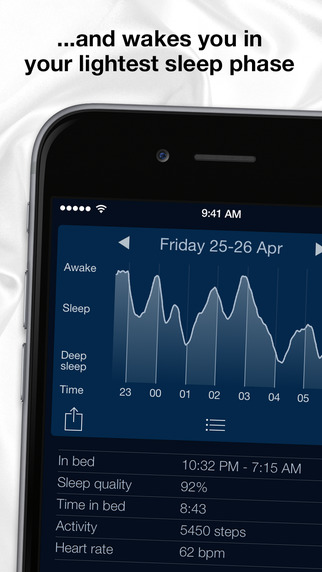
Lately, I have been having a dickens of a time waking up every morning. I simply don’t want to get out of bed. I wish someone would invent an intravenous coffee machine that I could hook up to every night, which will deliver the right dose of coffee to me every morning so I can open my eyes. Haha. Barring that, I just read about Sleep Cycle alarm clock. It’s an App for iPhones. Just got it to help wake me up, lets see if it works.

You put it on your bed, close enough so it can detect your movement. And it wakes you up in the correct phase of your sleep, the lightest phase of your sleep cycle. According to the description and it makes sense, this is the natural way to wake up, rested, refreshed and relaxed. And Wow! since you move differently in bed in different sleep states, it can monitor your movement in bed to determine which phase you’re in. I hope big brother isn’t watching this, haha.

I’ll keep you posted. Starting tonight. Good night, y’all

Wide Arc Mood Swings

Emotions are a double edged sword for people with bipolar d/o. Our intense emotions allow us to feel deeply, be empathetic, be creative. But these intense emotions can also break us. Things like Empty Nest Syndrome are very difficult to deal with, as our emotions get get very intense and painful and difficult to handle for ourselves. Any kind of emotional upheaval is more difficult when you have a mood disorder. We people who have bipolar 1, 11, or major depressive or anxiety disorders have a more difficult time coping with it. We feel so much more deeply, we really do, I’m not making that up. Whether we are happy or sad, we feel off the charts. Our mood swings are more extreme and have a wider arc than someone who doesn’t have a mood disorder.

Screen Shot 2015-01-07 at 11.06.16 PM

Here’s a figure I made. It’s not exact, just illustrative, the normal mood range is a little past the lines labelled “Normal Depression” and “Normal Euphoria.” The Bipolar mood swings however can go beyond even the “Out of Touch with Reality Depression” and “Out of Touch with Reality Mania“!!! That is some depth and intensity of emotion, that is why when people are in a severe depression, they kill themselves, because the depth, the intensity, the very quantity of their sadness is too painful, too intense to bear.

Just something I wanted to share with people who don’t know what it feels like to have a mood disorder.

Mood stabilizers like Lithium Carbonate, Depakote, Abilify keep us in mostly the normal mood range. They are literally heaven sent for us, people with mood d/o’s. I don’t know if I’d be here without my Lithium Carbonate, I don’t think I would actually. Even with it, I still have been going through some extreme mood situations, but they are somewhat attenuated and more easily reversed than if i wasn’t on Lithium. So even though I have Bipolar Disorder Type 1 (the official name) I feel lucky that I also have Lithium Carbonate. Also, my mood lability was also due, in large part, to Zoloft, which I haven’t taken in 3.5 months, and this will also help stabilize my mood. Yaay! Coming off Zoloft has been anything but easy. But that’s a subject for another post.

Best wishes and hugs to you my dear friends.

International Bipolar Foundation: Get Help

This is a wonderful resource for people who are newly finding out that they have bipolar d/o as well as people and families who have been living with this disease for a long time. Please visit and get knowledge, information and most importantly, get help.

http://www.ibpf.org/get-help

Get Help

What do you need help you with?

Crisis: If you are in a crisis, please call 1-800-273-TALK (8255) in the US, or click here for a list of international hotlines. Calls are confidental and answered by a trained listener who is aware of the available resources for help in your area. They will listen to your needs and connect you to immediate assistance if necessary, or refer you to a place to go for help.

Treatment: Click on Resources on the left side of the screen to browse a list of resources such as inpatient and outpatient treatment centers, hospitals, clinics, and more. We know the quality of treatment varies greatly from place to place, so we do the best we can to vet these resources by using volunteer recommendations. We also have an internal database of therapists and psychiatrists. To find out if we know someone in your area, or for help finding other resources, email info@ibpf.org

If you are in the US, you can also use the USA treatment locator to search by zipcode.

Support: There are many support groups for both people who have bipolar disorder and their caregivers. In the US, NAMI and DBSA have several throughout the country. Some are for all mental illnesses and some are specific to bipolar. They also offer support groups for families of those affected by mental illness. In the UK, Bipolar UK offers many support groups. Visit our resources page to find support groups in other countries.

There are also several websites with online support groups or chats. One of these is 7 Cups of Tea – a free and confidential conversation with trained active listeners.

Newly Diagnosed? In addition to the above resources, you might want to check out our book – Healthy Living with Bipolar Disorder. PDFs are available for free by clicking here. We also have tons of other information on our website to learn more about living with bipolar disorder, click here to see a list. 

For help finding any of these resources, email info@ibpf.org

– See more at: http://www.ibpf.org/get-help#sthash.3ueVQINA.dpuf

Is Depression A Kind Of Allergic Reaction? Caused By Inflammation?

http://www.theguardian.com/lifeandstyle/2015/jan/04/depression-allergic-reaction-inflammation-immune-system
Barely a week goes by without a celebrity “opening up” about their “battle with depression”. This, apparently, is a brave thing to do because, despite all efforts to get rid of the stigma around depression, it is still seen as some kind of mental and emotional weakness.

But what if was nothing of the sort? What if it was a physical illness that just happens to make people feel pretty lousy? Would that make it less of a big deal to admit to? Could it even put a final nail in the coffin of the idea that depression is all in the mind?
According to a growing number of scientists, this is exactly how we should be thinking about the condition. George Slavich, a clinical psychologist at the University of California in Los Angeles, has spent years studying depression, and has come to the conclusion that it has as much to do with the body as the mind. “I don’t even talk about it as a psychiatric condition any more,” he says. “It does involve psychology, but it also involves equal parts of biology and physical health.”

The basis of this new view is blindingly obvious once it is pointed out: everyone feels miserable when they are ill. That feeling of being too tired, bored and fed up to move off the sofa and get on with life is known among psychologists as sickness behaviour. It happens for a good reason, helping us avoid doing more damage or spreading an infection any further.
It also looks a lot like depression. So if people with depression show classic sickness behaviour and sick people feel a lot like people with depression – might there be a common cause that accounts for both?

The answer to that seems to be yes, and the best candidate so far is inflammation – a part of the immune system that acts as a burglar alarm to close wounds and call other parts of the immune system into action. A family of proteins called cytokines sets off inflammation in the body, and switches the brain into sickness mode.

Both cytokines and inflammation have been shown to rocket during depressive episodes, and – in people with bipolar – to drop off in periods of remission. Healthy people can also be temporarily put into a depressed, anxious state when given a vaccine that causes a spike in inflammation. Brain imaging studies of people injected with a typhoid vaccine found that this might be down to changes in the parts of the brain that process reward and punishment.

There are other clues, too: people with inflammatory diseases such as rheumatoid arthritis tend to suffer more than average with depression; cancer patients given a drug called interferon alpha, which boosts their inflammatory response to help fight the cancer, often become depressed as a side-effect.

As evidence like this continues to stack up, it’s not surprising that some people have shifted their attention to what might be causing the inflammation in the first place. Turhan Canli of Stony Brook University in New York thinks infections are the most likely culprit, and even goes as far as to say that we should rebrand depression as an infectious – but not contagious – disease.

Others aren’t willing to go that far, not least because infection is not the only way to set off inflammation. A diet rich in trans fats and sugar has been shown to promote inflammation, while a healthy one full of fruit, veg and oily fish helps keep it at bay. Obesity is another risk factor, probably because body fat, particularly around the belly, stores large quantities of cytokines.

Add this to the fact that stress, particularly the kind that follows social rejection or loneliness, also causes inflammation, and it starts to look as if depression is a kind of allergy to modern life – which might explain its spiralling prevalence all over the world as we increasingly eat, sloth and isolate ourselves into a state of chronic inflammation.

If that’s the case, prevention is probably the place to start. It’s not a great idea to turn off inflammation entirely, because we need it to fend off infections, says Slavich, but “lowering levels of systemic inflammation to manageable levels is a good goal to have”.

The good news is that the few clinical trials done so far have found that adding anti-inflammatory medicines to antidepressants not only improves symptoms, it also increases the proportion of people who respond to treatment, although more trials will be needed to confirm this. There is also some evidence that omega 3 and curcumin, an extract of the spice turmeric, might have similar effects. Both are available over the counter and might be worth a try, although as an add-on to any prescribed treatment – there’s definitely not enough evidence to use them as a replacement.

In between five to 10 years, says Carmine Pariante, a psychiatrist at Kings College London, there may be a blood test that can measure inflammation in people with depression so that they can be treated accordingly. Researchers have already come up with a simple finger-prick test that reliably measures inflammation markers in a single drop of blood.

And as for the stigma – could it really be killed off by shifting the blame from the mind to the body? Time will tell. This is not the first time that depression has been linked to a physical phenomenon, after all. A recent survey found that despite wider awareness of the theory that “chemical imbalances” in the brain cause depression, this has done nothing to reduce stigma; in fact, it seemed to make matters worse.

This time, though, the target is not any kind of brain or mind-based weakness but a basic feature of everyone’s body that could strike anyone down given the right – or wrong – turn of events. And if that doesn’t inspire a greater sympathy and understanding, then nothing will.


How the CLINT MALARCHUK interview came to be :-)

Screen Shot 2015-01-05 at 10.54.05 PMScreen Shot 2015-01-05 at 10.35.03 PM

Now I am not resting on my laurels, nobody can seriously accuse me of that, however this is the story behind the story, the bloopers so to speak, and it is a really interesting story, so I’d like to share it with you.

First of all, here is a link to the interview https://bipolar1blog.wordpress.com/2014/12/24/clint-malarchuk-interview-by-samina-raza/

How, you might ask yourself, did Samina Raza come to interview Clint Malarchuk? How did that come to be? Well Clint Malarchuk’s book called “A Matter Of Inches” had just come out. My brother, who is very literary and keeps on top of everything sent me an email with the link to Clint’s book and a message saying “You should interview him for your blog.” I read the book reviews and a bit of the book’s preview and thought to my self that Clint Malarchuk is not going to want me to interview him. And there the issue stood for a few days.

Why was it important to interview Clint? Well my family had been living in Buffalo NY since 1972. My brother and my sister were born there. Just like anyone living in Buffalo. we were huge Buffalo Sabres’ fans. Clint Malarchuk had been the Buffalo Sabres’ goalie and we watched and loved him. When the goriest accident in sports happened, when his throat got injured by the skate of another player, there was a collective scream in Buffalo. He was taken to the Buffalo General Hospital where my step dad worked as a cardiovascular surgeon. And although he did not work on Clint, he was there the night the accident happened. So we “knew” Clint in a manner of speaking. And when his book came out, and we found out about his battles with Obsessive Compulsive Disorder (OCD), Post Traumatic Stress Disorder (PTSD), Obsessive Compulsive Disorder (OCD) and alcohol abuse as well as major anxiety and depression disorders, and I had a blog about bipolar 1, it made sense to try and interview him.

But, at first, I was too nervous to even think about it. Then I went from Louisville to Buffalo to visit my son. My brother also came to Buffalo at the same time to visit my son. He asked me what was going on about possibly doing the interview. I said basically nothing. My brother gave me a little push. And then somehow I started to believe that it could be done! My son had posted, on his Facebook page, about Clint’s book and that post also showed that Clint Malarchuk had a Facebook page. So that very night, on December 12th, 2014, I friend requested Clint Malarchuk and he accepted, as he has accepted almost 3000 people! There was a lot of excitement in my son’s apartment that night because Clint had accepted my friend request! Most of the excitement was from me! Then later that night, 12:34 am to be exact, I sent Clint a message telling him about how I was a huge Sabres fan. How I’d heard of his book and intended to read it pronto. Also, I said I had bipolar d/o and I’d started a blog about my illness. I also told him I would love to interview him for my blog. The next morning I told my brother what had happened. I waited one day, nothing. Two days, nothing. I told my brother, “He’s not interested.”

Then later on Dec. 15th, Clint wrote back saying he would like to help! There was a lot of hooting and hollering after getting that message. I got his book “A Matter Of Inches” on my Macbook Air immediately. I started reading the book at about 8 pm. And I finished the book at 6 am the next morning. As I’ve said before, I sobbed, I laughed, I couldn’t put it down. I was hooked from the first word of the Prologue to the very last word of the book.

Then I emailed him a list of my questions which I’d formulated. I had about 22 questions.

And he answered all of my questions, over the phone, graciously, patiently, and sweetly. Even encouraging me to keep up the good work of my blog. The interview lasted 40 minutes and I recorded it on two devices because I was so afraid that I might accidentally erase the whole interview.

It took me two days to transcribe it. And I posted it on my blog on Dec. 22nd. And immediately after I posted it, I sent Clint a link to the post. After about half an hour, he messaged me saying “Great job Samina!” After I read that, I was dancing! And smiling and laughing! And I texted my brother, my son, my nephew, all the people who were actually present when this all started, to say that the interview was done and posted. I also emailed them a copy of the interview.

This was the most fun post I’ve ever posted. Not only did it mean a lot, it was with someone who we had a connection with. It was important information to disseminate. And Clint Malarchuk was a delight to interview. Thank you again Clint!

This Mantle.

DSCN5041

Bipolar disorder. This is not the mantle I would have chosen to put on my shoulders.

This is not the cause whose voice I would have liked to be.

Although my shoulders are broad, my shoulders are strong. I have to wear it.

My voice is pure and carries far, I have no choice, I have to sing this song.

So I do, I wear the mantle and I sing its song.

I would have preferred something softer, lighter, airier, sky blue in color.

Not heavy and dark, with terrifying images and a sharp, cutting, bloodying texture.

I had no choice. I inherited it.

And so I go on, I hush the fear in my breast, I quell the anxiety.

I quiet my mind and I go on.

For the people in my life whom I love more than life itself.

My son, my brother, my sister, my nephew, my niece, my husband.

These are my rocks and in return I am theirs.

No matter what I go through, no matter how lost I feel, no matter how much of a shadow of my former self I am. I go on, I wear my mantle, I sing my song and I live for them.

Ah So Familiar! “The Secret Dual Lives of People Living With Mental Illness”

Steph.jpg.CROP.

I just read an article called “The Secret Dual Lives of People Living With Mental Illness” at http://www.slate.com/blogs/behold/2014/10/28/liz_obert_dualities_looks_at_the_hidden_and_visible_worlds_of_people_living.html?search=sign+up#&wp_login_redirect=0 The pictures in this article of people with bipolar disorder are so familiar. One is taken when the person is feeling well and happy and functional. The other is taken when they are in a depression, feeling like nothing, feeling like a “shadow of themselves.” This is what bipolar does, it takes a happy, healthy, active, productive person, and it makes them into nothing. Either depressed and really nothing, or manic and flying high but pretty much non productive. Looking at these pictures made me feel like I was looking at pictures of myself in the different phases I go through.

In the comments after the article, someone asked if bipolar depression couldn’t simply be treated by cognitive behavioral therapy (CBT)! Really? Would you treat a brain tumor with CBT? Would you treat severe diabetes with CBT? Would you treat liver cancer with CBT? Come on! Bipolar disorder is a deadly, complex, severe disease of the brain, it along with other severe physical illnesses cannot simply be treated with CBT and easily wished away. Would that it was so. I am sure that CBT would help but it cannot replace medication.

When I Went To France Without A Visa!

sam 17 samina 16

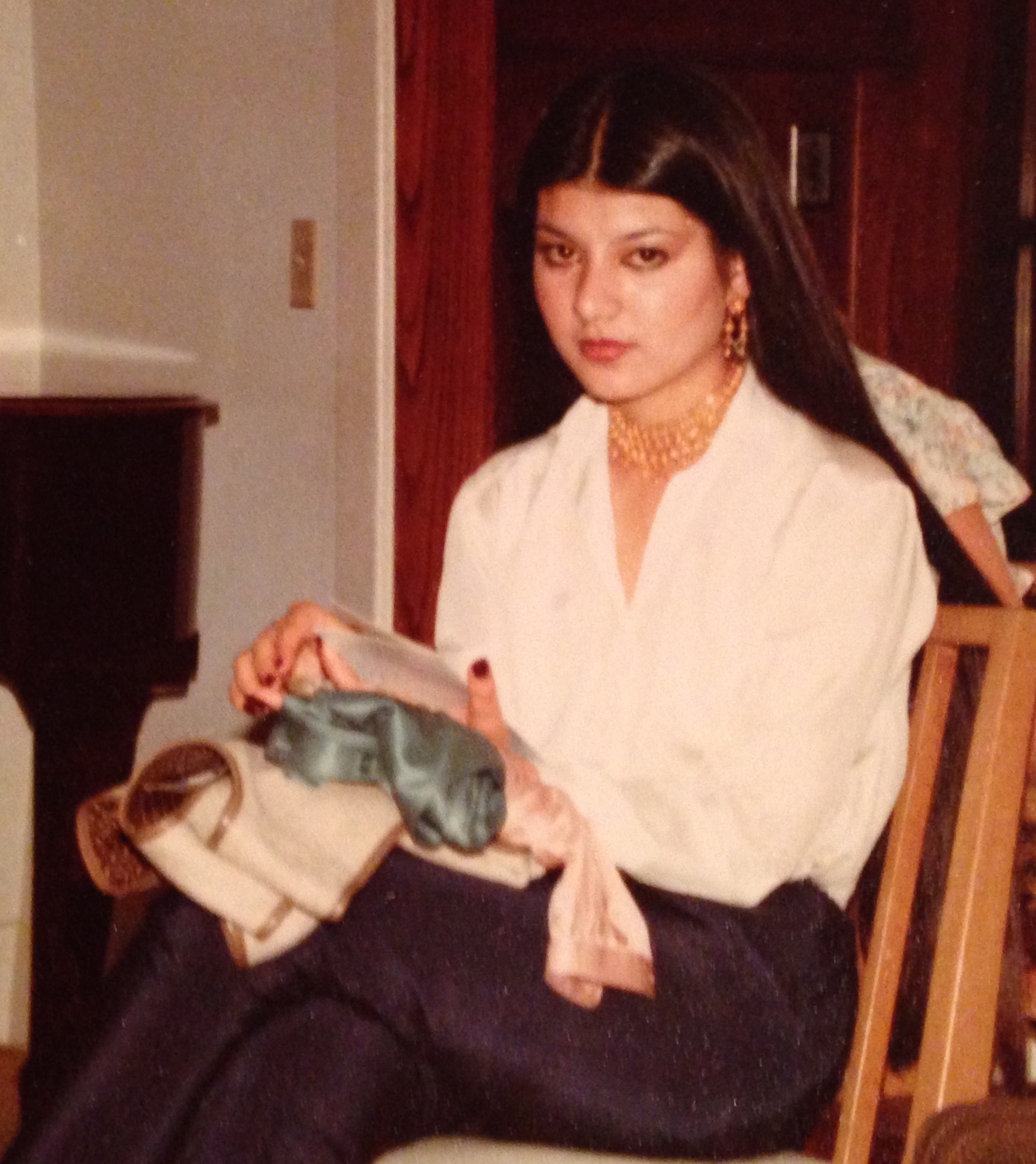
I was 17 years old, I had worked at a Deli in a grocery store (against the strong objections of my mother who said I didn’t need to work) for a few months and had saved all my money. My step father’s younger brother (my uncle) and his family were in Bordeaux, France. He was an officer in the Pakistani Air Force, and was sent to Bordeaux to learn everything about Mirage jet fighter planes. So, since he was there, I decided I would go to France with my money. We went to see a travel agent, she booked my flight from Buffalo to NYC to Paris to Bordeaux. I packed my suitcase. Told everyone at school I was going to France. And excitedly waited for the day. On the day, got on the plane and finally arrived in Paris. There I waited in line to get to the immigration official. She looked at my Pakistani passport (I wasn’t an American citizen in 1977) and looked at me and went to the back to talk to someone. I was quite fluent in French then and thought I could explain whatever was the problem to them in French. She came out, looked at me and said “Visa?” All my French went out the window, heck all my English went out the window. Apparently Pakistani nationals, even if they had Green Cards (as I did) needed visas to enter France. The travel agent in Buffalo had failed to mention that to us and we had, erroneously. assumed that since I had a Green Card, I didn’t need a visa to go to France. So now I’m sobbing, tears are spilling out of my eyes copiously. I am sure she is going to send me back. And the only thought I have is how will I ever show my face in school again. Oh my god, my life will be absolutely ruined. This woman is just shaking her head. Then finally she asks where I am going and to whom. I tell her my uncle’s name and his address in Bordeaux. She and some other officials discuss this, she says my uncle and my last names are the same, I am visiting him in Bordeaux and then miraculously she stamps a visa in my passport, hands it to me and says ” Prochaine en ligne”!! Oh and my heart is singing, I literally want to grab this lady and give her a hug! But I don’t, I just say “Merci, merci, merci beaucoup!” and leave before they change their mind! I find the gate for the plane going to Bordeaux. I barely make it, but I do! My uncle meets me at the airport and I tell him and his wife about my misadventures, which luckily turned into good adventures.

Then we go to San Sebastien in Spain and again I have no visa, they give me one with a smile. We get caught in the Basque independence rebellion, amidst huge crowds chanting slogans and turning over cars and jeeps and setting them on fire. We are separated from each other only for a few minutes which feel like hours. In the end, we find each other, we have dinner, we go to bed and just stay a day and head back to Bordeaux.

Then we go to Paris. Le Tour Eiffel, Le Louvre, Avenue des Champs Elysées, La Place de la Concorde, Rive Gauche, oooh la la! I had such a wonderful time in Paris. Street vendors gave me gifts, everyone gave me smiles, I was walking on air, but then I was 17 and charmed and happy.

Then we went back to Bordeaux. There we decided to send my passport to the Embassy in Paris to have my visa renewed so I could stay a bit longer. My passport never reached the Embassy. It got lost in the mail. So then I had to have another passport issued from the  Pakistani Embassy in Paris and this took quite a while. I still have my old passport issued in Paris! I went to school about 10 days after Christmas vacation was over. And everyone thought I was a rock star, having gone to France and stayed for so long. I had bought some clothes and high heeled boots and people in school would always ask  me if I was a model! It was such a fun time and doubly fun because I was 17.

When I met President Clinton!

44_Bill_Clinton_3x4

We were living in Little Rock AR. My son was born there in 1990. On November 3rd, 1992, Bill Clinton was elected president. In December, I was at the mall, shopping for Christmas presents. I was holding my son in my right arm and bags of presents in my left arm. I saw a throng of people standing outside of a store in the mall. I asked one of them what was going on. They answered that President (Elect) Clinton was inside. I asked if the store was closed to everyone, and the person said “No, it’s a public place, they can’t close it to the rest of us.” I decided right then and there I was going to congratulate him and wish him luck! So I marched into the store, making a beeline for President Clinton. I saw the secret service men rustle, but no one stopped me. I walked up to him, my son in one arm and shopping bags in the other, he gave me a dazzling smile, ready to pour on the charm, but at the last instant he remembered he had just been elected president and toned it down. I shook his hand, congratulated him, and told him how happy we were that he was the president and I wished him the best of luck at the White House. He beamed at me again, and even pinched my son’s cheek. And then I turned around and walked out and went home and told my husband very excitedly about the whole encounter. Oh if only they had as ubiquitous cell phones as they do today, back then, I might have gotten a picture of that fun little moment in my life.