Bipolar is a Progressive, Organic Brain Disease. Medication Helps Stop Damage to Brain.

From: http://www.mdjunction.com/forums/bipolars-only-discussions/general-support/10087928-bipolar-gets-worse-with-age

Sarah Troy writes:

I am not a doctor. I have bipolar disorder. My responses are based on my own experience, reading and research.

QUESTION: “I know bipolars begin to experience cognitive damage with each untreated manic episode but do BPs on medication also experience this cognitive damage?”

Yes. Bipolar is a progressive, organic brain disease.

Bipolar is a major mental disease (or disorder). Research on the major mental disorders, such a bipolar, schizophrenia, major depression, and Alzheimer’s disease, shows: A) Deterioration of the brain occurs slowly over the lifespan in each of these disorders. B.) This deterioration is both structural and functional. C) There are differences between how the brain looks in each of these disorders. In other words, the brain of a bipolar has structural and functional deterioration that is different from the brain of a major depressive disorder. D) In each of these disorders, we know that active phases of the disease, or “episodes,” accelerates brain deterioration.

In bipolar, the “episode” used as the marker for brain deterioration is the hypomanic or manic episode. So, one thing observed in bipolars is that as they age (due to the underlying organic deterioration) “episodes” of hypomania or mania gradually become more intense and frequent, with a fewer number of years between episodes. This pattern of deterioration occurs in all bipolars, whether they are un-medicated, under-medicated, or medicated.

There is simply no “cure” for bipolar.

Does medication slow the progressive nature of the disease? Yes, because effective treatments (medications) for bipolar decrease the intensity or frequency of hypomania or mania, or increase the number of years between episodes.

Therefore, a bipolar who is effectively (adequately) medicated will experience less brain deterioration over time than a bipolar who is under-medicated or un-medicated.

Do we know more about lithium than other bipolar meds? Yes. Because lithium has been studied the longest, we know more about it than any other bipolar medication. Research shows effective treatment with lithium can, in some people, help the brain to heal the damage done by “episodes.” Can other bipolar meds do this? We just don’t know. More research is needed.

How much of a difference is there between the brains of effectively (adequately) medicated bipolars and the brains of un-medicated or under-medicated bipolars? A lot. It has been established for a while that the brains of untreated Schizophrenics deteriorate similarly to the brains of Alzheimer patients over time. Now, the newer research is showing that the brains of untreated bipolars deteriorate like the brains of untreated schizophrenics over time. Hence, the brains of untreated bipolars have been compared to the brains of Alzheimer’s patients over time.

http://www.bipolar-lives.com/ bipolar-brain-imaging.html – Accelerated shrinking of grey matter of brain

http://www.pendulum.org/ disease.htm#enlargedventricles – Disease process of Bipolar and Schizophrenia

http://www.amenclinics.com/ brain-science/spect-image-gallery/spect-atlas/images-of- bipolar-disorder-and- schizophrenia/ – Images of Bipolar disorder and Schizophrenia

http://www.loni.ucla.edu/ ~thompson/projects.html – Current neuroscience projects

Bipolar Disorder: A Brain Disease.

THE BIPOLAR BRAIN – WHERE AND WHAT HAS GONE WRONG?

VENTRAL STRIATUM — WHAT IT DOES: Helps the brain process rewards. WHAT HAS GONE WRONG: Studies show overactivity and a 30% loss in gray matter in this region, causing people to lose judgment about how certain behaviors, such as overspending or being sexually indiscriminate, will affect their lives.

PREFRONTAL CORTEX — WHAT IT DOES: Parts of the prefrontal cortex regulate emotion and are instrumental in processing rewards and motivation. WHAT HAS GONE WRONG: Studies show a 20% to 40% reduction in gray matter-the result of a loss of the branches that connect neurons.

AMYGDALA — WHAT IT DOES: One of the brain’s emotional centers; helps in the recognition of facial expressions and tones of voice. Neural transmissions increase in response to emotional stimuli. Normally, repeated exposure to the same experiences or images leads to habituation, or reduced response. WHAT HAS GONE WRONG: Habituates slowly to some stimuli, remaining reactive beyond the usual response time.

HIPPOCAMPUS –WHAT IT DOES: One of the brain’s memory centers. One layer of the hippocampus, the subiculum, helps recognize contexts that represent danger or reward. WHAT HAS GONE WRONG: Loss of branches that connect neurons may lead to a constant state of anxiety because the person can no longer identify safe situations.

BRAIN STEM —WHAT IT DOES: The raphe nucleus in the brain stem is home to serotonin cell bodies, which create and disperse the neurotransmitter to different parts of the brain. WHAT HAS GONE WRONG: Bipolar patients have a 40% loss of the serotonin 1a receptor in the raphe, which may contribute to atrophy of neurons and depression.

SOURCE: Wayne Drevets, M.D., National Institute of Mental Health

http://www.mdjunction.com/forums/bipolars-only-discussions/general-support/10087928-bipolar-gets-worse-with-age

Anxiety

monumentmonument

Fear of loss

Hot, stinging peppers in my chest

Shallow breath

Fear of loss

Terrified

Only fear and worry

Only no

Life please don’t leave me

Laughter, love, where has the sun gone?

Lightness, airiness, come back to me

I don’t want to live here in this dungeon

It’s dank, cold, frightening

Help me

Help me out of here

I belong in the sun with crystal waters running

With the sounds of waves crashing on white beaches

Take the weight off my chest and let me breathe

Let me out of the dungeon

Evaporate

Clint Malarchuk , former NHL goalie, suffering from depression, took a gun and put a bullet in his head. He survived.

Clint Malarchuk

Clint Malarchuk is a former NHL goalie, cowboy and all around hero. While playing for the Buffalo Sabres, his neck was slashed, on live TV, by a skate in what is the most gruesome sports’ history. After this injury, he was not offered counseling of any sort and was back on the ice in ten days. His attitude was that he was a tough guy and he didn’t need help. But Clint was suffering from depression, obsessive compulsive d/o and post traumatic stress. One day, on his ranch, he put a gun to hid head and pulled the trigger putting a bullet in his head. He was airlifted to the hospital, insisting that he didn’t need the air ambulance. They actually had to sedate him to get him on the helicopter! He survived the suicide attempt. After Clint awoke from the coma due to the gunshot to the head, he was determined to use his fame to help people with mental illness and break down the stigma. He wrote a book called “The Crazy Game”. In it he says that dealing with mental illness was much more painful than having his throat slashed. In an interview (below) he said he would rather have his throat slashed a million times than suffer from depression! In the book, he also opens up about the pain and his path to getting help. He says that many people don’t speak about their mental illness for fear of being judged and the stigma, but that this can change as society’s attitudes about mental illness change. He points out that a person who had cancer would go and tell his boss, whereas a person with mental illness would hide He also says that a depression is caused by a deficiency in serotonin, just like diabetes is caused by a deficiency in insulin. Both chemical imbalances. So why does the person with depression have more stigma attached? Mental Illness is not a weakness. In fact, Clint realized the toughest thing he ever did was to allow himself to talk about it.

Here’s the full interview. (Warning: The throat-slashing skate injury appears from 0:14 to 0:27.)

https://www.youtube.com/watch?v=sJ1SFd9d-MQ

http://www.upworthy.com/a-famous-nhl-goalie-put-a-bullet-in-his-head-and-he-wants-everyone-to-know-why?c=ufb1

Breakthrough Workshop at Caron.

breakthrough

This sounds amazing! I am seriously thinking about going there for their 5.5 Day Workshop for Personal Growth. The most important thing for me is Emotional Manageability on a Daily Basis. Sounds really wonderful! I wonder if this works for people with bipolar d/o. We certainly need emotional manageability. Do any of my blogging friends (Dyane?) know about this program? The picture is the mansion in Caron PA where the workshops and groups are held!

About Breakthrough Workshop

http://www.breakthroughatcaron.org/about-breakthrough-workshop

One Week Can Change Your Life

Life is full of ups and downs and most of us want to flourish and improve our lives and the lives of those we love.  Breakthrough at Caron is a groundbreaking residential, 5-day program specifically designed for adults seeking a higher level of happiness and satisfaction.

Breakthrough at Caron has helped over 40,000 adults overcome obstacles that may have previously blocked their efforts towards developing healthier relationships, positive connections and emotional stability. One year follow-up studies conducted by Rutgers University have shown that this innovative program can promote change and maintain results leading to a healthier more rewarding life.

The Breakthrough program is held in a beautiful restored mansion in the hills of Eastern Pennsylvania. Unlike other programs, our program is offered every week of the year and staffed by a team of full-time therapists. Our focus is helping adults, 18 and older, who believe that life could be better and would like to gain the momentum or direction necessary to create the lasting change they want and need. Breakthrough utilizes a unique and time tested process of experiential group therapy where groups of 10, facilitated by 2 skilled full-time therapists, work together to identify previously unidentified and ineffective patterns and to develop healthier and more effective responses towards achieving personal goals.

All aspects of the program are designed to create a “real time” experience of changing unwanted patterns that interfere with healthy attachment. Using an individualized approach, methods include mindfulness training and psychodrama along with exercises to address complex grief and shame which may be inhibiting desired growth. Regardless of previous experience in a group, Breakthrough clients are able to expand their own comfort zone and take risks that they never dreamed were possible.

Today may be the day your change begins.

Come to Breakthrough if you want to:

  • Bring out the best in yourself, allowing your strengths to guide you
  • Flourish and grow rather than just cope
  • Be the best parent, partner and spouse you can be
  • Have emotional manageability on a daily basis – regardless of the ups and downs around you
  • Experience happiness and joy as a way of life
  • Increase the closeness and intimacy in your relationships
  • Feel productive and purposeful in your work
  • Be able to accept the people and things you cannot change
  • Center your life around your values and the people you love

Although a referral from a therapist is not required, this program is intended as an addition to private therapy or outpatient counseling where individuals may accelerate their personal growth by examining and modifying long-standing patterns that interfere with their quality of life. At the conclusion of the program, Breakthrough staff provides each participant with direction for follow-up care and a referral to a therapist for individuals who do not yet have one.

Note to self: Please stop acting insane!

DSCN3261DSCN3261

Really hate this disease/illness/hell today. My adrenalin spikes are so high that when they happen, they make me behave in an extreme and obsessive and insane way. My friends, even ones who know I have this illness, find it extremely difficult to deal with me and understand why I am behaving this way. I don’t blame them, who wants a rash, obsessed, crazy person around. I mean when a friend says “You’re doing it again. Please settle down a little” it is a wake up call, and it is embarrassing beyond belief… And not only that, am I now supposed to contact this friend again? The issue that I was going on and on about is drowned in this manicky behavior and never gets addressed. It seems to be happening more this year than in the past years… Lithium, Seroquel, whatever, it isn’t controlling this manicky aspect of my illness. And then I feel like absolute crap that I behaved like a lunatic again. WTF am I supposed to do? Call my psychiatrist so he can add on a 3rd medication with triple the awful side effects? Oh My God. Leave me the eff alone, leave my brain alone. Why do I have to live in this hell? This hell of embarrassment and chagrin and fear? Fear because I am so afraid all my friends will leave me, all my family will leave me because of my strange, obsessed, extreme behavior.  Tis the season, tis the season alright, of being as annoying, extreme, and frightening as I can be. Ho ho ho.

Is there not a positive way to look at this too? That a friend realized I was acting manicky and cared enough to check me thereby stopping me in my manic tracks? That means I have good, I mean GOOD friends. My friends, even though I am acting really annoying, recognize that that’s not me and give me a warning. Who could ask for better friends?

Even though I have this disease, I have friends and family who look out for me and let me know when I am behaving in a manicky way, so that I recognize what I am doing and stop. Ok, lets go with this version, where everyone is helping me overcome my illness’ symptoms and somehow banish, banish, banish the fear.

And if you readers have no idea what I am talking about, consider yourselves very lucky.

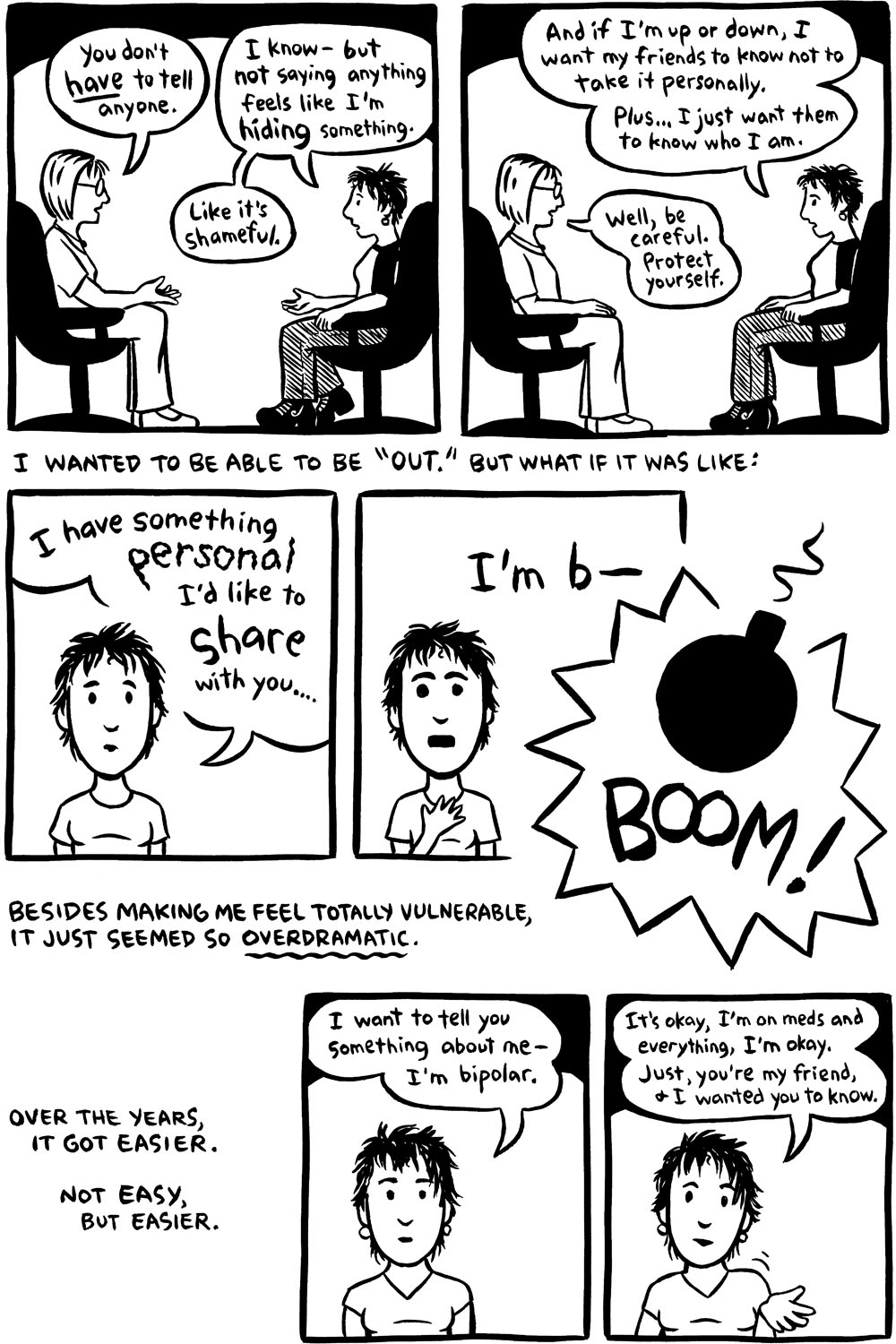
What Bipolar Disorder Really Feels Like. In cartoon pictures!

From: http://www.huffingtonpost.com/2014/09/18/bipolar-disorder-ellen-forney_n_5823138.html.

About 2.6 percent of American adults — nearly 6 million people — have bipolar disorder, according to the National Institute of Mental Health (NIMH). But the disease, characterized by significant and severe mood changes, is still dangerously misunderstood.

Bipolar disorder is vastly different from the normal ups and downs of everyday life, but many have co-opted the term to refer to any old change in thoughts or feelings. The mood swings in someone with bipolar disorder, sometimes also called manic depression, can damage relationships and hurt job performance. It has been estimated that anywhere from 25 to 50 percent of people with bipolar disorder attempt suicide at least once.

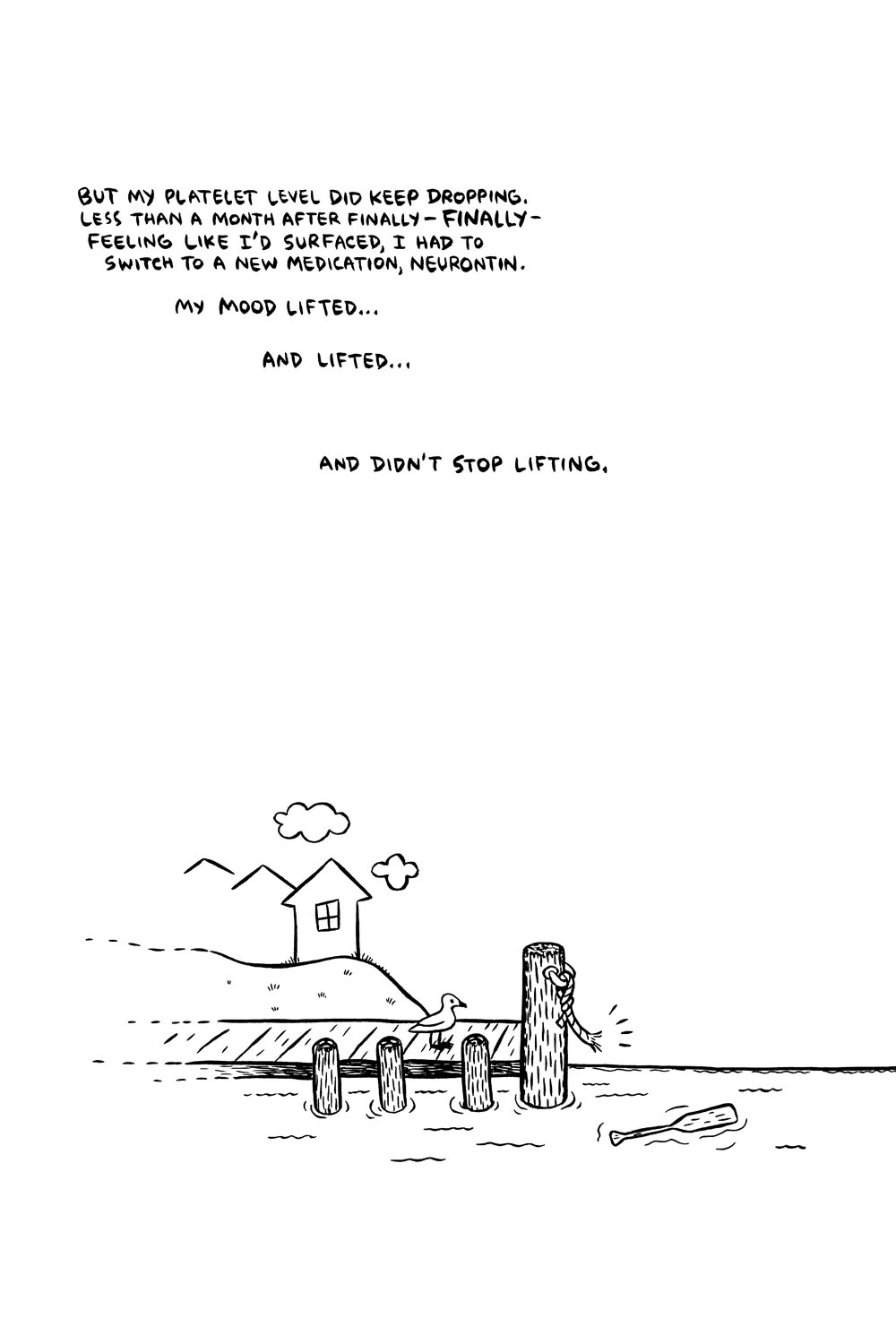
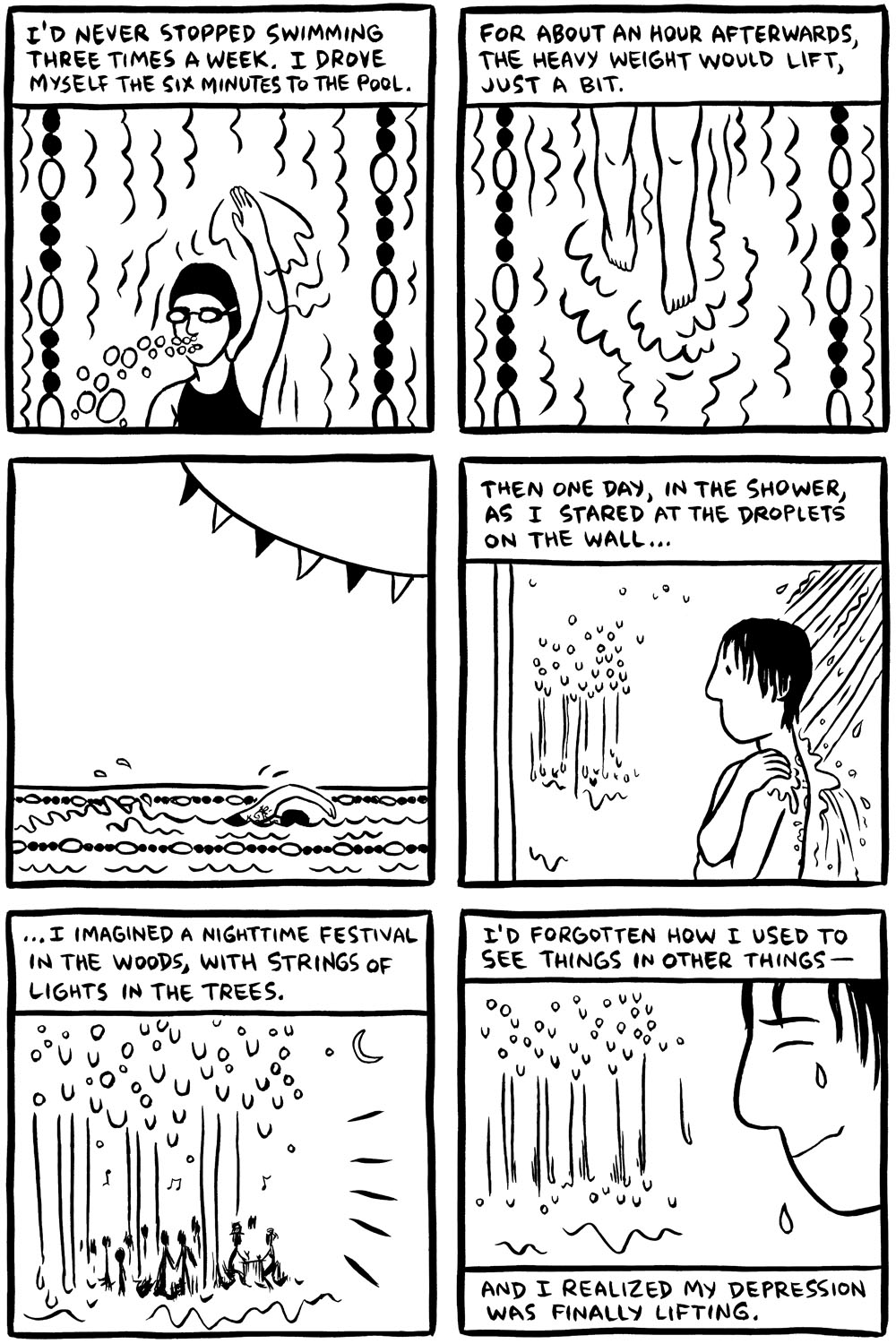
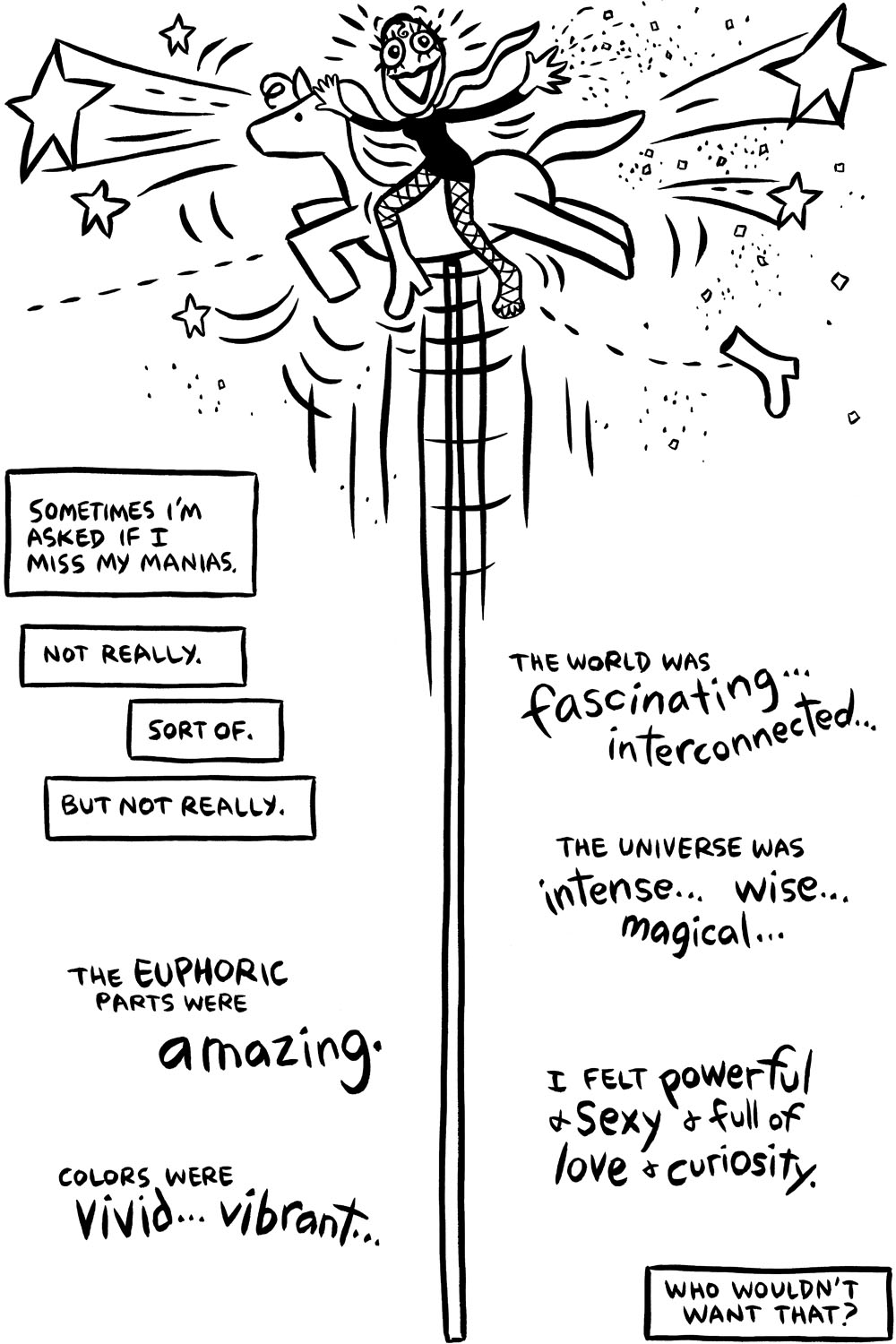
Artist Ellen Forney detailed her diagnosis with bipolar disorder in the graphic memoir Marbles: Mania, Depression, Michelangelo, and  Me. Forney previously shared her story with us, specifically detailing how her bipolar disorder has affected her creative work.

Below are some poignant pages from the memoir, the memoir, along with unique commentary into how these panels came to be and what they mean to Forney, in her own words.

bp1   bp2   bp3 bp4   bp5   bp6

Home.

IMG_2946IMG_2946

During the Holidays, everyone is heading home. What is a home? Is it simply where you live? The structure of walls, doors, and windows? Or is it more than that? Is it the place where your friends are? Is it, as they say, where the heart is? Is it the place where you feel happy, where your positive emotions reside with you? Is it familiar and well known, where you know all the places around and don’t feel like a stranger? Is it where your loved ones are close by? Yes, yes and yes. All yes. And I feel very sad and still am having a very difficult time having moved out of Buffalo.

Buffalo still feels like home, except I don’t have a home here. and after a year, Louisville still does not feel like home, and funnily enough I do have a home there. I have friends there, new friends. Friends I’ve made within the last year. Friends who are very welcoming and warm, but with whom I have no history. They haven’t known me since I was a preteen. They don’t know much about me. Maybe that’s better, haha! My friends in Buffalo are friends of my childhood days. There is such a connection here in Buffalo, I come back all the time and connect with my friends, but it is temporary, because in a week, in ten days, I leave again. It is a disjointed, disconnected, disassociated existence. I know full well I have a beautiful home in Louisville. I know I am fortunate and blessed that I have friends in Louisville and in Buffalo and that financially I can afford to visit Buffalo as I want to. Of course, Aral’s here. And sometimes I miss him terribly. I think I have no right to complain, everything is going well. Aral is doing so well in Law School, knock on wood! Our condo in Louisville has been totally renovated and is just beautiful. I am happy about that of course. I don’t know. Discontent seems to be the mood of the hour. Maybe tomorrow will be a better day.

Side Effects.

IMG_3658.JPG
We people with mental illnesses have to take the scariest drugs/meds. There are mood stabilizers out there (see Saphris, Latuda) whose side effect is sudden death!!! When I was put on those meds and I looked up their side effects and saw “sudden death” as one of them, I literally laughed out loud. And yet there it is!! Of course everyone has heard about the black box warning on antidepressants, which says they can cause suicidal thoughts and actions. Psychiatric medications have the most horrendous side effects!! There is diabetes and blindness for Seroquel, which I an currently on. I also get awful muscle cramps in my legs, so bad that they wake me up at night. Actually that’s pretty minor. My friend Andrew had bad tardive dyskinesia (uncontrollable movements,) so extreme that he doesn’t leave his home. Lithium can cause kidney failure. Doctors rarely want you to decrease your dose of meds if your mood is stable. However if the side effects are intolerable, then the dose has to be decreased. You have to walk the tight rope between least number of symptoms and least number of side effects, and hope you don’t fall off performing your little high wire act.