Bipolar Disorder Treatment: Brain Cells May Reveal Why Lithium Doesn’t Work For Everyone

There it is in a nutshell, folks: “Neurons are normally activated by a stimuli and respond. The cells we have from all six (bipolar) patients are much more sensitive in that you don’t need to activate them very strongly to see a response.”

Researchers took skin cells from 6 people with bipolar d/o. They made them turn into stem cells, which then differentiated into neurons. When they activated these neurons, they saw that neurons from people with bipolar d/o didn’t need a very strong stimulus to become activated. So our neurons can be activated by very weak stimuli. In other words we react much more strongly to things than people who don’t have bipolar d/o! Hunh! I think I already knew that! I do it all the time. I have extreme reactions to small stimuli! And now here is the reason, in black and white, our neurons fire at stimuli that wouldn’t make the neurons of people without bipolar d/o.

“Mitochondria — the energy producing powerhouse of the cell — were more active in the bipolar neurons.” This means that bipolar neurons also produce more, therefore have more energy.

“Cells from the patients who responded to lithium showed weakened excitability after growing in the lithium bath, while cells from patients who hadn’t been helped by the drug remained hyperexcitable. The findings didn’t explain why exactly lithium works in certain patients but not others, but it provided a great starting point for probing at what those differences are.”

So cells from people who respond to lithium show weakened excitability in response to lithium, whereas cells of people who don’t respond to lithium keep being hyperexcitable. Again a difference at the cellular level.

This is so amazing, because now for lithium resistant patients, they can test other medications to see which will decrease the hyperexcitability.

http://www.medicaldaily.com/bipolar-disorder-treatment-brain-cells-may-reveal-why-lithium-doesnt-work-everyone-359316

In one of the first studies to show how bipolar disorder affects the brain at a cellular level, researchers have discovered that the brains of people with the disorder are more sensitive to stimuli than those in people without it.

The findings, published in the journal Nature, also suggested the reason why some bipolar patients respond to treatment with lithium while others do not. “Researchers hadn’t all agreed that there was a cellular cause to bipolar disorder,” said Rusty Gage, a professor in Salk’s Laboratory of Genetics and senior author of the study, in a press release. “So our study is important validation that the cells of these patients really are different.”

Bipolar disorder, which affects over five million Americans, is characterized by severe mood swings between depression and elation. The disorder can be challenging to treat because when lithium doesn’t improve the mood swings, mental health professionals must piece together a unique treatment plan with antipsychotic drugs, antidepressants, and mood stabilizers. Oftentimes, though, these treatments only affect one of the mood extremes, not both.

For the study, Gage and his team recruited six bipolar patients and collected skin cell samples. They reprogrammed the cell samples into stem cells, then coaxed the stem cells into becoming neurons. These induced bipolar neurons were then compared to the normal neurons of healthy people.

“Neurons are normally activated by a stimuli and respond,” said Jerome Mertens, a postdoctoral research fellow and first author of the new paper. “The cells we have from all six patients are much more sensitive in that you don’t need to activate them very strongly to see a response.”

Mertens also noted that the mitochondria — the energy producing powerhouse of the cell — were more active in the bipolar neurons.

Three of the bipolar patients’ cells responded to lithium treatment, while the three others’ did not. The scientists tested how the cells reacted to growing in a liquid with lithium, and then remeasured how sensitive they were. Though all of the bipolar patients’ neurons had been more sensitive than healthy ones in the first test, this test showed they behaved differently after lithium exposure.

Cells from the patients who responded to lithium showed weakened excitability after growing in the lithium bath, while cells from patients who hadn’t been helped by the drug remained hyperexcitable. The findings didn’t explain why exactly lithium works in certain patients but not others, but it provided a great starting point for probing at what those differences are.

“Now that we have neurons that show differences in excitability, we can use them to screen for better drugs,” Mertens said.

For example, a new drug that reverses the hyperexcitability at a cellular level would likely be able to treat bipolar disorder in patients. The team plans to study the affected cells for longer periods to determine whether the hyperexcitability it measured is simply an initial manic phase or more long-lasting.

“After a few months, it’s possible that this hyperexcitability becomes too much for the cell to handle and it crashes into a less excitable state,” Gage said. “That could signal the shift between the depression and mania that patients experience.”

Source: Gage R, Mertens J, Yongsung K, Yu D, Pham S, Diffenderfer K, et al. Bipolar patients’ brain cells predict response to lithium. Nature. 2015.


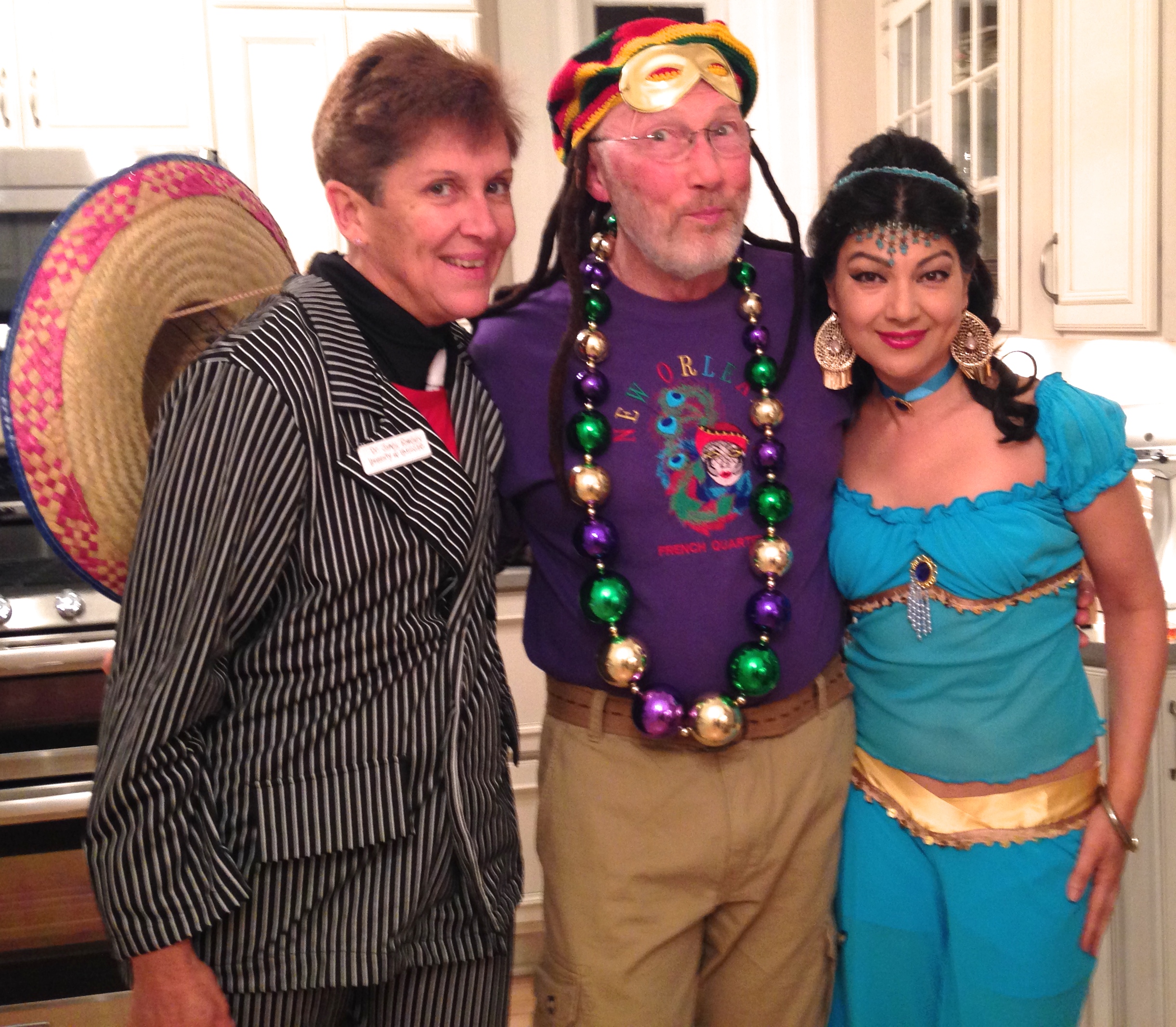
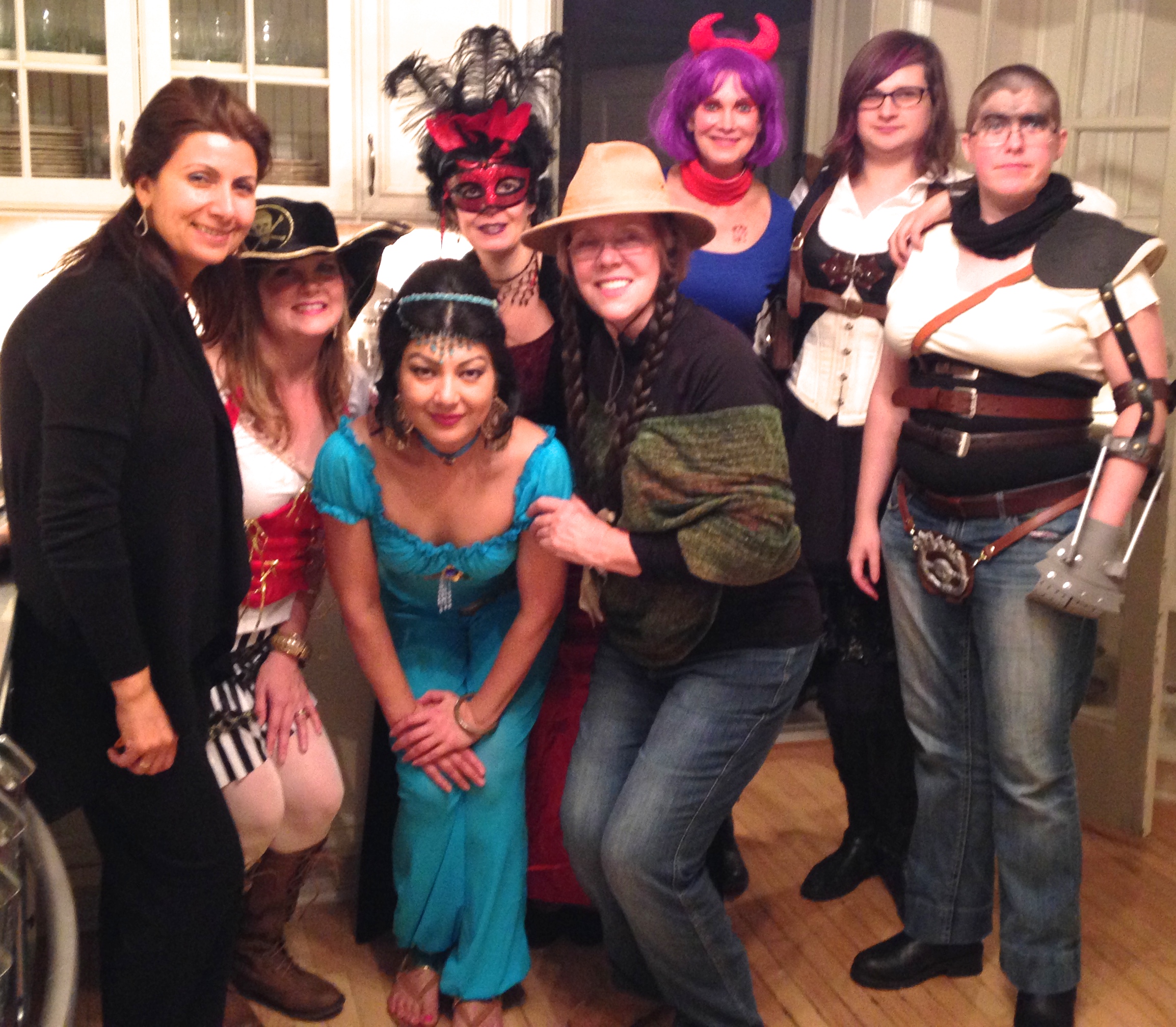
Happy Halloween form Jasmine and Jafar!

IMG_9548 IMG_9550 IMG_9553  IMG_9558

IMG_9560 IMG_9559 IMG_9561 IMG_9567 IMG_9572 IMG_9584 IMG_9594

Halloween is probably my favorite holiday. I love, love, love to dress up, and cook, and dance, all of which happen at a Halloween party. Already thinking about my costume for next year. Hahaha.

I have been nominated for the “REALLY NEAT BLOG AWARD”! :-)

real-neat-blog-award

Thank you to Gentle Kindness at http://gentlementalannie.com/ for nominating Bipolar1Blog for the Real Neat Blog Award.

The Rules Are

1. Put the award logo on your blog.

2. Answer 7 questions asked by the person who nominated you.

3. Thank the people who nominated you, linking to their blogs.

4. Nominate any number of bloggers you like, linking to their blogs.

5. Let them know you nominated them (by commenting on their blog etc.)

My answers to Gentle Kindness’s  questions:

1)Do you see yourself as introverted or extroverted?

Extroverted, usually, I am very outgoing. I can walk up to complete strangers and talk to them with ease. There is one caveat, when I have bad anxiety, then I turn into an introvert, all my sparkly friendliness disappears and I just want to hide in bed under a blanket. Thankfully, that doesn’t happen too often, although it happens more than I’d ever want it to.

2. What do you do for relaxation?

I exercise, as in lifting weights and Zumba. And I love to read and sometimes veg out in front of the TV, although my favorite shows are Masterpiece theatre and Masterpiece mystery, not vegging out kind of shows.

3. Do you have a favorite movie (or movies)?

One of my favorite movies is “Gone With the Wind”, another is “Pride and Prejudice”, and “Sense and Sensibility.” I loved Jurrasic World, especially the end! I know there are other movies I love, but I can’t think of them right now… Oh wait, “The Pink Panther” is hilarious, I know I know, I’m old….

4. Do you have any pets?

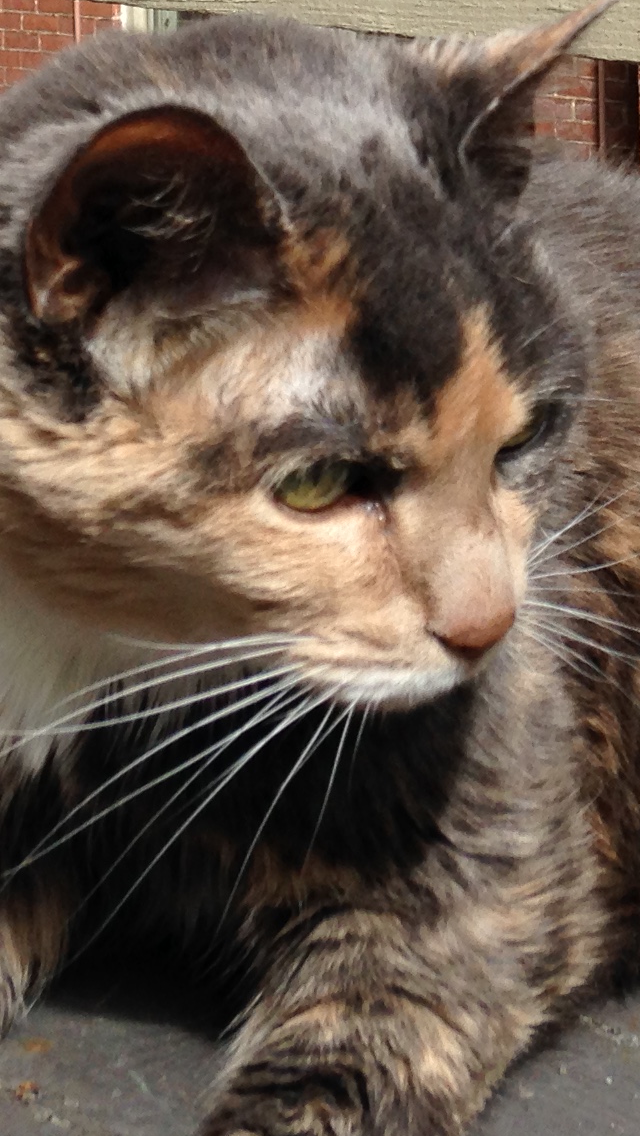
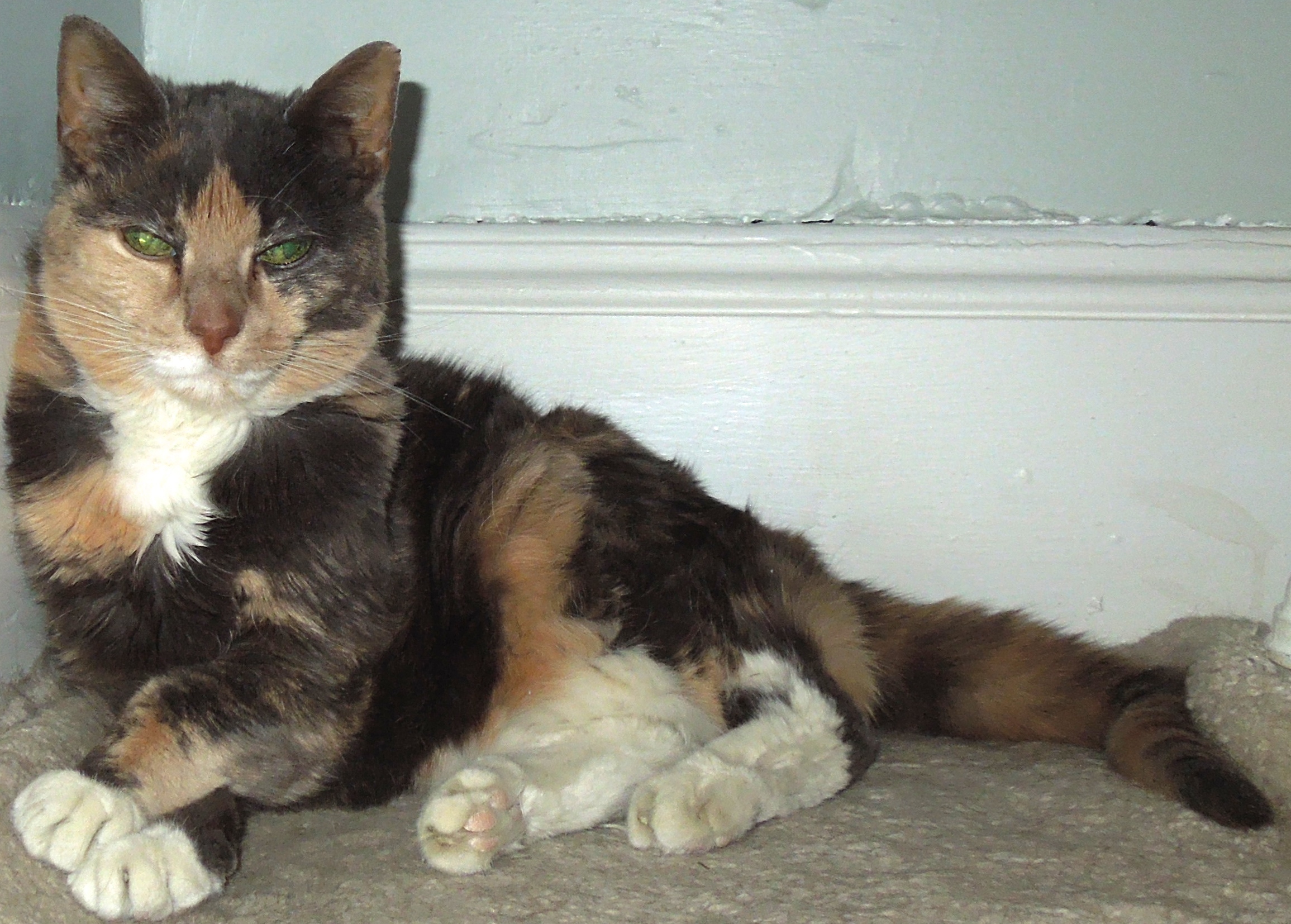
Yes, I have a gorgeous, beautiful, very beloved cat. She is 20 and a half years old, which translates to about a 95 tear old human! Pretty spectacular! She has grass green eyes and is very loving and gentle, although in her younger days she used to be a fierce warrior, bringing us moles, mice, and even rabbits as presents!

IMG_9020 DSCN5374

5. How long have you been blogging?

Since August of 2014, a little over a year.

6. How often do you read other blogs?

Every day!

7. Tell us something you want to share about yourself.

I act in plays 🙂 and I speak 4 languages, and I love to sing, and I love and adore my son 🙂

If I have to do this, so do you! My nominees:

  1. http://proudlybipolar.wordpress.com
  2. http://bipolarhappens.wordpress.com
  3. http://kittomalley.com/
  4. https://deanneworld.wordpress.com/
  5. http://theblahpolar.wordpress.com/

My Questions for you:

1. How long have you been blogging?

2. What made you start your blog?

3. Which post of yours has the most views?

4. Do you like cats or dogs?

5. Summer or winter?

6. If there is one thing, what would you like to change about your self?

7. How much time do you spend on your blog daily?

“Are Prions behind All Neurodegenerative Diseases?” WOW! The answer seems to be YES!

Prions are known to cause Creutzfeldt-Jakob disease (the human version of mad cow disease) and kuru (in Papua, New Guinea), and have been implicated in Alzheimer’s disease, Parkinson’s disease, Huntinton’s disease, and amyotrophic lateral sclerosis (ALS).

What if prions were also responsible for mental illness? Those are a kind of neurodegenerative disorder as well!!

http://www.scientificamerican.com/article/are-prions-behind-all-neurodegenerative-diseases/

Evidence mounts that chain reactions involving toxic proteins link Creutzfeldt–Jakob disease, Alzheimer’s, Parkinson’s and more

brain with Alzheimer's disease
Alzheimer’s disease (bottom) destroys neurons in many areas of the brain, including those responsible for memory.

In the human form of mad cow disease, called Creutzfeldt-Jakob, a person’s brain deteriorates—literally developing holes that cause rapidly progressing dementia. The condition is fatal within one year in 90 percent of cases. The culprits behind the disease are prions—misfolded proteins that can induce normal proteins around them to also misfold and accumulate. Scientists have known that these self-propagating, pathological proteins cause some rare brain disorders, such as kuru in Papua New Guinea. But growing evidence suggests that prions are at play in many, if not all, neurodegenerative disorders, including Alzheimer’s, Huntington’s and Parkinson’s, also marked by aggregations of malformed proteins.

Until recently, there was no evidence that the abnormal proteins found in people who suffer from these well-known diseases could be transmitted directly from person to person. The tenor of that discussion suddenly changed this September when newly published research in the journalNature provided the first hint such human-to-human transmission may be possible. (Scientific American is part of Springer Nature.)

For the study, John Collinge, a neurologist at University College London, and his colleagues conducted autopsies on eight patients who died between the ages of 36 and 51 from Creutzfeldt-Jakob. All the subjects had acquired the disease after treatment with growth hormone later found to be contaminated with prions. The surprise came when the researchers discovered that six of the brains also bore telltale signs of Alzheimer’s—in the form of clumps of beta-amyloid proteins, diagnostic for the disease—even though the patients should have been too young to exhibit such symptoms.

These observations suggest that the tainted hormone injections might have carried small amounts of beta-amyloid proteins that triggered the formation of more such proteins. Neither Alzheimer’s nor any known human prion diseases are contagious through direct contact. Yet human transmission of prion diseases has occurred through certain medical procedures and, in the case of kuru, cannibalism. The new study therefore raises the possibility that Alzheimer’s is a transmissible disease with an etiology akin to prion diseases.

The new finding is provocative, but experts advise caution in interpreting the results. For instance, neuroscientist John Trojanowski of the University of Pennsylvania points to the small size of the study and lack of direct evidence for transmission in support of causality. But if it is eventually shown that Alzheimer’s and other neurodegenerative diseases indeed share the same basic pathological pathway and mechanism, treatments could target one and all.

“Transmission may occur in only a small percentage of human cases,” says Claudio Soto, a professor of neurology at the University of Texas Health Science Center at Houston. “But the underlying principle is the most important thing that could lead to new opportunities for therapeutic interventions and diagnostics.” Investigators such as Soto and Collinge are working on ways to detect in body fluids the presence of small clumps of the transmissible proteins now thought to be involved in Alzheimer’s and other neurodegenerative diseases, which could represent a diagnostic advance.

Such detection will likely be difficult. A study published online in September in the journal Nature Neuroscience by Mathias Jucker of the University of Tübingen in Germany and his colleagues required extremely sensitive methods to find minuscule clumps of beta-amyloid proteins, referred to as seeds, in mice brains. These seeds appear to be able to regain pathological properties even after six months of lying dormant. These possibly prionlike proteins might therefore exist in the brain long before symptoms develop, at levels too low to be found by routine tests.

One potentially prionlike protein may cause several diseases, according to a study published this summer by Nobel laureate Stanley Prusiner, who discovered prions in the 1980s. Prusiner and his colleagues found that a “strain” of alpha-synuclein—the misfolded protein involved in Parkinson’s—can cause a similar but rare neurodegenerative disease, called multiple-system atrophy. Understanding how variants of these disease-causing proteins differ in shape and how the particular configuration influences their pathogenic nature is destined to become a focus of future research. “There’s evidence that both prions and beta-amyloid exist as different strains and have very different biological effects,” says Lary C. Walker of Emory University, who was involved in the Nature Neuroscience study. “I think understanding this will give us insight into what’s happening in disease.”

As the evidence increases, more scientists now suspect that prionlike processes probably underlie all neurodegenerative disorders. Prusiner expected the current change in thinking: in his 1997 Nobel Prize lecture, he predicted that the understanding of prion formation could “open new approaches to deciphering the causes of and to developing effective therapies for the more common neurodegenerative diseases, including Alzheimer’s disease, Parkinson’s disease, and amyotrophic lateral sclerosis (ALS).”

One Word: HOPE!

My friend Julie Fast, who has a blog called http://www.bipolarhappens.wordpress.com, she is a bipolar d/o coach and advocate and she offers treatment plans for BPD, and she has written many books on the subject as well! She is quite amazing! She asked me what is one word I would say to a person who was newly diagnosed with bipolar disorder and my answer is in the mini video 🙂

You rarely hear the words bipolar disorder and hope spoken together. Lets hope (!) that treatment, education and other services needed to live well with this awful illness make the use of bipolar disorder and hope in a single thought a common occurrence!

Just got interviewed for

Aralee and me
Just got interviewed by Debbie Olsen for www.healthmonitor.com She is compiling a guide to bipolar 1 disorder, for people who have it and for their caregivers. The guide I was interviewed for will provide information and strategies as to how to cope with this not so amazing illness. The guide will be distributed to 16,000 psychiatrists’ and primary care doctors’ offices across the country. It will be published by Health Monitor Network (www.healthmonitor.com), which publishes many consumer health guides and magazines.
Once it’s published, I will, of course, post it here.
PS
The picture is the reason I want to be well 🙂

New role for insulin: Studies tie the hormone to brain’s “pleasure” center

http://www.neuroscientistnews.com/research-news/new-role-insulin-studies-tie-hormone-brains-pleasure-center

Insulin, the hormone essential to all mammals for controlling blood sugar levels and a feeling of being full after eating, plays a much stronger role than previously known in regulating release of dopamine, a neurotransmitter that helps control the brain’s reward and pleasure centers, new studies by researchers at NYU Langone Medical Center show.
“We found that when there’s more insulin in the brain, there will be more dopamine released, not less,” says study senior investigator and NYU Langone neuroscientist Margaret Rice, PhD. Her team’s new findings from laboratory and behavioral studies with rodents are set to appear in the journal Nature Communications.

Rice says the experiments she and her colleagues conducted not only reaffirm that insulin helps trigger the reuptake of dopamine when insulin levels rise, but also are the first to show that the net effect is a rise in dopamine levels. The results may also be the first to demonstrate that insulin’s role in the dopamine pathway may affect and explain food choices.

In one set of experiments, Rice and her colleagues recorded a 20 percent to 55 percent increase in dopamine released in the striatal region of the rodent brain (where dopamine’s effects on the brain are felt and which governs the body’s response to getting a reward). The rise occurred along the same timeframe as the rise in insulin activity needed to process any food sugars the mice and rats ate. And this occurred despite the reabsorption, or reuptake, of dopamine that in other regions of the brain tells an animal that its appetite is satisfied.
Rice and study co-principal investigator Kenneth Carr, PhD, also conducted separate experiments with rats in which they found that animals fed low-calorie diets had a 10-fold greater sensitivity to increasing insulin levels in the brain (meaning that it took only a tenth of a rise in insulin levels as seen in rats on a normal diet to spur dopamine release). By contrast, rats on high-calorie diets lost all striatal-brain insulin responsiveness. In addition, rats offered a choice between a drink reward that was paired with either an insulin antibody injection to block hormone signaling or a mock placebo injection always favored the drink-injection combination that led to intact insulin signaling (and more dopamine).

“Our work establishes what we believe is a new role for insulin as part of the brain’s reward system and suggests that rodents, and presumably people, may choose to consume high-carb or low-fat meals that release more insulin – all to heighten dopamine release,” says Rice, a professor in the Department of Neurosurgery at NYU Langone and a member of its Neuroscience Institute.

Rice says this finding is important because chronically elevated insulin levels and lowered insulin sensitivity in the brain are closely tied to obesity and type II diabetes, both very prevalent in the United States.

Rice says the team plans further experiments on how insulin influences the mammalian brain’s control over food motivation and reward pathways, and whether changes in insulin sensitivity brought about by obesity can be reversed or even prevented.

“If our future experiments prove successful,” says Rice, “it could confirm our hypothesis that when people refer to an insulin-glucose rush, they may really be referring to a dopamine reward rush. And there are healthy ways to get that by making smart food choices.”

Note: Material may have been edited for length and content. For further information, please contact the cited source.

NYU Langone Medical Center press release

Publication

Rice ME et al. Insulin enhances striatal dopamine release by activating cholinergic interneurons and thereby signals reward. Nature Communications, Published October 27 2015. doi: 10.1038/ncomms9543

A Reminder That ‘Princess Leia’ Is An O.G. Mental Health Hero

image

http://m.huffpost.com/us/entry/562795dbe4b0bce347031e34?utm_hp_ref=gps-for-the-soul&ir=GPS+for+the+Soul&section=gps-for-the-soul

She’s been speaking out against stigma for years.
Carrie Fisher is a total badass.
The actress, who is reprising her role as the formidable Princess Leia in the next installment of the Star Wars franchise, has been speaking out on mental illness for more than 10 years — something that was almost unheard of in Hollywood at the time she began.
She’s given honest testimonies of the trials and triumphs of battling addiction and bipolar disorder, displaying a no-holds-barred attitude when it comes to discussing the realities of mental health conditions.
Since we’re going to be seeing a lot more of Fisher in the coming days (thanks, Disney!), we wanted to make sure to revere the original Princess Leia for her groundbreaking stance on mental health in the public eye. Below are few times Fisher stood up against stigma:
Carrie Fisher is a total badass.
The actress, who is reprising her role as the formidable Princess Leia in the next installment of the Star Wars franchise, has been speaking out on mental illness for more than 10 years — something that was almost unheard of in Hollywood at the time she began.
She’s given honest testimonies of the trials and triumphs of battling addiction and bipolar disorder, displaying a no-holds-barred attitude when it comes to discussing the realities of mental health conditions.
Since we’re going to be seeing a lot more of Fisher in the coming days (thanks, Disney!), we wanted to make sure to revere the original Princess Leia for her groundbreaking stance on mental health in the public eye. Below are few times Fisher stood up against stigma:
When she owned what was happening with her mental health

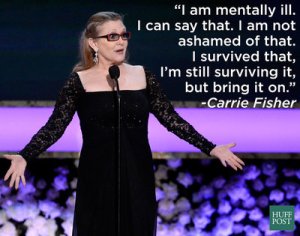
“I have a chemical imbalance that, in its most extreme state, will lead me to a mental hospital … I am mentally ill. I can say that. I am not ashamed of that. I survived that, I’m still surviving it, but bring it on.”
The time she had this great response to being called the “poster child” of bipolar disorder.
“Well, I am hoping to get the centerfold in Psychology Today. … Now, it seems every show I watch there’s always someone bipolar in it! It’s going through the vernacular like ‘May the force be with you’ did. But I define it, rather than it defining me.”
When she offered sound advice on pursuing dreams despite mental illness.
“Stay afraid, but do it anyway. What’s important is the action. You don’t have to wait to be confident. Just do it and eventually the confidence will follow.”
The time she got real about how it feels to go through manic episodes.
“You can’t stop. It’s very painful. It’s raw. You know, it’s rough … your bones burn … when you’re not busy talking and trying to drown it out.”
When she explained the only real way to manage a mental health condition.
“The only lesson for me, or for anybody, is that you have to get help. It’s not a neat illness. It doesn’t go away.”
And finally, when she shut down the shamers by explaining just how strong you have to be to deal with a mental health condition.
“One of the things that baffles me (and there are quite a few) is how there can be so much lingering stigma with regards to mental illness, specifically bipolar disorder. In my opinion, living with manic depression takes a tremendous amount of balls. … At times, being bipolar can be an all-consuming challenge, requiring a lot of stamina and even more courage, so if you’re living with this illness and functioning at all, it’s something to be proud of, not ashamed of.”
Nailed it.

I’m trying!

IMG_9029 IMG_9029

I have been stuck in the past forever, going over things that happened years ago, in fact I just posted a post about why I didn’t finish my PhD, and the comment left on that post by my good friend Barb led me to write this post.

Her comment: “My friend…..this is my new ideology…..maybe it will help you.
NO REGRETS!
I USE to feel guilty about EVERYTHING and repeat these scenes in my head over and over….now NO REGRETS…we are here right now on this planet to learn and become better humans….so if we did everything perfectly there would be nothing for us to learn…..therefore…NO REGRETS!”

She is so right. Regrets and rumination, they will keep you stuck in the past, and keep you in a depressed mood, they may not put you in a depression but they will definitely exacerbate it. The past is over, get over it! Can’t change it, have to move forward from here on out. No point in second guessing it, you can’t go back there and change anything.

Actually I have not been feeling well since I came back from Philadelphia. It was such a positive experience, my heart soared, and what goes up must come down… at least that is what happens if you have bipolar disorder. Sigh…

So not only do regrets keep you depressed, but they are the direct result of having gone into a depressive phase. So there, I admitted it, I have been in a depressed phase for the last few days. And it feels awful. I am tired, don’t want to do anything or go anywhere.

How do I pull myself out? Well, I’m having a Halloween party and the house isn’t going to decorate itself. Also heeding Barb’s advice will help, actually I think just reading her words made my brain produce some much needed neurotransmitters, in other words reading her comment made me feel better. That’s how simple it is. We get by with a little help from our friends!

No regrets! Onwards and upwards! I’m trying!