Bipolar1Blog

How Smartphone Apps Can Treat Bipolar Disorder and Schizophrenia

This smartphone app, called Priori, monitors your behavior. It can listen to your speech, if it starts to becomes very loud, rapid and shifting from topic to topic, as it does in mania, then after collecting all this data, in the future, the app will warn you and your doctor of an impending manic phase or depressive phase. Startup companies, universities, and research clinincs are developing apps that will “Through the discreet and continuous recording of social and physical behavior, these apps can detect changes in mental well-being, deliver micro-interventions when and where needed, and give patients a new awareness of their own illnesses. In the long run, they may even diminish the stigma attached to mental health disorders.”

This can be a wonderful aid to people such as me, who have bipolar d/o and are very aware and cognizant of this fact when they are in a normal phase. But when mania or, to a lesser degree, depression, hits, this awareness goes down and eventually disappears. That is the nature of mania and severe depression, your brain is not functioning well, so it cannot recognize you are sick. That is the ironic and heart breaking part of having mental illness, why people commit suicide… If there is a tool which can help you recognize the fact that you are getting ill when your own brain is unable to do it, then it will help so much in managing bipolar d/o, depression, even schizophrenia. This is one app that I would readily endorse, and I would definitely label it smart!

http://www.wired.com/2014/11/mental-health-apps/

“BRYAN TIMLIN ALWAYS carries an iPhone and an Android phone.

The 57-year-old is an app and graphic designer with a Michigan company called OptHub, but he doesn’t carry two phones for work. He carries the iPhone because that’s what he likes, and he carries the Android because it’s what he needs.

The Android phone monitors his behavior. Five years ago, Timlin was diagnosed with rapid-cycling bipolar disorder, a mental illness characterized by four or more manic or depressive episodes a year. Some episodes, he says, can last as long as eight weeks. “Being bipolar is like jumping out of an airplane knowing you don’t have a parachute on,” he says. “You know you’re going to be hurt, but the high is so euphoric that it’s worth the risk. You can deal with the consequences later.” With his Android phone, he hopes to deal with these moments in other ways.

At the moment, the app only collects data on his behavior. But the hope is that it eventually will use this information to warn Timlin and his doctor to an impending bipolar episode.The phone, provided by researchers at the University of Michigan, includes an app called Priori that runs constantly in the background, using the phone’s microphone to analyze his voice and track when he is, and isn’t, speaking. Mania is typically marked by speech that’s loud and rapid, often with erratic leaps from topic to topic. Longer pauses or breaks can indicate depression.

Priori is one of many efforts to address mental health through smartphone apps. Tools gestating within startups, academic institutions, and research clinics aim to help people manage everything from severe depression to bipolar disorder and schizophrenia. Through the discreet and continuous recording of social and physical behavior, these apps can detect changes in mental well-being, deliver micro-interventions when and where needed, and give patients a new awareness of their own illnesses. In the long run, they may even diminish the stigma attached to mental health disorders.

“The question isn’t whether or not this technology is going to be used in healthcare and monitoring individuals with psychiatric illnesses,” says University of Michigan psychiatrist Melvin McInnis, who developed Priori alongside computer scientists at the university’s College of Engineering. “The question is really: How?”

Most of these apps—which include CrossCheck, from Dartmouth Psychiatric Research Center, and Companion, from a Boston-based startup called Cogito—aren’t yet publicly available. But some projects have completed trials with small groups of patients, larger trials are underway, and preliminary results are encouraging. These apps are based on objective, contextual data, and they require little work on the part of patients.

But, certainly, there are many hurdles to overcome—most notably the potential for these tools to mislead patients and compromise their privacy. Finding ways of regulating such apps is as important as refining their technology.

“I think this will have a liberating effect, and will extend the boundaries of healthcare in a really enormous way,” says Dr. Jeffrey Lieberman, psychiatrist in chief at the New York-Presbyterian Hospital/Columbia University Medical Center. “But there are also ethical and legal principles that will need to be established.”
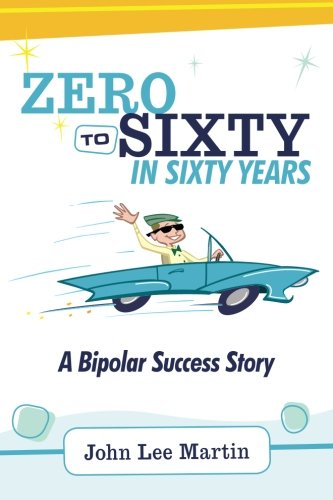

Zero to Sixty in Sixty Years: A Bipolar Success Story

41N1Tc6fWiL

A success story (below). John Martin attributes his success to exercise, a determined will, a supportive wife, God, and of course medication. Love to read success stories, gives me hope too! If Mr. Martin can do it, so can you and I. Seems the formula for success is always the same, a supportive person/people in your life, medication, exercise, belief in yourself and a higher power (!) and meditation and a support groups are beneficial as well. We were not born to live an easy, airy life, but we were born with amazing strength and determination to be able to thrive in spite of this illness. Cheers to us!

http://www.ahherald.com/columns-list/disabilities/19842-carolinian-with-bipolar-disorder-had-success

According to the National Institutes of Health, bipolar disorder (formerly manic-depressive illness) is a “brain disorder causing unusual shifts in mood, energy, activity levels, and the ability to carry out day-to-day tasks.” Affected people often have damaged relationships, poor school or occupational performance, and some commit suicide.

Sixty-seven year-old John Martin, who reads this column in the New Bern (NC) Sun Journal, has bipolar disorder 1, a form of the disorder in which the manic state dominates.

In a telephone interview, he said, “My symptoms started in 1966 at 18. I then made it through four years of the Navy, but boy did I struggle. I did my job, but (off work) sometimes stayed in bed for weeks due to depression. After the Navy, I put together two and a half good years at Oklahoma State, but the last semester I went crazy nuts.” After making up classes, he eventually graduated with a bachelor’s degree in engineering.

Over the years, Martin said his untreated manic periods often lasted two years each and included paranoia and delusions, after which he would have a couple “normal” months before slipping into depression. The cycle would then repeat. During manic periods, he had racing thoughts and was irritable, angry, paranoid, delusional, had insomnia, and, during one cycle, he drank heavily to dampen racing thoughts. To cope with insomnia, sometimes he boated on a local river in the middle of the night.

Martin said bipolar disorder often hurts family members most. For example, he and his wife married in 1983, separated several times before divorcing in 2004, and in 2008 re-united after his symptoms had improved considerably. He attributed his improved condition over the last decade to the Veteran’s Administration, exercise, a determined will, God, and a loving wife, Genevieve.

He said, “Over the years, I was in seven different (mental health) facilities in four different states.” To help others, Martin (using the name of John Lee Martin) chronicled his experiences in a 100-page book, Zero to Sixty in Sixty Years: A Bipolar Success Story.

He said, “Basically, I’ve outmanaged my symptoms. I read a lot about the disorder and got decent medication. I was always trying to get better. At one point, I was as bad off as anyone with bipolar disorder, but with some hard work, here I am. You’d be amazed how functional I am now (versus 2004).”

A Walk 

Went for a lovely walk at sunset. Still light enough to take pictures, but the sky was reddening in the west. Walked with my husband, he likes to walk in the neighborhood and I like to walk in the park, opposites even in this. Haha. We compromised, walked in the neighborhood to the park and walked home through the park. Feeling a bit low, not too low, just a bit. Just a bit slow. Oh well, nothing catastrophic. I’ll get over it. Exercise will help, have my FaceTime personal trainer session (my trainer is in California, I’m in Kentucky.) It works, he just sits at a Starbuck’s and drinks coffee while I exercise. Good for times when I have trouble motivating myself. The pics are from my walk. Nothing earth shattering and nothing catastrophic, I’d say that’s a good day! Does this even qualify as a Bipolar1Blog post? Hmmmm…


eCounseling

Screen Shot 2015-04-10 at 12.20.26 AM

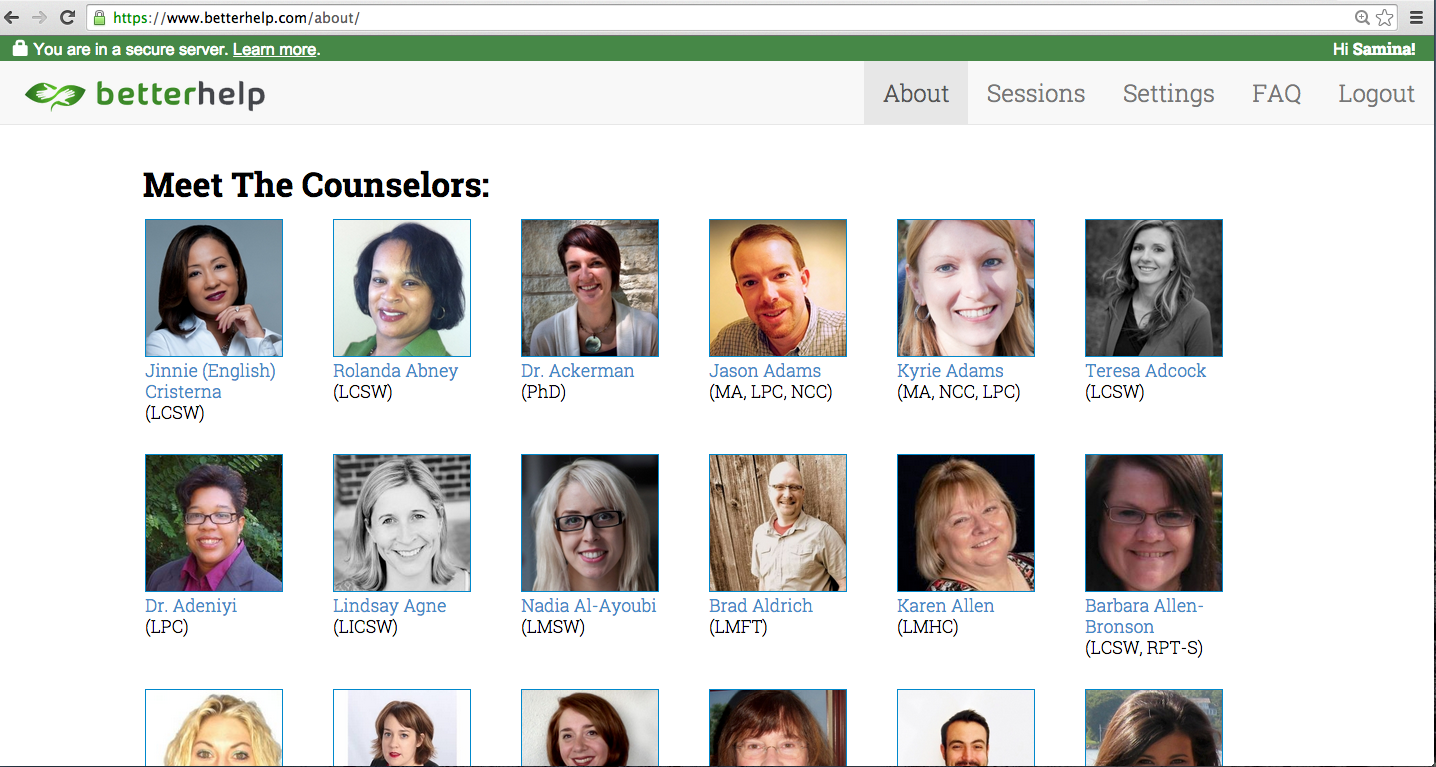
I found a very good ecounselor via this website: https://www.betterhelp.com/ She was insightful, easily understood what I was telling her, and reframed many of the things I told her as an obsessive worrier, and made positives out of my negative thinking. I am so glad I set up my account and was fortunate enough to have been matched with this smart, helpful, insightful lady.

I actually found this website advertised on, what else, Facebook! I asked my psychiatrist if ecouseling was a legitimate and helpful thing. He said that in studies that were done to determine exactly that, no difference was found between ecouseling and conventional (you go to the counselor’s office) counseling. So I decided to try it and I am very, very happy that I did.

I made an account with all my info. The first week is free as a tryout. Then you get charged $35/month. This includes one hour long phone session (additional phone sessions are $20/hour) and unlimited texting with the counselor who has been matched with you.They have literally 100’s of counselors and if you don’t like the one with whom you were matched, you can request a change.

They matched mine to me very well. Really happy that I did this and I will be setting up more appointments with her, for sure.

Words

IMG_1318

Some words that have the power to change your thinking, the power to pull you up by your bootstraps, the power to pull you out of the seemingly bottomless hole that is depression and anxiety:

RESILIENCE, that is what we have, what we are to recover over and over again from black depressions, from the mean reds. We get up over and over again and brush ourselves off and go on! How resilient is our spirit, how resilient are we! I marvel at this ability.

PLASTICITY, this is what our brains do in learning or after any experience. An experience leaves a mark on our brains, good or bad. But this is not permanent. Our brains have the ability to form new connections and lose old ones. This happens between neurons. Once it was thought that an adult brain is like a structure made of stone. There is nothing further from the truth, the brain is undergoing changes all the time, whether it be in repair, or neuronal cell growth or growth of axons and dendrites. This all makes our brain very adaptable and repairable and changeable! So if we have undergone bad experiences, our brain can recover from those through plasticity!

HOPE, well what can I say about this word? This is the little, four letter word my world rests on. It is so powerful that even in the darkest of circumstances, just say it and things will get brighter. Your heart will get lighter. You will breathe easier. Take it away and , oh no I can’t even fathom taking it away. Always have hope, as long as you live and breathe!

STRENGTH, we with mental illnesses all have to be strong. We go through hell so many times that the word hell sort of loses its meaning. My muscles are getting stronger because I have a FaceTime personal trainer and that is just fab. But my mind has to be strong, my heart has to be strong, my will has to strong to withstand this sick disease. We all do. And we all are, that is why we are still here. We are strong for our children, for our friends and loved ones and we are strong for ourselves!

OVERCOME, when I am in a very depressed state or manicky phase, I do have lucid moments when I tell myself that I will overcome this too, just like I have been doing since 1985, yes I will overcome.

and a sentence: THIS TOO SHALL PASS, everything passes, good, bad, indifferent things pass. So of course whatever phase you’re in, it will pass.

Take heart my friends and stand tall and strong, easier times are ahead. I am sure of it!

Still Standing

t 6 t 1 t 2 t3t 4 t 5

This tree, this beautiful, strong, stalwart, faithful tree, was struck by a powerful flash of lightning. We were in the back of our condo and the sound was so loud, so loud that I swear I’ve never heard such a loud sound before. The tree is about 20 ft. away from our building. Its bark was shattered, splintered and thrown all over the street as well as into our front yard! Yet it stands! This amazing tree still stands. I am in awe of it. I gather strength from it. As you may have noticed, I haven’t been posting too much lately… well… I haven’t been feeling good. But since seeing this tree withstand I don’t know how many joules of electricity with which the lightning struck it, I feel inspired and strengthened. If the tree could do it, and it is a living being, then so can I! If the tree can take a hit and still keep standing, so can I! I love trees. You may even see me giving a tree a hug if you are walking in Cherokee Park. I am so glad that this tree is still here and I hope the wood wide web is giving it the nutrients it needs to heal. Yes there really is a wood wide web and yes the trees in it really do send nutrients to weak trees, here is a link if you’re interested in the wood wide web: http://www.bbc.com/earth/story/20141111-plants-have-a-hidden-internet

Ain’t the world grand!

Well then, here’s a poem I wrote for this heroic tree:

The Tree

It was a flash, it was a powerful flash

You were struck, and it could have undone you

But you are strong. stronger than what life throws at you

You absorbed it, stood strong and grounded

I look at at you and marvel, how did you do it

But there is no “how”, there is only standing tall and proud

My best wishes for this amazing tree and may it live a long and healthy life.

Clint Malarchuk Interview on Soul Luminous Radio

http://www.soul-luminous.com/

Another BRILLIANT interview by Clint Malarchuk, he talks about his injury, his OCD, PTSD, suicide attempts, depression, stigma, and ultimately his SURVIVAL and his thriving and living a great life now! I would listen if I were you 😉

And here is the link to by his book “A Matter of Inches.” http://www.amazon.com/Matter-Inches-Survived-Crease-Beyond/dp/1629370495

Great Tips for Reducing Anxiety from Healthline.com

IMG_2726

http://www.healthline.com/health/bipolar-disorder/guide-stress-anxiety

Since I posted about anxiety, here’s an article which tells you how to lower anxiety levels. Great tips to use when anxiety is troubling you. The link to the article is above and an excerpt from the article is below. I think my favorite is the first one, to invoke the relaxation response when your flight or flight is activated.

Here are some ways to help prevent stress and anxiety in your life:

Use ‘the Relaxation Response’

Dr. Jason Evan Mihalko, a certified psychologist working out of Harvard Square in Cambridge, Mass., said that stress is one of the most manageable things of all.

“Many people know about the fight or flight response—a biological response to stress where our bodies become prepared to either run to safety or fight. What many people don’t know is that we have also designed an antidote to fight or flight: the relaxation response,” he said. “Through simple deep breathing exercises, visualizing a pleasant scene, or soothing ourselves through the five senses, we can induce this relaxation response.”

When we’re able to relax, many things happen, Dr. Mihalko said, including decreased metabolism, slower heartbeat, relaxed muscles, slowed breathing, lowered blood pressure, increased levels of nitiric oxide (an important chemical compound in protecting vital organs and Science’s Molecule of the Year in 1992), and our general sense of well-being and calm increases.

Prioritize

It’s human to feel overwhelmed when there are a million things to do at once—work, school, kids, marriage, friends, family, etc. can all lead to worry. Coupled with the unpredictable nature of bipolar disorder, anxiety can create havoc inside your mind.

The key to preventing stress and anxiety build up—with or without bipolar disorder—is determining which is the most important and what can be done first. We often lose focus of why we’re doing so many things, so concentrating on what’s most important can be an easy way to eliminate clutter in our lives.

It’s important that your therapy for bipolar disorder remains a main priority. You may think you don’t have time for it, but know that if you skip on treatment, you’re only making things worse for yourself.

Lists are a great way to keep track of what you should be doing and what’s the most important thing to do first. Lists are a great way of tackling some of the quick and easy things first, allowing you to cross tasks off your list and gaining a sense of accomplishment.

Here’s an example of what a list might look like:

1. Take medications
2. Email boss about vacation
3. Pick up dry cleaning
4. Meet Shirley for lunch
5. Buy groceries

Limit Yourself

Even super heroes can’t be everywhere at once. You can spend all day, every day attempting to do it all, but that won’t leave you with enough time or energy to stop and enjoy life. Plus, the stress generated by attempting to do it all could only aggravate your mood.

You may want to work full-time, prepare a good dinner every night, volunteer with a local charity, organize events, and do more, but there’s a good chance you’ll only stress yourself out, lose sleep, lose your temper, and create more problems for yourself.

Instead of trying to do everything, focus your energy and attention on doing a few things well. If you can afford it, hire some help around the house to do a little cleaning and the laundry. If you can’t afford it, ask everyone to help pitch in.

Think of your tasks as things you are buying with your time. You can try to buy a 120-bedroom house, but they’re all going to get dirty and broken down without regular maintenance. Besides, you don’t need all that space. You can afford (with your time) a nice two-bedroom house and make it the best one you’ve ever seen. In essence, don’t buy more than you can maintain.

Break Away

No matter your responsibilities, you need time for yourself. You need time to be able to collect your head, think things through, or even let your mind wander. This is especially important if you’re feeling manic and can’t concentrate.

The occasional weekend getaway can do wonders, but even being left alone for a few minutes when you get home can clear your mind. Let people know you need a moment to unwind and clear your head before getting down to business.

Some easy ways to sneak a moment to yourself is going for a walk, reading in a quiet place, going to the park, or just laying down in bed for a minute. No matter how you want to escape, make sure you can when things get to be too much.

Find Support

Friends and family can be the best listeners. They can be your greatest ally against welling stress and anxiety when coupled with bipolar disorder. They also provide a more objective insight into your problems and can help you spot stressful patterns. If all else fails, they can help you get a good laugh in when you need it most.

Therapists are trained listeners, and there’s no shame in seeing someone to help you talk through your problems. There are numerous types of therapy available, and the right one can help you express your emotions in a constructive way.

Take Care of Yourself

Mental health is directly related to physical health. Eating a balanced diet—void of sugary, deep fried, high fat, high sodium, and other harmful foods—can help your body get in shape to handle stress better. If your body is already under stress from harmful substances, it won’t be as ready to handle outside stress as well.

Be wary of tobacco, alcohol, and drugs as a way to relax. They may take the edge off for the time being, but they’ll only create more health problems down the road.

Learn which foods to eat (and avoid) to help your body deal with the stress of anxiety.

Sleep

Sleep is one of the first things to suffer under a busy, stressful schedule, but it should be the first thing that gets attention. We often skip sleep to tackle our to-do lists, but by doing that we’re robbing our body of rest, which leaves it more vulnerable to stress, anxiety, and illness.

Exercise

If your mind won’t rest when it’s time to get some sleep, you should incorporate some exercise into your day. Even if you’re snoring the second your head hits the pillow, exercise is a vital way to not only handle stress, but to keep your body in tune to accept any challenge.

Hitting the gym or going for a run after work is a great way to beat stress, as well as give you time to think. Start incorporating it into your routine and see how quickly you can become addicted to good habits.

Plan

There will always be unforeseen circumstances, but when you plan in advance, you’ll know what’s next and how to prepare for it. A day planner, smart phone, or email reminders are great ways to keep yourself accountable while giving your mind a second to concentrate on something other than what you’re supposed to be doing next.

About Anxiety

Aral's closet Aral's closet

Something I realized about anxiety, it’s the god of small things. When we think about each little, minute detail, and of course in our anxious state, we invariably think every single thing is going to result in disaster, that is anxiety. It is fueled by an anxious mind, reinforced by our anxious, negative thoughts, and so goes the circle, round and round. What I have found gets you out of this anxious spiral is to look at the bigger picture, and then we realize these minute, little details don’t really matter. They are just what our mind is clinging to in our anxious state and it’s a snowball effect. In fact, in the big picture, everything is fine and will be fine. The big picture pulls us out of this anxiety ridden, panic stricken state. For example, my anxiety is ALL about my son. We’ve been through very difficult times with him, as we have generally because of my illness, and the resulting circumstances in my (nuclear) family. But we all made it, my little family is still intact. Of course my son has flown the coop now and I miss him terribly. That’s why I am in Buffalo every month 🙂 He is doing very well, knock on wood. Of course, as is sometimes the case, he is messy, and of course my anxious mind takes it to: He is dysfunctional, that means he is mentally ill (he is not) and all kinds of disasters are going to happen because of this. It doesn’t mean anything of the sort. It just means he is messy, and if that is the worst of it then it’s really nothing to worry about! That’s just one example, and now that I have written it down, I know why it is called catastrophizing!!! I do this with hundreds of things everyday. But if I look at the bigger picture, all’s well.

All’s well.