Armor not shackles!

ARMOR

Just saw this graphic, and I absolutely love it! It resonated with me so much. I wanted to share it with all my blog readers and friends. As a person with bipolar disorder, with a family history of bipolar disorder, tragedy has certainly touched my life. My grandmother lost her brother at a young age, most likely to bipolar disorder, and I lost my precious, beloved brother Farooq, he was only 26 years old. So, to see this graphic put into clear words something that I was always (subconsciously) trying to do, it is helpful and inspiring, and emotional all at the same time. Imagine, all your tragedies are now your armor, they strengthen you by having gone through them, they do not shackle you to weakness.

This is so empowering for me that I really wanted to share it, hopefully all who see it will get the same empowering message as I did. Love and peace.

Shame-less

IMG_6731 IMG_6869 - Version 2

I posted these pictures in a status on FB entitled “Covered up or not, My Choice!”

A response from a religious muslim person was that this is shameful.

Shame! In this context, shame is just a construct made to control women. To keep them covered up and at home, bearing children and listening to men.

Well I have been an atheist since my early twenties, so this shame thing slides off me like water off a duck’s back 🙂

What is shameful about the human body anyway? NOTHING! The Greeks idealized and mythologized it, the Romans alternately debauched and disciplined it, The Hindus worshipped it, and the Buddhists asceticized it. There is no shame in any of these philosophies. I personally think the human body is a glorious creation of evolution, almost perfect in its form and function of homeostasis, growth, repair and even decline through entropy to make room for others. The human brain, which is part of the human body, is an absolutely genius computer produced by millions of years of evolution. This brain can gather information through our sensory organs and produce an output in milliseconds. Self awareness comes to us via the human brain. And it is also with this brain we decide to make the decision to view the human body, nature’s “miraculous” creation as shameful or glorious. I choose the latter!

Trips

IMG_6655  IMG_6731 IMG_6697 DSCN6196  DSCN6290 IMG_6846 DSCN6345 DSCN6067  DSCN6071 DSCN6036  DSCN6040 DSCN6033

Trips are so much fun, no I don’t mean the hallucinatory ones, I mean the real ones. Real life is suspended, you are exploring new sights, eating new food, your interest is peaked, perhaps you are on a beach, swimming in the sea, the therapeutic sea. Thalassotherapy. On this trip to Turkey, I did have some anxiety and panic the first day I was there, which was highly unusual for me, it did subside very quickly and then I had a wonderful time. No responsibilities, no deadlines, just fun, food, family and friends. Getting dressed up, going out to dinner, a wedding reception, sightseeing. Freedom! Freedom from anxiety, from depression. Sometimes a feeling of wellbeing for no reason at all. Can I keep it all now that I’m home? I’m going to try. Obviously life is not suspended anymore, have play rehearsals every night for 3-4 hours to get ready for our July 16 opening night! Appointments, meetings, sessions, all waiting for me. Oh and unpacking, my least favorite activity in the world. But I suppose if I didn’t unpack, I wouldn’t be able to pack for my next trip, which I am planning even as I write this lol. Anyway, here are some pictures, memories, from my trip.

Drive?

IMG_6892

People who are complacent and happy and fulfilled are not the ones who accomplish great things. It is people who are driven, who have a “fire in their belly”. who are dissatisfied with their life, the state of the world, who feel this urge, hear the siren’s call, these are the people who do something great in the world.

I have been thinking, which am I? Certainly not the complacent kind. I am anxious almost all the time, yet I also have moments of blissful peace. Is it enough to be anxious? No. It has to be a directed anxiety, a goal oriented anxiety, the anxiety one feels has to be directed into achieving something. Just like energy, energy exists everywhere, but only when it is directed into an electrical cable can it light up the world.

I think education was to have taught me this directing capability, but I must have been sick at home the day they taught that lesson.

Yet also, another voice speaks to me (no not really, haha, it’s just my thoughts) and it says: Why do you have to strive and wish for greatness, isn’t it enough to just be you? A kind and loving and compassionate you, who can affect people’s and little animals’ lives everyday, not in some grand way, but in a small way? There is freedom in this. I can be kind, loving, compassionate every day without being tethered to an outside goal. I can be me without the need for fanfare and external responsibilities.

I used to think my epitaph should read “She tried as much as she could!” I’ve changed my mind about that, now I think it should read “She was loving, kind and compassionate.” Hopefully that is all true of me so it can be put on my tombstone. Actually I am not going to have a tombstone, I’m going to be cremated.

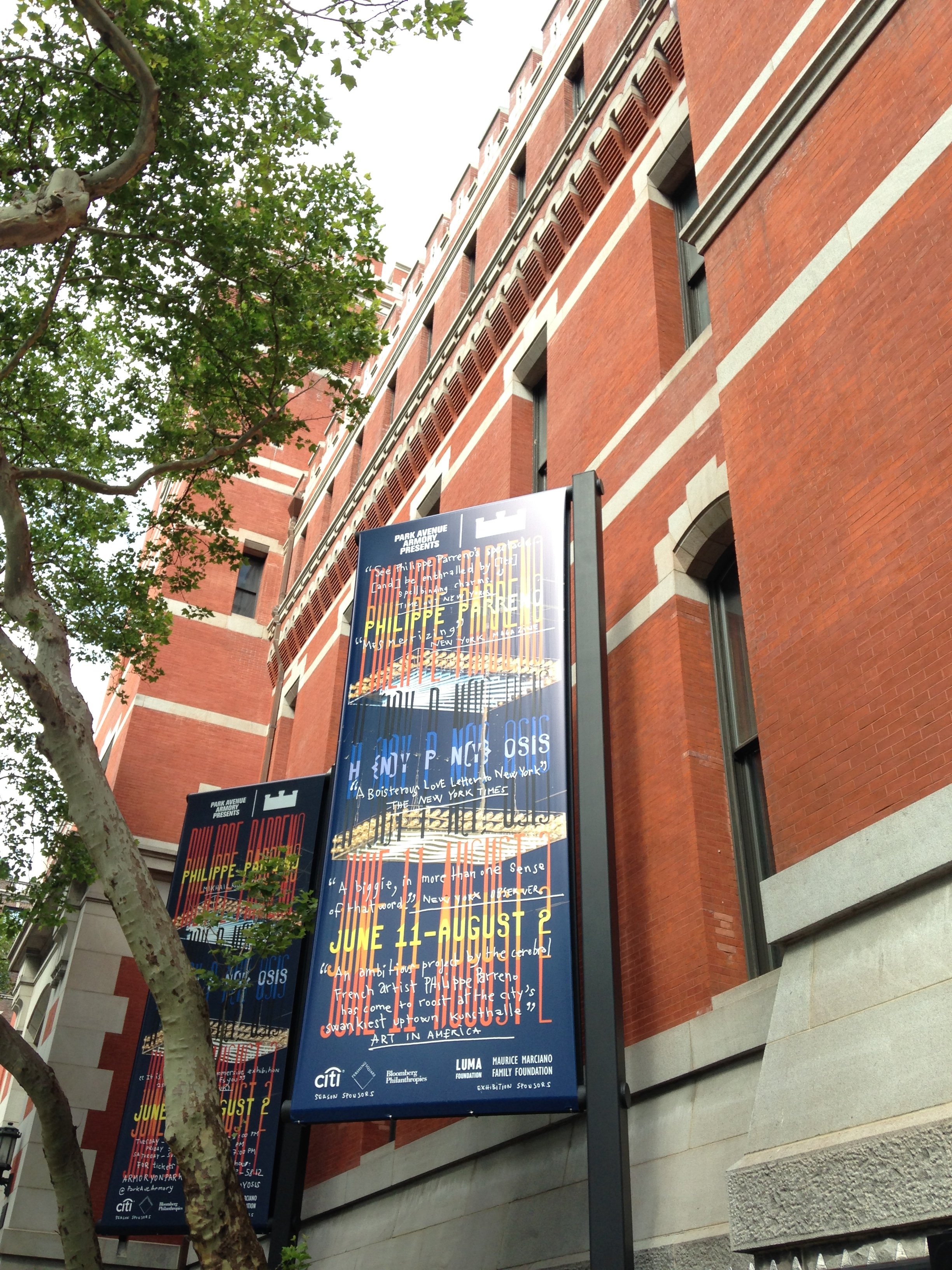
Anyway, this tug of war between living a small quiet life and the wish to accomplish something great, something stellar, goes on in my head sometimes; especially after I see something great like “H{N)Y P N (Y} OSIS.” Something like a one woman show with acting, singing, reading… I don’t know, who knows, we’ll see. I wonder how I can turn something like that into a reality? Certainly not by blogging about it, but by doing it.

Ok, gotta go and rehearse my song and lines for my upcoming play “Buster, The Musical!” Community theatre it is, but still something that entertains people and that screams: Look at me, here I am! Validation. And entertainment. At least in a small way.

H {N)Y P N(Y} OSIS

IMG_6884 IMG_6886  IMG_6888  IMG_6891 DSCN6374 DSCN6375

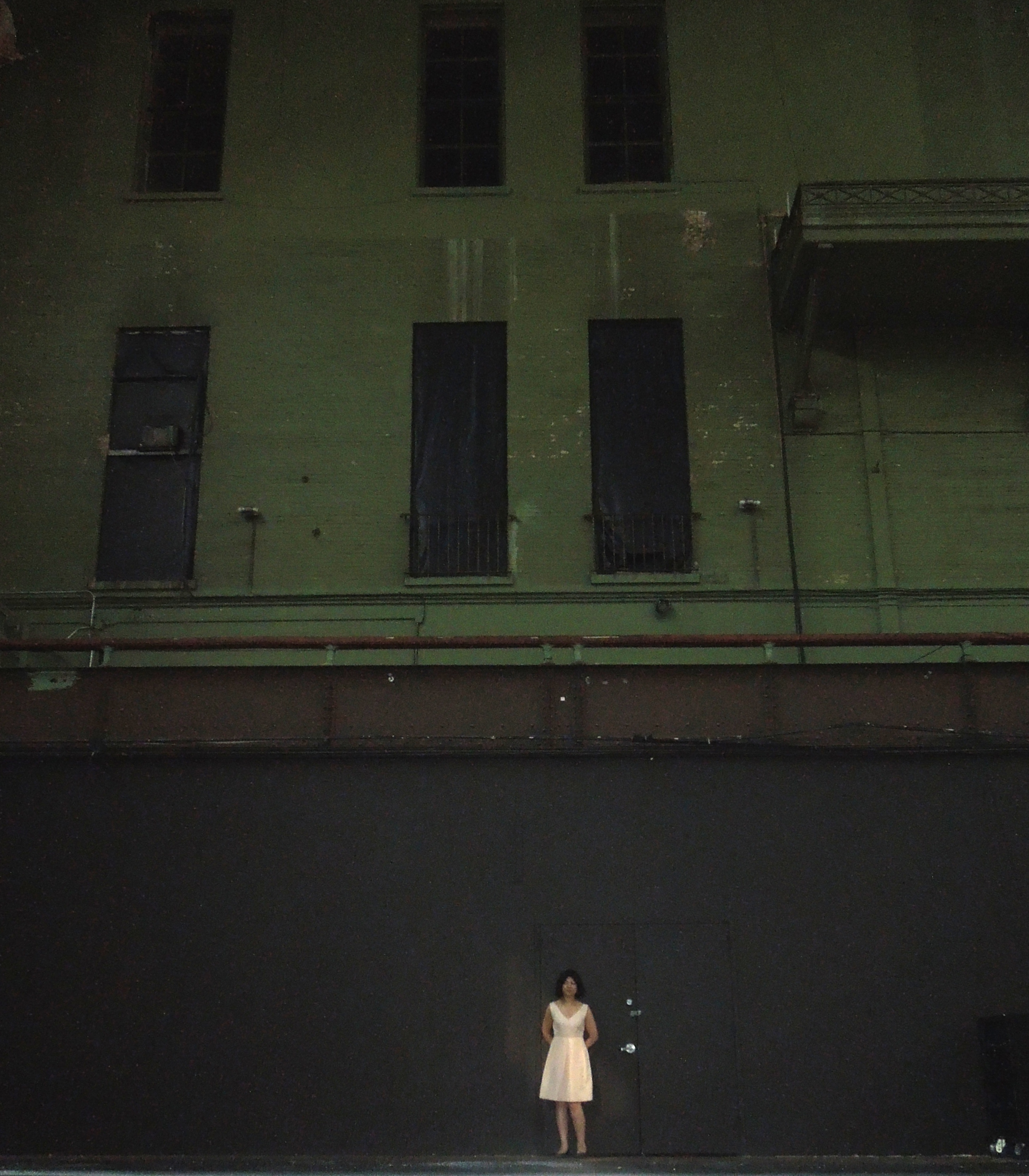
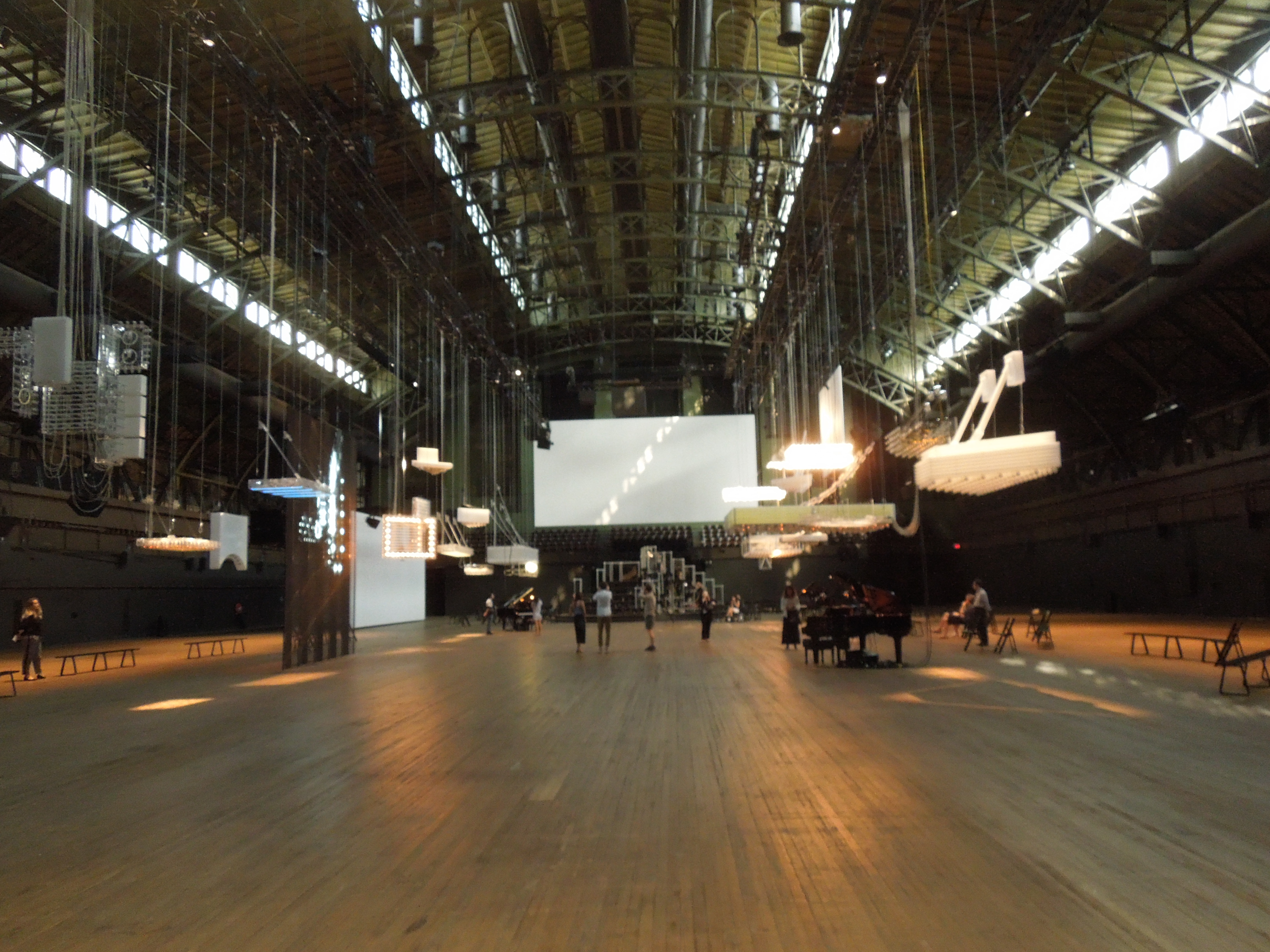
I went to see “H {N)Y P N(Y} OSIS”, (http://www.armoryonpark.org/programs_events/detail/philippe_parreno) Phlippe Parreno’s show at the Park Avenue Armory (an enormous venue) which my brother Asad Raza produced. It made me think, think, think. It plucked at many of the chords and strings in my heart. There were lights, as in marquee lights, there was piano music. There were films projected onto giant screens. One of them was of a train going through a green landscape, with people standing by and watching it go. They had 1950’s clothes on, there were 1950’s cars standing around. People were grouped into young and old, african americans, asians, mixed groups. Was it showing us that we missed the train on race relations, the environment? It had a post apocalyptic feel to me. Another film was the inside of an apartment, again with a 1950’s look, with a narrator (a sweet female voice) telling us about the apartment and its furnishings, etc. Also, in this film, a real ink fountain pen was writing things in a notebook, and then scribbling them out and then writing everything twice so it looked like the writing was three dimensional. The person attached to the hand that was doing the writing, was he descending into madness? Something strange was going on. Finally the camera pulled back, farther and farther to show that the apartment was a set, surrounded by a film crew and all the technology and equipment needed to make a film. Also a child came out and started talking. I happened to catch her speaking about Heidegger, “Thus we ask now: even if the old rootedness is being lost in this age, may not a new ground and foundation be granted again to man, a foundation and ground out of which man’s nature and all his works can flourish in a new way even in the atomic age?” (the same quote I heard in the Tate Modern show a few years ago. This made me think of continuity, how things assimilate and relate in our lives!) It also made me think about what is art? How big does something have to be in order to matter? Should I be doing something big with my life? Big as in a show in a giant hall of an armory! Am I capable of doing something that big? Obviously, you don’t start that big, you work up to it. Am I able to put aside my fear and create something, say something meaningful? Am I able to put aside my “laziness” to do something on a grand scale? Am I able to commit to something and then see it through? Do I need to do something? Am I not enough just as I am? Do I need to use my voice and speak out for something, against something? I have a brain, that despite bipolar disorder, works pretty well (lol), is it incumbent on me to use it for the greater good? Isn’t it enough just to be a pretty face, hahaha.
My brother, Asad, (https://www.google.com/webhp?sourceid=chrome-instant&ion=1&espv=2&ie=UTF-8#q=asad%20raza%20art) has done all these things. He has steadily been making a name for himself. He started with Tino Sehgal​ a few years ago, producing his shows, at the Guggenheim (the whole gallery was theirs for weeks!) at the Tate Modern in London, in Rio, in Athens, in Paris, and many other places. He wrote a book with Hans Ulrich Obrist called “Ways of Curating.”
He has steadily, and without much fanfare, been working his butt off, and creating a name for himself in the art world, not to mention a stellar and extensive resume. I am so proud of him, his hard work and dedication, and vision. He is my baby brother and I couldn’t be more proud of him and his accomplishments or love him more! Now to learn from all that he’s done and do something myself. Believe in myself and commit to something bigger than myself and then like Nike, Just Do It! Hmmmm, lets see what life has in store for me, or maybe what I have in store for life.

Istanbul

DSCN6033 DSCN6036DSCN6040 DSCN6063 DSCN6069   DSCN6067DSCN6070 DSCN6105 DSCN6118 DSCN6027

In Istanbul. What an amazing city, every time I come here I am still amazed, at its size, modernity, ancient history, architecture and scenery, not to mention the food.

The first day, had anxiety attacks, almost to the point of panic. Ah yes, you can leave the place behind, but you cannot leave your brain behind. powered through them though, after spending all morning sobbing in my room, went about the rest of the day with aplomb, hahaha.

Today, I feel fine. Maybe it was the time change that brought on the anxiety. Still have many periods of dizziness, that’s how I manifest jet lag. oh and I have a sinus infection, rare for me, and luckily I was able to get Zithromax without a prescription, don’t need one in Turkey. So, I am hoping that my sinus headache will be gone in a day or two.

On the positive side, Istanbul is beautiful, the Bosphorus is a deep blue, the weather is perfect and it is lovely to be with my family here, in this gorgeous city.

A bit up…

IMG_1793

Feeling a bit up today. Coffee/ caffeine is having its heart pounding, overly talkative effect on me again. That only happens when I am having an up swing. Time to bring out the big gun, increase my Lithium dose. I am in a play, a musical actually. A bit of a chaotic mess at rehearsals, that has me very anxious and sort of dreading them. I am also going to Istanbul, Turkey day after tomorrow, excited and a bit anxious about that. And of course, June 21st, every year, at this time, we feel the loss of my beloved brother Farooq acutely. All this anxiety will definitely push me into either an up or down swing, and up it is. Jumpy, irritable, anxious, talkative, intense, passionate, that is how I am feeling. A bit manic, or is this the real me? Oh god, please let’s not start that again… Being manicky is probably easier on me and much more difficult for other people to handle, because there is so much “more” of me than normal. I might be in your face, I might be very vocal, I will definitely be extremely intense and passionate, hard for people to handle, sometimes even I tell myself to just shut up, lol. Being depressed is much more painful and difficult for me to handle, however, it is much easier for other people to handle a depressed me, because there is so much “less” of me in my depressed state. I would be quiet as a mouse, tired, sleepy, just a sad, watered down version of myself. But easier for everyone else to handle.

Anyway, I’m up right now, so have to get back to my normal, less anxious, less up state, haha I said up state, as in Upstate NY. Ooops here come the flight of ideas, another symptom of manicness… Ok, a few days of some increased lithium and I will stop this in it’s tracks, because I really don’t have time for all this BS right now. Have to be functional, calm, and in control. Must do a good job in the play and must be normal in Turkey. That’s all there is to it. Wish me luck, oh and lithium 🙂

Mindfulness practice leads to increases in regional brain gray matter density

IMG_1661 IMG_3618

Thank you Kitt, (kittomalley.com) for posting this on your FB page! This is big, very big.

Of course it’s known that meditation has tremendous benefits for practitioners. Now, a study called “Mindfulness practice leads to increases in regional brain gray matter density” by Hölzel et al, shows how and why. In this Harvard study, they took participants who did Mindfulness meditation 27 minutes per day, for eight weeks and controls who did not meditate. They then took MRI’s of their brains and looked for differences. In the group that practiced mindfulness meditation, the areas in the hippocampus had a major increase in gray matter. The hippocampus is part of the Limbic system, the region in the brain that regulates emotions. They also saw a decrease in the gray matter of the amygdala, the area in the brain that is responsible for stress and anxiety. Therefore, “The results suggest that participation in MBSR is associated with changes in gray matter concentration in brain regions involved in learning and memory processes, emotion regulation, self-referential processing, and perspective taking.”

So it has now been shown how meditation works! It seems like the perfect thing to do if you have a mood disorder! Will you meditate? Well that’s up to you. For myself, yes. I am starting today.

http://www.ncbi.nlm.nih.gov/pmc/articles/PMC3004979/

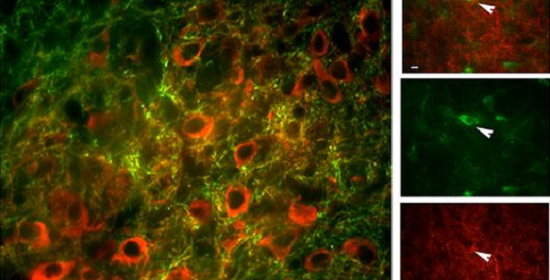
Brain Inflammation triggered by Chronic Pain Linked to Depression and Anxiety

MICRO

Brain inflammation caused by chronic nerve pain alters activity in regions that regulate mood and motivation. This, for the first time, shows a direct biophysical link exists between long-term pain and the depression, anxiety and substance abuse seen in more than half of these patients.

These findings also point the way to new treatment options for those with chronic pain, the incidence of suicide in patients with chronic pain is second only to those with bipolar d/o. Therefore it would be wonderful to have new treatments.

Researchers found that that pain-derived brain inflammation causes the accelerated growth and activation of immune cells called microglia. These cells trigger chemical signals within neurons that restrict the release of dopamine, a neurotransmitter that helps control the brain’s reward and pleasure centers.

Morphine and its derivatives can be ineffective in treating chronic pain. This study explains why, normally morphine and its derivatives stimulate the release of dopamine, but in rats with chronic pain, administration of morphine does not cause them to produce dopamine, resulting in impaired reward-motivated behavior. However, when these rats are treated with drugs that inhibit microglial activation, they then start producing dopamine.

Next the researchers aim to look at human chronic pain, and determine whether pain derived behaviors might account for mood disorders in these patients.

This can also shed light on mood disorders that are not caused by chronic pain. Of course dopamine is an integral part of the neurotransmitter system that contributes to mood stability. It is also the main neurotransmitter involved in Parkinson’s disease. Hoping for good things to come out of this research.

_________________________________________________________________________________

Article reference below:

Microglia Disrupt Mesolimbic Reward Circuitry in Chronic Pain

http://www.jneurosci.org/content/35/22/8442.full.pdf+html

Noninvasive brain stimulator may ease parkinson’s symptoms in a patient’s homeParkinson’s disease

Master’s students have developed a new portable device to inhibit neuronal firing in critical regions of the brains of people with Parkinson’s disease to stop the tremors associated with that disease. This device is a helmet, which the patient can control, it sends electrical stimulation to the patient’s brain, however the level and duration of the stimulation is controlled by a physician.

The wonderful part about this is that it is portable and under the patient’s control. My father in law had Parkinson’s disease, he was a solid, strong, silent man, and this disease brought him down like tissue paper fluttering from the sky. I’m sure at least some of his symptoms and problems would have been alleviated by this portable helmet!

Article and reference below.

http://www.neuroscientistnews.com/clinical-updates/noninvasive-brain-stimulator-may-ease-parkinson-s-symptoms-patient-s-home

Parkinson’s disease patients whose symptoms such as tremor, muscle stiffness and slowed movement make it tough to hold an eating utensil steady have few options for relief outside of a hospital or clinic. Medication can help, but over time it tends to become less effective. To give these patients another in-home option, Johns Hopkins graduate students have invented a headband-shaped device to deliver noninvasive brain stimulation to help tamp down the symptoms.

The students’ prototype, developed during a yearlong biomedical engineering master’s degree program, has not yet been tested on humans, but it is viewed as a promising first step toward helping Parkinson’s patients safely relieve their own symptoms at home or elsewhere without going to a hospital or doctor’s office. The design has already received recognition at several prominent competitions. On June 9, it won the $5,000 second-place prize in VentureWell’s BMEidea national design contest for biomedical and bioengineering students. In May, the invention earned first-place honors in the People’s Choice Award competition at Johns Hopkins’ Biomedical Engineering Design Day 2015. Earlier, it was a finalist in the Rice University Business Plan Competition.

The five student team members were inspired to build the new device last summer after observing neurosurgery being performed on Parkinson’s patients at Johns Hopkins Hospital. Parkinson’s is an incurable neurodegenerative disorder that affects 1 million people in the United States and 7 million worldwide.

Tremtex team members
From left, the Tremtex team members are Ian Graham, Melody Tan, Erin Reisfeld, Shruthi Rajan and David Blumenstyk. Credit: Will Kirk, Johns Hopkins University

For patients in advanced stages, one treatment option is deep brain stimulation. In this procedure, a surgeon implants thin electrical leads into the region of the brain that controls movement. The leads are connected to a pulse generator—similar to a pacemaker for the heart—that is placed under the skin below the collarbone. This implant sends electrical signals to the brain to help curb some symptoms caused by Parkinson’s.

“We saw that this procedure is really invasive and can take 10 to 15 hours to complete,” said Shruthi Rajan, a team member from Charlotte, North Carolina. “It’s also very expensive, and not all patients qualify for the surgery. We asked if there was a way to provide the same treatment in a less invasive way that doesn’t require brain surgery.”

The students were referred to Yousef Salimpour, a Johns Hopkins Medicine postdoctoral research associate who has been studying a noninvasive Parkinson’s therapy called transcranial direct current stimulation. In this painless treatment, low-level current is passed through two electrodes placed over the head to tweak the electrical activity in specific areas of the brain. The technique can be used to excite or inhibit these nerve cells. The treatment is still considered experimental, but it has attracted much attention because it does not require surgery and is inexpensive, safe and relatively easy to administer without any side effects.

The biomedical engineering students met with Salimpour to learn about the research he conducts in a clinical setting. “We told him we had an idea for a portable home version of this equipment,” Rajan said. “But we planned to add safety measures to make sure the patient used it properly without a doctor or nurse being present.”

The students aimed for a prototype that would enable a patient to activate the battery-powered treatment by touching a large easy-to-press button. With patient safety in mind, the students designed their prototype to deliver current for only 20 minutes daily and only at a doctor-prescribed level.

To help fine-tune their design, the students met with dozens of Parkinson’s patients over a four-month period. Although the students did not administer the actual brain treatment, the patients help them craft the critical headband component so that it would be easy to put on, comfortable to wear and positioned so that the electrodes would remain stable and properly target the motor cortices areas of the brain.

“For a comfortable fit, we put an elastic band in the back and told the patients to put it on like a baseball cap,” said team member Ian Graham, from Old Saybrook, Conn. “The interaction with the patients was really helpful. In our usual college classes, we’re just given a textbook problem to solve. In this program, being able to find a real-life biomedical problem and figure out how to address it was huge. And we even received letters of encouragement from some of the patients we met.”

The other members of the student design team were David Blumenstyk, Erin Reisfeld and Melody Tan.

In addition to the assistance from neuroengineer Salimpour, the student inventors received guidance from other members of an interdisciplinary team of Johns Hopkins medical researchers that includes neurologist Zoltan Mari, neurosurgeon William Anderson and neuroscientist Reza Shadmehr.

“Our group is working on the idea of using noninvasive brain stimulation for Parkinson’s disease symptom control as a new clinical treatment,” Salimpour said. “Our preliminary results were promising. Patients keep asking us for more of this treatment. But we couldn’t provide the treatment for them because there is no portable and FDA-approved device like this for Parkinson’s patients that is on the market at this time. The biomedical engineering students then approached us with the idea of designing the home-based treatment device. They did a great job, and made a fascinating prototype. We hope that based on their preliminary work, Parkinson’s patients will receive the benefit of this new technique at home very soon.”

With help from the Johns Hopkins Technology Ventures staff, the student inventors obtained provisional patents covering the design of the device, dubbed the STIMband. Another Johns Hopkins student team is slated to take over the project in September to further enhance the design and move it closer to patient availability. One addition may be a wireless connection to allow a doctor to adjust a home patient’s treatment level from a remote location.

– See more at: http://www.neuroscientistnews.com/clinical-updates/noninvasive-brain-stimulator-may-ease-parkinson-s-symptoms-patient-s-home#sthash.1LZh448E.dpuf