So Happy to Share That

Screen Shot 2016-02-12 at 7.47.14 PMDSCN7502 - Version 2

So happy to share that:

1) I got 31 Likes on my blog posts today. Thank you to my dear readers for this record number of likes!

2) Because of the abandonment work I’ve been doing on my self (more on that later) I am learning the signs of anxiety and not to act because I’m anxious! This is huge for me, because basically until today, whenever I felt anxious, I could not control myself from acting out in ways that were damaging to my relationships with my friends and family. Getting my life back, from the past, from the abuse, from the anxiety and panic. I am not going to let those miscreants control me anymore. I am going to control myself and my own life!

Happiness!

img_1173This is a speech ascribed to Pope Francis, my friend posted it on her FB page. Is it Pope Francis? I don’t know, but whether it is or not, the message is incredibly beautiful and clear! It’s poetic, yet illustrative of how to be happy and loving. I’m so glad I saw this and read it, thank you Cata for posting it!  I’d like to dedicate this to all my friends and family 🙂

“You can have flaws, be anxious and live irritated sometimes, but don’t forget that your life is the largest company in the world. Only you can prevent that it goes in decline. There are many who appreciate you, admire and love you. I’d like to remember that being happy is not having a sky without storms, path without accidents, work without fatigue, relationships without disappointments. Being happy is finding strength in forgiveness, hope in the battles, security at the stage of fear, love in the disagreements.
Being happy is not only enhance the smile, but also reflect on the sadness. It’s not only to commemorate the success, but to learn lessons in the failures.
It’s not only to learn how to have joy with applause, but to have joy in anonymity. Being happy is to recognize that it is worthwhile to live life, despite all the challenges, misunderstandings and periods of crisis. Being happy is not an inevitability of fate, but a conquest for he who knows how to travel to the inside of his own being. Being happy is to stop being victims of the problems and become an actor of one’s own story. It is to cross deserts outside of if, but to be able to find an oasis in the recesses of our soul. It is to thank god every morning for the miracle of life.
Being happy is not to be afraid of one’s own feelings, it is to know how to talk of himself. It is to have the courage to hear a “no”. It is to have security to receive criticism, even if it is unfair. It is to kiss the children, to pamper the parents, have poetic moments with friends, even though they hurt us. Being happy is let the live creature free, cheerful and simple, that lives in each and every one of us. It is to have the maturity to say ‘I was wrong’. Is to have the audacity to say ‘forgive me’. It is to have sensitivity to express ‘I need you’.
It is to have the capacity to say ‘I love you’. That your life becomes a garden of opportunities to be happy… That in your springs be mistress of the joy. That in your winters be friends of wisdom.
And that when you’re wrong on the way, you start all over again, because then you will be more passionate about the perfect life!
Use the tears to irrigate the tolerance. Use the losses to refine patience. Use the failures to sculpt serenity. Use the pain to store the pleasure. Use the obstacles to open the windows of intelligence.
Never give up…. Never give up on the people you love. Never give up on being happy, because life is an incredible show!

DEA Approves Ecstasy For Anxiety, MDMA Trials Begin In California

E Ecstasy pills or tablets close up studio shot methylenedioxymethamphetamine. Image shot 2004. Exact date unknown.

Wow! I wonder what my psychiatrist will think about this one, he won’t even prescribe me benzodiazepines for my anxiety! Might be a good idea to move to Marin right about now!

They used to use LSD and mushrooms as psychotherapeutic drugs in the 1950’s. They claimed, among other things, to recover memories this way, I’m not sure if they were recovering or perhaps more like creating memories with the help of hallucinogenic drugs. Don’t know, will have to wait to hear what the results of this study are.Very curious as to what it will show. Also they say that there are no longterm associations between psychedelic use and mental illness. However, if a person with eg schizophrenia genes, uses hallucinogenic drugs, the schizophrenia will be unmasked and that person will develop schizophrenia, that is quite commonly known. So that is something they’d have to be careful about. Well, we’ll have to see.

http://www.decodedmagazine.com/dea-approves-ecstasy-for-anxiety-mdma-trials-begin-in-california/

The U.S. Drug Enforcement Administration (DEA) has approved the first clinical trial of MDMA to treat anxiety and other psychological illnesses, amid a growing resurgence in therapeutic psychedelic drug usage in the medical community.

Aljazeera.com reports:

“The tide has changed for psychedelic research,” said Brad Burge, the communications director for the Multidisciplinary Association for Psychedelic Studies (MAPS), a California-based nonprofit research group that studies medicinal uses for psychedelics and marijuana and is sponsoring the study. The DEA approved the project on Friday, he said.

Unlike Ecstasy or Molly — names for MDMA sold on the street and often mixed with dangerous adulterants — pure MDMA has been proved “sufficiently safe” when taken a limited number of times in moderate doses, MAPS says on its website. The DEA did not immediately respond to a request for comment.

MDMA can be useful in psychotherapy for people suffering from anxiety due to life-threatening illnesses because it produces in users a sense of calm, trust and confidence, Burge said. Unlike psychedelics such as LSD and psilocybin, MDMA does not produce hallucinations, he added.

The clinical trial will be held in Marin, California, in a psychologist’s office, as opposed to a hospital setting, Burge said. The patients will lie on a couch with a therapist nearby for support and conversation.

In the trial, 18 subjects diagnosed with life-threatening illnesses will attend months of psychotherapy, with MDMA being used in a few sessions in order to facilitate the process, he said. The outcome will be measured by whether using the psychedelic helps reduce people’s anxiety, which will be determined at the end of the sessions by the patient’s feedback and the therapist’s assessments.

Researchers hope that using MDMA alongside psychotherapy will let subjects confront their situation more clearly and allow the positive steps they take during the therapy to “stick,” Burge said.

“It opens them up and makes them more comfortable with the therapist while reducing fear and making them more able to talk about difficult emotions.”

If the pilot is successful, MAPS plans to continue with further studies involving more subjects and different approaches. For now, researchers hope to establish basic safety and effectiveness, he said.

The trial is part of a larger $20 million plan to make MDMA an FDA-approved prescription medicine by 2021, Burge said. MAPS is the only organization in the world funding MDMA-assisted psychotherapy trials, he added. The institute has carried out successful pilot studies of MDMA-assisted psychotherapy for post-traumatic stress disorder, adding to the drug’s scientific credibility, he said. Other research by the institute includes ayahuasca-assisted therapy for drug addiction, LSD for cluster headaches and psilocybin for nicotine addiction.

Researchers hope to back up growing evidence that psychedelics have legitimate therapeutic uses — and to counter the narrative that has demonized them as mind-destroying drugs.

“That’s what the really good science shows, despite decades of propaganda and government misinformation,” Burge said. “Just a couple weeks ago, a phenomenal study showed that there are no long-term associations between psychedelic use and mental illnesses.”

That study was published this month in the Journal of Psychopharmacology. In addition, a recent report by Johns Hopkins Medicine, a leading U.S. medical institution combining the Johns Hopkins University School of Medicine and the Johns Hopkins Hospital, showed that the use of psychedelic drugs — primarily psilocybin and LSD — could reduce psychological distress and suicidal thinking.

500 Posts for bipolar1blog!

Wow, I’ve posted 500 times on bipolar1blog and now i have 500 posts! Pretty amazing! Not surprising though as I post quite frequently, but still a milestone and a testament to my dedication to this blog. Hope all my readers have enjoyed reading them as much as I have enjoyed posting them!

500 Posts

Living Life On My Own Terms

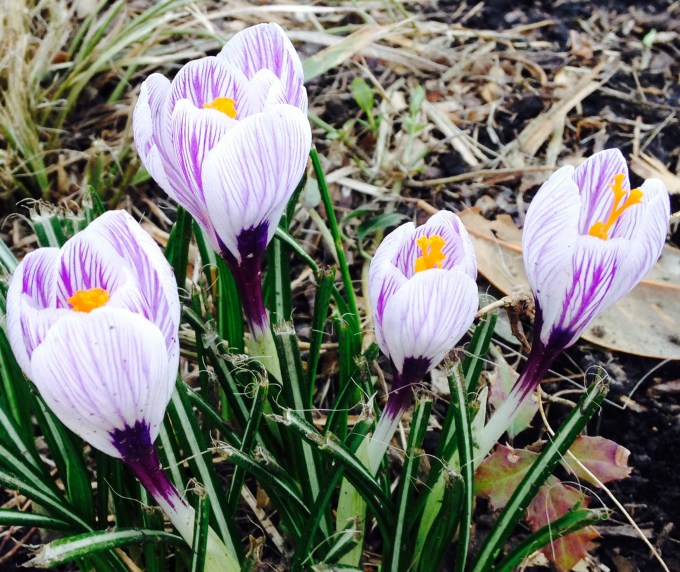
Crocuses are such harbingers of hope. When they appear, you know that winter is about to be over and spring is about to come.

crocus 1

I would like to get a handle on my abandonment issues and the ensuing anxiety and extreme fear of loss so that I can live life on my own terms.

I would like these issues (resulting from awful things that were done to me way back in the past) to NOT have any effect on my present life, moods, or actions. I am sick and tired of being controlled by something that happened years and years ago.

To get control of my life and live it on my own terms, this is what I am hoping, and expecting therapy and work on myself will accomplish.

Tomorrow I have an appointment with my therapist, Anna. I will share what happens in my session.

However long it takes, I am in it to win it, haha. No seriously, I am in it for however long it takes to heal myself and get control of my moods, emotions, actions, and ultimately my life.

Amen.

Byron Hamel: “I Am A Killer”

Choice.

There are times in our lives when we have choices, and times when we do not.

When we are children, we are led by those in charge of us.  They tell us to do things.  Mostly, we do what they say.  We believe what they believe, and behave how they behave.  We observe, and emulate.  It’s part of how we learn.  It’s human nature.

A mother is like God to a child.  Her will is destiny.  Fate.  “Do it, now” says the father.  And the child does.  The master teaches the apprentice.  This relationship between parent and child is a sacred trust.  A way to maintain safety, build character, and establish vital life habits and skills.  IF -and I mean a very big IF- the parents use their power correctly.

Essentially, as children, we are led.  And we follow.  When we are led poorly, bad things can happen.

Choices are steered by forces and circumstances beyond a child’s control or understanding.  Children neither possess the reasoning, nor the physical requirements to take command of their own lives in any responsible way.  Their views of the world are filtered through rules, limits, directions…

As children, we are sheep.  And we are vulnerable.  We are as helpless against the wolves as we are against the shepherds.  And that is why so many of us are taken advantage of as children.

We can not fight back when adults hit us.  We WILL not fight back.  We just get hurt.  And that becomes the reality of our lives.  If we are threatened into silence or submission, we will usually concede.  We will usually be victimized until, by some happy accident, a caring person intervenes.

The choice to end parental abuse is not our own.  Not while we are kids.

If we are lucky or clever enough to escape our abusive situations alive, we become adults.  And then we are called upon to make our own choices.  To behave in responsible ways of our own choosing.

But how?  How the hell do we know what to do, if nobody ever taught us correctly?

Maybe we learned when we were little that the correct way to respond to somebody denying us what we want is to punch them in the ear.  Perhaps we were taught that unsolicited fondling of another person’s genitals is the appropriate way of showing love.  It could be that we were beaten every time we expressed emotion, and therefore grew to hold our feelings inside, fearing punishment.

Now that we are adults, our understanding does not magically shift on it’s own.  If our minds and hearts become corrupted, they remain corrupted until we change them.  And change takes work.  Change takes wisdom.

But we are lost.  We truly have not been led to a place of responsibility.  But here we are, tasked with being adults.  Surrounded by other people who seem to be doing just fine.  But we’re not like them, are we?  We don’t GET IT.  We still need to learn all that very basic stuff.

And there’s a lot of it.

We are left to lead ourselves.  To teach ourselves.  But we haven’t been trained to lead.  And we don’t possess the knowledge to teach.

So what do we end up doing?  Well, we follow.  If we do not take control, we continue doing the things we learned how to do, the way that we learned how to do them.

And that is not a good thing.  It is a bad thing.  It is what monsters are made of.  But we’re not monsters.  We’re just grown up kids who got a raw deal.  And now some new kid is smiling up at us.  And we are God to that kid.  That kid is our chance to do the right thing. That kid is why we are not going to follow.  We are going to choose for ourselves.

We the abused stand on the edge of decision.  And we need to make a vital choice.  We can do the difficult thing, and learn how to parent properly.  Or we can do the horrible thing, and continue the cycle of abuse.  We the abused to do not have the luxury of inaction.  We must choose.  One, or the other.

Now that we are the adults, we have the power to choose.  We can end parental abuse before it even begins for our own children.  It may seem impossible to you.  That makes sense.  Ending a cycle of abuse is hard to do.  And I mean VERY difficult.  But the alternative is the continuation of abuse.  And that is worse.  Further, it is unacceptable.  It is inadmissible.

We need to take control.  We need to take the reigns, and choose for ourselves.  We need to parent ourselves.  Correct our damaging beliefs and behaviors.  We need to become the source of love, safety, wisdom, and security that we wish we had when we were children.

This does not happen overnight.

It will take time.  We will need help.  We will need, perhaps, medication and therapy.  We will need to be kind to ourselves.  Patient and persistent.  If we are to succeed in this, we need to learn to love ourselves in all the ways that we were not loved as children.

With this effort, we find our voices.  We make our own choices.  We take our own actions.  We refuse to emulate the wills and ways of those who damaged us.

Choice.

I made a good one.  I make good choices every day.

That is why I’m not a total piece of shit.

————-

BIO

Byron Hamel was raised by a violent man who got the death penalty for torturing and killing a baby.  As a result of his upbringing, Byron dedicates his life to fighting child abuse.  He lives with Complex PTSD, Depression, and Anorexia.  Despite his obstacles, he’s an amazing dad to his two lovely daughters.

An award-winning Canadian journalist, and television producer, his documentary film, “A Breaking Cycle”, is a powerful journey into the world of tough bikers who protect abused kids.

Byron is currently writing for his blog Trauma Dad, and his book “I Am A Killer”, to be released in 2016 by the Gravity Imprint of Booktrope Publishing.  This post is an excerpt from his work in progress.  His writing challenges readers with both depth and simplicity.  It’s raw and funny, but leaves you feeling hopeful and inspired.

http://traumadad.blogspot.ca

https://www.facebook.com/traumadad

https://twitter.com/byronhamel

https://www.facebook.com/GravityImprint

Learning to ride the waves of anxiety

Just got back from Buffalo last night. Even ordinarily, this is a depressing, and horribly anxiety ridden time for me. All manner of fearful, depressing thoughts swirl inside my brain. So with this abandonment thing going on, I was very afraid, I mean actually afraid for myself, that I wouldn’t be able to handle it. But I am riding the waves of anxiety. Sometimes it feels like my chest cavity is full of hot red pepper, sometimes it’s so intense that it literally feels like a gut punch. But I know it is only anxiety and I ride it out. I tell myself it is only a wave of anxiety and it will pass. The thoughts, which are all fears for my son and his future, I try to keep at bay. I am also reading a wonderful book called “The Journey From Abandonment to Healing” by Susan Anderson. This book has given me so much hope that I have the power to recover and live my life without the constant fear of being abandoned. It tells of people who have recovered, therefore if they could do it why the heck wouldn’t I be able to? Of course I will. And now I’ll ride the anxious waves and try to send them love.

‘Touched with Fire’ explores bipolar disorder

TOUCHED-WITH-FIRE-628x314

The movie “Touched with Fire” (also the title of Kay Redfield Jamison’s book) is coming out on Feb. 12th. The synopsis and comments of film maker Paul Dalio are hopeful, especially this “If I had any hope at all that there was any chance, any possibility that I could be happy and full of creativity, and even better than I was before, which now is the case, I would fight.” Hope, that is the one thing we all need and the one thing that sustains us, whether we have bipolar disorder or not.

http://www.gettysburgtimes.com/life_entertainment/lifestyles/article_5f834327-ca43-59d2-b098-1881987d1fc3.html

“Set to be released on Feb. 12, Paul Dalio’s new film, “Touched with Fire,” depicts Dalio’s personal experiences with bipolar disorder. The title of the film is taken from Kay Redfield Jamison’s 1996 book, “Touched with Fire,” which explored how many of the greatest artistic minds in history had bipolar disorder. Jamison herself acknowledges having bipolar disorder since early adulthood. Dalio explains that the book helped him see himself not just as an individual with a “defect” but as having a gift that taps into something that most people can’t. “Touched with Fire” takes Dalio’s personal experiences with bipolar disorder and uses two characters, Carla and Marco, to contrast the different emotions Dalio has felt toward bipolar in his life. The love story between these two characters is a metaphor for Dalio’s “love-and-hate relationship with bipolar: the way they bring out the romance in each other, but also the devastation in each other, and the way they have to reconcile those two things.” He stated, “The journey that I went through that I think a lot of people with bipolar go through is that you get it and you’re lost, but then you easily romanticize that fire ultimately to your own destruction. It ultimately takes most people repeated devastations to let go of the mania. What I wanted to do was have that journey of how they learned that they can have real meaningful emotions and sustain them. My hope is that people are able to watch the film and see where Marco and Carla make mistakes and know that they don’t have to make them themselves.”

One of the biggest themes throughout the film is the relationship that the two main characters must manage with their parents and offers glimpses into each person’s actions. Dalio describes how his family would frequently talk him out of suicide when he was in the midst of a depressive episode. “It was very draining on them, but they really struggled to try and give me hope. The best a family can do is to give hope to their family member, but ultimately it has to come down to the individual. The loss of hope – in my own experience – was the only time I had thoughts of suicide. If I had any hope at all that there was any chance, any possibility that I could be happy and full of creativity, and even better than I was before, which now is the case, I would fight.” Dalio stated that his goal for the film was to show a truthful situation between individuals and “well-intentioned parents.” “The truth is, even well intentioned parents, don’t always know what to do. They are dealing with a situation that there is no perfect guidebook for. My hope was to create characters that the audience could see themselves in. If there were any well intentioned parents in the audience, that they could not only see themselves in the parents, but also through their children’s eyes. That they could at least be able to understand their children enough so they could understand where they are coming from so that they can communicate with them.” Dalio’s final thoughts include describing bipolar disorder like a pendulum, and using exercise, meditation, and a low-sugar diet along with his prescribed medications to help manage the emotional swings. According to Dalio, “True happiness is having an appreciation of the darkest and brightest emotions and being able to experience both of them equally.””