Little, Big, and You as the Mediator (+ A Surprise!)

This is an exercise you do with yourself. Little is the Inner Child. Big is the Adult You. And the real you is the mediator. So you can stand, and imagine that Little is standing at your left hand side, as Little is weaker, therefore stands on your weaker side (as most people are right handed, so the left hand is the weaker side.)

Big stands at your right hand side, stronger by virtue of being bigger. And you are in the middle, you are the mediator. 

Now, Little and Big have a conversation and you mediate. Yes it is imaginary. You don’t even have to stand up. But with this conversation, Big listens to Little’s concerns and assures Little that Big is there for Little and loves Little and will always be there. This conservation is to be had once a day. It will be different everyday, it depends on what your issues are.  The point is to make Little feel loved and protected, ALWAYS! If you can do that for your inner child, your fear and neediness will go away. You will realize you don’t need anyone to make you feel loved or safe, miraculously, you can do it for yourself. And that makes you self sufficient and strong! 

A sample conversation follows: 

Little: Big I was afraid today because the neighbor’s were yelling and you were asleep. 

Big: Little, even when I’m asleep, I am still here and I will protect you and I love you. Those neighbor’s cannot come into our place and hurt you. 

Little: Are you sure, they sure sounded loud, like mom and dad used to sound. 

Big: Little, I know you were scared when mom and dad fought, but I am here to protect you now. I love you little, I will never let anyone hurt you. 

Little: Ok Big, thanks. I feel better. 

Have your own conversation and let me know how it goes. Hugs for all my readers, fellow bloggers, friends and family. 😻😻😻 

On a Tuesday 

Ok I know this has not much to do with bipolar d/o, except maybe that I do happen to have it🤓

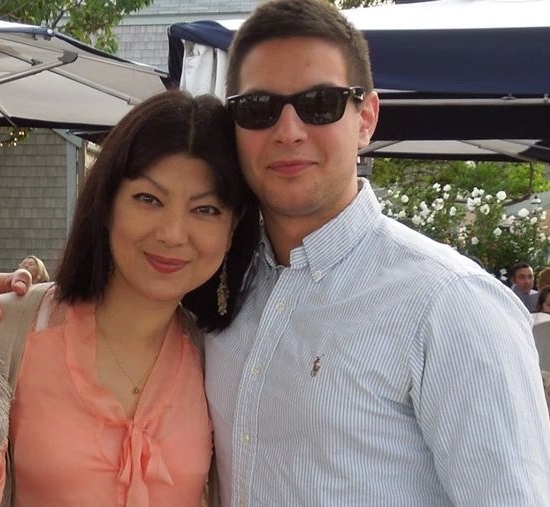
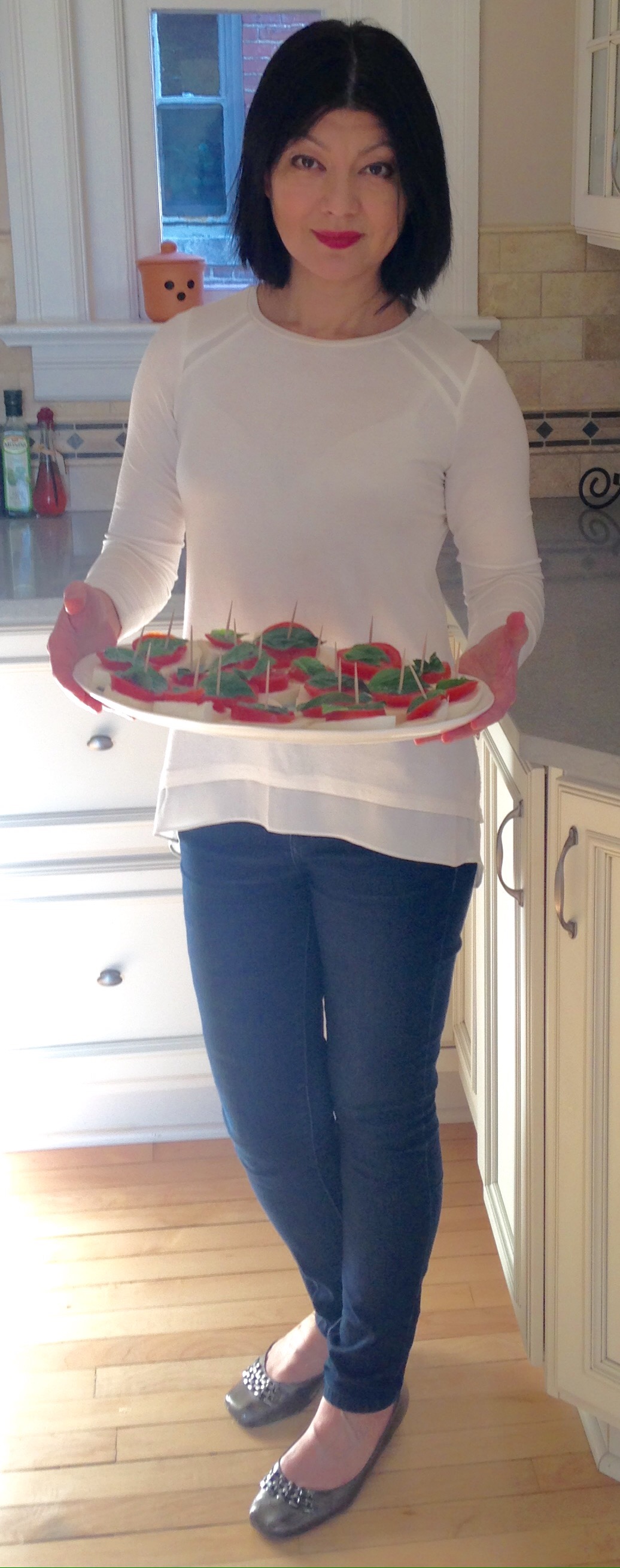
But really, what’s wrong with pictures of a “made from scratch” birthday cake and birthday goings on with our good friends? Oh and my new haircut, it’s a bob! Love it! Hugs everyone!

Tomorrow, I’ll post about “Little, Big, and You, the mediator.” 


Scientists identify molecular link between sleep and mood

Sleep and mood are so very linked. In bipolar mania, you have no need for sleep at all. In bipolar depression and all kinds of depression, you never want to wake up. These researchers have found a gene called Period 3, this is circadian rhythm gene and now has been found to be the link between mood and sleep. When Per 3 is mutated, mice get SAD or seasonal affective disorder, which is characterized by depression when sunlight is in short supply, such as in winter time. Another piece of the puzzle! Perhaps another target for drug development and delivery. 

http://www.sciencemag.org/news/2016/02/scientists-identify-molecular-link-between-sleep-and-mood?utm_source=sciencemagazine&utm_medium=facebook-text&utm_campaign=sleep_mood-2538By Claire AsherFeb. 22, 2016 , 5:45 PM

A poor night’s sleep is enough to put anyone in a bad mood, and although scientists have long suspected a link between mood and sleep, the molecular basis of this connection remained a mystery. Now, new research has found several rare genetic mutations on the same gene that definitively connect the two.

Sleep goes hand-in-hand with mood. People suffering from depression and mania, for example, frequently have altered sleeping patterns, as do those with seasonal affective disorder (SAD). And although no one knows exactly how these changes come about, in SAD sufferers they are influenced by changes in light exposure, the brain’s time-keeping cue. But is mood affecting sleep, is sleep affecting mood, or is there a third factor influencing both? Although a number of tantalizing leads have linked the circadian clock to mood, there is “no definitive factor that proves causality or indicates the direction of the relationship,” says Michael McCarthy, a neurobiologist at the San Diego Veterans’ Affairs Medical Center and the University of California (UC), San Diego. 
To see whether they could establish a link between the circadian clock, sleep, and mood, scientists in the new study looked at the genetics of a family that suffers from abnormal sleep patterns and mood disorders, including SAD and something called advanced sleep phase, a condition in which people wake earlier and sleep earlier than normal. The scientists screened the family for mutations in key genes involved in the circadian clock, and identified two rare variants of the PERIOD3 (PER3) gene in members suffering from SAD and advanced sleep phase. “We found a genetic change in people who have both seasonal affective disorder and the morning lark trait” says lead researcher Ying-Hui Fu, a neuroscientist at UC San Francisco. When the team tested for these mutations in DNA samples from the general population, they found that they were extremely rare, appearing in less than 1% of samples.
Fu and her team then created mice that carried the novel genetic variants. These transgenic mice showed an unusual sleep-wake cycle and struggled less when handled by the researchers, a typical sign of depression. They also had lower levels of PER2, a protein involved in circadian rhythms, than unmutated mice, providing a possible molecular explanation for the unusual sleep patterns in the family. Fu says this supports the link between the PER3 mutations and both sleep and mood. “PER3’s role in mood regulation has never been demonstrated directly before,” she says. “Our results indicate that PER3 might function in helping us adjust to seasonal changes,” by modifying the body’s internal clock.
To investigate further, the team studied mice lacking a functional PER3 gene. They found that these mice showed symptoms of SAD, exhibiting more severe depression when the duration of simulated daylight in the laboratory was reduced. Because SAD affects between 2% and 9% of people worldwide, the novel variants can’t explain it fully. But understanding the function of PER3 could yield insights into the molecular basis of a wide range of sleep and mood disorders, Fu says.
Together, these experiments show that the PERIOD3 gene likely plays a key role in regulating the sleep-wake cycle, influencing mood and regulating the relationship between depression and seasonal changes in light availability, the team reports today in the Proceedings of the National Academy of Sciences. “The identification of a mutation in PER3 with such a strong effect on mood is remarkable,” McCarthy says. “It suggests an important role for the circadian clock in determining mood.”
The next step will be to investigate how well these results generalize to other people suffering from mood and sleep disorders. “It will be interesting to see if other rare variants in PER3 are found, or if SAD is consistently observed in other carriers,” McCarthy says. That could eventually lead to new drugs that selectively target the gene, which McCarthy says, “could be a strategy for treating mood or sleep disorders.” 

Today, tomorrow, and this weekend :-)

Today is the 11th anniversary of the day my mother passed away. It is a sad day. I mourn and grieve for her. The mother who passed away, I had forgiven. The mother who passed away was really not the woman who mercilessly abused me, (Oooh felt a twinge of something old there) so I did love her. And I know she loved me.  So that’s today. 

Tomorrow is my husband’s birthday I spent all day making Bolognese pasta sauce (delicious, even if I do say so myself 😊) and these cakes from one of the most labor intensive and time consuming ‘Gourmet’s best desserts’ recipes in the history of the world! I had to make three kinds of syrups, whip up egg whites into stiff peaks, macerate strawberries, and whip cream and on and on. I will assemble the whole thing tomorrow and will put up a picture. Next year I think I’ll go to a bakery…


This weekend is the women’s weekend at the horse ranch. I simply cannot wait. It’s going to be wonderful! 

Been tackling abuse/abandonment issues. Thank goodness, bipolar is under control!

  
 My bipolar disorder (BPD) is under control, has been for roughly a year now! For that I must thank a good friend, who refused to see me any other way than at my best. I took this friend’s advice and increased my lithium to 900 mg per day. And voila! Bipolar wise I am stable. It’s a good thing too, because dealing with this abuse/abandonment “thing” would have been a million times more difficult if the BPD wasn’t lying low. 

What I am learning about abuse/abandonment is that it is one (two?) of the most painful things one can go through. The feelings stored inside me of pain, despair, terror, shame, and fear, massive amounts of anxiety, anger from when I was a little girl being subjected to all this, what is it, insanity, criminal behavior, sociopathy? Well, just pick one. Anyway, those frightening and deeply painful and anxious feelings, forgotten feelings, I now have to bring to the fore and feel them, and process them as an adult and then supposedly, they go away. I am feeling them alright, last night I was reading something about abuse/abandonment survivors and addiction to a variety of things. Something about what I was reading made me feel like I was going to die. At first I tried to run away from it, but then I told myself that this is exactly what I have to feel and process to get better. So I tearfully thanked those feelings. 

So here’s the thing, you are horribly abused, over and over, as a child, you have horrible emotional scars but you hide those feelings away, they are too painful to feel. And you have to survive the next beating, you can’t sit around feeling sorry for yourself. So now, as an adult, you have a repository of all these awful feelings and unmet needs, and they pop up when they are most unwelcome. And you over react, you feel like death, you basically turn into that little battered, unprotected, unloved child you were when you least want to. So now, as an adult, in order to stop reacting like an abused/abandoned child, you have to bring those terrifying feelings to your consciousness, feel them, process them and let them go. This is how you get over the pain and violence that happened to you, the pain and violence that happened to me when I was 4-14 years of age.  One more thing, you cannot just bring up these feelings at will. They are deeply hidden, and anyway, who would willingly want to feel like death? These feelings come up in response to situations where something reminds your subconscious of how things were in your childhood. Or some other stimulus, like reading something, etc.  Writing about each incident you remember over and over so that you go from a child’s perspective to finally an adults view of what happened also helps. There is another exercise that I call “Little, Big, and You as the Mediator” I will post about that next time. 

Healing, love, and laughter. May our lives be full of those! Hugs, my friends. 

Just a second ago,

he was a baby, and now he is graduating from Law School! Where did the time go? As his mother, of course, I am beyond happy and proud and only wish the best of health for him, the happiest of lives, and the healthiest of loves in his young and wonderful life. My son.

ARAL!!!Law school graduation picture!

ARAL 5 mos and meAral 6ARAL and meIMG_3246

Most Views Ever!

I had the most views ever in one day today at 201 views! 124 of those were the”I am in awe and so inspired” post at https://bipolar1blog.wordpress.com/2016/02/19/i-am-in-awe-and-so-inspired/

Well I can see what my audience wants, awesome and inspiring posts! Sheesh, how do I do awesome and inspiring everyday? Fine, I’ll try to. Next weekend I am going to Kamp Kessa, a women’s weekend  at a horse ranch called Cedar Fire Farm. They have beautiful horses and it is meant to be a very peaceful and healing time. Can’t wait for that. Of course expect lots of pictures. Hugs for all.

I am in awe and so inspired!

If this young woman could overcome her abuse as a child, I am sure I can too. Not only is she gorgeous and intelligent, she is strong, amazingly strong! I will write a detailed account of my abuse too, not to horrify anyone, but to get my power back. And once again I say, if she could overcome what she did, then so can I. I thank her for writing this and for inspiring me and scores of others as well, I’m sure.

These were her words that inspired me the most: “Though I still suffer my share of flashbacks and emotional scars, I live with a determination to experience as much peace and joy in adulthood as possible. Until now, I have been afraid to share my story. I’ve been afraid to allow readers to see my tattered clothing, my scars and vulnerability. I’ve been terrified of admitting that I come from such an ugly and painful place. But fear should be faced head-on and if I am going to fight it, I will do it in a forum that allows the opportunity to help anyone who can relate to it find the courage to move past the past or reach out to get help to escape a painful present.”

Wow! Brilliant!

http://www.huffingtonpost.com/brenda-della-casa/healing-the-scars-of-child-abuse_b_1554039.html

Healing The Scars of Child Abuse: ‘Until Now, I’ve Been Afraid To Share My Story. But Fear Should Be Faced Head-On’

“Don’t move or your head will roll!” warned the man with the cold, loaded .22 to my 8-year-old temple. Paralyzed with fear, I stood with stone legs, praying they would not shake as they always did when my father got this way. Though he’d tell anyone who would listen that he had fought in Vietnam, the truth was his drunken “flashback” episodes were merely delusional fantasies brought on by watchingRambo a dozen too many times. His penchant for violence was common and notated by the bite marks, pinch marks and blood-filled welts that covered my body on a steady basis. He seemed to enjoy the power that came with seeing me in a state of terror. Tonight was no different.

His eyes were bloodshot and the heavy, thick foam that had formed around his mouth from the saliva that had accumulated while he was screaming made him look like a mad dog. I responded to his questions with one-word answers, all the while fearing I might say something wrong and lose my life. After standing motionless for what seemed like hours, I suddenly felt the hot sensation of skin being yanked from my skull as I was dragged by my hair and thrown against a wall for being “born bad.” This was a favorite excuse of my father’s to beat me. Second only to the fact that I was not the boy he wanted me to be (though that did not stop him from calling me “son”). I often wondered if my being born Brendon instead of Brenda would have prevented him from tormenting me the way he did.

Adulthood has answered this question.

On most nights, while my peers took baths and watched television, I was being bullied and told that I was a “bad seed” who was destined to make mistakes. He explained that it was his duty to keep me in line since I was so inherently bad that I would fall by the wayside, regardless of my intention. If I complained, he’d remind me that my mother had left and he could put me up for adoption, after all, so I should be grateful. He likened his “spanking” to a natural preventative measure such as taking a multivitamin. “Get daddy’s belt,” he would demand. If I garnered up the courage to ask what I had done to deserve a beating, the answer was always “in case you do something tomorrow.” I do not remember much else of what he yelled at me that night, but the sensation of the inside of my arms being pinched, my pinkies being bitten and the warm blood dripping down my forehead as the result of a belt buckle smashing into my eyebrow is a memory that haunts me whenever I look into the mirror and see the scar it left behind.

Though violence had been a part of my life since birth, I never lived with the impression that what went on in our home was normal, nor did I feel responsible for my father’s behavior. I saw him as a demonic presence that somehow found its way into the lives of the innocent people who surrounded him. This was mainly myself, my grandfather and whatever woman my father happened to be married to or dating at the time. To me, my father was the ultimate culmination of all things I had been taught were “bad and unholy” on my Sunday trips to church with my grandfather. I often felt I was living out the stories I would read in the Bible, where good took on evil — only in our house, the good never seemed to stand a chance. The “good” in my house was my grandfather, a man so honorable, gentle and caring that I based my ideas of the God I read about on his disposition.

To say that my grandfather was the only person in my life who made me feel as though he cared if I ate, slept, lived or died would be a gross understatement. “I am your best friend and you are mine,” he would say as I sat on his lap, enjoying the candy he had snuck into my room and hidden under the pillow at the top of the army cot I slept on. My beatings hurt me, but the pain I endured was nothing compared to what I felt when I had to watch my frail best friend beaten and humiliated. Witnessing my hero receive lashings that left his glasses broken and back covered with lacerations made me feel the kind of hatred that leaves bile on your tongue. Our time alone was full of conversation and laughter, almost normalcy, but that would change as soon as we would hear the clanking sounds of my father’s boots on the pavement outside of the front door. We’d sit in fear in my room behind a closed bedroom door, both secretly wishing we had the ability to protect the other from whatever fate had in store for us that night. Unfortunately, one was too young, the other too old, and both far too weak.

Wondering if God truly heard our prayers for safety, I asked my grandfather why God had not intervened and had allowed my father to continue to hurt us. He explained to me that as long as we were good people, God would take care of us, and he instilled in me that all prayers were heard and answered if they came from those who were honest in their requests. From that point on, I started praying that my father would never come home. “I hope daddy dies,” I said to my grandfather. Stunned, my loving grandfather scolded me and told me never to stoop to such a negative and spiteful level, regardless of what others were doing around me. These words remained burnt in my mind but gave me little comfort on the nights my father would come drunk and violent, a routine as common for us as dinner and rest were for others.

Then, of course, there was the shame.

The neighbors in our cockroach-infested apartment building spoke of the “drunken lunatic” who lived in apartment 1A, and none of the children I so desperately wanted to play with were allowed to get near me. Treated with the shame that belonged to my father, I learned at a young age that the world of laughter and Barbies, a place with ice-cream cones and bedtimes, had no place for little girls with welts and tattered clothing. Thankfully, my grandfather had a childlike love of checkers and games, along with a heaping pile of patience, so I was able to play and laugh as I imagined other children did. I loved my grandfather’s company but I resented my father for his behavior and how it made my having friends an impossible dream.

I knew everyone knew of his antics, but I had somehow convinced myself that despite the bald patches and long-sleeved shirts, no one knew I was hit. That dream was shattered one night while doing my father’s laundry in the laundromat. Two of my classmates came in with their mother. I watched with envy as they giggled and played together, both receiving the motherly affection I craved but never knew. Suddenly, one turned to me and asked, “Do you know the song, ‘Dear Mister Jesus’?” I knew it well. The song was about a little girl who was beaten by her parents and ashamed of it. I had seen the video on the television and memorized the song but I dared not answer her. Before I could escape the room, the two girls started singing it. I demanded they stop, but my pleading went unnoticed as it did with everyone but my grandfather. It was the first time I was aware that my secret was not a secret at all. People knew and it shattered my spirit.

When school teachers and church members saw me falling asleep out of sheer exhaustion and unable to sit down due to searing burns brought on by beatings from leather belts, hangers, wires and flyswatters the previous night, law officials were often called in. Women would come into the school to watch me undress, gasp at the marks and listen to my story. I learned after a few “meetings” with my father that these well-intentioned men and women were excellent in coming in and repeating everything I had told them in confidence, but “protecting me” was a whole area of expertise they lacked. Keeping my mouth shut and lying about my wounds became my new specialty. When the beatings would leave marks on my lower legs and arms, I would cover up in jeans and long-sleeved shirts. My father called this loyalty. I called it survival. “You know daddy is sorry,” he would say the day after, handing me a present of some kind. “You don’t want daddy to go to jail, do you?” he would ask. I would shake my head no and secretly pray he would leave and never come home. This was a man who smashed my guinea pig against the wall and killed it in front of me when I forgot to put the clothes in the dryer. There was no room for error.

With my promises to lie to doctors and hide my welts, the only clues anyone had that my father was still as brutal as ever were the late-night screaming on his part and loud pleading on the part of his chosen victim. This was usually me or his wife or girlfriend, as my grandfather had too much grace to yell or yelp.

This continued until I was removed from the home. My grandfather got a place of his own far away from my father and remained my only light in a very dark world. He passed away a month before I was to move in with him. I found myself homeless and heartbroken for most of my teens, but also hopeful. Because of my grandfather, I knew there was a better life out there waiting for me. I promised myself that I would honor him by getting an education and making my time on earth matter, even if only to my grandpa and myself. I got up at 4:00 a.m. and took three buses to make sure I didn’t have to attend my 20th school. I slept in a storage room at USC before getting into American and attending college, and I slept out all night in front of where President Clinton was to speak in order to meet him before I applied for — and was granted — an internship at The White House. With the help and guidance of a number of mentors, I eventually realized my dream of becoming a published author, all the while building a family of friends who have more than made up for the lack of love and support I felt as a child.

Though I still suffer my share of flashbacks and emotional scars, I live with a determination to experience as much peace and joy in adulthood as possible. Until now, I have been afraid to share my story. I’ve been afraid to allow readers to see my tattered clothing, my scars and vulnerability. I’ve been terrified of admitting that I come from such an ugly and painful place. But fear should be faced head-on and if I am going to fight it, I will do it in a forum that allows the opportunity to help anyone who can relate to it find the courage to move past the past or reach out to get help to escape a painful present.

This post is not about my strength, it’s about yours. Whether you were held or beaten, cared for or neglected, happy or sad, take a moment to remind yourself that we are not defined by what has been done or done to us, but by what we choose to do with the time we have left.

Family’s obituary for son reveals a drawn-out, losing battle against heroin

MACKSo incredibly tragic, don’t even know what to say as tears stream down my face. Decidedly not one of those “Unconditional love triumphs yet again!” stories. What could the parents have done differently? How could this young man have been saved? My husband and I dealt with some similar issues, but thank god, my son pulled himself up by the bootstraps, and thank god, it never came to anywhere near this tragedy. I so commend my son’s strength in being able to do this! I gave him my unconditional love and was rooting for him every step of the way!

Death due to drug addiction, death due to mental illness, commonly known as suicide, these are deaths due to defective genes, just like a death from cancer is. The loss of my brother, my beautiful, loving brother, well, the tragedy never lessens its hold upon you. I am happy that MacKenzie’s parents were so open and honest in his obituary. Openness, and honesty, that may well be what is needed to stop these beautiful people’s deaths. Rest in peace, MacKenzie.

http://www.buffalonews.com/city-region/erie-county/familys-obituary-for-son-reveals-a-drawn-out-losing-battle-against-heroin-20160218
Like many other addicts, MacKenzie J. Weisbeck was no match for heroin and other opioids, his parents said.

The obituary that a Rochester family placed in The Buffalo News on Sunday and Monday was startling in its grief and honesty.

“Our dearest son, MacKenzie John Weisbeck, entered into eternal peace due to a heroin overdose after a courageous struggle with addiction,” the obituary read.

Not often does a family share the heartbreak of a loss with such candor. Why the family paid to place that notice in the newspaper says a lot about the Weisbeck’s loved ones, as well as the epidemic that has claimed hundreds of young lives throughout the area.

The 29-year-old Iraq War veteran’s family wants the community to know that their son and brother suffered, but that he wanted to live a drug-free life. Like many other addicts, he was no match for heroin and other opioids.

“The struggle for us was always trying to make other people understand. It was the stigma,” said Alison Weisbeck, MacKenzie’s mother, in explaining why the obituary was posted in Buffalo and Rochester.

She grew up on Grand Island; her husband, John, grew up in North Buffalo. They raised their family on Grand Island for several years before moving to the Rochester area. Along with MacKenzie’s lone sibling, 26-year-old Kirsten, they walked through the fires of addiction with unconditional love, willing to support him no matter what.

Yet after five known overdoses, 10 stays at drug detoxification units and rehabilitation facilities, the parents finally had enough and told him last December he could no longer live in their home. That tough love was not enough. He died last week in his friend’s apartment.

When Alison Weisbeck saw her son’s body in his bedroom at the apartment, the anger she once felt toward the doctors and institutions whom she sometimes begged to help MacKenzie was suddenly gone.

“In the end, we realized that the only person who could save MacKenzie was MacKenzie,” she said.

Yet the Weisbecks still believe monumental changes are necessary if society is to win the war against the opiate epidemic that has so many mothers and fathers burying their children.

Road to addiction
MacKenzie started with marijuana at Penfield High School, in a Rochester suburb, where the family relocated after moving from Grand Island because of John Weisbeck’s employment.

“When he was 16, he was smoking pot. He was so ossified, I thought we were going to lose him to pot,” Alison Weisbeck said.

She and her husband withdrew $30,000 from their retirement fund to pay for their son’s admission to a private drug rehabilitation facility in the Albany area.

“At the time, our health insurance carrier did not believe it was an issue. We borrowed the money from our 401K and brought him to Albany. In less than 24 hours, he was out on the streets. At age 16, he had legal rights and we had none. He had refused to stay. He would be homeless in Albany, and we went and got him. A big part of his story was that he was the hardest person to get through to,” Alison Weisbeck said.

As his progression into drugs continued, he quit high school in February of his senior year in 2005. A couple years later, his sister, Kirsten, cajoled him into earning his GED diploma by promising him her Christmas gift money. It worked.

With a GED in hand, he gave up drugs and joined the Army in 2007.

“That was the most proud he was in his whole life. He was GI Joe for four years. When an Army medical board told him he couldn’t go to Iraq because his hearing had been damaged by gunfire, he begged. He told them, ‘I need to do this.’ They let him go, and he was a gunner on top of an MRAP,” the mother said of the mine-resistant ambush protected vehicle.

At 6-feet tall, the lean 185-pound soldier with chiseled good looks, brown hair and bright blue eyes often volunteered for extra patrols, living up to the motto of his Scottish ancestral name, MacKenzie: “Luceo non uro,” which translated means, “I shine, not burn.” He had the Latin version of the motto tattooed onto the center of his chest.

But MacKenzie’s addiction to drugs pursued him into the service, and he managed to get opiates prescribed to him for a lower back injury he suffered while playing soccer in high school. He left the military with an “under honorable” discharge, though it later was upgraded to an honorable discharge.

“He was such a contradiction. In his military file, there was the concern about the drugs. Then you read things about how he was such a soldier and how he got all these commendations,” Alison Weisbeck said.

John Weisbeck marveled at his son’s bravery, volunteering to go out on night patrols and provide protection for fellow soldiers as they disposed of improvised explosive devices.

Back home on America’s streets, another enemy awaited him.

Civilian life
After the Army, his addiction worsened.

In one instance, MacKenzie secretly brought heroin to a treatment facility in Canandaigua and overdosed in his room. For two minutes, his heart stopped before the medical staff revived him. He was transferred to a hospital, where he threatened to commit suicide. Two hours later, he signed himself out and made his way back to Penfield, his parents said.

The next day, his parents found him in his bedroom unconscious from an overdose.

John Weisbeck recalled his son telling him that he had often asked for methadone to help him through withdrawals while in treatment facilities, but was denied.

“They thought he wanted to abuse methadone and get high from it,” the father said. “Ironically enough, one of the staff doctors told us that if he doesn’t get on methadone, he will die.”

In another overdose incident, MacKenzie was taken to a Rochester hospital, where a psychiatrist suggested his parents attend an instructional class on how to administer Narcan, an opiate antidote. Her son was at constant risk of fatally overdosing. A doctor in the emergency room, Timothy Wiegand, had, in fact, advised them not to leave the hospital without Narcan.

“I went to Dr. Wiegand and told him they wanted us to take the class. He said, ‘You’re not leaving this hospital without Narcan.’ He showed me and my husband how to give a shot and wrote a prescription,” the mother said.

Wiegand, who was thanked in the paid obituary, recalled the incident and added that stories like MacKenzie’s occur all too often. Drugs such as Suboxone and others, he said, can reduce the craving for opiates and block overdoses, if taken appropriately.

“If it hadn’t been for Dr. Wiegand giving us the Narcan kit, we wouldn’t have had nine more months with our son,” Alison Weisbeck said, explaining that she and her husband had revived MacKenzie with the Narcan. “We each gave MacKenzie a shot.”

The final weeks
Following yet another overdose in December, Kirsten Weisbeck, who resides in New York City, sent a text to her parents: “I love you guys so much. Tell Mac I love him when he’s conscious and that nobody’s gonna give up on him and that I want to see him.”

Alison Weisbeck said, “MacKenzie was so proud of her plans to go to medical school and become a doctor.”

MacKenzie was again admitted to rehab, this time in Buffalo, but he left just before Dec. 25. When he returned home, his parents said he could stay only if he agreed to enter long-term treatment.

MacKenzie left.

A friend in Penfield opened up his apartment to MacKenzie, who remained in daily contact with his parents. In fact, at 7 p.m. a week ago Wednesday, MacKenzie and his father had a phone conversation about taking a martial arts class together.

“As soon as you get healthy, we’ll take the class,” he told his son. “When you get up tomorrow, call, and I’ll come over and get you and you can do your laundry.”

And then he added: “I love you.”

That’s how they always ended their conversations, John Weisbeck said.

When MacKenzie failed to answer repeated phone calls the next day, his parents contacted his roommate, who found him dead in the apartment.

“John and I thought maybe we could help MacKenzie one more time. We grabbed our Narcan kit and drove five minutes to the apartment. Joe fell into my arms. The thing I remember was getting to the door and saying, ‘Look, we have Narcan,’ Alison Weisbeck said.

On Sunday afternoon, the Weisbecks opened their home for a funeral service.

“We gathered to say goodbye, all our family and friends who had unconditional love for MacKenzie,” Alison Weisbeck said.

His parents have also found comfort in the dozens of online condolences from friends and strangers praising them for publicly telling of MacKenzie’s addiction and fatal overdose in the paid obituary.