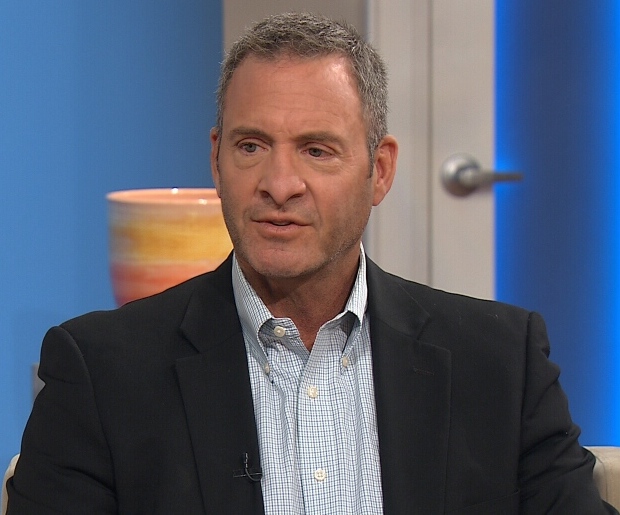
A really AMAZING interview with an incredibly amazing man, Clint Malarchuk. He is the author of a remarkable book called “A Matter of Inches.”
And please take a look at Clint’s website: http://www.malarchuk.com
(Also please see my first interview with him here: https://bipolar1blog.wordpress.com/2014/12/24/clint-malarchuk-interview-by-samina-raza/ )
He is a philosopher, and has a deep understanding of his illness, and what it takes to stay well. He truly understands life in general! Thank you Clint. All my best wishes. So happy to know you! It starts below.
Hi Clint, it’s so wonderful to talk to you again. How are you? Thank you so much for your response to my interview, I was so happy to get your message. I think the interview went really well last time, but I realized that I never asked you any questions about how everything is now…
C: I’ve been busy. Traveling quite a bit and public speaking about mental health, getting busier. Mostly in Ontario and Alberta.. Oh I get it, you mean where I’m at today. Yes, I can talk about that.
How are you doing now, moods, anxiety, mental health?
C: I would say that I’m doing very well today. You know that part of it is educating yourself and through experience you learn when you’re starting to struggle. Like stress, when I start getting stressed out, that’s when I have to take the extra time to check in with myself. I’m not sure if I told you last time, my tools are a 12 step program, I meditate and pray everyday and I try to exercise. I have a workout routine that I try to do every day. Those things keep me balanced. Now I can say that when I feel like I’m stressed out, and I’m starting to maybe slide into obsessive thinking or anxiety especially, it’ll get me so anxious, then I have to take my time and I double up on my medication, because sometimes my habit is to rush through and plow through everything and now I’ll take a step back and I’ll take the time to meditate, to bring my anxiety level down and then I can approach the problem or the stress or what ever is going in my life, whatever is the stressful situation a lot better and a lot clearer.
Oh wow! That’s amazing! Guess what, you just answered ALL of my question. Ok, we’re done. Haha.
C: Haha. It’s almost one question: how are you doing today and what keeps you in the healthy range. I make it sound easy but sometimes it’s not. When your anxiety gets going, it’s hard to just say “Ok, I’m going to go meditate then,” and find a quiet place. You’re trying to meditate and your mind just keeps bouncing back to what you’re trying to forget and ground yourself and center yourself. So it’s not always easy. I don’t want to make it sound like “Oh, I’m doing great because all I do is this and this.” And also the medication I’m taking is in my system and it helps me.
Are you on anti-anxiety medicines, like a benzodiazepine?
C: No. antidepressants. I take Cymbalta. And I take Seroquel, I take it at night because it helps me fall asleep. I take a 100 mg.
Ha! I take 125 mg of Seroquel.
C: Yes. But judging from Facebook and your blog posts, when they come up, I think: when does this lady sleep? So are you a night owl?
I am, I am a night owl. I go to sleep, for example at 3 am and then stay asleep, I’m not working right now, so there’s no reason for me to get up early. So then I get up around 11 am, sometimes noon. It’s BAD! I feel like i’m a teenager.
C: Some people, I think are wired differently. My wife, she gets up at 3:30 or 4’o’clock in the morning. She is a figure skating teacher and she goes up to the rink and they’re on the ice at 6 or 6:30 am. She doesn’t have to get up that early, but she does. She likes to take her time. She says it’s quiet. I can relate to that. There are a lot of people who like the quiet of the morning. My sister’s like you, she goes to bed late.
How about you?
C: I can go to bed at 9 pm and get up at 7 ‘o’clock.
Wow, that is so wonderful! I wish I could do that! I don’t take my Seroquel till I am done with everything, like posting on my blog. I’m sure if I took it at 9 pm, I’d be asleep by 10 pm. I’m going to do that.
C: You take Seroquel? And what else do you take?
Yes I take Seroquel. And then of course, I take the mainstay for bipolar disorder, which is Lithium. I take everything at night, all at one time.
C: My sister’s like you, she’ll clean the whole house at night.
I feel very creative at night, it seems like my mind works better at night. And in the morning, I don’t want to wake up. Don’t wake me up, please. Haha.
C: I’m like you in that, maybe it’s because of the medication I’m on, I have a hard time waking up. I need a lot of coffee. I drink a whole pot. Over a couple of hours, I’ll drink a whole pot of coffee. And then I’m ready to go, but till then I have a hard time. Don’t let society make you feel bad. There are a lot of people who do better at night, they stay awake till 3 in the morning, they go to bed late. There’s nothing wrong with that. Who says that’s wrong?
As long as you don’t have to go to work.
C: Yeah. Well if you have to go to work and you have to be there at 8’o’clock in the morning, well then… But if you have your own schedule, then what the heck. You know? Society again, just like with mental illness, stigma, society, lets not let society dictate to us.
I agree with you. And you really answered all my question! The next one I was going to ask was “How are you keeping well?” And you answered that. The next one was “Are you on medication?” and you answered that. The next one is: Is exercise and nutrition important? And what do you do for exercise?
C: You know I used to lift weights a lot, but now as I am older, I am careful with my joints. I’ve got dumb bells. I do TRX, it’s straps, a suspension system. They hang from something up high. You can see it on youtube. It’s cardio and muscles. I do that with dumb bells and in my barn, I punch a bag a lot.
Yes, ok, you look like you’re in really good shape. And you horseback ride, right?
C: Yes, I’m glad you brought that up, because I find that my animals, I have a little dog, and she is my emotional support. When I meditate, I lay down and the cat lays on my belly and the dog curls up beside me, it is very relaxing. Petting them, and hearing the cat purr and the dog all cuddled up, that all kind of gives you that calming feeling. So they’re therapeutic. And of course, when I ride, that’s therapeutic too.
That sounds great! I always feel like animals, like dogs and cats pull out the love that’s inside of you.
C: Yes, yes. Well I’m really in to animals. And people have always said that, when I work on horses for my business, the horses that no one can really get close to, I just walk up to them. And people say “How did you do that, what are you doing? This horse is always afraid of people!” I believe in your energy, we all have it. We’re animals just like they are, so I really believe that my energy is really confident with animals, so they respond to me.
Ha! You’re the horse whisperer!
C: Yes (laughing) some people say that. I take that as a compliment.
I’m going for a weekend for healing therapy with horses. I’m really looking forward to it. I’ll blog about it.
C: Just remember your energy and try to be in tune and they will respond. You’ll get more out of it if you’re in tune with the animals. Be confident with them, and supportive and you’ll get a lot out of it.
Yes, you’re right, you’re right. That is great advice and I am definitely going to follow it!
C: And you can just call it love, that’ll simplify it. Haha.
So true. It’s the energy of love. And what they do at the ranch I’m going to is, you walk into the herd of horses, and whichever horse picks you, is your horse for the weekend! Isn’t that cool?
C: Yes, it’s cool. It’s kind of what I’m talking about. Yup.
Yes, like your energy sort of matches that particular horse’s, so he’s yours.
C: Yup.
The next question was “Have you or would you try meditation?” and you just answered that. So here’s the next one: What has been the most helpful thing in your recovery and well being?
C: Well I’m a big proponent of getting yourself treated because you’re sick. You’re not weak. Because some people say “Just don’t be depressed” or “Don’t be bipolar.” They don’t know. But once they understand it’s a sickness, it’s a chemical imbalance, then they say “Oh ok.” It’s ok, I go to the doctor, it’s like diabetes or another illness. So once they realize that, they understand. I am a big proponent of medication. Some people aren’t, but I believe that when you’re sick, you go to the doctor. And if you’re chemically imbalanced, whether it’s your pancreas/diabetes or if it’s your brain/serotonin, it doesn’t matter. So I believe medication has saved me. And that in itself was not easy. As you know, you try different medications, different doses. And it’s not immediate, you have to be on it for a while before you figure out if it works or it doesn’t work. So, that was a long trial for me.
Yes, yes. Well they used to give people who have bipolar d/o SSRI’s like Zoloft or Prozac. But now they say that SSRI’s cause more mood swings, so they are taking us off them. I was taken off Zoloft, something I’d been on since the 1990’s. So I have been having some trouble coming off it after so many years.
C: Yes, me too. It’s like you have withdrawals, it’s not a good feeling. You feel sick.
Yes. But almost, the physical symptoms I can handle, but sometimes I feel depressed or anxious… but eventually it’ll go away. They say that for people to come off Zoloft takes 6-12 months for their brains to normalize! I’ve been off it for almost 6 months now. So I am hoping things will get better soon!
C: Yes, right. But don’t forget, it takes a long time to be on those medications before they either kick in if they’re going to work, or you figure out “Oops they don’t work, I have to try something else.”
You are so correct! I was on a LOT of medications. But the side effects were so awful, seemed worse than my illness. I’ve found 3 medications I can take, one was Zoloft, and then Lithium and Seroquel. That’s it.
C: I took Zoloft for a long time too.
It didn’t work?
C: Oh no. It worked really well. Then I think I was on it for so long that my body got immune.
True, your brain gets used to it. There are semi permanent changes that happen in the brain when you’re on something like Zoloft or Prozac. And when those changes happen, your brain stops responding to the drug.
C: Yes, I think that’s what happened. Because I took it for 14 years. I wasn’t getting checked by the doctor regularly either.
Oh yes, I read that in your book. I’ve had some good doctors, and then I’ve had some who were not good at all.
C: Yes. Same here! I’ve spent years trying to find a different doctor. It’s difficult to change, especially if you had one who you trusted a lot.
So true. It’s a bit scary to change doctors due to moving or their retiring. I feel it’s a traumatic event. And on to the next question: Is there something you feel you need to work on, if so how will you work on it? You sound really good…
C: No, I still have to.. and whether this is exactly mental illness, but for me it seems somewhat it is, that I have to work on my issues. There’s self love, and I don’t know if this is a product of my upbringing, what I went through with my dad. They’re just issues. I think we all have different issues. I have to be kind to myself, and remind myself that I deserve to be happy. I think that growing up in turmoil, that anxiety was the norm for me. And sometimes, if I’m not feeling anxious, I feel like I have to think of something to worry about, to get anxious. Because that’s where I’m comfortable, Even though it’s not a good feeling, but when you grow up that way, you feel like something’s missing. I think a lot of people may be able to relate to that but it’s a bit of a hard thing to understand. Think about it. You probably know people that love the drama, they love it when something’s going on, when it’s not good. Maybe that’s what they miss in their life, because as kids they had that. I don’t know, but I know for me, I think that’s pretty accurate. I have to be conscious of it, I have to be really in tune with my feelings, and my thoughts. What’s going on? Why are you feeling anxious? Why are you not feeling anxious? Be in tune with myself. And this is where medication helps too.
I think medication is key too. I would not be sitting here interviewing you without the Lithium and even Seroquel. I’d probably be in a hospital.
C: Oh I’m sure I would too. I’d probably be dead.
Oh gosh, I hope not. That’s so scary!
C: No, it’s true though.
Needless to say, I am really, really glad you’re here! Lets just keep it that way!
C: And you are doing a great job with your blogs. They are very educational. Sometimes when you read something, you say “Yeah! I just couldn’t put it into words. That sure describes me.” That’s educational.
Thank you so much! I started this blog in August of last year and I said if it helps even one person, then I am successful. So if you say that it means something to you, I appreciate it so much!
C: Oh for sure! And that helps you too because you’re supporting people whom you’re helping and when you do that, it gives you support. And you’re supporting them, that’s what this is all about. Helping each other.
Absolutely. The people who comment on my blog, and post something and the other bloggers and people who subscribe to my blog, we really have a conversation about the things that I write and it helps me and hopefully it helps them.
C: Have you heard of the magazine called Esperanza? They did an article on me.
Oh Congratulations! I’ll find it and post it on my blog.
If your emotions boil over, how do you control them?
C: That would be part of my keep checking to see what I’m feeling and why and what I’m thinking. To figure out what’s going on, if I’m feeling anxious, to ask “Why are you feeling anxious, what are you thinking?” So those things, but also everything else you do, like meditation, and working out. Those things help you keep that balance. So you don’t boil over, that is the number one thing. It’s probably as important as taking your medication. My routine of all the things I do to keep my balance.
How are you managing the alcohol issue?
C: I go to AA. I try to go to a meeting almost everyday. It’s important for me, I feel the more meetings I go to, the more I learn the tools of the 12 steps, how to properly apply them.
Yes that is really very important.
C: To me it’s like a course in life. Because it’s not just about not drinking. The 12 steps are a lot deeper than that. (Maybe I should go to one, haha, I don’t know if they’ll let me in.) All of them are the same, whether they are for drinking or for gambling, they’re all the same 12 steps. They use the 12 step program in everything. Just look it up, 12 step AA, they’ll be the same as any 12 step program. You don’t have to be an alcoholic or anything, you can follow a 12 step program in your own life. (Ok, I’ll look it up.)
It’s a very spiritual program. It’ll help you. The first step is admitting you’re powerless over alcohol, well, your first step could be you’re powerless over your… life… (laughs.) It doesn’t have to be alcohol or drugs or anything like that. (Right, it can be anything, it could be moods.) Anything, you can apply it to anything. (Hmm, it’s a cool way of looking at it.)
Is alone time important or are you very social?
C: I’m both. I like being with people, I joke around, and I make people laugh. But I also really value my alone time. And my alone time includes my wife. I can’t be around people all the time, it’ll drive you crazy. But when I am around them, I enjoy them.
How do you think you can stay healthy?
C: Continue to take my medication, but also to be monitored, to see the doctor regularly. Because the last time I was taking the medication, I never checked in with my doctor. And I think my body just became immune to it. So, I think it is key to stay on top of things. We’re creatures of habit, and I don’t want to slip back into my old habits of not going to meetings, not doing my meditation, not working out. These things keep me healthy, and the 12 step program, which is very spiritual. So I don’t want to lose my contact with my higher power, so to speak and start thinking I can do it on my own. Sometimes I feel like I’m being selfish, because I’ll tell my wife that I have to go meditate, or I have to go to a meeting, or I have to go workout. I feel like I am being selfish. But I have to do that to be healthy. She understands that. She understands I need to do certain things to keep my balance. It’s just me communicating to her that this is what I need to do, and she says “Yup, that’s good, do it.”
Right, probably if you weren’t doing all those things, it wouldn’t be very easy to be with you and it wouldn’t be very good for your health.
C: Oh yes, she understands. So I have to communicate that to loved ones that this is what I need to do. I hate to be thought of as selfish, if you want to label it as selfish. (I don’t think it’s being selfish.) No. But again society might perceive it as being selfish, but it’s not. (No, it’s taking care of yourself.)
Have you ever looked at this book called “The Power of Now” by Eckhart Tolle?
C: Yes. I’ve read quite a few of his books. I have all of them.
Do you feel they help you in any way?
C: Yes. But personally, I find his writing to be a little more complicated for what I like. The book that I really like is “The Four Agreements.” Those four agreements are simple. I really like the simplicity of that book. I try to use that one.
Yes, I agree, Eckhart Tolle sort of blends Zen Buddhism with New Age spirituality, so it can be complicated. But for me, when I first read it, I was like: Wow, this is a new way to be! But then I sort of forgot about it so I think I have to read it again.
C: And that’s the creatures of habit! If we’re going to change habits, we have to replace them with other habits. Like when you said: Wow this could change my thinking and my everyday living! And yet we forget, because it’s a habit. So you have to resolve to practice them everyday. Like “The Four Agreements” is easy, it’s just four things.
Well that’s it, that was the last question. Unless you would like to add anything else. Thank you very much for your time and for answering all my questions. I am so happy you are doing so well. I’m going to start doing all the things you are doing. Stay well and we’ll talk soon.