Palestine WILL Be Free

I can take a licking and keep on ticking!

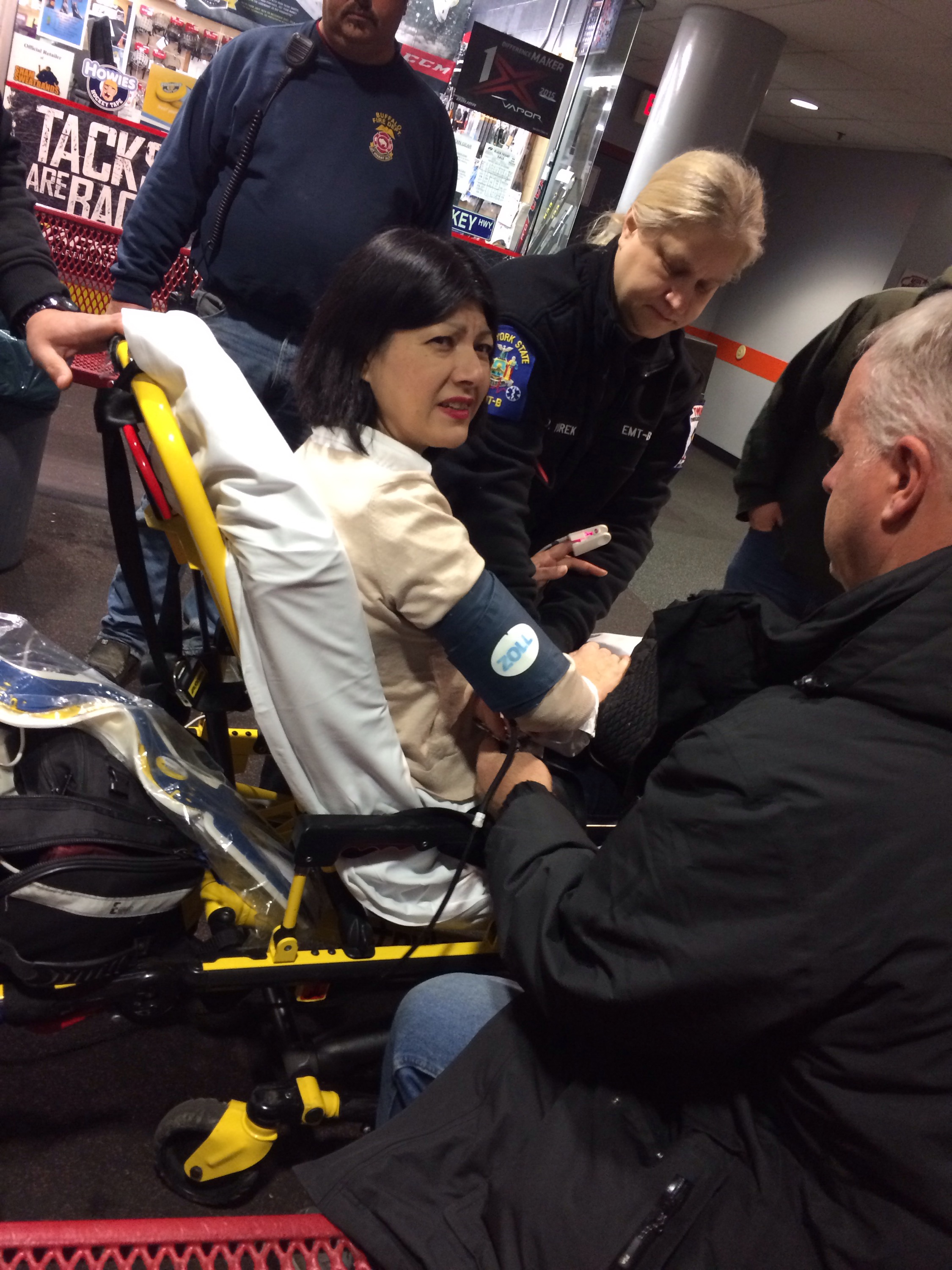
My son, the BRILLIANT skater!IMG_0160Me before my accident, oy ve!

Well, first of all, I feel like a fool for not even thinking about wearing a helmet for my first time on the ice! Not very smart. I have a concussion, but luckily, the only effect is a giant headache 😦

I feel fine and the interestingly amazing thing about all this is that my anxiety completely disappeared! Whatever measures my brain took to overcome the concussion made short work of my anxiety! Wish we knew what they were and we could bottle them. Also, I stayed in bed ALL day long, because of a terrible headache and fatigue. And I didn’t feel guilty or bad or useless about it, like I do when I stay in bed because of depression/anxiety issues. It was as if this concussion, because it was a physical reason, it was a valid reason to stay in bed. God! Even I practice stigma and discrimination against the mentally ill, namely myself.

But really, the disappearance of anxiety, and the practice of accepting that I needed to stay in bed, well these were the two positive side effects of getting a concussion. Pretty amazing, sometimes good things really do come out of bad, out of your control events.

So I am fine, have not much anxiety at all, haven’t forgotten to speak, eat, or think. Occasionally I do search for words, probably as a result of the concussion. Hopefully this will desist, as words and communicating clearly are very important to me.

Ok, so you can officially call me a Timex watch, I can take a licking and keep on ticking. Hahaha.

Went ice skating…


… for the first time ever, I was having so much fun and  I was doing really  well in the beginning. Then I started pushing off and skating a little harder. I shouldn’t have done that, because the next thing I knew was that I was in a stretcher being worked on by EMTs. Apparently I fell and hit my head on the ice and got a concussion,  also got a very bruised tail bone. Ouch! I’m fine. I had a cat scan and an X-ray. All’s well. I do have a concussion though, and do not, not for the world, remember the fall. However, my anxiety is gone. I has massive amounts of anxiety the last 10 days or so, but it’s gone!!! I feel light and airy and calm and at peace. How did that happen? Maybe I simply needed a clomp on the head, ha ha ha. Will it last? I hope so. I hate anxiety, feeling like the world is ending for no reason whatsoever. A concussion cured anxiety! At least for the moment. Not happy about my head and tailbone pain but thrilled about the absence of anxiety. And I have promised myself I’m going to learn how to skate like a pro. Oh yes I am! 

Brain Study Seeks Roots of Suicide

A clinical trial will look at the neurological structure and function of people who have attempted suicide

 Researchers hope to elucidate the brain mechanisms associated with the impulse to kill oneself.

Suicide is a puzzle. Fewer than 10% of people with depression attempt suicide, and about 10% of those who kill themselves were never diagnosed with any mental-health condition.

Now, a study is trying to determine what happens in the brain when a person attempts suicide, and what sets such people apart. The results could help researchers to understand whether suicide is driven by certain brain biology — and is not just a symptom of a recognized mental disorder.

The project, which launched last month, will recruit 50 people who have attempted suicide in the two weeks before enrolling in the study. Carlos Zarate, a psychiatrist at the US National Institute of Mental Health in Bethesda, Maryland, and his colleagues will compare these people’s brain structure and function to that of 40 people who attempted suicide more than a year ago, 40 people with depression or anxiety who have never attempted suicide and a control group of 40 healthy people. In doing so, the researchers hope to elucidate the brain mechanisms associated with the impulse to kill oneself.

Zarate’s team will also give ketamine, a psychoactive ‘party drug’, to the group that has recently attempted suicide. Ketamine, which is sometimes used to treat depression, can quickly arrest suicidal thoughts and behaviour — even in cases when it does not affect other symptoms of depression. The effect is known to last for about a week.

To some researchers, such findings suggest that ketamine affects brain circuits that are specific to suicidal thinking. But John Mann, a psychiatrist at Columbia University in New York City, says that abnormal brain chemistry and genetics could also predispose a person to attempt suicide in times of great stress, such as after a job loss. “They’re part of the person, they’re a trait,” Mann says. “They just get more important when the person gets ill.”

Written in the genes?
There is evidence that genetics influences a person’s suicide risk. For instance, biological relatives of adopted children who kill themselves are several times more likely to take their lives than the general population.

Fabrice Jollant, a psychiatrist at McGill University in Montreal, Canada, suggests that this genetic influence is related to impulsivity and flawed judgement, rather than a specific mental illness. He has found that close relatives of people who killed themselves were more impulsive than a control group when playing a gambling game designed to test decision-making. “It seems that this is something transmitted,” Jollant says.

Other researchers are seeking biomarkers that would allow clinicians to spot people most at risk of suicide. Alexander Niculescu, a psychiatrist at Indiana University in Indianapolis, and his colleagues have identified a set of six genes whose expression is altered in the blood of people who have killed themselves. The team has found that combining these biomarkers with data from an app that tracks mood and risk factors can predict, with more than 90% accuracy, whether people with bipolar disorder or schizophrenia will eventually be hospitalized for a suicide attempt.

And Mann is using positron emission tomography to track the best-studied biomarker, for the signalling molecule serotonin, in the brains of people who have attempted suicide. Their altered serotonin patterns are similar to those seen after death in the brains of those who have killed themselves, says Mann.

Although serotonin levels are altered in people with depression, Mann has found differences between people who attempt suicide and those who are depressed but have no history of suicide attempts. He has also shown that serotonin levels are altered to a greater degree in those who make more serious suicide attempts — such as taking an entire bottle of painkillers — than in those whose attempts are less drastic.

Ethical challenges
Researchers hope that a better understanding of the biology underlying suicide will lead to more effective treatments for suicidal impulses. But studies such as Zarate’s present difficult logistical and ethical challenges. Researchers must consider whether a person who has just attempted suicide can make informed decisions about whether to participate in research.

Michael Minzenberg, a psychiatrist at the University of California, San Francisco, knows these concerns all too well: he studies suicidal people with schizophrenia. Many of these people struggle with basic life skills, such as keeping a job or finding housing. “They’re a challenging group to treat, let alone to study,” Minzenberg says.

He and other researchers who study suicidal people say that they treat them with special care — and that the overall benefits of such studies outweigh any risks. “In most clinical trials, people at high risk of suicide are excluded, so we don’t know how to treat them,” Jollant says. “We need to assess this population, not just say ‘exclude them from trials’.”

Negative Symptoms

SCHIZO

This is a graphic for negative (meaning things that are absent or missing, such as affect, pleasure, speaking, and activity) symptoms of schizophrenia, but these very symptoms are also present in the depressive phase of bipolar disorder. And these can also be erroneously attributed to laziness, “just not trying enough”, or unwillingness, but they are due to illness.

Schizophrenia, bipolar disorder and major depression share genetic risk factors: Study

DSCN6809

From the article below. Again, immune involvement. “The researchers found strong associations between mechanisms related to immune function and changes in processes when genes are turned on and off. The findings confirm known mechanisms as well as revealing new ones that pertain to the development of psychiatric disorders.”

I know when I am in full blown mania and out of touch with reality, there is no difference between me and a person who has schizophrenia. The thing is that my getting to that point can be prevented by taking Lithium (for me), whereas a person with schizophrenia has a lot more trouble coming out from delusions, hallucinations and back in touch with reality.

http://www.belmarrahealth.com/schizophrenia-bipolar-disorder-and-major-depression-share-genetic-risk-factors-study/

Schizophrenia, bipolar disorder and major depression have been found to share a genetic risk factor, according to a new study. Aside from the recent research, many previous studies also showed a genetic link between all three mental disorders. Below are synopses of the health studies that reveal the connection they all possess.

Study on shared genetic risk factors for schizophrenia, bipolar disorder and major depression

Research published in Nature Neuroscience from the Louisiana State University Health Science Centers revealed a genetic risk factor that is shared between schizophrenia, bipolar disorder and major depression. Lead researcher, Nancy Buccola, and her team examined data from 60,000 participants, including those with schizophrenia, bipolar disorder, major depression, autism, attention deficit disorders as well as individuals without any diagnosed conditions.

Study on shared genetic risk factors for schizophrenia, bipolar disorder and major depressionThe researchers found strong associations between mechanisms related to immune function and changes in processes when genes are turned on and off. The findings confirm known mechanisms as well as revealing new ones that pertain to the development of psychiatric disorders.

Treatments are available for many mental disorders but many patients do not obtain relief from such treatments. Buccola stated, “The PGC is a collaboration of some of the finest psychiatric genetic researchers in the world who are working together to understand the biology that underlies psychiatric disorders. This knowledge is critical in developing more effective and personalized treatments. I feel fortunate to make even a small contribution to this important work.”

Previous study shows schizophrenia and bipolar disorder cause dendritic spine loss in brain

Alternative research has found that schizophrenia and bipolar disorder both play a role in dendritic spine loss in the brain. The findings suggest that the two disorders share similar pathopsychological features.

Dendritic spines play a role in many brain functions. To achieve their results, researchers looked at individuals with schizophrenia, bipolar disorder, and individuals not affected by either disorder.

Spine density was reduced in those with bipolar disorder and those with schizophrenia, when compared to the control group. Furthermore, there was a significant reduction in spines per dendrite in both bipolar individuals and schizophrenics.

Lead researcher, Glenn T. Konopaske, M.D., said, “The current study suggests that spine pathology is common to both [schizophrenia] and [bipolar]. Moreover, the study of the mechanisms underlying the spine pathology might reveal additional similarities and differences between the two disorders, which could lead to the development of novel biomarkers and therapeutics.”

Bipolar disorder is often misdiagnosed as major depressive disorder (MDD)

Bipolar disorder is often misdiagnosed as major depressive disorder (MDD)Research has shown that bipolar disorder is often misdiagnosed as major depressive disorder (MDD). In bipolar disorder, individuals experience intense lows in mood and euphoric highs. In major depressive disorder, individuals experience steady, intense lows in mood. Because episodes of low mood can last for days or even weeks in those with bipolar, it can lead to a misdiagnosis of major depressive disorder. Researchers are closing in on an objective to help distinguish between the two conditions in order to reduce misdiagnosis.

Current diagnostic methods involve interviews with the patient, but this can be subjective and misleading. Researchers decided to combine techniques together in order to create a more accurate diagnostic method. The techniques used are gas chromatography-mass spectrometry and nuclear magnetic resonance, which analyze the urine of patients with MDD and bipolar disorder in order to uncover biomarkers of each disorder. These biomarkers will allow doctors to improve diagnosis by 89 to 91 percent.

Depression in patients with schizophrenia

One study found that a quarter (25 percent) of those with schizophrenia also have course-related depression. Depression in schizophrenia patients is related to a reduction in social and vocational functioning and also increases the risk of a psychotic relapse.

Depression in schizophrenia often has poor outcomes; patients have more suicidal thoughts, suicide attempts, and suicides.

It can be difficult to diagnose depression and schizophrenia separately as the “negative” symptoms related to schizophrenia can present themselves like depression. Negative symptoms refer to social withdrawal, low motivation and energy, difficulty experiencing pleasure or having interests and an impaired thought process; all symptoms seen in depression as well.

For the many similarities presented in both schizophrenia and depression, not only is distinguishing between the two difficult, but depression can often be seen in many schizophrenic patients as well.

From all the presented studies we see many links and associations between schizophrenia, bipolar disorder and depression. By continuing to make these links, we can obtain a better understanding of these mental disorders, which could greatly assist in developing more specific treatments that could offer more patients greater relief.

How many times before

We institute any kind of gun control? How many people dead, before we institute gun control? How many prayers and condolences do we send out to families before we institute gun control? Look at Australia and Great Britain, they have cut their mass shooting rates down by instituting strict gun laws. For goodness sake, we must do the same. This year, there have been more mass shootings than days that have passed! How can the politicians continue to let this happen without laws that control who can buy a gun and who can’t? How can background checks not be required? Life is precious. Are we not a civilized society? Are we just going to allow anyone to get their hands on a gun and do with it as they like?

Close call…

computer

Got off the plane, went to the restroom. Had my purse and my Macbook Air in a bag with me. Spotted a Starbucks, oooh coffee, went and got some. went to a natural foods place and got a sandwich. Went to the bookstore, browsing… suddenly realized my computer bag was missing! Heart skipped a few beats, broke out in a hot sweat… crap… went all the way back to the disembarkation gate in Concourse B from A, went back to the bathroom, no computer, went back to Starbucks, no computer, stopped on the way at a gate and asked agent to help me. She said to go to the police office. On the way to the police office, stopped at bookstore, no computer, last chance, stopped at the natural foods restaurant… and there it was, my gray bag, with my Macbook Air, sitting propped up against some soft drink dispensers. I laughed and laughed and said thank you and gave the girl behind the counter a great, big hug! Said thank you again and walked all the way back to my gate for Buffalo.

Wow! We don’t know how precious something is until it’s lost. Human nature, I guess. I mostly thought of my pictures on my computer, about 2000 of them, those are what I would have missed the most.

So lucky! So lucky! Hanging on tight to my computer bag.

Just sitting here, thinking.

IMG_0079

I should be in bed, with a bag of ice on my head, but I sit here, with a nauseating migraine, looking at the graceful remains of the thanksgiving flower bouquet that I had so lovingly arranged, still beautiful, in its languorously droopy way. I am on a self prescribed lithium holiday! With the blessings of my psychiatrist, yes, really.  Still on Seroquel. And don’t worry, I’ll go back on the necessary, yet difficult to swallow, lithium soon, very soon, tomorrow in fact. My right hand, which shakes like a leaf when I am on 900 mg of lithium, has finally started shaking like a flag in a mild breeze. Only my right hand has tremors, not my left hand, and yes, I am right handed. My friends remark on it with horrified eyes, I tell them this tremor is the least of my worries. I tell them they should peak into my quaking brain when I am in the midst of mania or depression. Unfortunately, this mostly passes by, unregistered,  un-understood. But I can’t really blame them, they, and how fortunate they are, have no frame of reference with which to understand my statement.

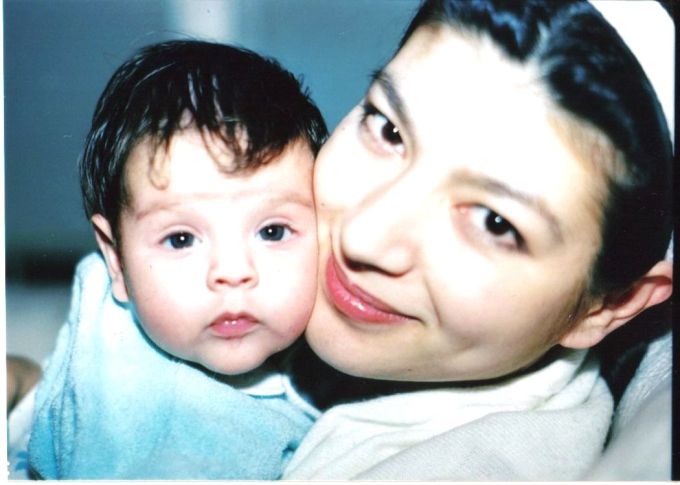
My mind is awhirl. Going to Buffalo tomorrow for my son’s birthday 🙂 He is 25 years old! I gave birth to him a quarter of a century ago! How did that even happen! My adorable, blue eyed baby turned into my handsome, loving, adored young man!

ARAL 5 mos and meAral, 5 months old!

Aralster and me!Aral, 24 years old!

Then, I’m going to Pakistan at the end of this month, I will be seeing my aunt and giving her all my love. Can’t believe it’s December already. How time just takes upon its wings and soars. And we are left standing, graying and wrinkling, in its dusty wake. Oh come now, you are alive, you are healthy, yes, healthy, you want for nothing, you have family and friends whom you love and are loved by in return! What more can you ask for?

Well, I have to go pack for my trip now. I’m hoping this unforeseen and thoroughly unwanted migraine takes flight soon, before I have to get on my flight.

DNA Repair Protein BRCA1 Implicated in Cognitive Function and Dementia

BRCA1 in neurons_2130x1198

Wow! The BRCA1 gene, mutations in which lead to breast cancer, has now been implicated in cognitive functioning, dementia and the development of Alzheimer’s disease!

BRCA1 is a tumor suppressor gene, this encodes a protein that repairs DNA mutations. If these mutations in the DNA were not repaired, the cell would become cancerous. So the repair of these mutations suppresses tumor formation, hence the term tumor suppressor gene. If there is a mutation in BRCA1, the mutations in DNA will not be properly repaired and can lead to oncogenesis.

What’s very surprising is that these genes, first discovered in relation to breast cancer, have now been seen to have an important role in neurons! In post mortem studies, it was seen that BRCA1 was 65-75% lower in patients who had dementia than in normal controls. It was found that β amyloid (the proteins that accumulate in brains of people with Alzheimer’s,) depletes BRCA1 in neurons. Faulty DNA repair was known to occur in the neurons of people with Alzheimer’s, now with the involvement of BRCA1, it makes perfect sense.

BRCA1 is involved in Alzheimer’s disease, wow! Could it or some other DNA repair proteins be involved in mental illness?

As I said in another post about why elephants don’t get cancer (https://bipolar1blog.wordpress.com/2015/10/11/wow-this-is-the-reason-why-elephants-dont-get-cancer/), elephants have 40 copies of a particular tumor suppressor gene called p53, whereas humans have two. I wonder if overproducing BRCA1 in neurons, either by increasing the number of its gene or by delivering the BRCA1 protein in nanoparticles into the neurons of people with dementia, would that halt dementia, or at least slow it down?

Curiouser and curiouser… it is all interconnected!

Breast cancer proteins seen in dementia; neurotransmitters, neuronal messengers, seen in the gut and muscles; interleukins, immune cell molecules, present in the brain…

http://gladstone.org/about-us/news/dna-repair-protein-brca1-implicated-cognitive-function-and-dementia